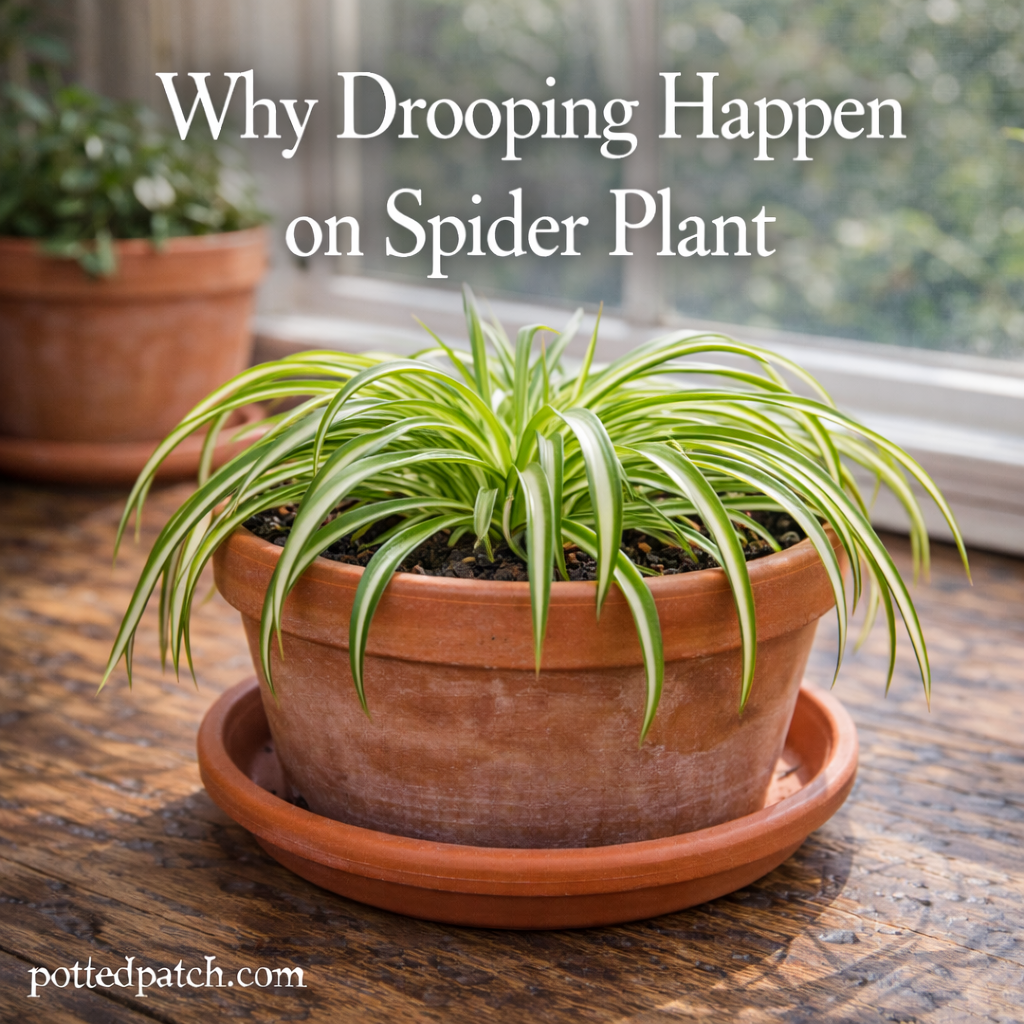
Spider plants are known for their arching, fountain-like leaves. But when those leaves suddenly hang limp or look lifeless, something is off.
Drooping is one of the most common spider plant problems — and thankfully, it’s usually fixable.
Here’s exactly why drooping happens on a spider plant and how to identify the cause.
Is Drooping the Same as Wilting?
Not always.
- Wilting usually looks dramatic and sudden.
- Drooping can be gradual and less severe.
Drooping leaves may still feel firm but hang lower than usual. Identifying whether the plant feels soft, limp, or simply heavy helps narrow down the issue.
1. Underwatering (Most Common Cause)
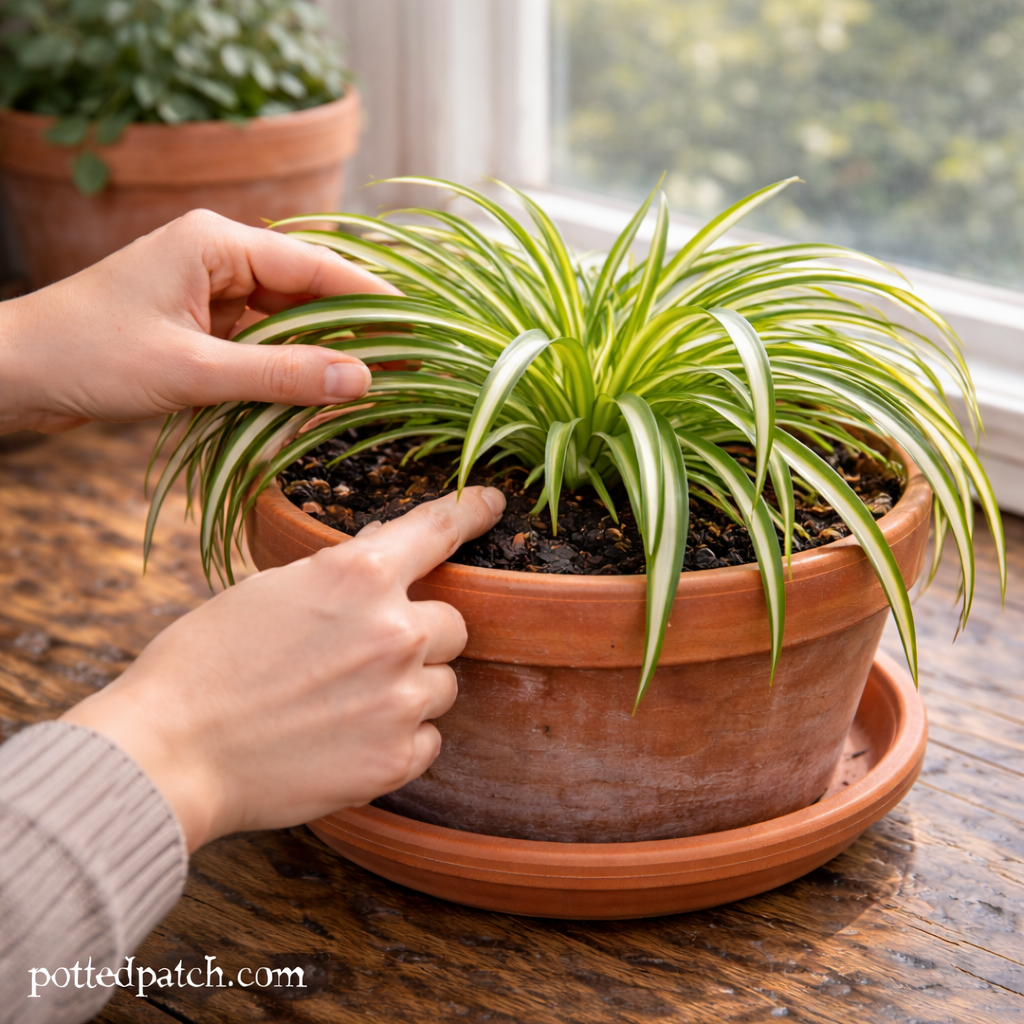
Spider plants droop quickly when they’re thirsty.
Dry soil prevents the roots from supplying enough moisture to the leaves.
Signs of Underwatering
- Soil feels dry several inches down
- Pot feels lightweight
- Leaves may curl slightly
- Brown tips may appear
What to Do
- Water thoroughly until excess drains out
- Allow the pot to drain completely
- Resume consistent watering
Most underwatered spider plants perk up within hours.
2. Overwatering
Too much water can also cause drooping.
Soggy soil suffocates roots, limiting oxygen and weakening the plant.
Signs of Overwatering
- Soil stays wet for days
- Leaves feel limp and soft
- Yellowing leaves
- Musty odor from soil
How to Fix It
- Stop watering immediately
- Allow soil to dry out
- Ensure proper drainage
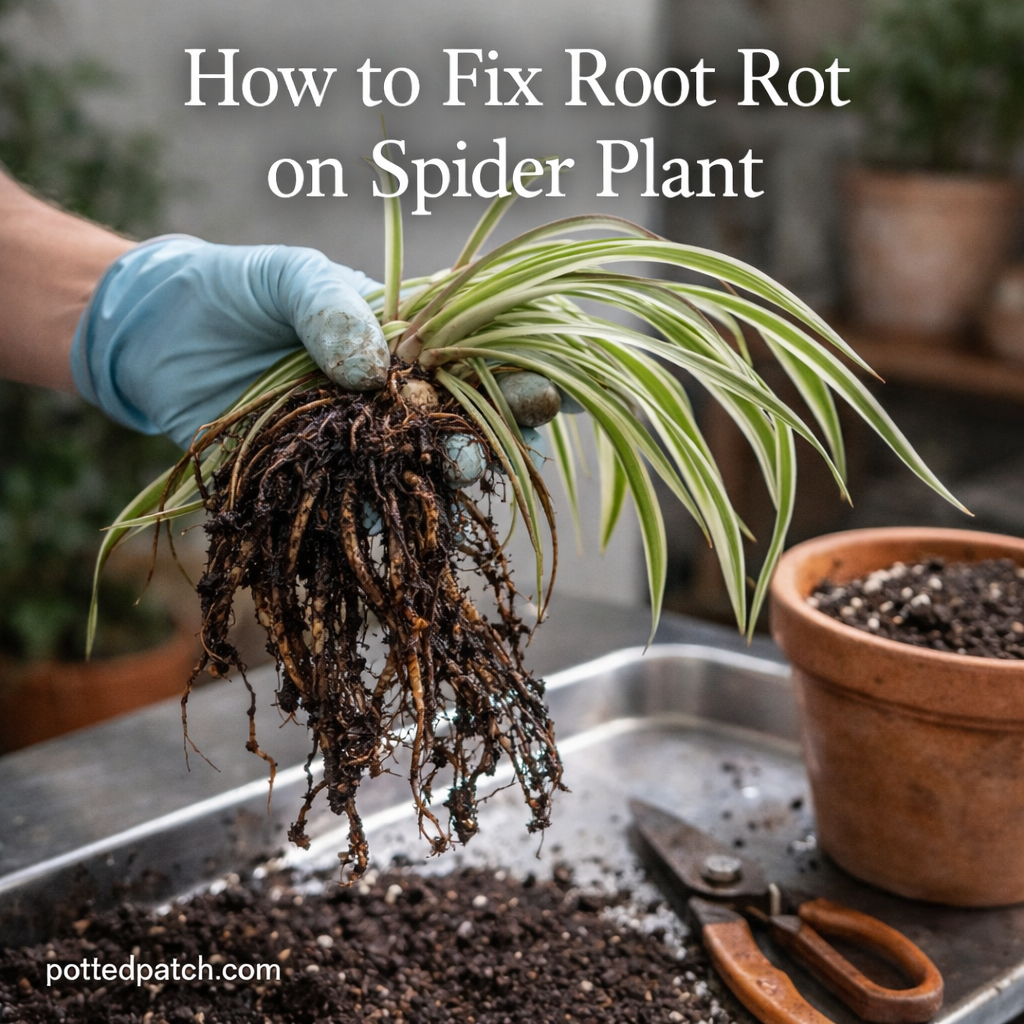
- Repot if root rot is present
Recovery takes longer than underwatering.
3. Root Bound Stress
Spider plants grow fast and often outgrow their pots.
When roots are tightly packed, water absorption becomes inconsistent.
Signs
- Roots circling the pot
- Water drains straight through
- Drooping shortly after watering
Solution
Repot into a container 1–2 inches larger with fresh soil.
4. Temperature Stress
Spider plants prefer moderate indoor temperatures.
Drooping can occur if exposed to:
- Cold drafts
- Air conditioning vents
- Extreme heat
Ideal range: 60–80°F
Stabilizing temperature often restores firmness within days.
5. Low Humidity
While spider plants tolerate average indoor humidity, very dry air can stress them.
Symptoms may include:
- Drooping combined with brown tips
- Dry-feeling leaves
- Issues worsening in winter
Increasing humidity may help.
6. Transplant Shock
If you recently repotted or divided your spider plant, drooping may occur temporarily.
The roots need time to adjust.
What to Do
- Keep soil lightly moist
- Avoid fertilizing
- Maintain consistent light
Most plants recover within 1–2 weeks.
7. Natural Growth Habit
Sometimes drooping is simply the plant’s natural shape.
Spider plants develop long, arching leaves and may appear lower as they mature.
If leaves are:
- Firm
- Green
- Free of yellowing
The plant may simply be growing normally.
When to Be Concerned
Seek action if drooping is accompanied by:
- Black or mushy roots
- Rapid yellowing
- Leaf collapse
- Foul-smelling soil
These signs indicate root issues.
Quick Drooping Checklist
If your spider plant is drooping, check:
- Soil moisture
- Drainage
- Root crowding
- Temperature exposure
- Recent changes
Start with watering — it’s the most common cause.
Final Thoughts
Drooping on a spider plant is usually a care adjustment issue — not a death sentence.
Check soil first, correct watering, stabilize the environment, and give your plant time to respond.
Spider plants are resilient and often bounce back quickly with consistent care.