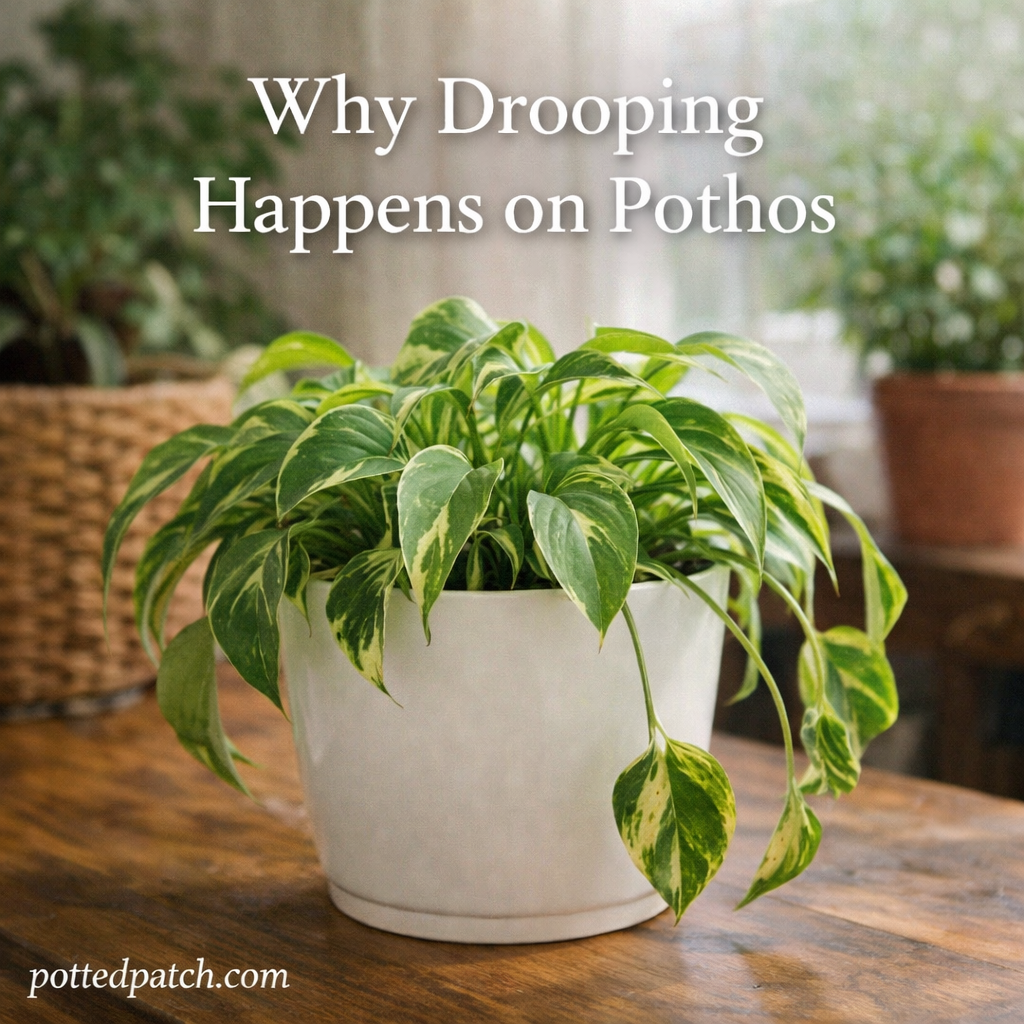
Pothos plants are known for their resilience, glossy leaves, and trailing vines. So when those once-perky leaves start sagging, it can feel alarming.
Drooping is one of the most common pothos problems — but the good news is that it’s usually fixable. In most cases, your plant is simply reacting to stress in its environment.
Let’s break down why drooping happens on pothos and exactly how to fix it.
The Most Common Causes of Drooping
Drooping leaves are typically a sign that something is off in one of these key areas:
- Watering habits
- Light exposure
- Root health
- Temperature stress
- Soil condition
Identifying the correct cause is the first step toward recovery.
1. Underwatering
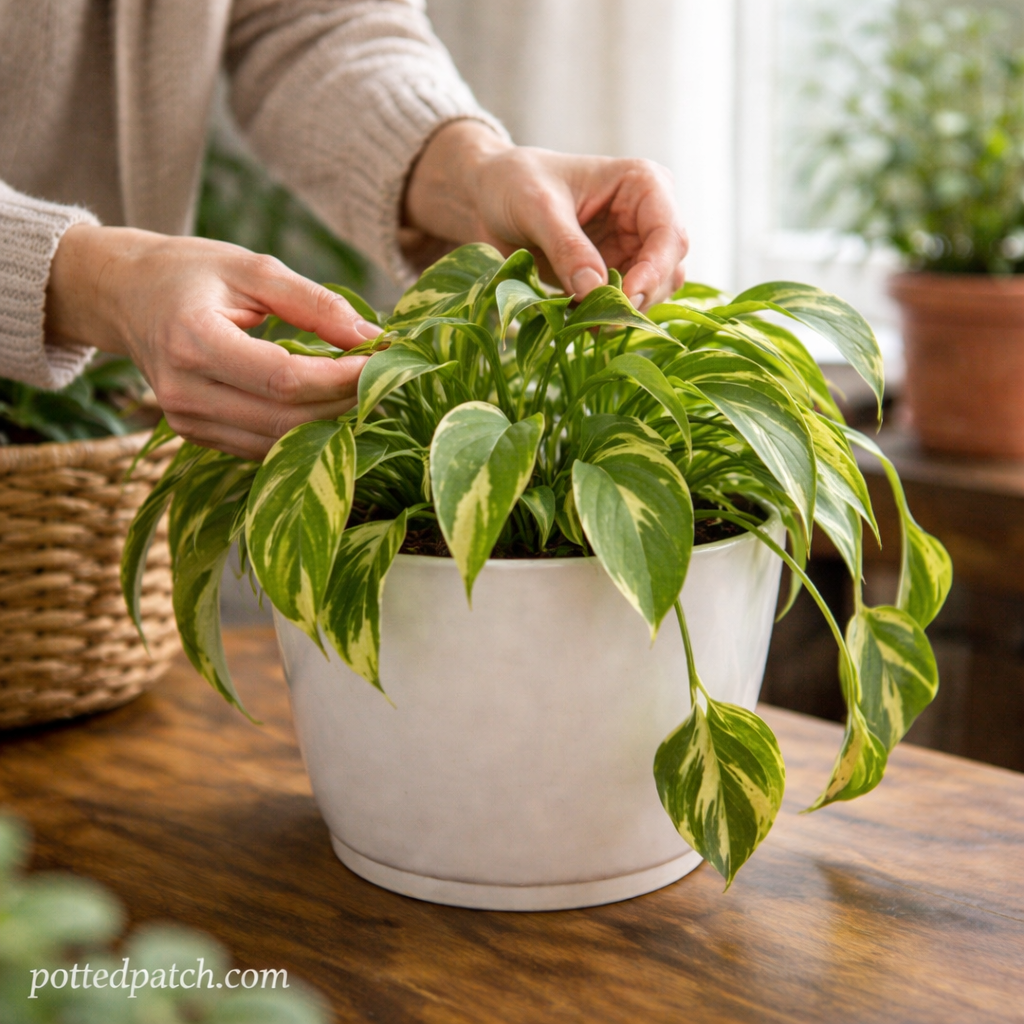
The most common reason pothos droop is underwatering.
When the soil becomes too dry, the plant loses turgor pressure (the internal water pressure that keeps leaves firm). As a result, the leaves and stems begin to sag.
Signs of underwatering
- Dry soil pulling away from the edges of the pot
- Leaves feel thin or limp
- Pot feels unusually light
How to fix it
- Water thoroughly until excess drains from the bottom.
- Allow the soil to rehydrate evenly.
- Resume a consistent watering schedule.
Pothos often perk back up within hours after a proper watering.
2. Overwatering and Root Stress
Ironically, too much water can also cause drooping.
When soil stays soggy, roots struggle to get oxygen. This can lead to root rot, which prevents the plant from absorbing water properly — causing the same drooping symptoms as underwatering.
Signs of overwatering
- Yellowing leaves
- Mushy stems
- Foul-smelling soil
- Consistently wet potting mix
How to fix it
- Let the soil dry out before watering again.
- Ensure the pot has drainage holes.
- Repot into fresh, well-draining soil if root rot is present.
Healthy roots are firm and white. Trim any brown, mushy roots during repotting.
3. Low Light Conditions
Pothos tolerate low light, but prolonged dim conditions can weaken the plant over time.
Without enough light, growth slows and stems may stretch, causing leaves to droop.
Best lighting for pothos
- Bright, indirect light
- A few feet away from a sunny window
- Filtered natural light
If your plant is in a dark corner, gradually move it to a brighter location.
4. Temperature Stress
Pothos prefer stable indoor temperatures between 65–85°F.
Sudden changes can shock the plant and cause drooping.
Avoid placing your pothos near:
- Air conditioning vents
- Heating vents
- Drafty windows
- Exterior doors
Stability helps restore firmness to the leaves.
5. Compacted or Poor Soil
Old soil can become dense and restrict airflow to roots.
When oxygen flow is limited, root performance declines, leading to drooping foliage.
Signs soil needs refreshing
- Water pools on the surface
- Soil takes too long to dry
- Growth has slowed
Repotting into a loose, well-draining mix can significantly improve plant health.
6. Transplant Shock
If you recently repotted your pothos, temporary drooping may occur.
This is normal as the roots adjust to a new environment.
Keep care consistent, avoid fertilizing immediately, and give the plant time to settle. Recovery usually happens within 1–2 weeks.
How to Tell Which Issue Is Causing Drooping
Use this quick checklist:
- Soil bone dry? → Likely underwatering.
- Soil soggy and yellow leaves? → Overwatering.
- Plant in dark area? → Low light.
- Recently moved or repotted? → Stress response.
Examining the soil and environment usually reveals the answer.
How Long Does Recovery Take?
Recovery time depends on the cause:
- Underwatering: Often within hours
- Mild overwatering: Several days
- Root rot recovery: 1–3 weeks
- Light adjustment: 2–4 weeks
Pothos are resilient and respond quickly once conditions improve.
Preventing Future Drooping
Consistency is key.
Follow these simple guidelines:
- Check soil moisture before watering
- Use well-draining potting mix
- Provide bright, indirect light
- Keep temperatures stable
- Repot every 1–2 years
Routine care reduces stress and keeps foliage firm and vibrant.
Final Thoughts
Drooping on pothos is rarely a death sentence. It’s a signal.
Whether the issue is too much water, too little light, or environmental stress, small adjustments usually bring your plant back to life.
Pay attention to the soil, lighting, and temperature. Once you correct the imbalance, your pothos should return to its lush, trailing self.
Healthy pothos plants are adaptable — and they reward consistent care with strong, glossy growth.