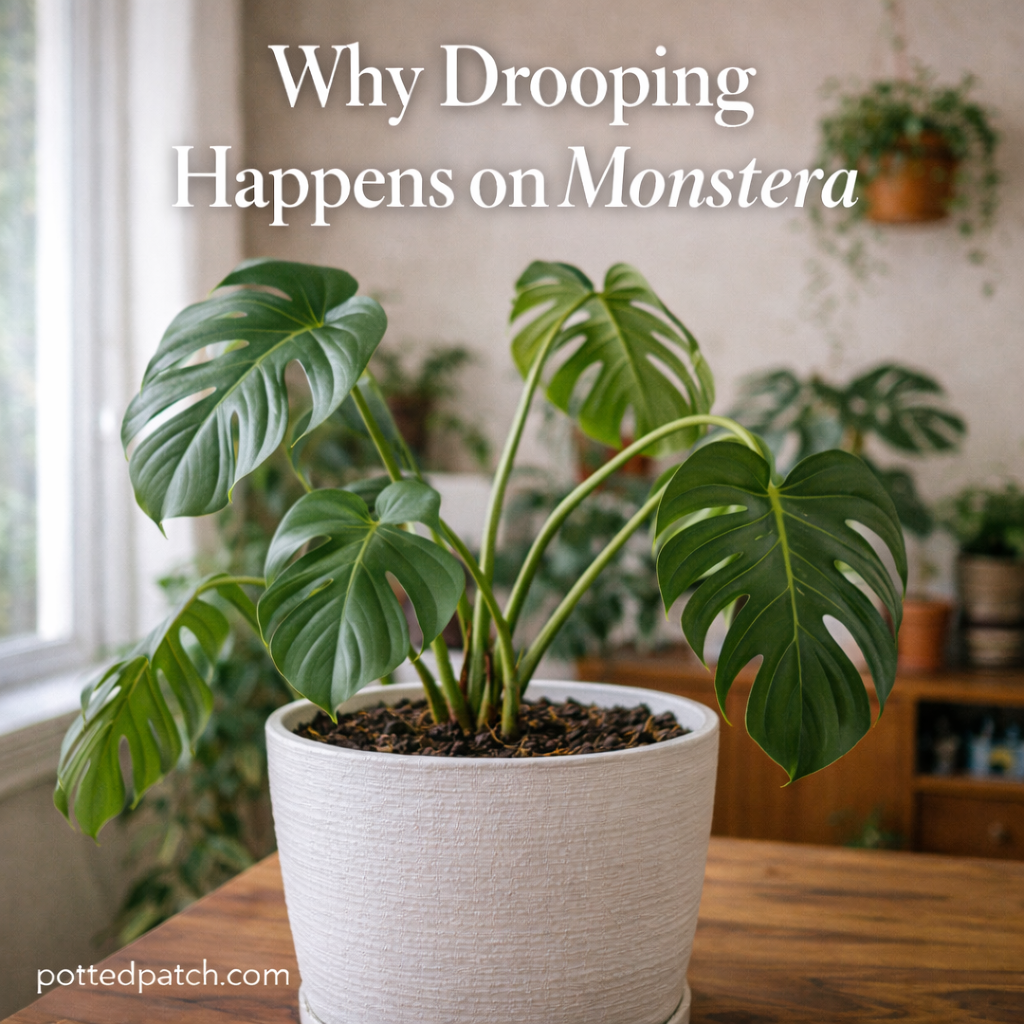
Drooping leaves on a Monstera can be alarming, especially when the plant otherwise looks green and healthy. While Monsteras are naturally bold and expressive plants, noticeable drooping is usually a sign that something in the environment or care routine is off.
The good news is that drooping is often reversible. Once you identify the cause, Monsteras typically bounce back quickly. Here’s how to understand why drooping happens on a Monstera and what you can do to fix it.
What Drooping Looks Like on a Monstera
Before troubleshooting, it helps to recognize true drooping versus normal growth.
Drooping usually means:
- Leaves hanging downward instead of outward
- Stems bending or losing rigidity
- The plant looking tired or collapsed
- Multiple leaves affected at once
This is different from a single older leaf aging or a plant naturally leaning toward light.
Underwatering Is the Most Common Cause
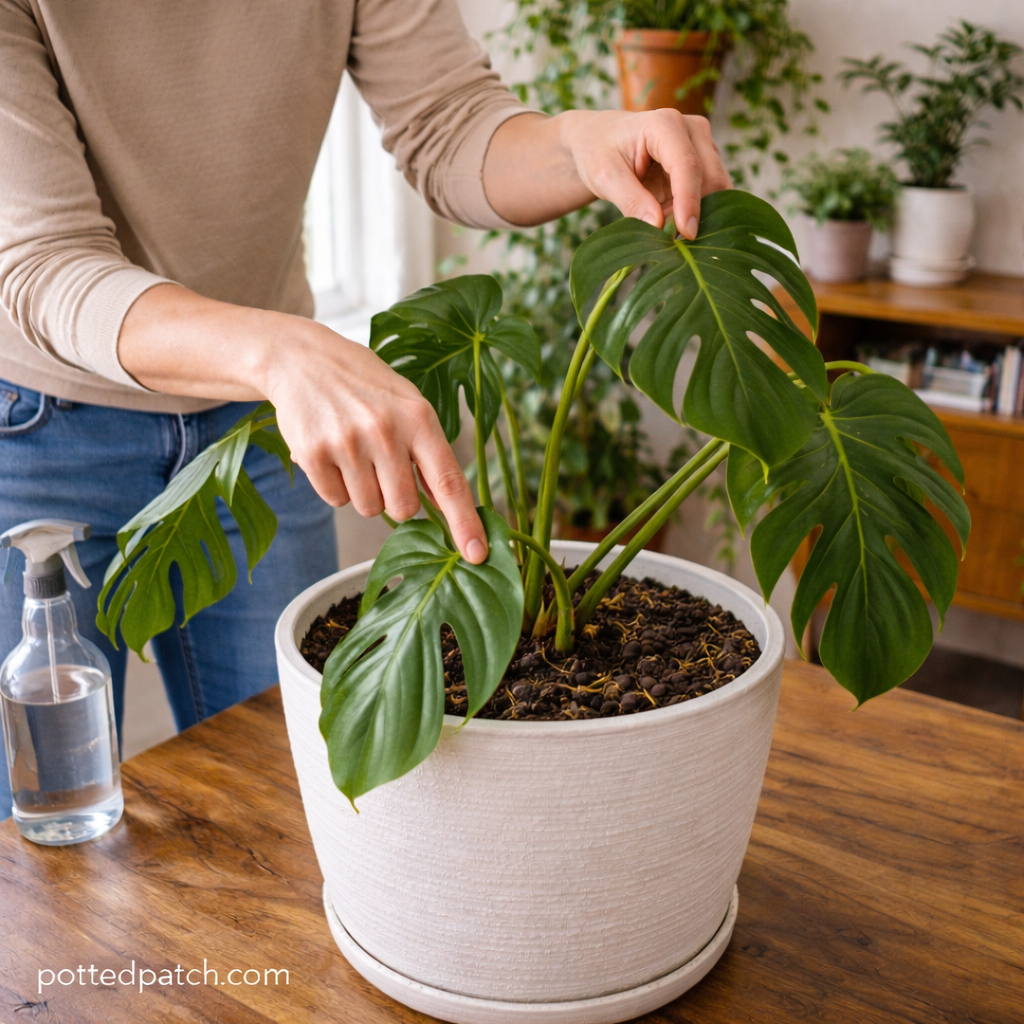
Lack of water is the number one reason Monsteras droop.
When soil dries out too much:
- Cells lose internal pressure
- Leaves lose firmness
- Stems soften and bend
Signs underwatering is the issue:
- Soil feels dry several inches down
- Leaves look limp but still green
- Drooping improves shortly after watering
A deep, thorough watering often perks the plant up within hours.
Overwatering Can Also Cause Drooping
Too much water can look surprisingly similar to too little.
Overwatering leads to:
- Oxygen-deprived roots
- Reduced water uptake
- Weak stems and leaves
Clues overwatering is the problem:
- Soil stays wet for days
- Leaves droop but feel soft or heavy
- Yellowing may appear alongside drooping
If overwatering is the cause, drooping will not improve immediately after watering.
Poor Drainage and Compact Soil
Even with proper watering, poor drainage can cause drooping.
Common drainage issues include:
- Pots without drainage holes
- Dense, compacted soil
- Roots sitting in standing water
When roots can’t breathe, they can’t support leaf structure, leading to drooping growth.
Low Light Weakens Leaf Support
Monsteras rely on adequate light to maintain strong stems.
In low light:
- Growth becomes stretched and weak
- Stems can’t support large leaves
- Drooping increases over time
If your Monstera is far from a window or light source, gradual drooping is often a sign it needs brighter conditions.
Sudden Temperature Changes or Cold Stress
Monsteras are sensitive to temperature swings.
Drooping can occur when:
- The plant is near a cold window
- Air conditioning blows directly on it
- Temperatures drop below 60°F
Cold stress slows water movement inside the plant, causing leaves to lose firmness.
Root Stress or Being Rootbound
Roots play a major role in leaf posture.
Drooping may happen if:
- Roots are tightly circling the pot
- Water runs straight through the soil
- The plant is top-heavy with limited root support
A rootbound Monstera may droop even with correct watering and light.
Lack of Structural Support
Monsteras are climbers, not free-standing plants.
Without support:
- Stems naturally bend outward
- Large leaves pull the plant downward
- Drooping can look worse over time
A moss pole, stake, or support structure helps redistribute weight and improve posture.
Recently Repotted or Moved Plants
Drooping after a change is often temporary.
This can happen after:
- Repotting
- Changing light locations
- Transporting the plant
- Environmental shifts
In these cases, drooping usually resolves as the plant adjusts.
How to Fix Drooping on a Monstera
Once you identify the cause, take targeted action.
General fixes include:
- Water deeply if soil is dry
- Allow soil to dry slightly if overwatered
- Improve drainage and soil structure
- Move to brighter, indirect light
- Protect from cold drafts
- Add vertical support
- Repot if roots are severely crowded
Avoid changing multiple factors at once. Small, focused adjustments work best.
When Drooping Is Not a Serious Problem
Not all drooping is a warning sign.
Mild drooping can be normal:
- At the end of the day
- During seasonal slowdowns
- On older, lower leaves
- While new leaves are forming
If the plant otherwise looks healthy, patience may be all that’s needed.
Final Thoughts
Drooping on a Monstera is usually the plant’s way of signaling stress, not failure. In most cases, it comes down to water balance, light levels, or root conditions. Once those basics are corrected, Monsteras tend to recover quickly and regain their bold, upright look.
Pay attention to patterns rather than isolated leaves, and your plant will tell you exactly what it needs.