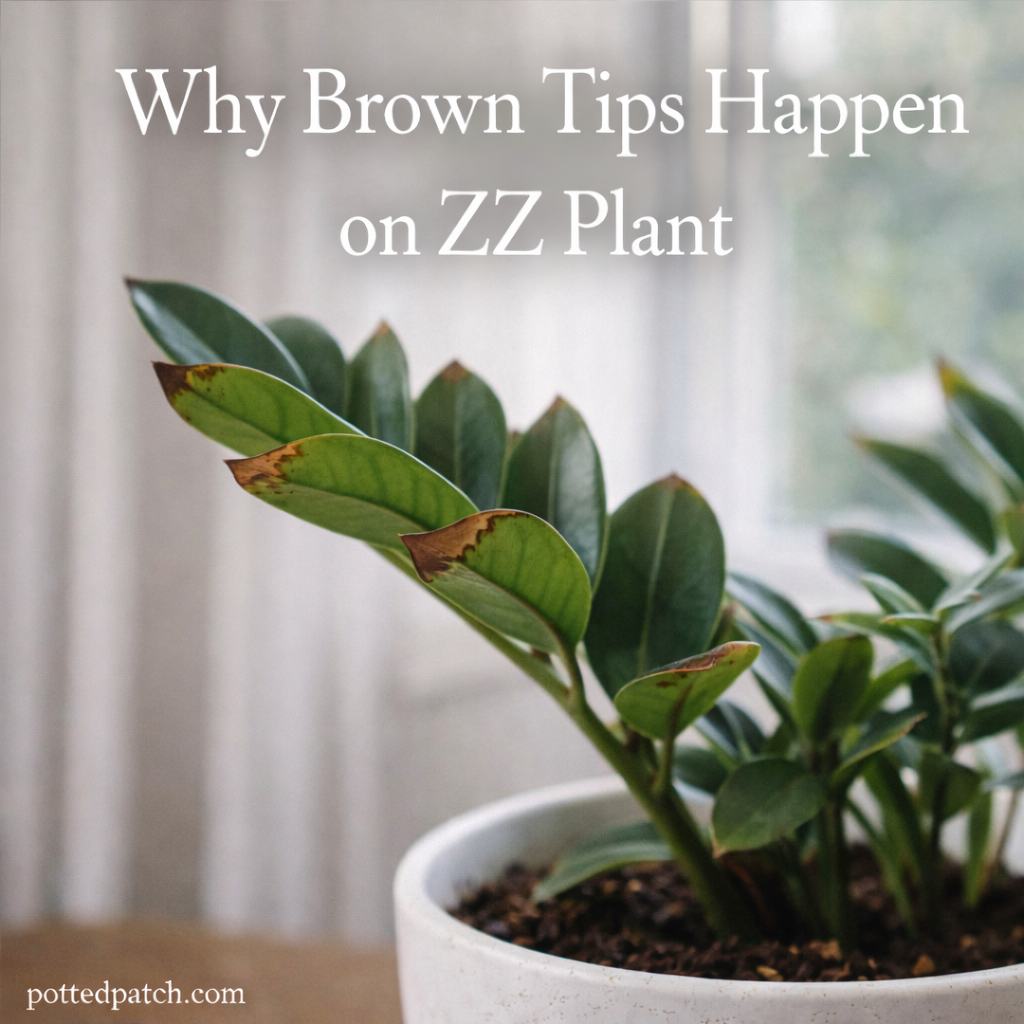
ZZ plants are known for being low-maintenance and drought-tolerant. But even these tough plants can develop brown leaf tips from time to time.
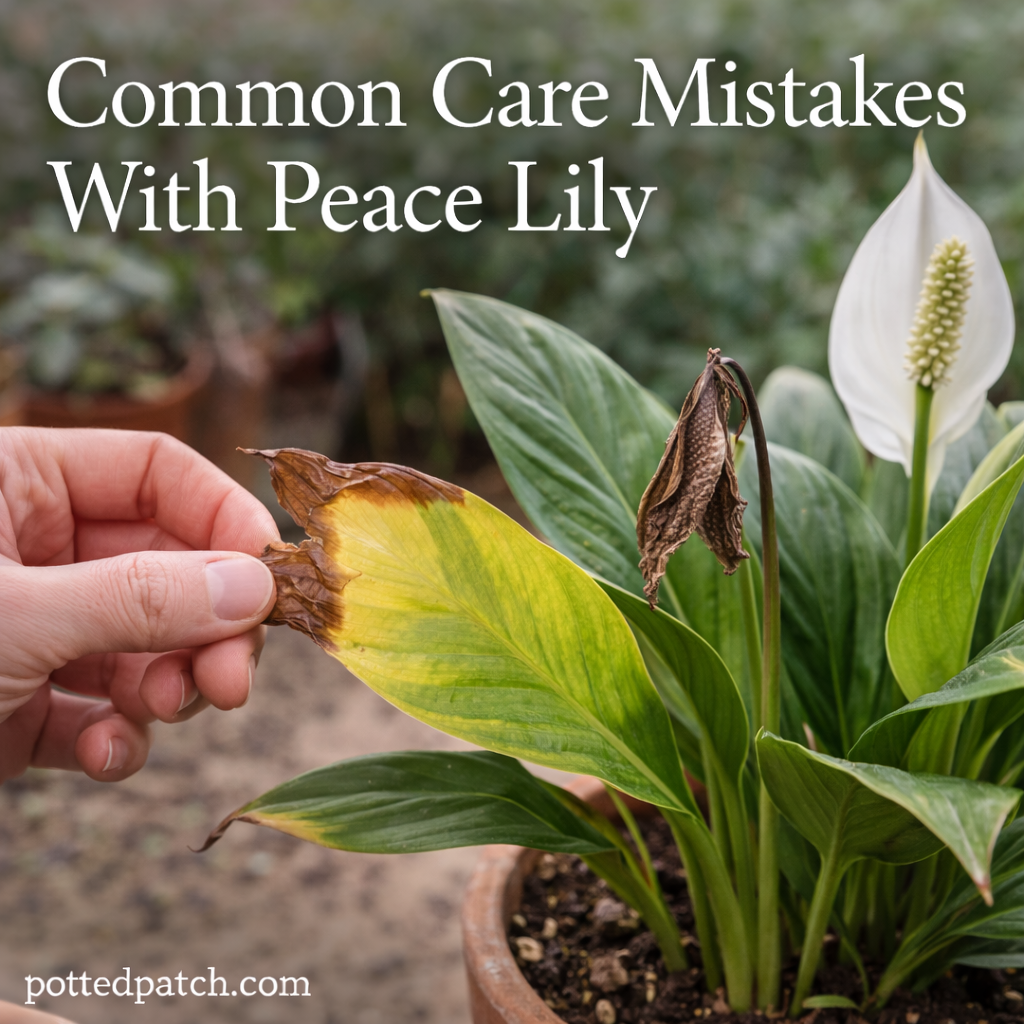
If your ZZ plant (Zamioculcas zamiifolia) has crispy or darkened tips, it’s usually a sign of environmental stress — not a fatal issue.
Here’s what causes brown tips on ZZ plants and how to fix them.
1. Underwatering
Although ZZ plants tolerate drought, prolonged dryness can cause leaf tips to turn brown.
When the plant runs out of stored moisture in its rhizomes, the leaf edges and tips are often the first to show stress.
Signs It’s Underwatering
- Dry, compact soil
- Leaves feeling thin or slightly wrinkled
- Brown, crispy tips
How to Fix It
- Water thoroughly until excess drains out
- Allow soil to dry between waterings
- Avoid letting the plant stay bone-dry for extended periods
ZZ plants prefer a “soak and dry” rhythm — not complete neglect.
2. Low Humidity
ZZ plants handle normal indoor humidity well, but very dry air can cause subtle browning at the tips.
This is more common in winter when heating systems reduce indoor moisture.
What to Do
- Keep the plant away from heating vents
- Group plants together to increase local humidity
- Use a humidifier if your home is extremely dry
Brown tips from humidity stress are usually minor and cosmetic.
3. Salt Buildup in Soil
Over time, fertilizer salts and minerals from tap water can accumulate in the soil.
This buildup can damage roots and show up as brown leaf tips.
Signs of Salt Buildup
- White crust on soil surface
- Browning tips despite proper watering
- Slowed growth
How to Fix It
- Flush the soil with distilled or filtered water
- Allow water to drain thoroughly
- Consider repotting with fresh soil if buildup is severe
Less fertilizer is usually better for ZZ plants.
4. Overfertilizing
ZZ plants are light feeders.
Applying too much fertilizer can burn the roots, leading to brown tips and leaf discoloration.
Best Practice
- Fertilize once a month during spring and summer
- Skip feeding in fall and winter
- Dilute fertilizer to half strength
If you suspect fertilizer burn, flush the soil thoroughly.
5. Temperature Stress
Sudden temperature swings can shock your ZZ plant.
Cold drafts or hot air blowing directly onto the leaves may result in browning tips.
Keep your plant in stable indoor temperatures between 65–80°F and away from:
- Air conditioning vents
- Heaters
- Drafty windows
Consistency keeps foliage healthy.
6. Natural Aging
Occasionally, a leaf tip may brown as part of natural aging.
If:
- Only one or two leaves are affected
- The rest of the plant looks healthy
There’s likely no major problem.
Trim cosmetic damage and continue normal care.
Should You Cut Off Brown Tips?
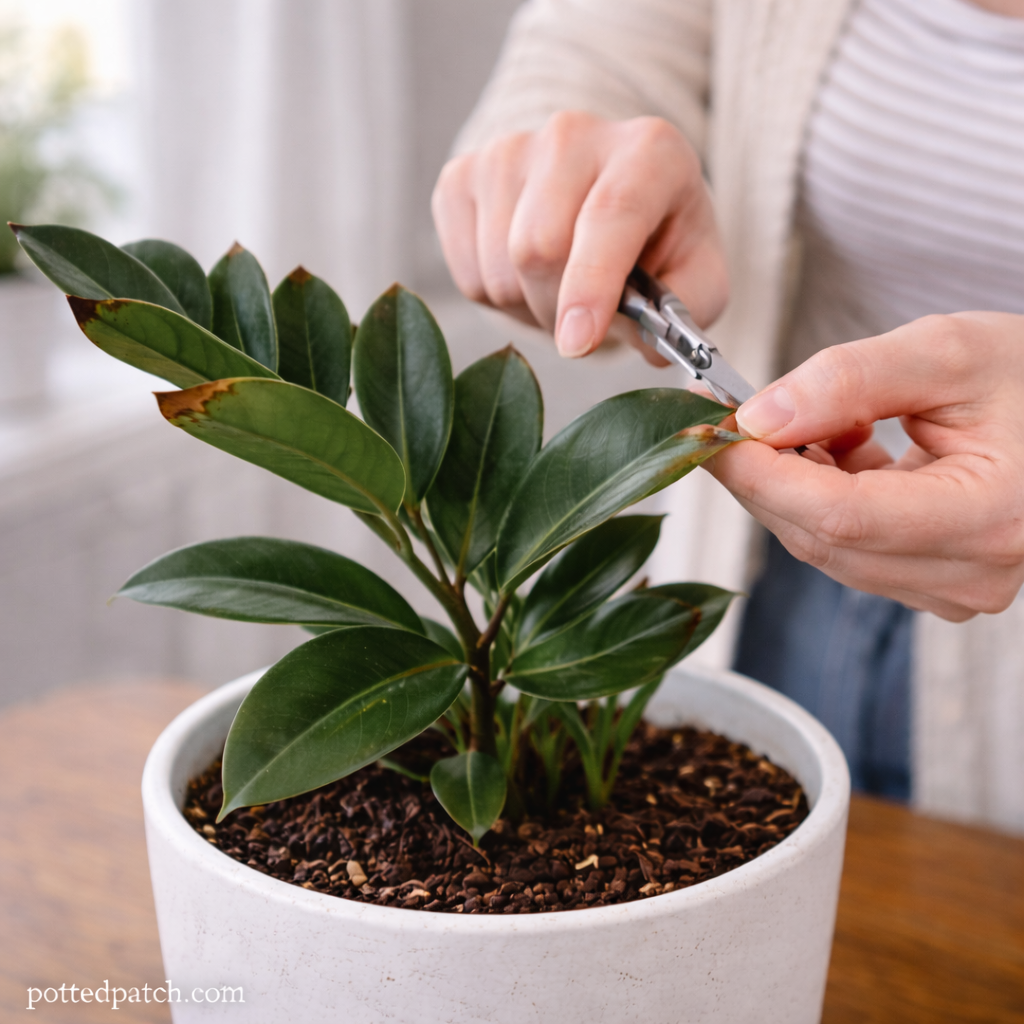
Yes — but carefully.
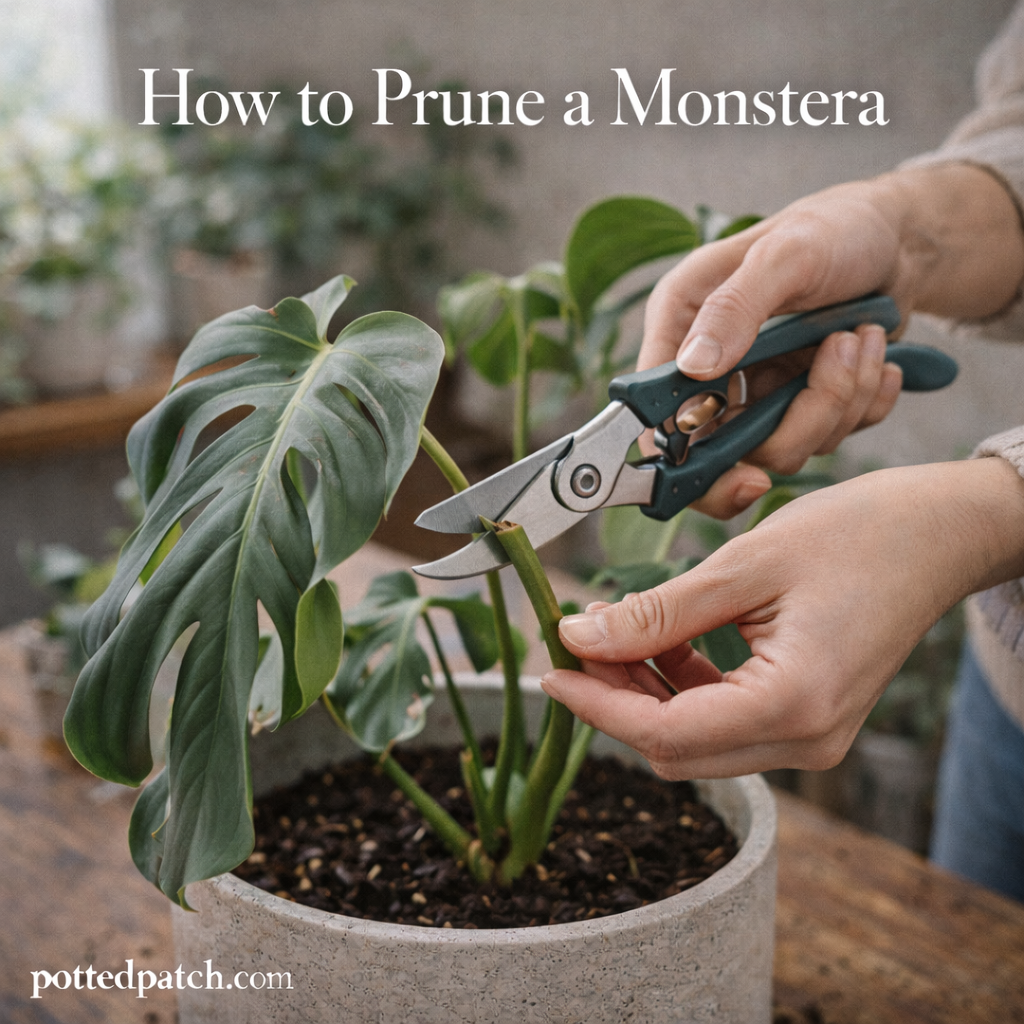
Use clean scissors and trim just the brown portion, following the natural shape of the leaf. Avoid cutting into healthy green tissue.
Trimming improves appearance but doesn’t address the underlying cause — so fix care issues first.
How to Prevent Brown Tips in the Future
To keep your ZZ plant looking its best:
- Water consistently (not too often, not too little)
- Avoid over-fertilizing
- Flush soil occasionally
- Keep temperatures stable
- Maintain moderate indoor humidity
Most brown tip issues are minor and reversible with small adjustments.
Final Thoughts
Brown tips on a ZZ plant are usually caused by underwatering, dry air, salt buildup, or minor environmental stress.
The key is identifying patterns. Once you adjust watering, fertilizer, or placement, new growth should return healthy and tip-free.
ZZ plants are resilient — they just need balanced care.