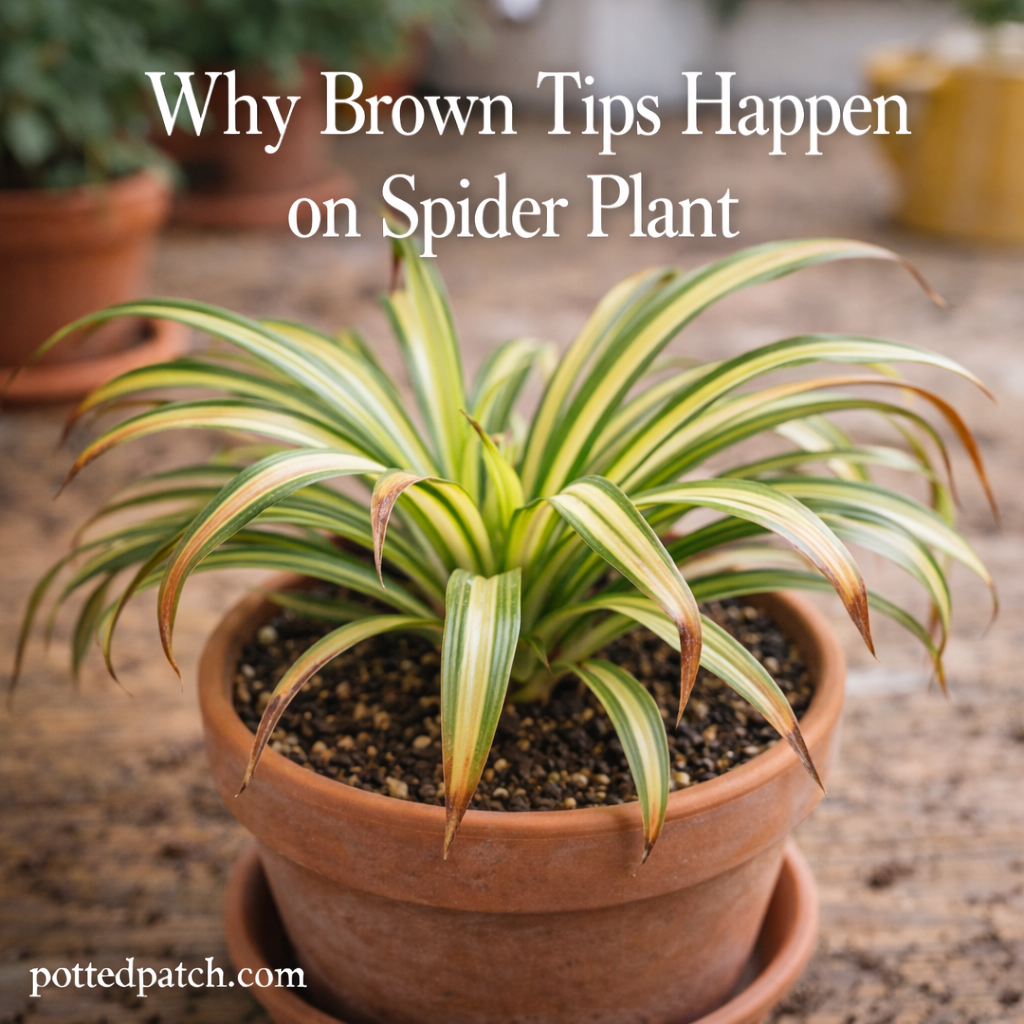
Brown tips are one of the most common issues spider plant owners face.
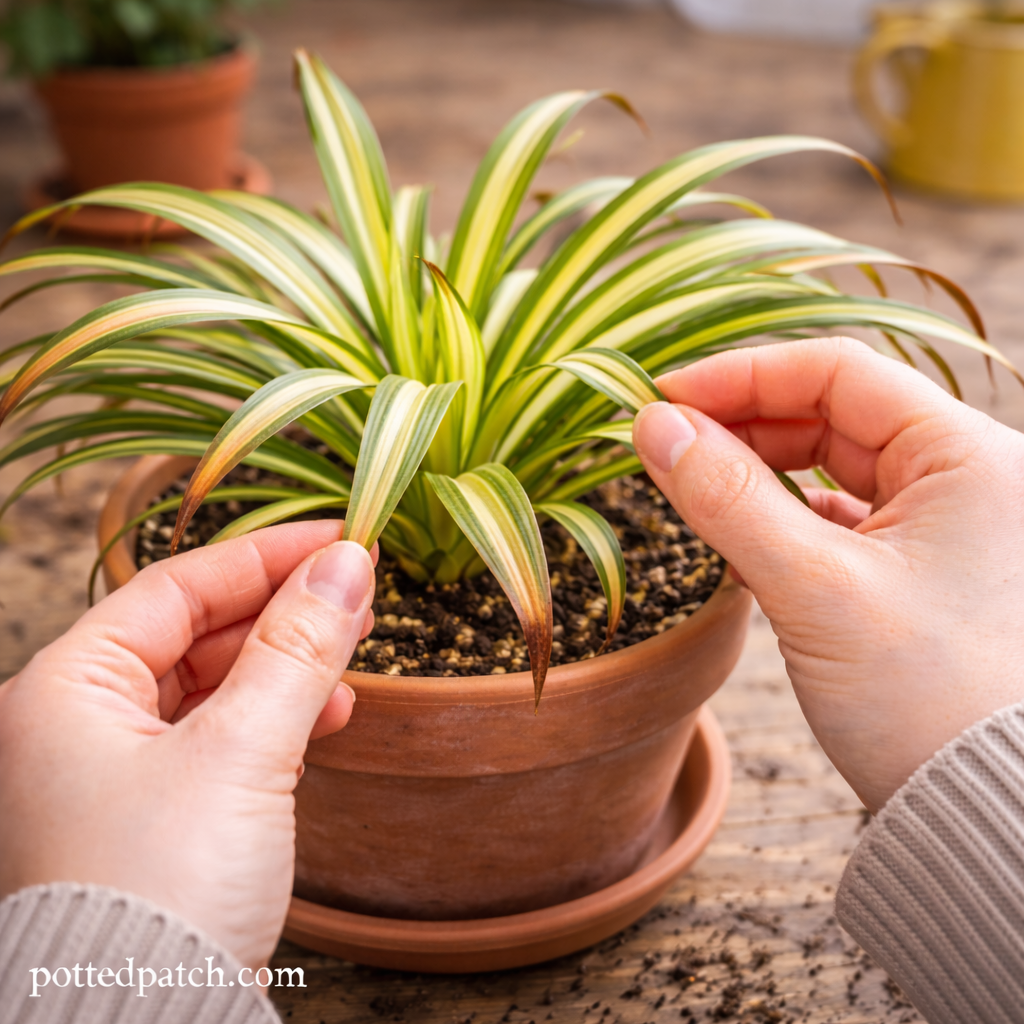
You may notice the ends of the leaves turning crispy, dry, or slightly curled — even though the rest of the plant looks healthy.
The good news? Brown tips are usually cosmetic and fixable once you identify the cause.
Let’s break down why brown tips happen on spider plants and what you can do about it.
1. Tap Water Chemicals (Most Common Cause)
Spider plants are sensitive to fluoride, chlorine, and mineral buildup found in tap water.
Over time, these chemicals accumulate in the soil and cause leaf tip burn.
Signs It’s a Water Quality Issue
- Brown tips with otherwise healthy green leaves
- White crust on the soil surface
- Gradual worsening over time
How to Fix It
- Switch to distilled water
- Use rainwater if available
- Let tap water sit out 24 hours before using
- Flush the soil occasionally with distilled water
This is the most frequent reason for brown tips.
2. Low Humidity
Spider plants prefer moderate humidity.
Dry indoor air — especially in winter — can cause leaf tips to dry out.
Signs of Low Humidity Stress
- Brown, crispy ends
- Curling leaf edges
- Issues worsening during heating season
How to Fix It
- Place the plant near other houseplants
- Use a small humidifier
- Move away from heating vents
- Lightly mist (if airflow is good)
Even a small increase in humidity can help.
3. Inconsistent Watering
Letting the soil go completely dry for too long can cause the leaf tips to dry and brown.
On the flip side, overwatering can stress the roots and lead to similar symptoms.
What to Aim For
- Keep soil slightly moist
- Allow the top inch to dry between waterings
- Avoid letting the plant sit in standing water
Consistency prevents stress-related browning.
4. Fertilizer Salt Buildup
Too much fertilizer can create salt buildup in the soil, which damages leaf tips.
Signs of Over-Fertilizing
- Brown tips spreading along the leaf edges
- White residue on soil surface
- Sudden browning after feeding
How to Fix It
- Flush the soil thoroughly with distilled water
- Reduce fertilizing frequency
- Feed only during spring and summer
Spider plants don’t need heavy feeding.
5. Root Bound Conditions
Spider plants grow quickly and can become root bound.
When roots are tightly packed, the plant struggles to absorb water evenly.
This stress can show up as brown tips.
Signs
- Roots circling the bottom
- Water draining too quickly
- Slower growth
Solution
- Repot into a container 1–2 inches larger
- Refresh with new soil
6. Too Much Direct Sunlight
Spider plants thrive in bright, indirect light.
Strong direct sunlight can scorch the leaf tips.
Signs of Light Burn
- Browning concentrated on sun-facing leaves
- Faded leaf color
- Dry, brittle tips
How to Fix It
- Move the plant a few feet from the window
- Use sheer curtains to filter light
- Avoid harsh afternoon sun
Should You Trim Brown Tips?
Yes — if you’d like.
Brown tips won’t turn green again.
To trim properly:
- Use clean, sharp scissors
- Cut at an angle to mimic the natural leaf shape
- Avoid cutting into healthy green tissue
Trimming improves appearance but does not solve the underlying issue — address the cause first.
Are Brown Tips Dangerous?
In most cases, no.
If:
- The rest of the plant is green
- New growth looks healthy
- The plant is upright and strong
Then brown tips are mostly cosmetic.
However, if browning spreads rapidly or affects entire leaves, check for root or watering problems.
How to Prevent Brown Tips
Follow this simple checklist:
- Use filtered, distilled, or rainwater
- Maintain moderate humidity
- Water consistently
- Fertilize lightly
- Provide bright, indirect light
Small adjustments often prevent recurring browning.
Final Thoughts
Brown tips on spider plants are common and usually caused by mineral buildup or dry air.
Start by adjusting your water source — that alone solves many cases.
With proper care and a few small changes, your spider plant can stay vibrant, lush, and healthy year-round.