
Snake plants are known for being tough, forgiving, and nearly indestructible—until those crisp brown tips start showing up. While the plant may still look mostly healthy, brown tips are a signal that something in the care routine is off. The good news is that this issue is usually easy to diagnose and fix once you understand the cause.
This guide breaks down the most common reasons snake plant tips turn brown and exactly what to do to stop it.
What Brown Tips Mean for Snake Plants
Brown tips usually indicate stress rather than disease. In most cases, the damage is cosmetic and won’t kill the plant if corrected early.
Typical signs include:
- Dry, crispy leaf tips
- Brown edges that don’t spread quickly
- Otherwise firm, upright leaves
If browning is spreading rapidly or leaves feel mushy, that points to a different issue, such as root rot.
Overwatering Is the Most Common Cause
Snake plants are succulents at heart. Too much water is the fastest way to stress them.
What happens:
- Roots sit in soggy soil
- Oxygen levels drop
- Roots weaken and can’t support healthy leaf growth
- Leaf tips dry out or brown as a stress response
How to fix it:
- Let soil dry out completely between waterings
- Water every 2–4 weeks, depending on season and light
- Always use a pot with drainage holes
If soil stays wet for more than a few days, watering frequency needs to be reduced.
Underwatering Can Also Cause Brown Tips
While less common, prolonged dryness can also lead to brown tips.
This usually happens when:
- The plant goes months without water
- Soil becomes compacted and hydrophobic
- Roots dry out and stop functioning efficiently
What to do:
- Water deeply when the soil is fully dry
- Make sure water penetrates the soil evenly
- Avoid small, frequent sips of water
Consistency matters more than frequency.
Mineral Buildup from Tap Water or Fertilizer
Snake plants are sensitive to salts and minerals that accumulate in soil over time.
Sources of buildup include:
- Hard tap water
- Excess fertilizer
- Repeated watering without flushing the soil
Signs of mineral stress:
- Brown or yellow tips
- White crust on soil surface
- Slower overall growth
Solutions:
- Use distilled or filtered water
- Flush the soil every 2–3 months
- Fertilize lightly and only during spring and summer
Low Humidity Isn’t Ideal (But Rarely Severe)
Snake plants tolerate dry air well, but extremely low humidity can contribute to browning.
This is more likely if:
- The plant sits near heating vents
- Indoor air is very dry year-round
- Tips feel brittle rather than soft
Helpful adjustments:
- Move plant away from direct airflow
- Group plants together
- Increase ambient humidity slightly if possible
Humidity alone rarely causes severe browning, but it can worsen other issues.
Too Much Direct Sunlight
Snake plants handle bright light, but harsh direct sun can scorch leaf tips.
Watch for:
- Brown, dry tips on sun-facing leaves
- Yellowing before browning
- Faded or washed-out leaf color
Best light conditions:
- Bright, indirect light
- Tolerates low light but grows slower
- Limited early-morning sun is usually safe
If the plant is near a south- or west-facing window, pull it back a few feet.
Cold Damage and Temperature Stress
Snake plants are sensitive to cold, even briefly.
Temperature issues occur when:
- Exposed to drafts or cold windows
- Temperatures drop below 50°F (10°C)
- Placed near air conditioners in summer
Cold stress often shows up as:
- Browning at tips or edges
- Soft or wrinkled sections
- Stalled growth
Keep snake plants in stable indoor temperatures year-round.
Should You Cut Off Brown Tips?
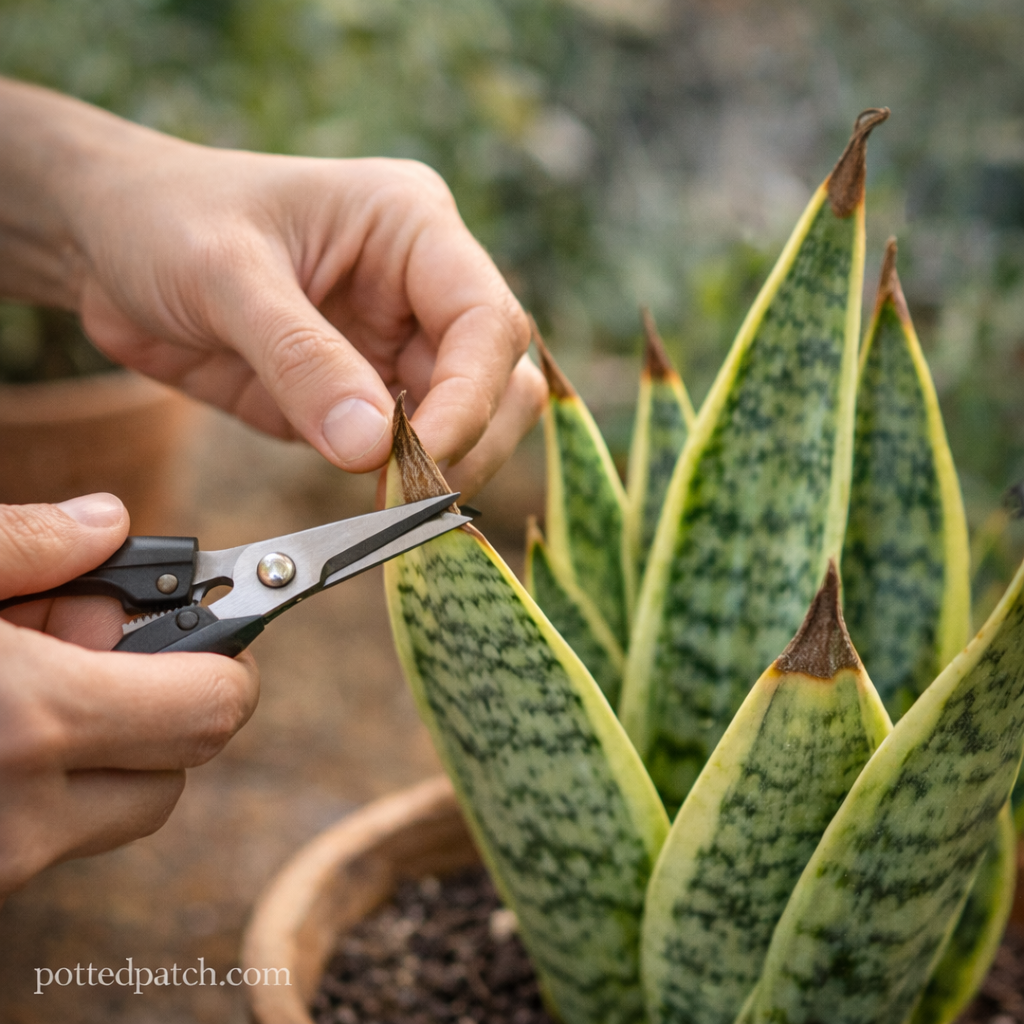
Yes—but carefully.
How to trim:
- Use clean, sharp scissors
- Follow the natural shape of the leaf tip
- Remove only the brown portion
- Avoid cutting into healthy green tissue
Trimming improves appearance but doesn’t fix the underlying issue, so pair it with a care adjustment.
Quick Troubleshooting Checklist
If your snake plant has brown tips, check the following:
- Is the soil staying wet too long?
- Does the pot have drainage holes?
- Are you using hard tap water?
- Is the plant in direct sun or near a vent?
- Has fertilizer been overused?
Correcting just one of these is often enough to stop further browning.
Final Thoughts
Brown tips on a snake plant are usually a warning, not a crisis. Most cases come down to watering habits, mineral buildup, or environmental stress. Once conditions are corrected, new growth will emerge healthy—even if the damaged tips remain.
Snake plants are resilient. A small tweak in care is often all they need to bounce back. 🌱