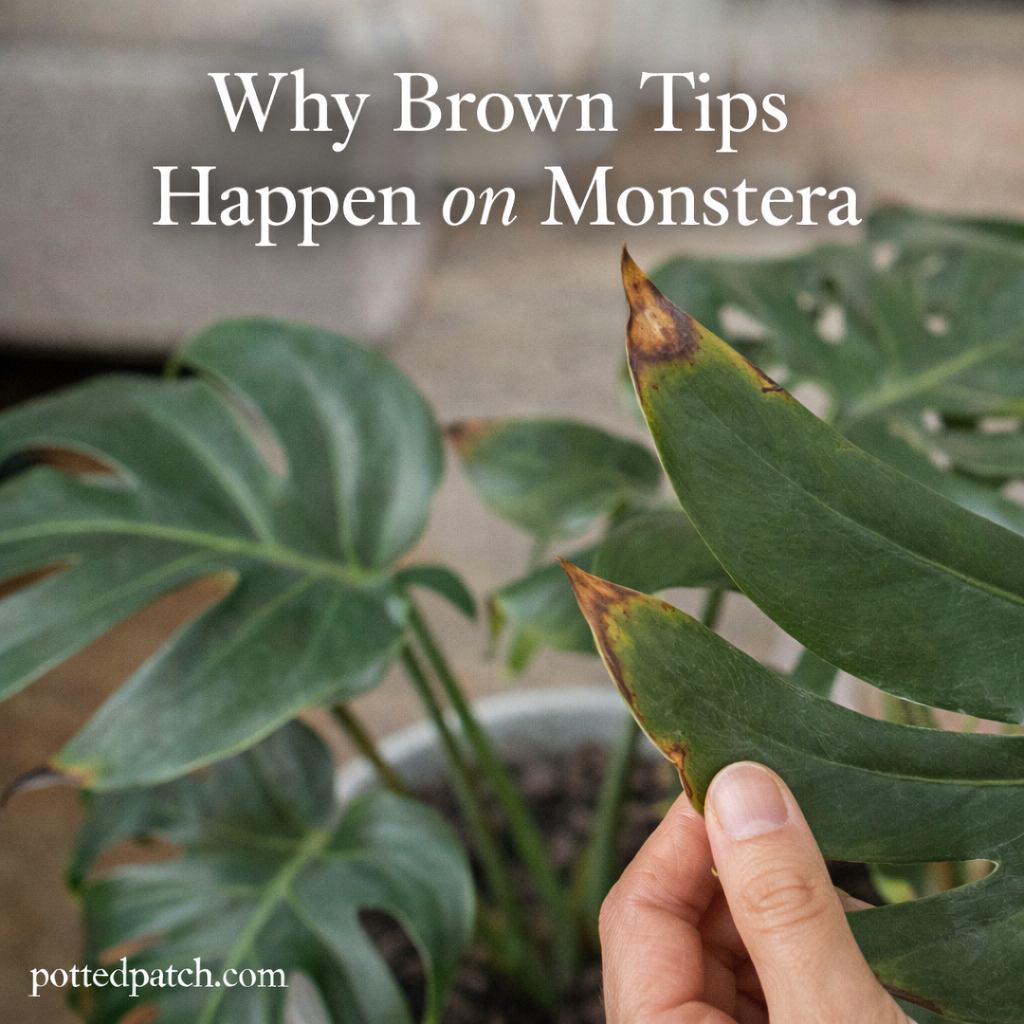
Brown tips on a peace lily can make an otherwise healthy plant look stressed. If you’ve noticed crispy edges forming on the leaves, your plant is sending a signal that something in its environment needs adjustment.
Peace lilies (Spathiphyllum) are sensitive to water quality, humidity, and inconsistent care. The good news? Brown tips are usually easy to correct once you identify the cause.
This guide explains why brown tips happen on peace lily and how to fix and prevent them.
The Most Common Causes of Brown Tips
Brown tips typically result from environmental stress rather than disease.
The main culprits include:
- Low humidity
- Inconsistent watering
- Tap water chemicals
- Overfertilizing
- Salt buildup in soil
- Temperature stress
Let’s break each one down.
1. Low Humidity
Peace lilies naturally grow in tropical environments with high humidity. Dry indoor air — especially in winter — can cause leaf tips to dry out.
Signs It’s Humidity Related
- Brown tips but otherwise green leaves
- No yellowing at the base
- Worse during heating season
How to Fix It
- Place a humidifier nearby
- Group plants together
- Set the pot on a pebble tray with water
- Avoid placing near heating vents
Increasing humidity often improves new growth quickly.
2. Inconsistent Watering
Letting the soil dry out completely and then soaking it can stress the plant.
Signs of Water Stress
- Crispy brown tips
- Drooping before browning
- Soil that alternates between bone dry and soggy
Solution
- Water when the top 1–2 inches feel dry
- Keep soil evenly moist, not saturated
- Stick to a consistent routine
Peace lilies prefer stability.
3. Tap Water Chemicals
Peace lilies are sensitive to chlorine, fluoride, and mineral-heavy tap water.
Over time, these chemicals accumulate in the soil and burn leaf tips.
Fixes
- Use filtered or distilled water
- Let tap water sit out overnight before using
- Flush the soil occasionally with distilled water
Improved water quality can significantly reduce browning.
4. Overfertilizing
Too much fertilizer causes salt buildup in the soil, which leads to tip burn.
Signs of Fertilizer Burn
- Brown leaf edges
- White crust on soil surface
- Recently fertilized plant
How to Fix It
- Flush the soil with distilled water.
- Reduce fertilizer to half strength.
- Feed only during spring and summer.
Less is more with peace lilies.
5. Salt Buildup in Soil
Even without heavy fertilizing, minerals from water can build up over time.
What to Do
- Leach the soil every few months with distilled water
- Repot every 1–2 years
- Replace compacted soil
Fresh soil restores balance.
6. Temperature Stress
Peace lilies prefer temperatures between 65–80°F.
Cold drafts or hot air from vents can dry out leaf tips.
Prevent Temperature Damage
- Keep away from drafty windows
- Avoid direct airflow from HVAC systems
- Maintain stable indoor conditions
Sudden changes often trigger browning.
How to Trim Brown Tips Properly
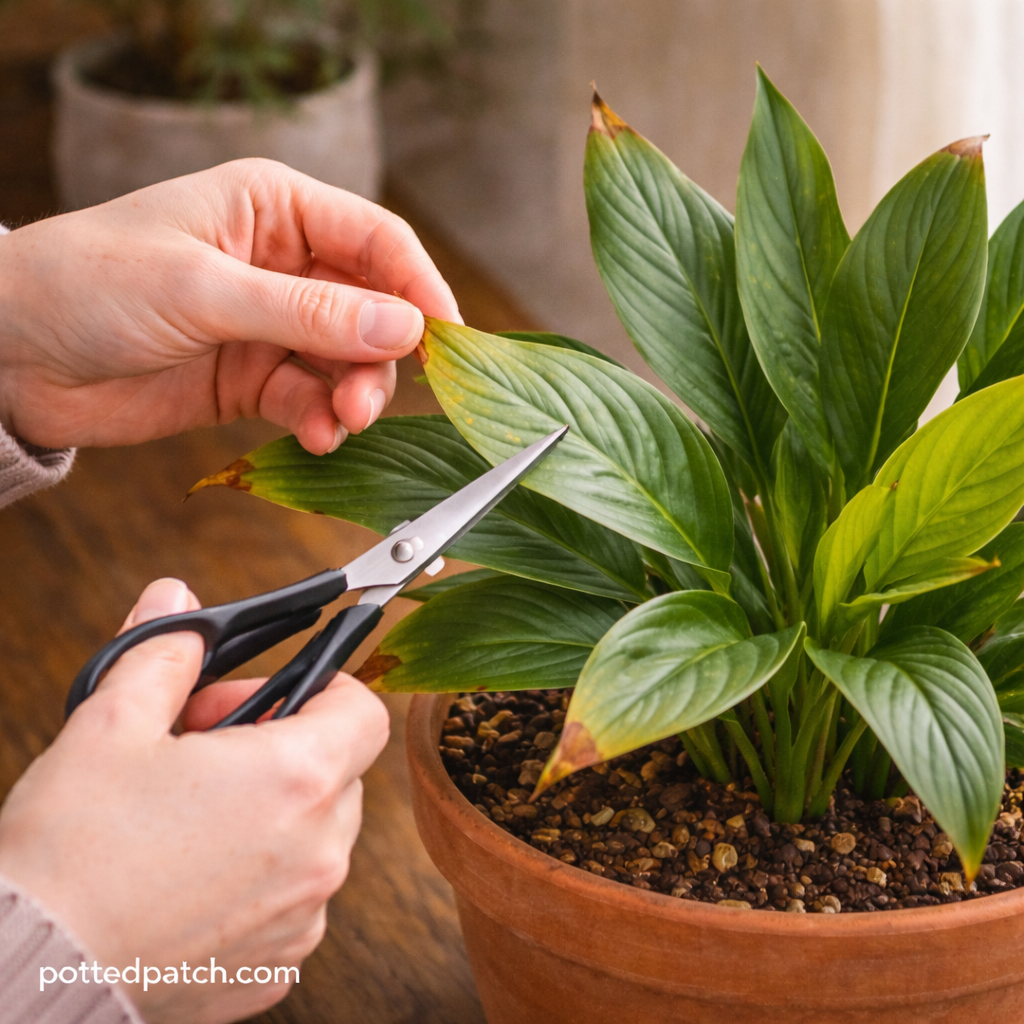
Brown tips won’t turn green again, but you can trim them for appearance.
Trimming Steps
- Use clean scissors.
- Trim only the brown portion, following the natural leaf shape.
- Avoid cutting into healthy green tissue.
This keeps the plant looking neat while you address the cause.
How to Prevent Brown Tips in the Future
To keep your peace lily healthy:
- Maintain moderate humidity
- Water consistently
- Use filtered water
- Fertilize lightly
- Repot periodically
- Keep temperatures stable
Regular observation prevents recurring problems.
Final Thoughts
Brown tips on peace lily leaves are usually a sign of environmental stress — most commonly low humidity or water quality issues. Fortunately, with small adjustments and consistent care, new growth should emerge healthy and green.
Peace lilies are forgiving plants. Once you fine-tune their environment, they typically bounce back quickly.