Choosing the right spot for houseplants is just as important as watering and light. Even the healthiest plant can struggle if it’s placed in the wrong location. Some areas in your home may look convenient or decorative—but actually create stress, slow growth, or long-term damage.
This guide breaks down the most common places where houseplants shouldn’t be placed and explains why these spots cause problems.
Directly Against Drafty Windows or Doors
Cold drafts and sudden temperature changes are hard on most houseplants.
Why this placement causes issues:
- Cold air can shock roots and leaves
- Hot air in summer can cause dehydration
- Frequent fluctuations stress the plant
Better alternative:
- Place plants a few feet away from doors or draft-prone windows
- Use curtains to buffer temperature changes
Near Heating Vents or Radiators
Heat sources dry out plants faster than you might expect.
Problems caused by heat exposure:
- Rapid moisture loss from soil
- Brown leaf tips and edges
- Increased watering stress
Plants placed near heaters often show decline even with proper care.
In Complete Darkness
Low light is manageable—no light is not.
Why darkness is harmful:
- Plants can’t photosynthesize
- Growth stalls completely
- Leaves may yellow or drop
Examples of poor placements:
- Windowless bathrooms
- Interior hallways
- Closed-off closets
Even low light plants need some ambient light.
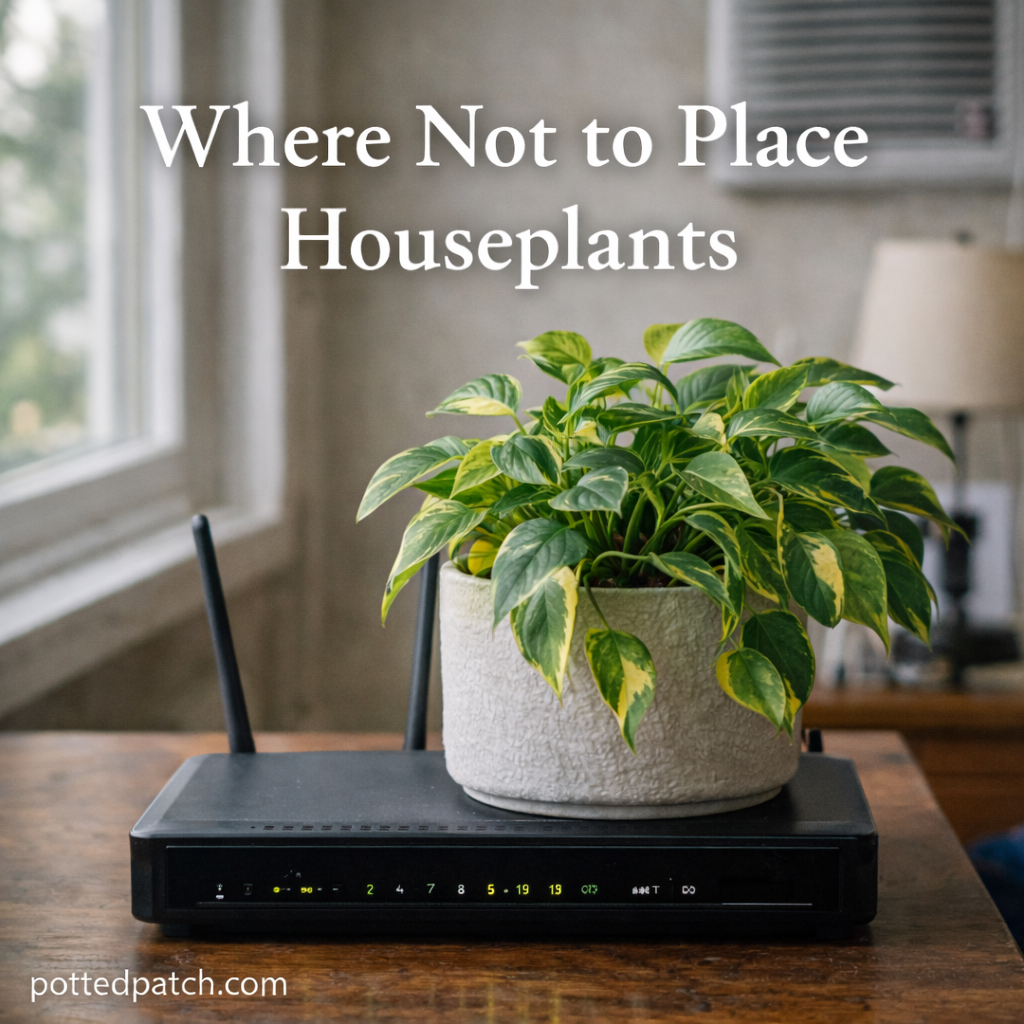
On Top of Electronics
Electronics produce subtle heat and vibration.
Why this is a problem:
- Soil dries unevenly
- Roots experience temperature stress
- Leaves may show curling or browning
TV stands, routers, and refrigerators are common trouble spots.
In High-Traffic Areas
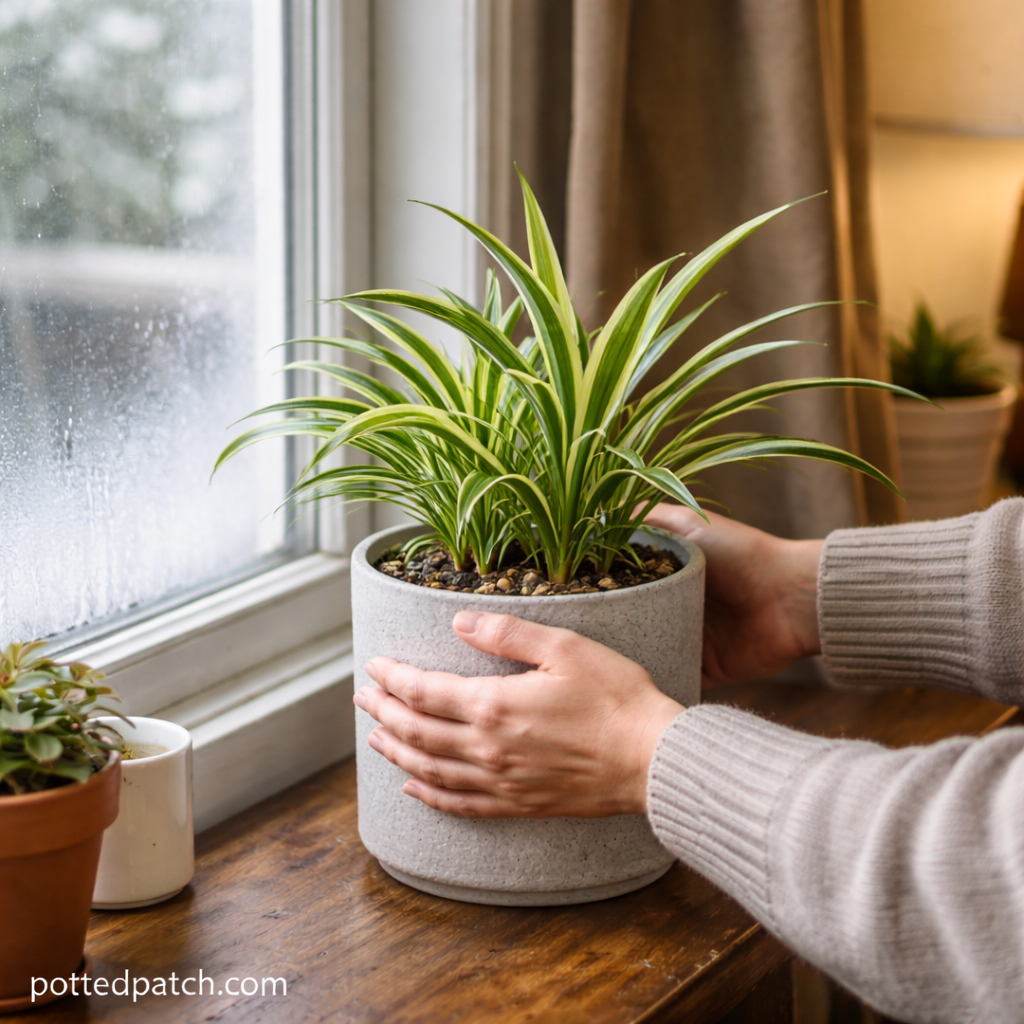
Busy areas can cause repeated physical stress.
Common issues:
- Leaves get bumped or broken
- Pots can be knocked over
- Soil may spill or compact
This is especially problematic for tall or trailing plants.
Directly Under Air Conditioning Vents
Cold, forced air is just as damaging as heat.
Why AC placement hurts plants:
- Dries leaves quickly
- Causes temperature shock
- Leads to leaf drop
Airflow that feels comfortable to humans can be stressful for plants.
Outdoors Without Gradual Adjustment
Indoor plants can’t handle sudden outdoor exposure.
Common mistakes:
- Moving plants directly into sun
- Exposing them to wind or rain
- Skipping acclimation
Plants need gradual adjustment to outdoor conditions to avoid shock.
Bathrooms Without Natural Light
Bathrooms are often recommended for plants—but only with light.
Why some bathrooms fail:
- High humidity without light
- Inconsistent temperatures
- Artificial lighting that’s insufficient
Without a window or grow light, plants often decline.
Final Thoughts
Where you place a houseplant can quietly determine its success or failure. Avoiding extreme temperatures, drafts, and light deprivation helps plants maintain steady growth and overall health.
When in doubt, choose a stable environment with indirect light, consistent temperatures, and minimal airflow. Small placement changes often lead to big improvements.