

Snake plants are slow growers that prefer being slightly root-bound, which means they don’t need frequent repotting. In fact, repotting too often can do more harm than good. Knowing when to repot—and how to do it correctly—helps keep your snake plant healthy, stable, and growing at a comfortable pace.
This guide explains the signs that repotting is necessary, the best timing, and a step-by-step method that minimizes stress on the plant.
Do Snake Plants Like Being Repotted?
Snake plants tolerate tight spaces better than most houseplants. They often grow well for years in the same container.
Repotting is only needed when:
- Roots outgrow the pot
- Soil structure breaks down
- The plant becomes unstable
If your snake plant looks healthy and upright, it likely doesn’t need repotting yet.
When to Repot a Snake Plant
Signs Your Snake Plant Needs Repotting
Look for these clear indicators:
- Roots growing out of drainage holes
- The pot cracking or bulging from pressure
- Water running straight through without absorbing
- The plant tipping over easily
- Growth slowing despite proper care
One or two signs are enough—don’t wait for all of them.
Best Time of Year to Repot
Spring and early summer are ideal.
Why this timing works:
- The plant is entering its active growth phase
- Roots recover faster from disturbance
- New soil nutrients support fresh growth
Avoid repotting in late fall or winter when the plant is dormant.
How Often Should You Repot a Snake Plant?
In most cases:
- Every 2–4 years is sufficient
Larger, mature snake plants may go even longer without needing repotting, especially if growth is slow and the plant remains stable.
Choosing the Right Pot
Pot Size
Choose a pot that is:
- 1–2 inches wider than the current pot
- Not excessively deep
Oversized pots hold too much moisture, increasing the risk of root rot.
Pot Material
Heavier pots work best.
Good options:
- Terracotta
- Ceramic
- Thick plastic with drainage
Terracotta is especially helpful because it allows moisture to evaporate faster.
Best Soil for Snake Plants
Snake plants require fast-draining soil.
Ideal soil mix:
- Cactus or succulent potting mix
- Or regular potting soil amended with perlite or coarse sand
Avoid dense, moisture-retaining soils that stay wet for long periods.
Step-by-Step: How to Repot a Snake Plant
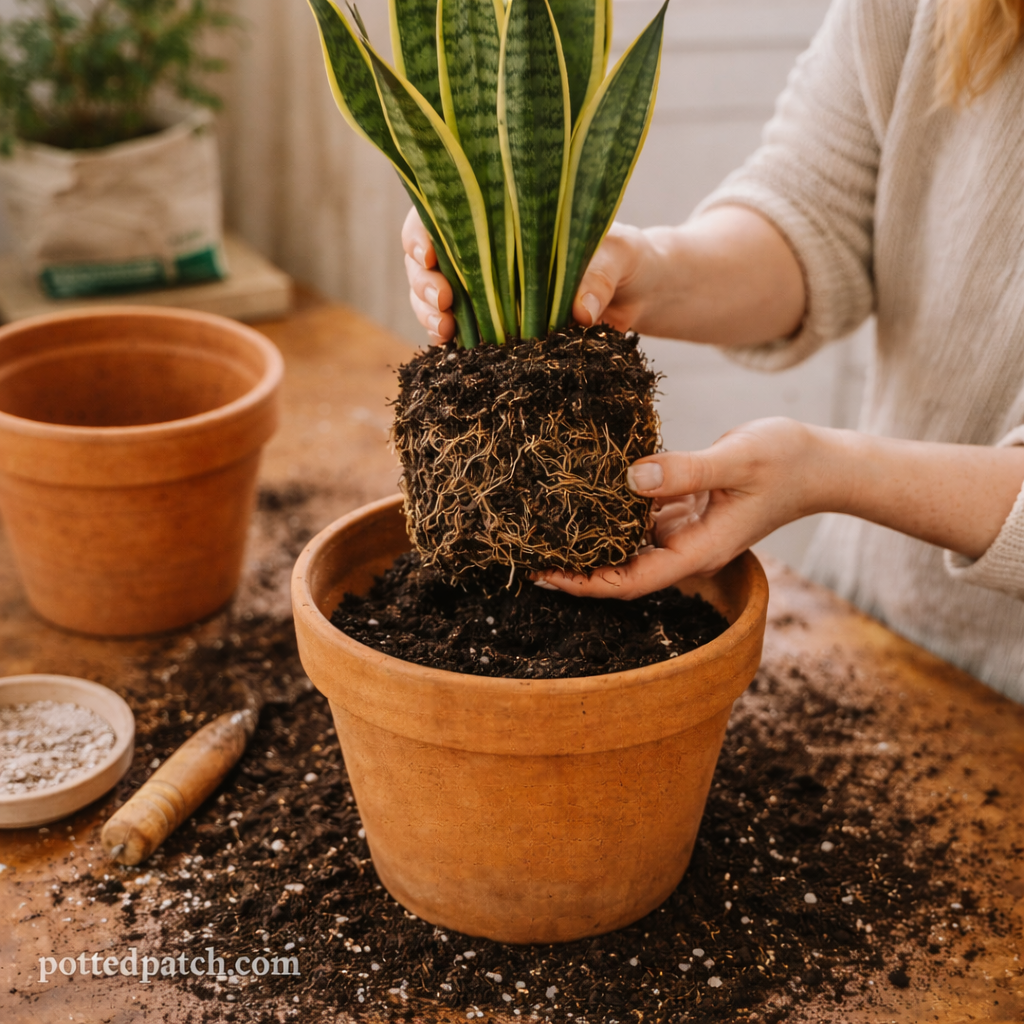
Follow these steps to reduce stress and prevent damage.
- Let the soil dry out for a few days before repotting
- Gently remove the plant from its current pot
- Shake off loose soil and inspect the roots
- Trim any black, mushy, or damaged roots
- Add fresh soil to the new pot
- Position the plant at the same depth as before
- Fill in around the roots with soil and lightly firm
- Do not water immediately
Aftercare: What to Do After Repotting
Snake plants need time to adjust.
After repotting:
- Wait 5–7 days before watering
- Place the plant in bright, indirect light
- Avoid fertilizing for at least 4–6 weeks
This allows roots to heal and reduces the risk of rot.
Should You Divide a Snake Plant When Repotting?
Division is optional and depends on plant size.
You can divide if:
- The plant has multiple separate clumps
- You want additional plants
- The pot is extremely crowded
To divide:
- Gently separate root sections
- Ensure each section has healthy roots
- Pot divisions separately in fresh soil
Division slightly slows growth but does not harm healthy plants.
Common Repotting Mistakes to Avoid
Avoid these frequent errors:
- Repotting too often
- Using pots without drainage holes
- Watering immediately after repotting
- Choosing a pot that’s too large
- Compacting soil too tightly
Most repotting problems come from excess moisture, not handling.
What If You Can’t Repot Yet?
If repotting isn’t possible right now, you can still help your plant:
- Refresh the top 1–2 inches of soil
- Rotate the pot for even growth
- Ensure proper drainage and light
These steps can extend the time before repotting becomes necessary.
Final Thoughts
Repotting a snake plant is an occasional task, not a routine one. When done at the right time and with proper technique, it supports long-term health without disrupting the plant’s natural rhythm.
If you’re unsure whether to repot, waiting a little longer is usually safer. Snake plants thrive when they’re slightly constrained and consistently cared for.