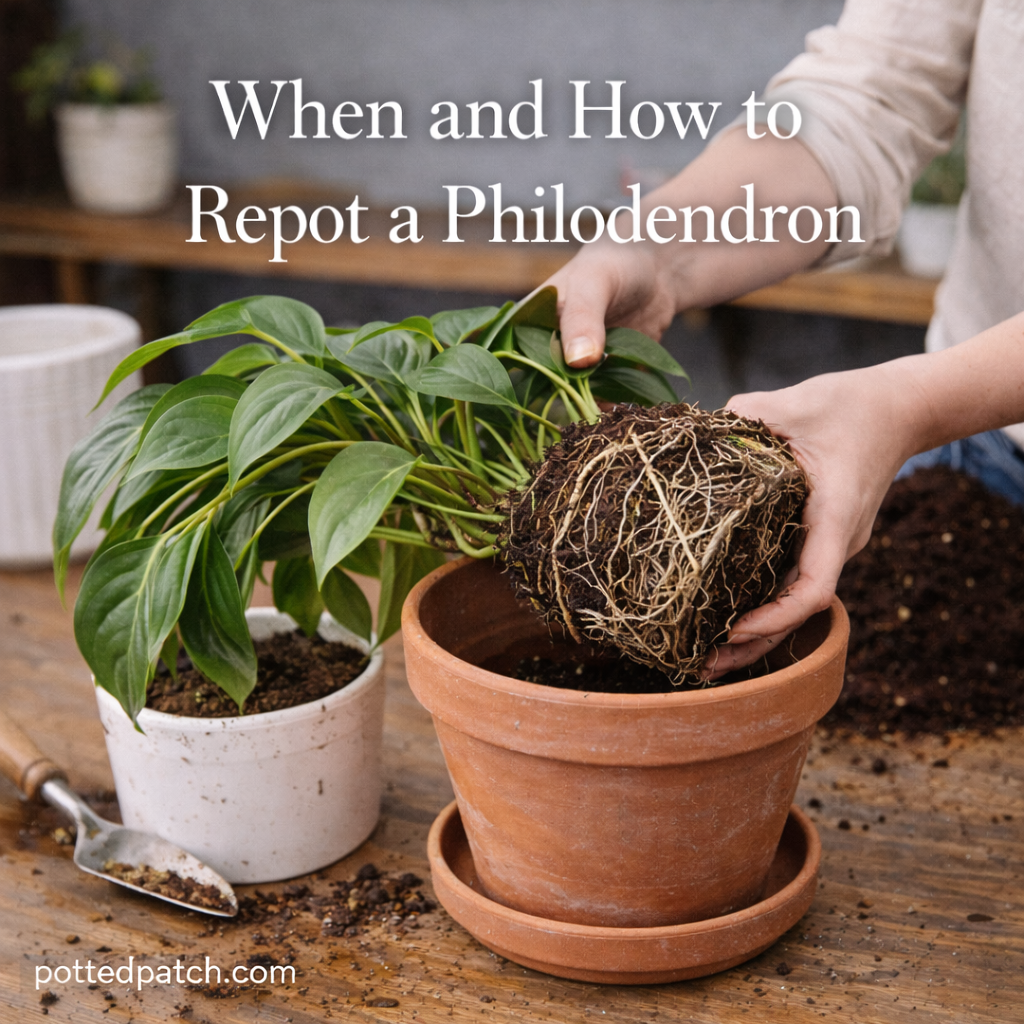
Philodendrons are fast-growing, adaptable houseplants. But even the healthiest plant will eventually outgrow its container.
Repotting at the right time prevents root stress, improves drainage, and encourages stronger leaf growth.
Here’s exactly when and how to repot a philodendron safely.
When Should You Repot a Philodendron?
Most philodendrons need repotting every 1–2 years.
However, timing depends on growth rate and environment.
Signs It’s Time to Repot
- Roots growing out of drainage holes
- Soil drying out very quickly
- Water running straight through the pot
- Slower growth than usual
- Smaller new leaves
- Roots circling tightly inside the pot
If you notice two or more of these signs, it’s likely time to upgrade the container.
Best Time of Year to Repot
Repot during the active growing season.
Ideal Timing
- Early spring
- Late spring
- Early summer
Avoid repotting in winter when the plant is semi-dormant. Recovery is slower during colder months.
Choosing the Right Pot Size
When repotting, avoid drastic size increases.
Choose a pot that is:
- 1–2 inches wider than the current pot
- Equipped with drainage holes
- Made of breathable material (terracotta or nursery plastic works well)
A pot that’s too large can trap excess moisture and increase the risk of root rot.
Step-by-Step: How to Repot a Philodendron
1. Water the Plant Lightly
Water the day before repotting. Slightly moist soil reduces root shock and makes removal easier.
2. Remove the Plant Carefully
Gently tip the pot sideways and slide the plant out.
If stuck:
- Tap the sides of the pot
- Loosen soil around edges
- Avoid pulling by the stems
3. Inspect the Roots
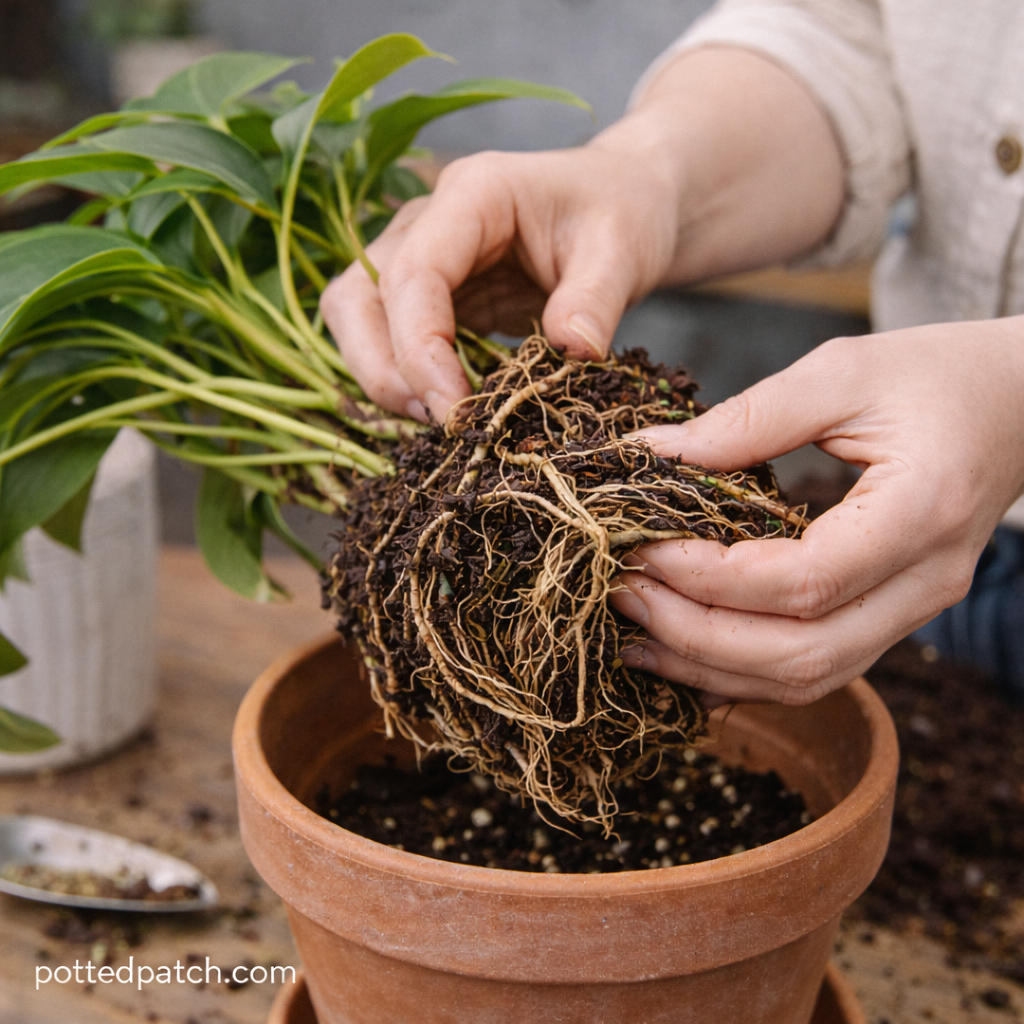
Healthy roots should be:
- Firm
- White or light tan
- Free of foul odor
Trim away any:
- Black
- Mushy
- Rotten roots
If roots are tightly circling, gently loosen them with your fingers.
4. Add Fresh, Well-Draining Soil
Use a chunky, airy mix made of:
- Potting soil
- Perlite
- Orchid bark
Place a layer of fresh soil in the new pot before positioning the plant.
5. Position and Fill
Set the plant at the same depth it was previously growing.
Fill around the sides with fresh soil, lightly pressing to remove large air pockets — but don’t compact too tightly.
6. Water Thoroughly
Water until excess drains from the bottom.
Discard any water sitting in the saucer.
Aftercare Following Repotting
Repotting can cause mild stress.
For the next 1–2 weeks:
- Keep in bright, indirect light
- Avoid fertilizing
- Maintain consistent watering
- Avoid extreme temperature changes
Some slight drooping after repotting is normal.
Can You Repot a Large, Mature Philodendron?
Yes — but proceed carefully.
For large plants:
- Use a sturdy container
- Consider dividing the plant if overcrowded
- Have a second person help stabilize large root balls
Large philodendrons may need repotting less frequently but still benefit from fresh soil every few years.
What If You Don’t Want a Bigger Plant?
If you want to control size:
- Trim roots slightly during repotting
- Refresh soil without increasing pot size
- Prune top growth moderately
This maintains plant health without encouraging major size increases.
Final Thoughts
Knowing when and how to repot a philodendron keeps roots healthy and growth steady.
Watch for early warning signs, repot during active growth, and always choose well-draining soil.
With proper timing and care, your philodendron will continue producing vibrant, healthy leaves year after year.