
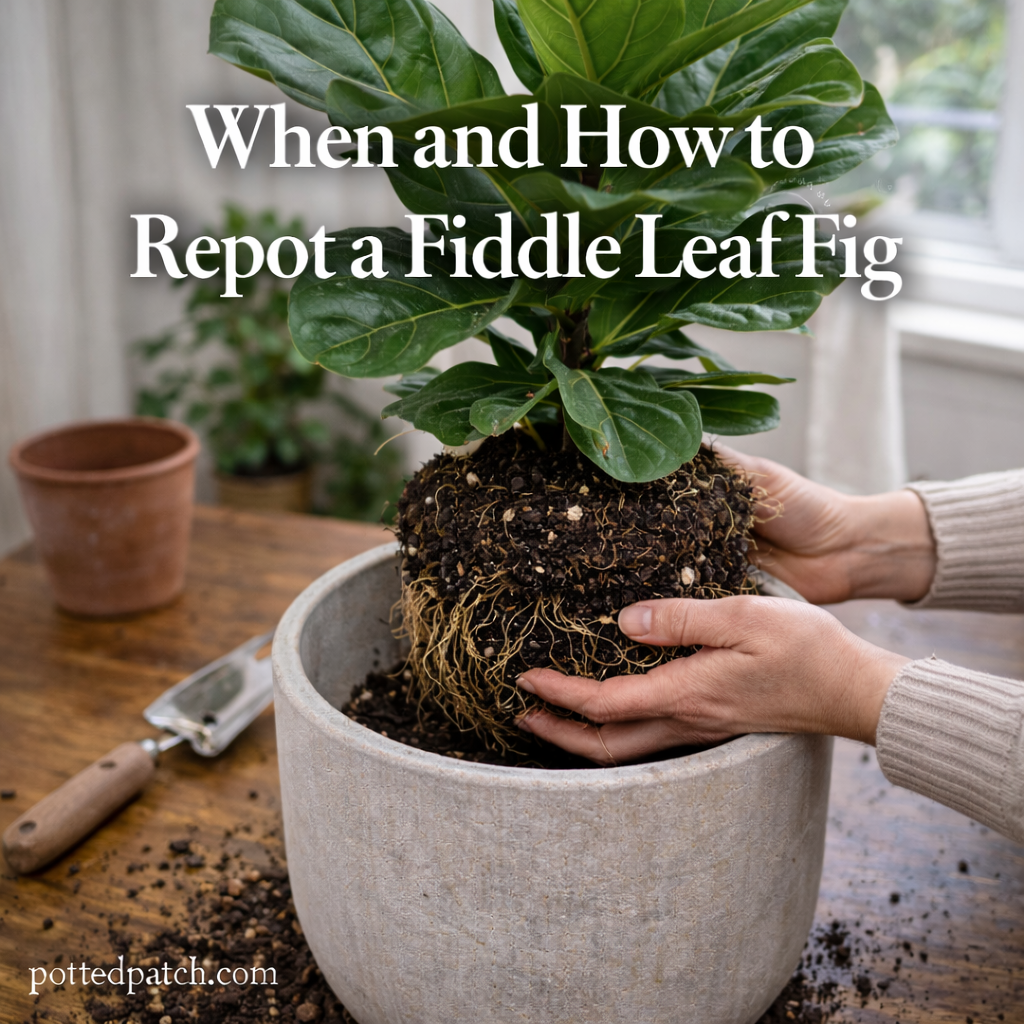
Fiddle leaf figs can grow quickly when conditions are right. But over time, even a healthy plant will outgrow its pot.
Repotting gives the roots more room to expand, refreshes old soil, and supports continued growth. Done incorrectly, however, repotting can stress the plant.
Here’s exactly when to repot—and how to do it safely.
When Should You Repot a Fiddle Leaf Fig?
Most fiddle leaf figs need repotting every:
- 12–18 months (younger plants)
- 18–24 months (mature plants)
The best time to repot is spring or early summer, when the plant is actively growing and can recover more easily.
Avoid repotting during late fall or winter unless there’s an urgent problem.
Signs Your Fiddle Leaf Fig Needs Repotting
Look for these warning signs:
- Roots growing out of drainage holes
- Soil drying out unusually fast
- Slowed or stalled growth
- Roots visible at the surface
- Cracked or bulging pot
- Frequent wilting despite proper watering
If you notice two or more of these signs, it’s time to check the roots.
Choosing the Right Pot
Selecting the correct pot size is critical.
Choose a container that:
- Is 1–2 inches larger in diameter than the current pot
- Has proper drainage holes
- Is sturdy enough to support the plant’s height
Avoid jumping to a pot that’s too large. Excess soil holds more moisture, increasing the risk of root rot.
Choosing the Right Soil
Use a well-draining mix designed for indoor plants.
An ideal blend includes:
- High-quality potting soil
- Perlite for aeration
- Orchid bark for improved drainage
Avoid heavy or moisture-control soils.
Step-by-Step: How to Repot a Fiddle Leaf Fig
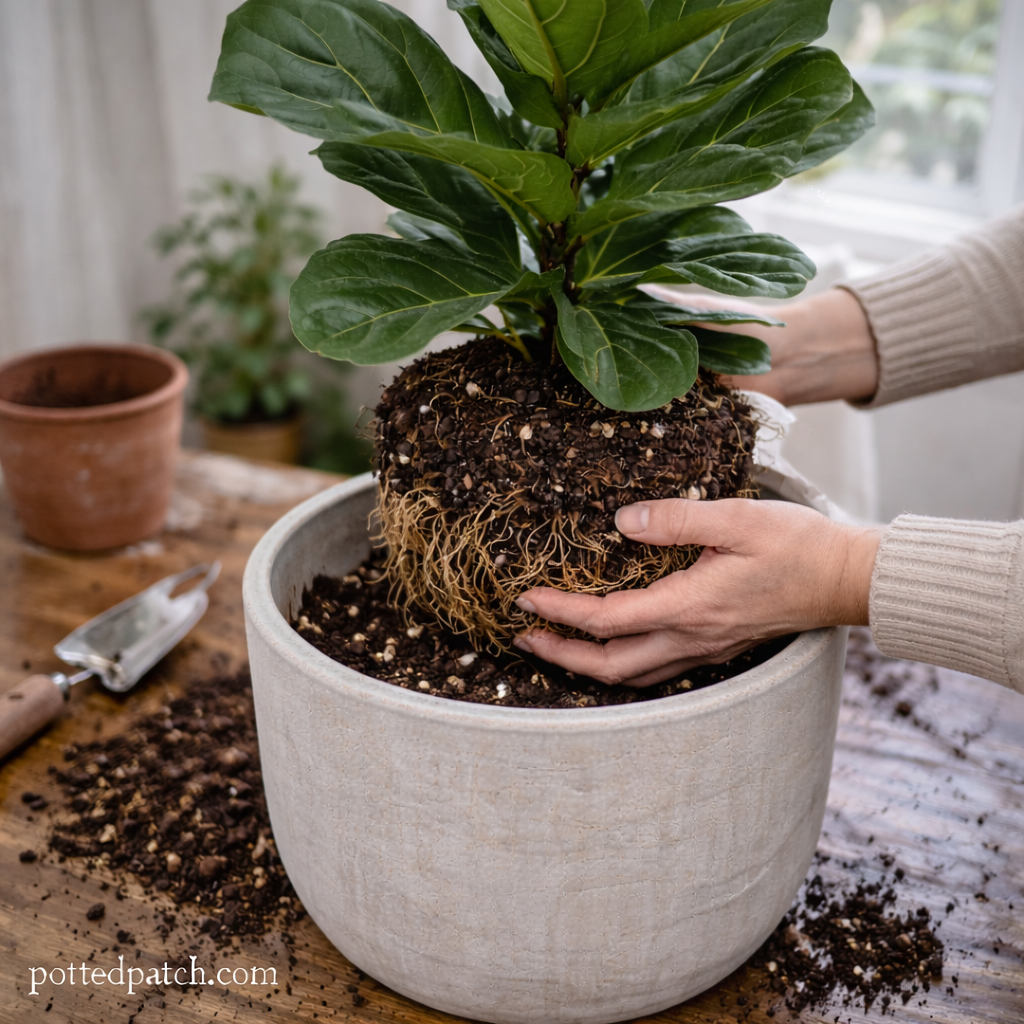
Follow these steps carefully:
Step 1: Water Lightly the Day Before
Slightly moist soil makes it easier to remove the plant.
Step 2: Remove the Plant
Gently tip the pot sideways and slide the plant out while supporting the base.
Step 3: Inspect the Roots
Healthy roots should be light-colored and firm.
If roots are tightly circling, gently loosen them with your fingers.
Trim any black or mushy roots if present.
Step 4: Add Fresh Soil to the New Pot
Add a layer of soil at the bottom before placing the plant inside.
Step 5: Position the Plant
Keep the plant at the same soil depth as before.
Step 6: Fill and Secure
Fill around the root ball with fresh soil. Gently press to remove large air pockets, but don’t compact tightly.
Step 7: Water Thoroughly
Water until it drains from the bottom. Empty the saucer afterward.
What to Expect After Repotting
It’s normal for your plant to show mild stress for a short time.
You may notice:
- Slight drooping
- Slower growth for a few weeks
Place the plant in bright, indirect light and avoid fertilizing for 3–4 weeks.
Most fiddle leaf figs adjust quickly when repotted properly.
Should You Repot Immediately After Buying?
If you recently purchased your plant:
- Wait 2–4 weeks before repotting.
- Allow it to adjust to your home environment first.
However, if the plant is severely root bound or sitting in poor-quality soil, earlier repotting may be necessary.
How to Avoid Repotting Shock
To reduce stress:
- Repot during active growth season.
- Avoid changing lighting conditions at the same time.
- Keep watering consistent.
- Do not fertilize immediately after repotting.
Stability helps recovery.
Final Thoughts
Repotting a fiddle leaf fig is part of normal plant care—not something to fear.
By:
- Watching for root-bound signs
- Choosing the right pot size
- Using well-draining soil
- Repotting in spring or summer
You give your plant the space and nutrients it needs to thrive.
Healthy roots mean healthier leaves—and that’s what every fiddle leaf fig owner wants.