Calatheas are known for their stunning foliage and dramatic leaf movements, but they can also be a little picky when it comes to their environment. If your plant seems stressed, rootbound, or slow-growing, it might be time for a new pot.
In this guide, you’ll learn exactly when to repot a Calathea, how to do it safely, and how to help your plant bounce back quickly.
How Often Should You Repot a Calathea?
Most Calatheas need repotting every 1–2 years.
However, timing depends more on the plant’s condition than the calendar.
You should repot when:
- Roots are growing out of the drainage holes
- Water runs straight through the pot
- Soil dries out extremely fast
- Growth has slowed significantly
- The plant becomes top-heavy or unstable
Calatheas prefer slightly snug pots, so don’t rush to repot unless you see clear signs.
Best Time of Year to Repot
The ideal time to repot a Calathea is:
- Early spring
- Late spring
- Early summer (if necessary)
This is when the plant is actively growing and can recover quickly.
Avoid repotting in:
- Late fall
- Winter
Repotting during dormancy can increase stress and slow recovery.
Signs Your Calathea Is Rootbound
Not sure if it’s really time? Look for these rootbound clues:
1. Roots Circling the Soil Surface
If you see thick roots wrapping around the top or sides of the soil, the plant has outgrown its pot.
2. Frequent Wilting
If your Calathea wilts even though you’re watering correctly, roots may be packed too tightly to absorb moisture properly.
3. Stunted Growth
New leaves are smaller than usual or growth has slowed dramatically.
4. Cracked or Bulging Pot
In extreme cases, roots push hard enough to distort thin plastic containers.
Choosing the Right Pot
When repotting, size matters.
Choose a pot that is:
- 1–2 inches larger in diameter than the current pot
- Equipped with drainage holes
- Made of breathable material (terracotta or ceramic works well)
Avoid jumping to a pot that’s too large. Excess soil holds moisture longer, which can lead to root rot.
The Best Soil for Repotting
Calatheas prefer soil that is:
- Light and airy
- Moisture-retentive but well-draining
- Rich in organic matter
A good mix includes:
- High-quality indoor potting soil
- Perlite or pumice
- Orchid bark or coco coir
This combination keeps roots hydrated without becoming soggy.
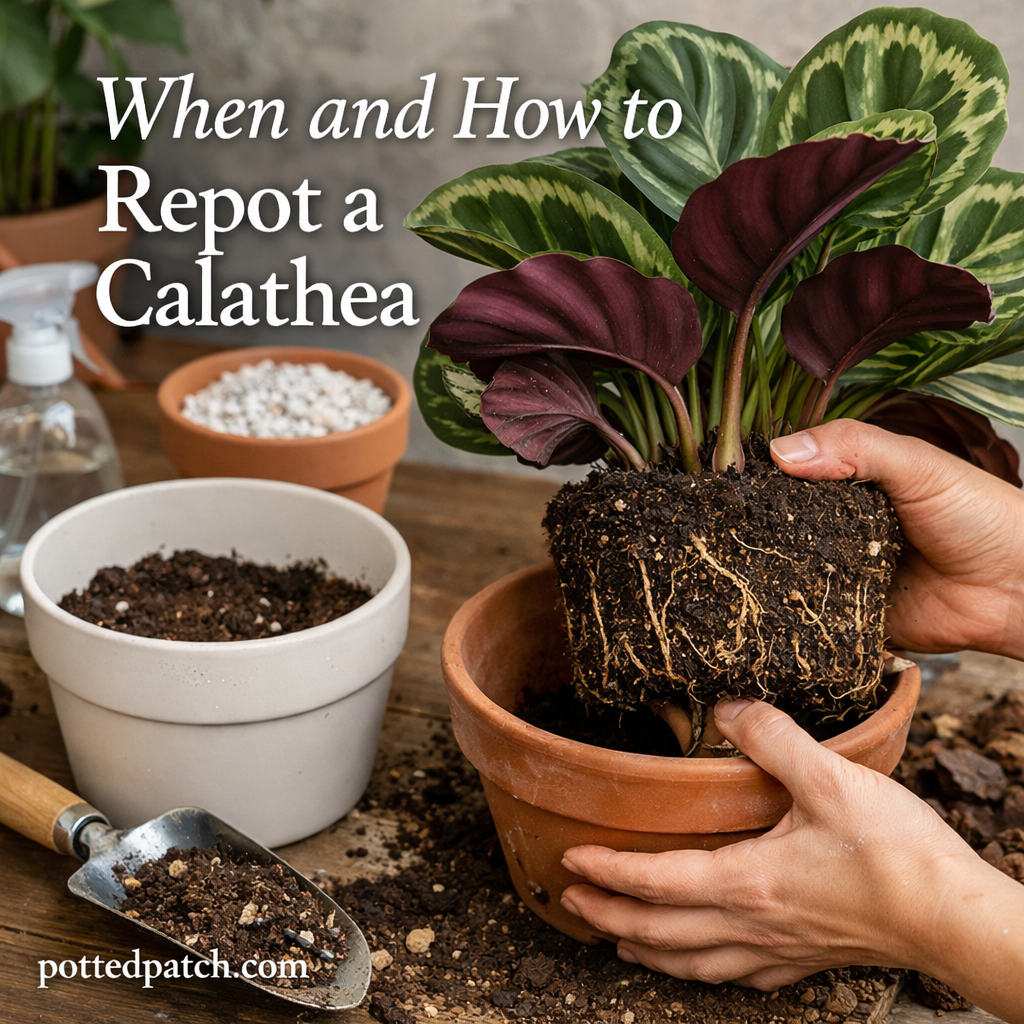
Step-by-Step: How to Repot a Calathea
Follow these steps carefully to reduce transplant shock.
Step 1: Water the Plant the Day Before
Moist soil helps protect roots and makes removal easier.
Step 2: Gently Remove the Plant
Tip the pot sideways and slide the root ball out.
If it’s stuck, gently squeeze the pot or tap the sides.
Step 3: Inspect the Roots
Look for:
- Healthy roots (white or light tan)
- Mushy, dark, or foul-smelling roots (trim these off)
If roots are tightly circling, gently loosen them with your fingers.
Step 4: Add Fresh Soil to the New Pot
Place a layer of fresh soil at the bottom so the plant sits at the same height as before.
Step 5: Position the Plant
Set the Calathea in the center and fill around it with fresh soil.
Lightly press the soil down to remove air pockets, but don’t compact it tightly.
Step 6: Water Thoroughly
Water until it drains from the bottom.
This helps settle the soil around the roots.
Aftercare: Reducing Repotting Shock
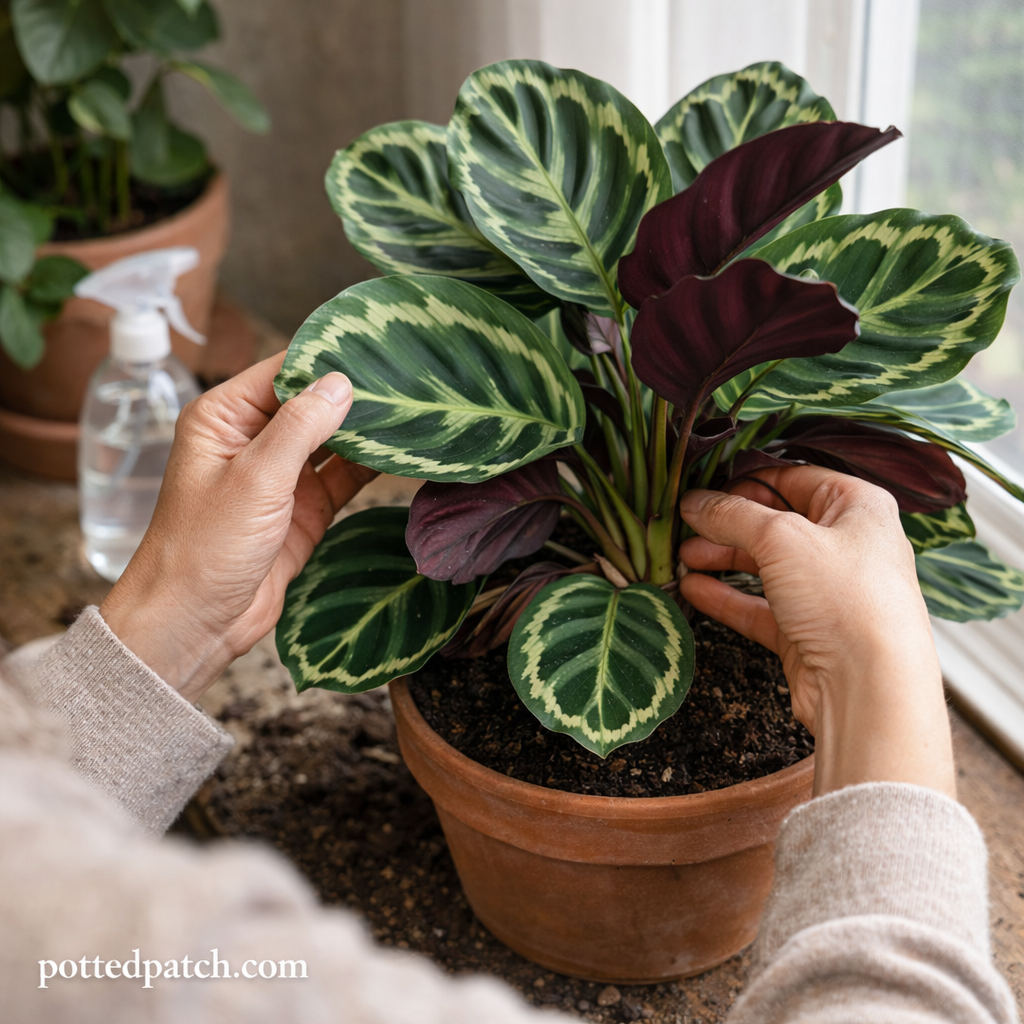
Some leaf drooping after repotting is normal.
Help your plant recover by:
- Keeping it in bright, indirect light
- Avoiding direct sun for 1–2 weeks
- Maintaining high humidity
- Avoiding fertilizer for at least 3–4 weeks
- Watering consistently but not excessively
Most Calatheas adjust within 1–3 weeks.
Common Repotting Mistakes to Avoid
Overpotting
Going too large increases the risk of root rot.
Compacting the Soil
Calatheas need airy soil. Don’t pack it down firmly.
Fertilizing Too Soon
Fresh soil already contains nutrients. Fertilizer can burn sensitive roots.
Repotting Too Often
Frequent disturbance stresses the plant.
Can You Divide a Calathea While Repotting?
Yes — and repotting time is ideal for division.
If your plant has multiple stems or clumps, you can:
- Gently separate root sections by hand
- Ensure each division has healthy roots
- Plant each in its own appropriately sized pot
Division is the easiest way to propagate a mature Calathea.
Final Thoughts
Repotting a Calathea doesn’t have to be intimidating. The key is timing, gentle handling, and proper soil.
When done correctly, repotting refreshes nutrients, improves root health, and encourages fuller growth. Pay attention to the signs, choose the right pot size, and your Calathea will reward you with vibrant, patterned leaves.
With the right care, your plant will thrive for years to come.