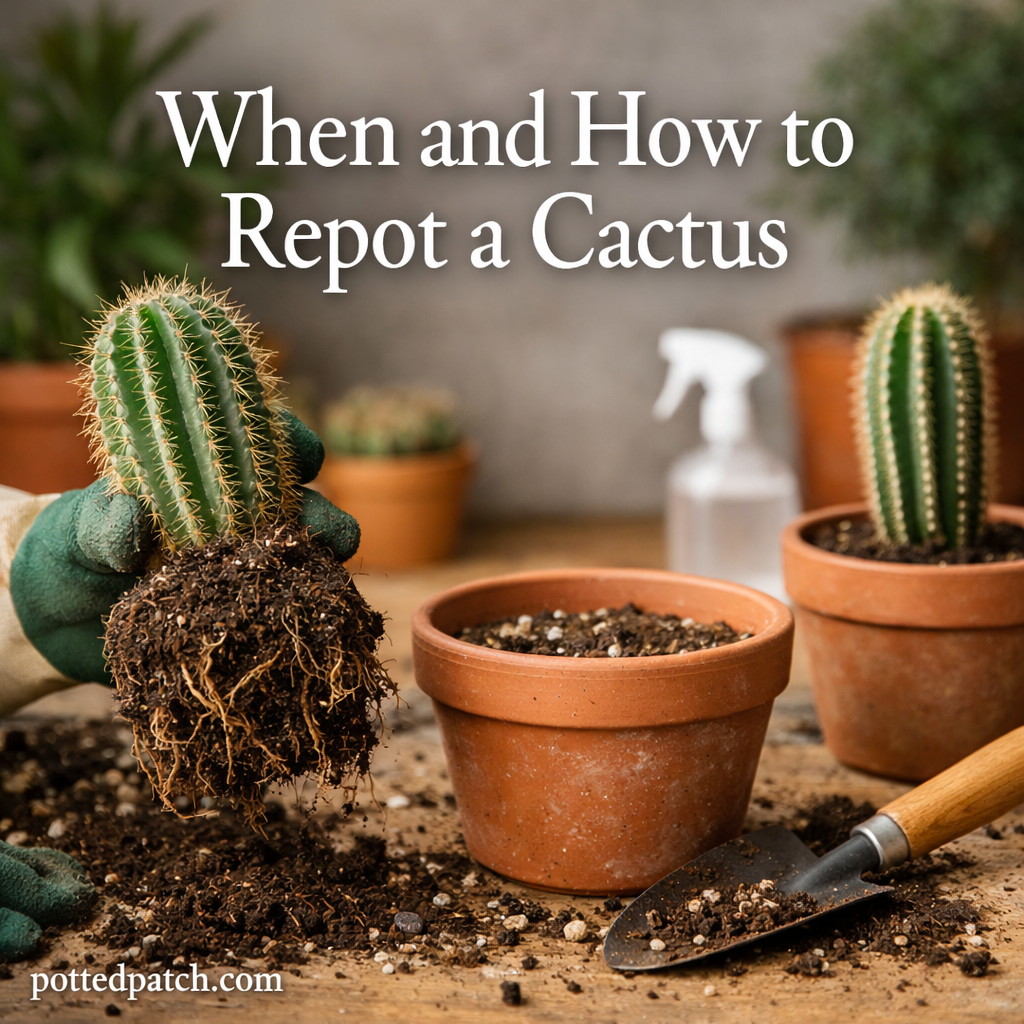
Cacti are low-maintenance plants, but they aren’t “never-maintenance” plants. One of the most important care steps—often overlooked—is repotting.
If your cactus is root-bound, leaning, or sitting in old compacted soil, it may be time for an upgrade.
In this guide, you’ll learn when to repot a cactus, how to do it safely, and how to avoid common mistakes that can stress or damage your plant.
When Should You Repot a Cactus?
Cacti don’t need frequent repotting. In fact, they prefer to stay slightly snug in their containers. But there are clear signs it’s time.
1. Roots Are Growing Out of the Drainage Holes
If you see roots poking through the bottom of the pot, your cactus has likely outgrown its space.
2. The Soil Dries Out Extremely Fast
When soil dries within a day or two after watering, it may mean:
- The root mass is taking up most of the pot
- There’s very little actual soil left
- The soil structure has broken down
3. The Cactus Looks Top-Heavy or Unstable
Tall or columnar cacti can become unbalanced as they grow. A larger pot helps stabilize them.
4. It’s Been 2–3 Years
Even if the plant looks fine, soil degrades over time. Repotting every 2–3 years refreshes nutrients and improves drainage.
5. After Purchasing a New Cactus
Many store-bought cacti come in:
- Peat-heavy soil
- Decorative pots without drainage
- Overly compact nursery containers
Repotting soon after purchase gives your cactus a healthier foundation.
Best Time of Year to Repot a Cactus
The ideal time is early spring to early summer, during the active growing season.
Why this matters:
- Roots recover faster
- The plant adapts more easily
- Warm temperatures encourage new growth
Avoid repotting in:
- Late fall
- Winter dormancy
Repotting during dormancy can shock the plant and delay recovery.
What You’ll Need
Before starting, gather:
- A new pot (1–2 inches wider than the current one)
- Cactus or succulent soil mix
- Gloves or folded newspaper
- Tongs (for spiny varieties)
- A small brush (optional, for cleaning roots)
Always choose a pot with a drainage hole.
How to Repot a Cactus (Step-by-Step)
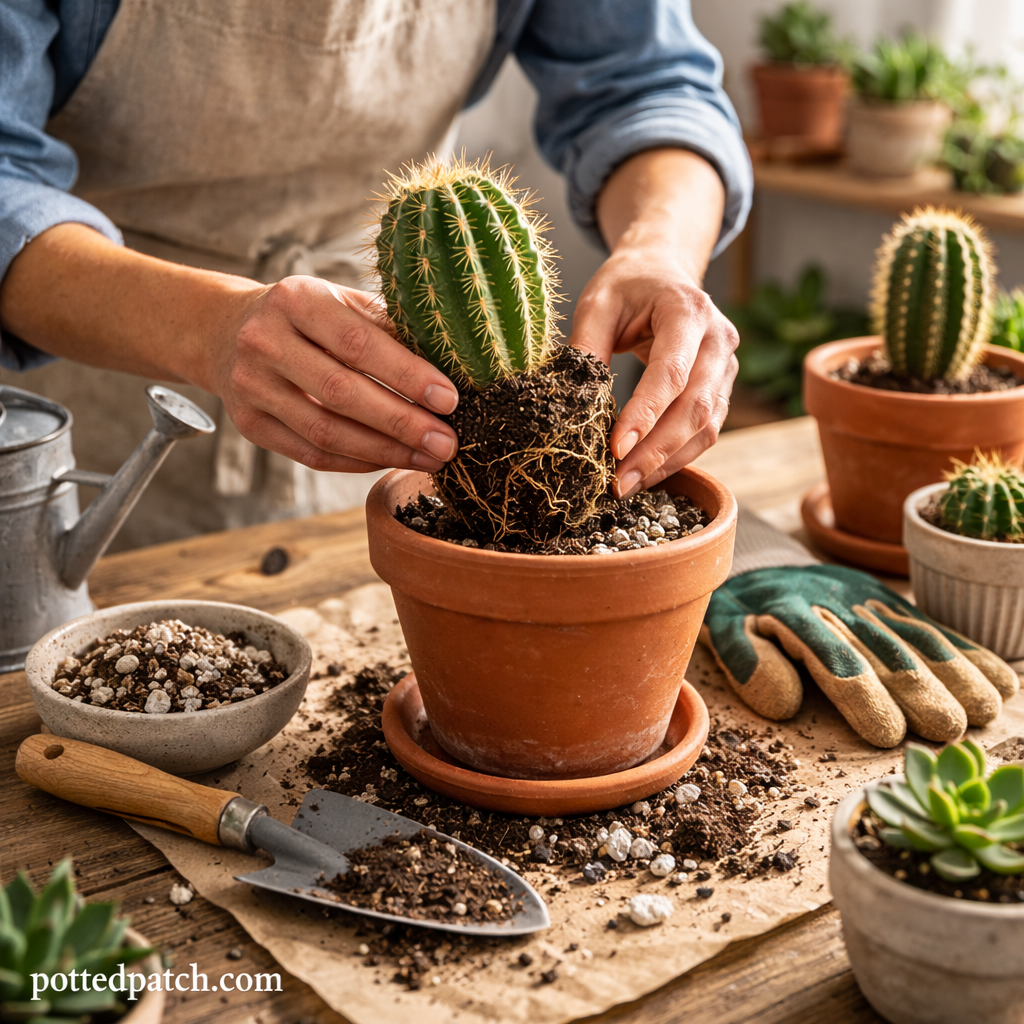
Follow these steps carefully to minimize stress.
Step 1: Let the Soil Dry Completely
Never repot a wet cactus.
Dry soil:
- Protects roots
- Reduces breakage
- Lowers risk of rot
Wait at least a few days after watering.
Step 2: Remove the Cactus Safely
Wrap the plant in:
- Thick gloves
- Folded newspaper
- A towel
Gently tip the pot sideways and slide the root ball out. If it’s stuck, tap the sides of the pot.
Avoid pulling from the top.
Step 3: Inspect the Roots
Healthy roots are:
- Firm
- White or light tan
Trim away:
- Black or mushy roots
- Rotten sections
If you trimmed roots, let the plant sit out for 1–2 days before repotting. This allows cuts to callous and reduces rot risk.
Step 4: Prepare the New Pot
Add a layer of fresh cactus soil at the bottom.
Do not add rocks to the bottom — this can actually worsen drainage.
Position the cactus so the base sits slightly below the rim.
Step 5: Fill Around the Roots
Add soil around the root ball, gently pressing to stabilize the plant.
Do not compact the soil tightly.
The goal is:
- Stability
- Airflow
- Proper drainage
Step 6: Wait Before Watering
After repotting, wait 5–7 days before watering.
This gives:
- Root injuries time to heal
- The plant time to adjust
- Reduced risk of root rot
After that, resume normal watering.
Choosing the Right Soil
Cactus soil should drain quickly.
Look for mixes that contain:
- Sand
- Perlite
- Pumice
- Small gravel
Avoid standard potting soil unless amended heavily for drainage.
Well-draining soil is the single most important factor in long-term cactus health.
Choosing the Right Pot
Material matters more than most people realize.
Terracotta Pots
- Breathable
- Allow soil to dry faster
- Great for beginners
Plastic Pots
- Retain moisture longer
- Lightweight
- Better for very dry climates
Size tip: Only go 1–2 inches larger. Oversized pots hold excess moisture and increase rot risk.
Common Repotting Mistakes to Avoid
Even experienced plant owners make these errors.
- Watering immediately after repotting
- Using regular potting soil
- Upsizing too dramatically
- Repotting during winter dormancy
- Handling the cactus without protection
Taking your time prevents setbacks.
How Long Does a Cactus Take to Recover?
Most cacti recover within 2–4 weeks.
You may notice:
- Slight pause in growth
- Mild leaning as roots settle
As long as:
- The plant stays firm
- There’s no softening at the base
- No discoloration appears
It’s adjusting normally.
Final Thoughts
Repotting a cactus isn’t complicated—but timing and technique matter.
Remember:
- Repot every 2–3 years
- Choose well-draining soil
- Only size up slightly
- Wait before watering
With proper care, your cactus can thrive for decades in the right container.