Aloe vera is a hardy, low-maintenance succulent—but even the toughest plants eventually outgrow their pots. If your aloe looks crowded, top-heavy, or isn’t draining properly, it may be time for a repot.
Repotting at the right time (and in the right way) helps prevent root rot, improves drainage, and encourages healthy new growth.
In this guide, you’ll learn exactly when to repot aloe vera and how to do it step by step.
When Should You Repot an Aloe Vera?
Aloe vera doesn’t need frequent repotting. In fact, it prefers being slightly root-bound. But there are clear signs it’s time for a new container.
Signs Your Aloe Needs Repotting
- Roots growing out of drainage holes
- The plant feels unstable or top-heavy
- Soil dries out extremely fast
- Water runs straight through without absorbing
- Pups (baby aloe plants) crowd the base
- The pot is cracking from pressure
Most aloe plants need repotting every 1–2 years, depending on growth rate.
Best Time of Year to Repot
The ideal time to repot aloe vera is during its active growing season:
- Spring
- Early summer
Avoid repotting in late fall or winter when growth slows. Repotting during dormancy can stress the plant and delay recovery.
Choosing the Right Pot
Selecting the proper container is just as important as the soil.
Pot Size
- Choose a pot 1–2 inches wider than the current one.
- Avoid jumping to a much larger container.
Too much extra soil increases moisture retention and raises the risk of root rot.
Best Material
Terracotta is ideal because it:
- Absorbs excess moisture
- Improves airflow
- Reduces overwatering risk
Always choose a pot with at least one drainage hole.
Choosing the Right Soil
Aloe vera needs fast-draining soil.
Use:
- Cactus or succulent mix
- Or a DIY blend (potting soil + coarse sand + perlite)
Avoid heavy, moisture-retentive soil blends.
If the soil stays wet for days, it’s too dense.
How to Repot an Aloe Vera (Step-by-Step)
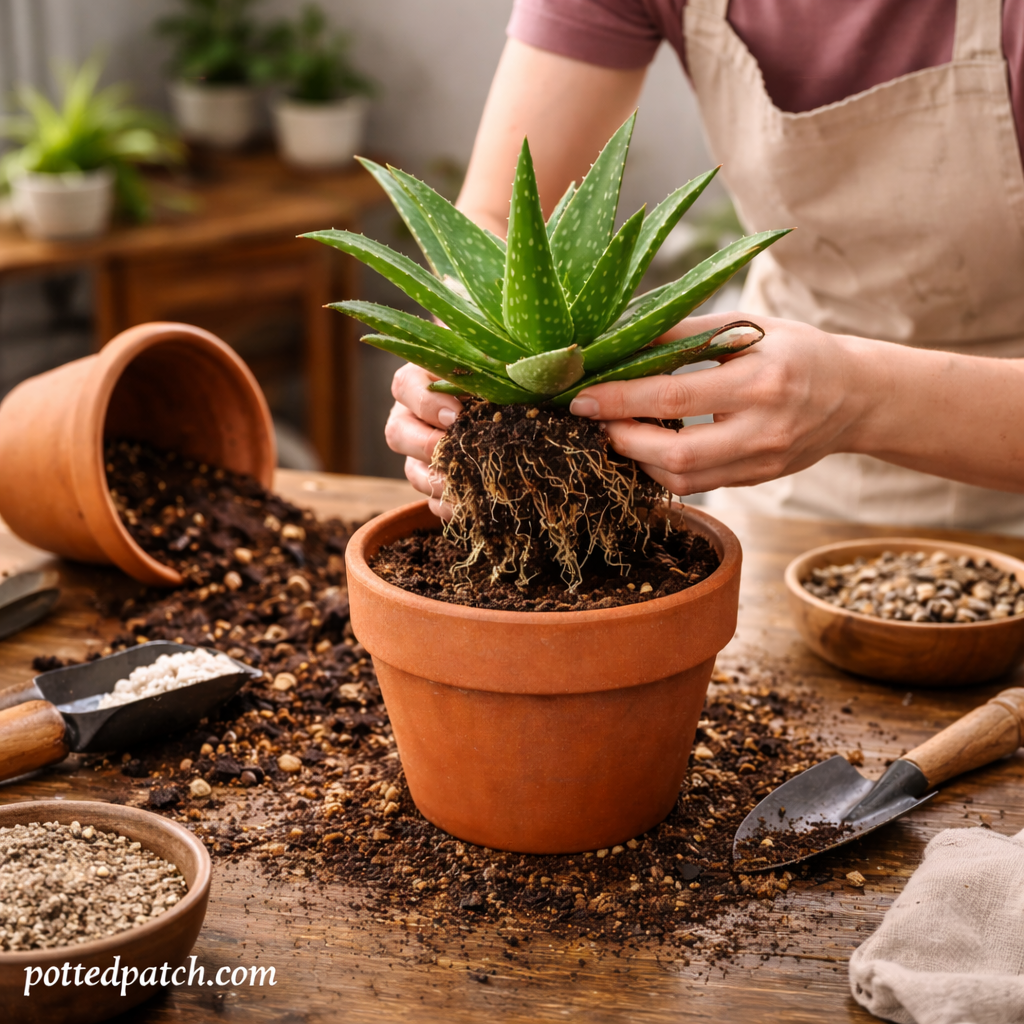
Follow these steps carefully to avoid damaging roots.
Step 1: Let the Soil Dry Out
Repot only when the soil is completely dry. This reduces stress and prevents root damage.
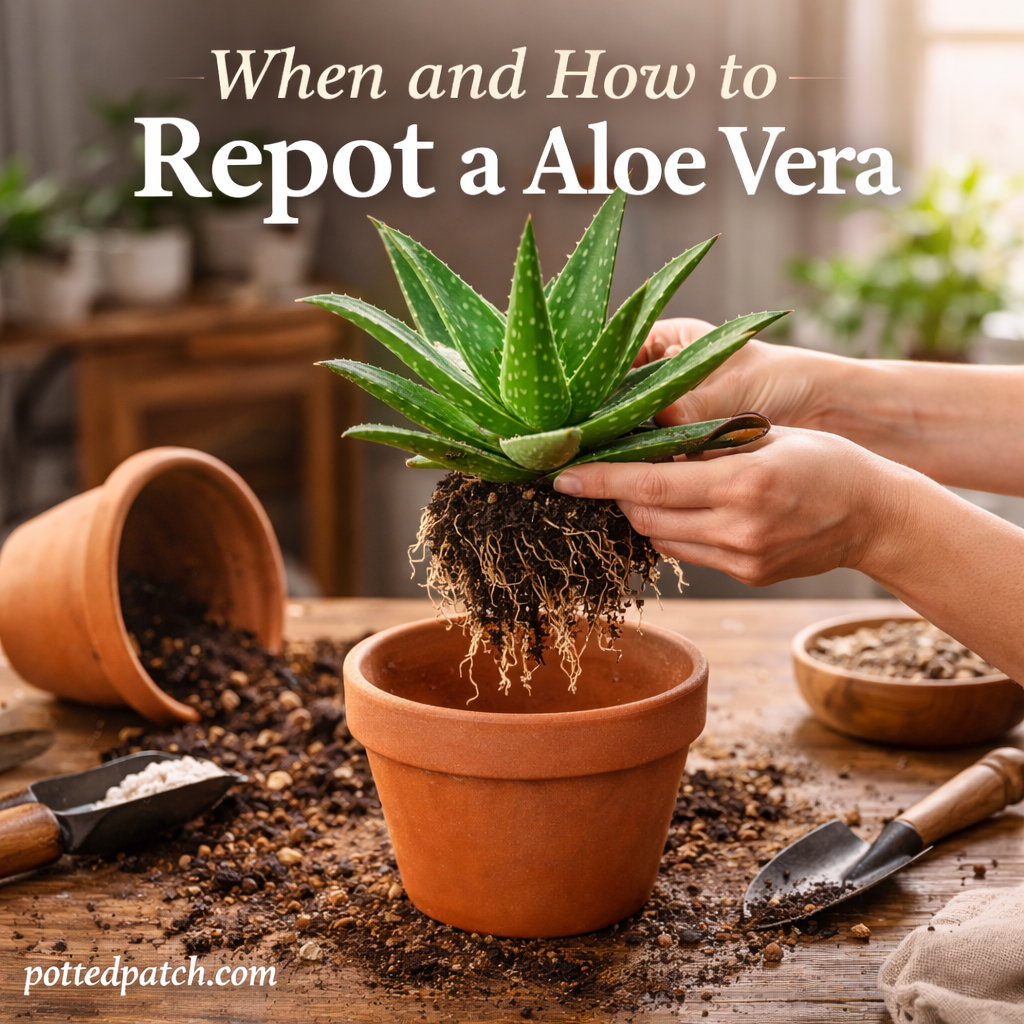
Step 2: Remove the Plant Gently
- Tip the pot sideways.
- Support the base of the plant.
- Gently slide it out.
If it’s stuck, tap the sides of the pot to loosen it.
Step 3: Inspect the Roots
Healthy roots should be:
- Firm
- Light tan or white
- Dry, not mushy
Trim away any black, soft, or rotten roots using clean scissors.
If rot is present, allow roots to air dry for several hours before replanting.
Step 4: Separate Pups (Optional)
If baby aloe plants are growing at the base:
- Gently separate them from the main plant.
- Ensure each pup has its own roots.
You can plant them in separate pots using the same soil mix.
Step 5: Add Fresh Soil to the New Pot
- Fill the bottom with fresh, well-draining mix.
- Position the aloe at the same depth it was growing before.
- Fill around the roots gently.
Do not bury the leaves.
Step 6: Wait Before Watering
After repotting:
- Wait 3–5 days before watering.
This allows small root injuries to heal and reduces rot risk.
Aftercare Tips
After repotting:
- Place the plant in bright, indirect light.
- Avoid direct harsh sun for a few days.
- Resume normal watering once established.
You may notice slight drooping for a few days—that’s normal.
Healthy growth should resume within a few weeks.
Common Repotting Mistakes to Avoid
- Using a pot without drainage
- Choosing a pot that’s too large
- Watering immediately after repotting
- Using regular potting soil without amendments
- Repotting during winter dormancy
Keeping things simple and well-draining is the key to success.
How Often Should Aloe Be Repotted?
Most indoor aloe plants need repotting every 1–2 years.
However, you may need to repot sooner if:
- The plant produces many pups
- Roots outgrow the container quickly
- Soil becomes compacted
Check your plant annually during spring to assess whether it needs more space.
Final Thoughts
Repotting aloe vera isn’t complicated—but timing and drainage matter. Choose a slightly larger pot, use fast-draining soil, and give roots time to recover before watering.
When done correctly, repotting refreshes your aloe, encourages stronger roots, and supports healthy long-term growth.
A little care goes a long way with this resilient succulent.