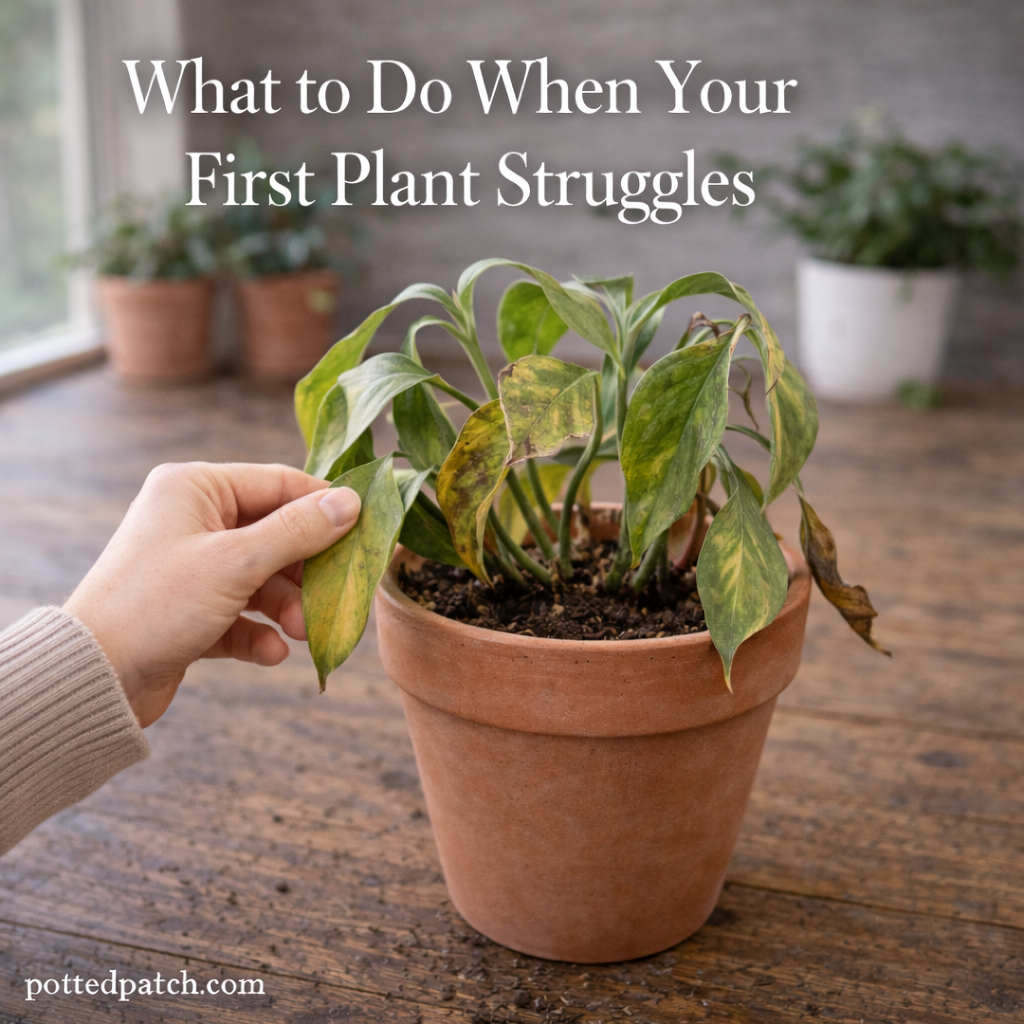
Your first houseplant struggling can feel discouraging—especially if you followed the care tag and did your best. The truth is, almost every plant owner goes through this. A struggling first plant isn’t a failure; it’s part of learning how plants actually respond to real homes, not ideal conditions.
This beginner-friendly guide helps you understand what’s going wrong, what to fix first, and how to give your plant the best chance to recover.
First: Don’t Panic or Overcorrect
The most common beginner mistake is trying to fix everything at once.
Plants don’t respond well to constant changes. Rapidly moving them, repotting, fertilizing, and changing watering schedules can increase stress rather than solve the problem.
Start slow. Observe before acting.
Step 1: Identify the Main Symptom
Focus on the most noticeable issue your plant is showing.
Common beginner symptoms include:
- Drooping or wilting leaves
- Yellowing leaves
- Brown or crispy edges
- Slow or stopped growth
- Mushy stems or soft leaves
Pick the primary symptom rather than trying to fix every small imperfection.
Step 2: Check Watering First (Most Issues Start Here)
Watering problems cause the majority of beginner plant struggles.
Signs of overwatering
- Soil feels wet days after watering
- Leaves turn yellow and soft
- Plant looks limp despite moist soil
Signs of underwatering
- Soil is bone dry or pulling away from the pot
- Leaves droop but feel thin or crispy
- Plant perks up shortly after watering
If you’re unsure, it’s often safer to wait a day or two before watering again.
Step 3: Make Sure the Pot Has Drainage
A healthy plant cannot survive long-term without proper drainage.
Check for:
- Drainage holes at the bottom of the pot
- No standing water in saucers or decorative pots
If your plant is in a pot without drainage, move it to one with holes or keep it in a nursery pot inside a decorative container.
Step 4: Evaluate the Light Honestly
Many beginner plants struggle because light is misunderstood.
Ask yourself:
- Is the plant receiving direct sun or just bright room light?
- Is it far from windows or blocked by furniture?
- Has it been moved recently?
Most houseplants prefer bright, indirect light—not direct sun and not deep shade.
If growth is weak or leaves are pale, gradually move the plant closer to a light source.
Step 5: Pause Fertilizing
New plant owners often fertilize too early.
If your plant is struggling:
- Stop fertilizing immediately
- Focus on stable light and watering instead
Fertilizer doesn’t fix stressed plants—it can make things worse.
Step 6: Inspect for Root or Stem Issues
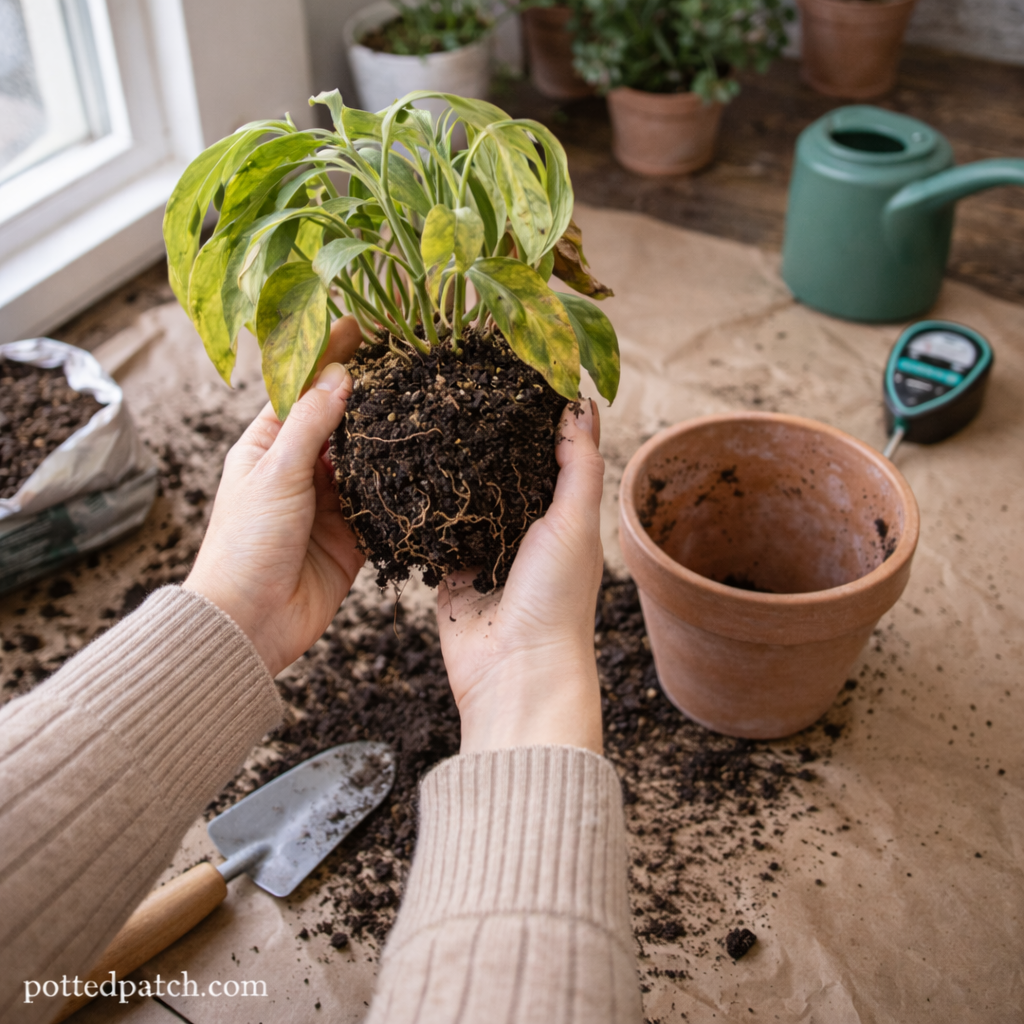
If symptoms are severe, gently check below the surface.
Look for:
- Mushy, black, or foul-smelling roots
- Extremely compacted or soggy soil
- Roots circling tightly around the pot
If roots are rotting, repotting into fresh, well-draining soil may be necessary. If roots look healthy, avoid repotting and let the plant stabilize.
Step 7: Give It Time to Respond
Plants don’t recover overnight.
After making one or two corrections:
- Leave the plant alone for 1–2 weeks
- Avoid moving it repeatedly
- Stick to consistent care
New growth is the best sign of recovery—even if old leaves don’t improve.
What Not to Do When a Plant Is Struggling
Avoid these common beginner reactions:
- Repotting immediately without checking roots
- Watering on a fixed schedule
- Cutting off multiple leaves at once
- Moving the plant daily
- Expecting damaged leaves to heal
Plants improve through stability, not constant adjustments.
When It’s Okay to Let a Plant Go
Sometimes, despite best efforts, a plant doesn’t recover—and that’s okay.
Every plant teaches you something:
- How your home’s light behaves
- How often soil dries out
- What care styles work for you
Losing a first plant doesn’t mean you’re bad at plants. It means you’re learning.
Best Beginner Plants After a Struggle
If your first plant had issues, try something forgiving next:
- Snake plant
- ZZ plant
- Pothos
- Philodendron
- Cast iron plant
These tolerate mistakes and rebuild confidence.
Final Thoughts
A struggling first plant is normal—and temporary. Most issues come down to watering, drainage, and light, not lack of skill. By slowing down, making small corrections, and giving plants time to respond, you’ll build instincts that make plant care easier over time.
Every successful plant owner started exactly where you are now.