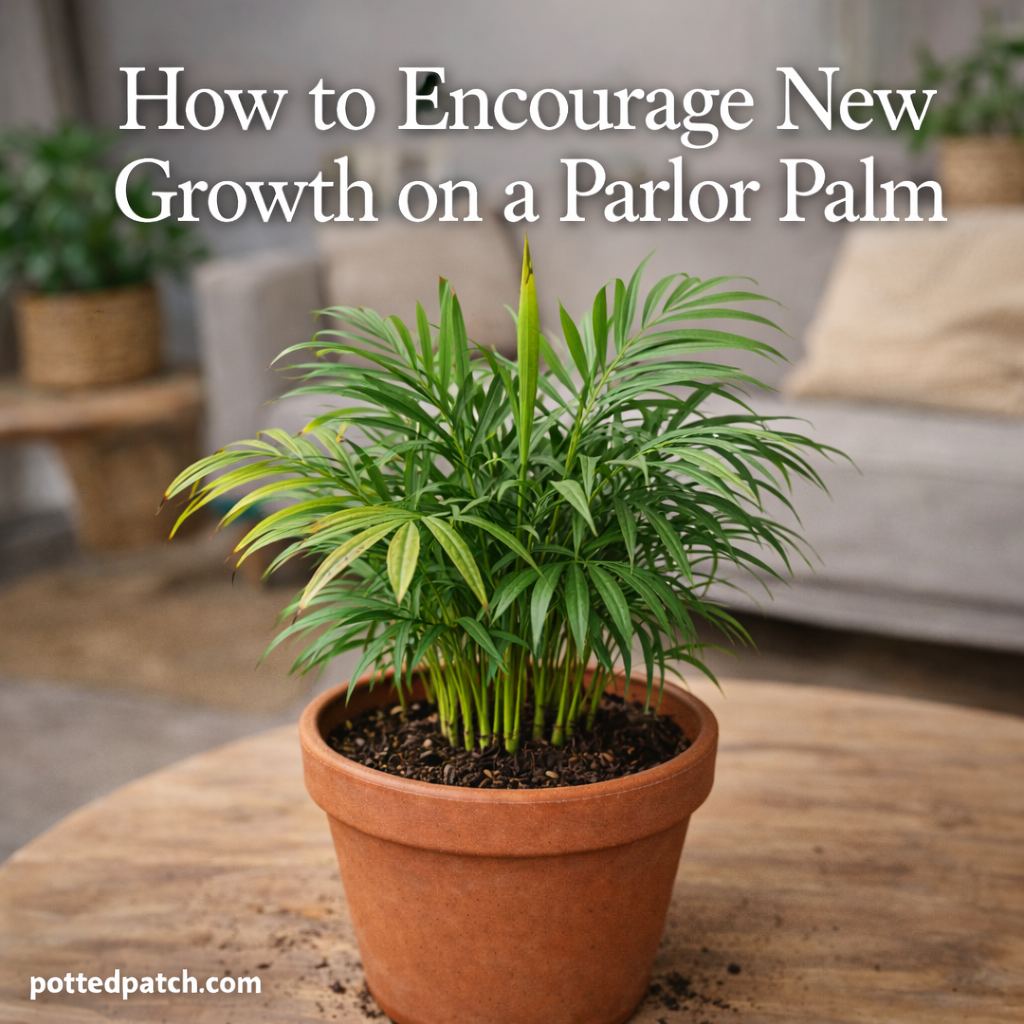
How to Encourage New Growth on a Parlor Palm

Healthy parlor palm in a terracotta pot with fresh green fronds and new growth emerging indoors.
Parlor palm showing fresh new fronds emerging under proper indoor care conditions. pottedpatch.com

Parlor Palms are known for their graceful, slow growth. But if your plant hasn’t pushed out a new frond in months, you might be wondering how to encourage fresh growth.

The good news? Parlor Palms respond well to the right balance of light, watering, and seasonal care. They don’t grow quickly — but with proper conditions, you’ll see steady, healthy new fronds emerge.

Let’s break down exactly how to stimulate new growth the right way.

Continue reading “How to Encourage New Growth on a Parlor Palm”
Common Care Mistakes With Parlor Palm

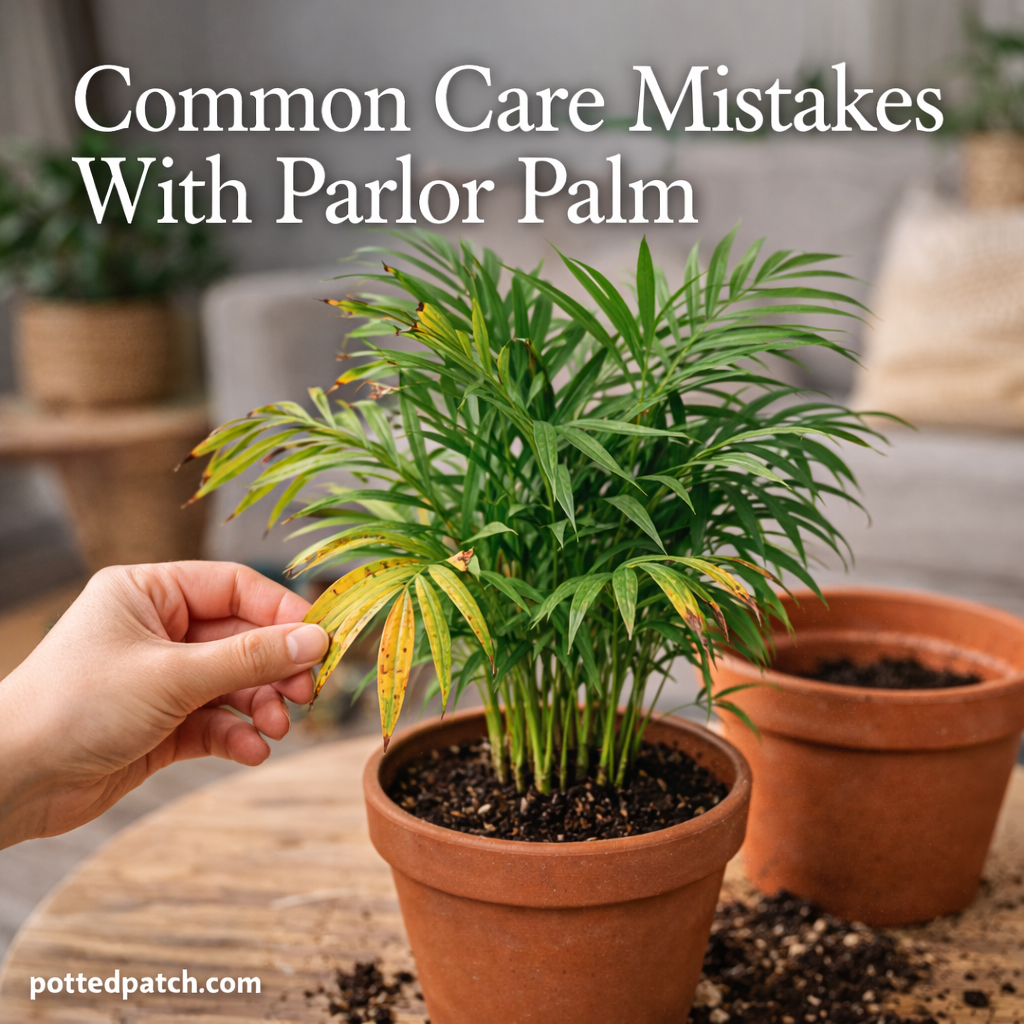
Parlor palm with yellowing and browning leaves being examined indoors in a terracotta pot.
Parlor palm showing signs of common care mistakes like overwatering and leaf burn. pottedpatch.com

Parlor Palms are known for being low-maintenance, adaptable, and beginner-friendly. But even easy houseplants can struggle when basic care mistakes stack up.

If your Parlor Palm has yellow leaves, brown tips, or stalled growth, chances are one of these common issues is the cause.

Let’s walk through the biggest Parlor Palm care mistakes — and how to fix them.

Continue reading “Common Care Mistakes With Parlor Palm”

When and How to Repot a Parlor Palm

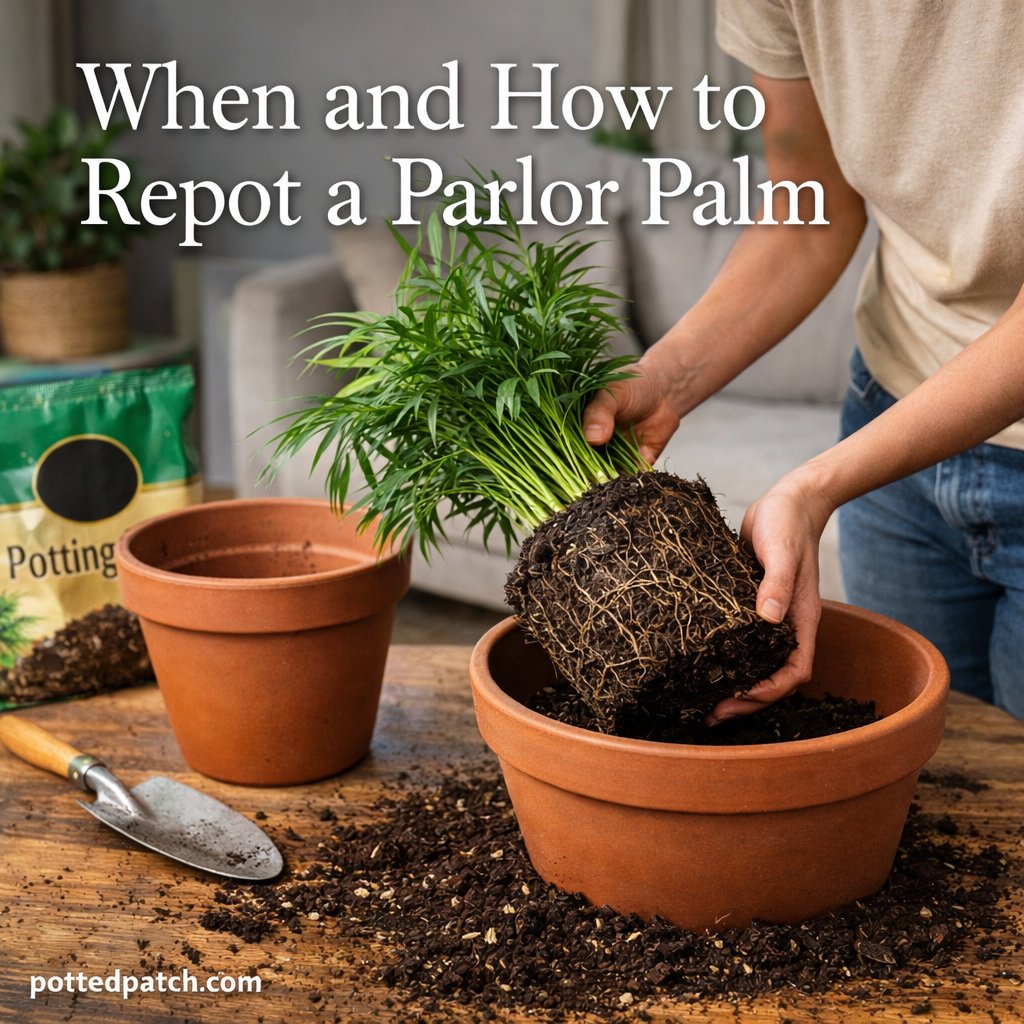
Person repotting a parlor palm by placing the root ball into a larger terracotta pot indoors.
Repotting a parlor palm into fresh soil for healthy growth. pottedpatch.com

Repotting a Parlor Palm isn’t something you’ll need to do often — and that’s a good thing. These elegant, slow-growing plants actually prefer being slightly root-bound. But when the time comes, repotting the right way makes a big difference in long-term health.

In this guide, you’ll learn exactly when to repot your Parlor Palm and the safest, step-by-step method to do it without stressing the plant.

Continue reading “When and How to Repot a Parlor Palm”

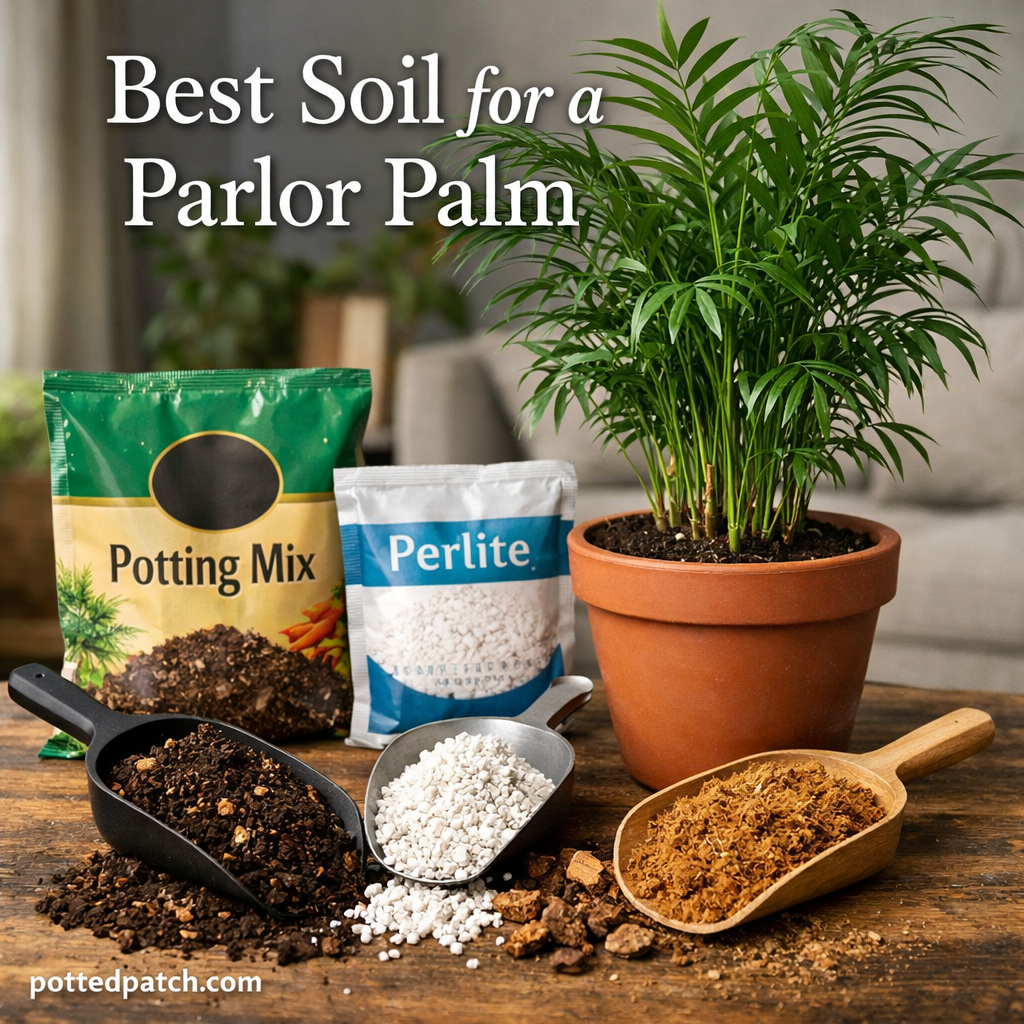
Best Soil for a Parlor Palm

Healthy parlor palm in terracotta pot with potting mix, perlite, and coco coir displayed on a wooden table.
Parlor palm with ideal soil components for healthy indoor growth. pottedpatch.com

If you want your Parlor Palm to thrive indoors, choosing the right soil is one of the most important decisions you’ll make. The wrong mix can lead to root rot, yellowing leaves, or slow growth. The right one? Healthy roots, steady growth, and that elegant tropical look that makes Parlor Palms so popular.

In this guide, we’ll break down exactly what kind of soil your Parlor Palm needs, what to avoid, and how to mix your own perfect blend.

Continue reading “Best Soil for a Parlor Palm”

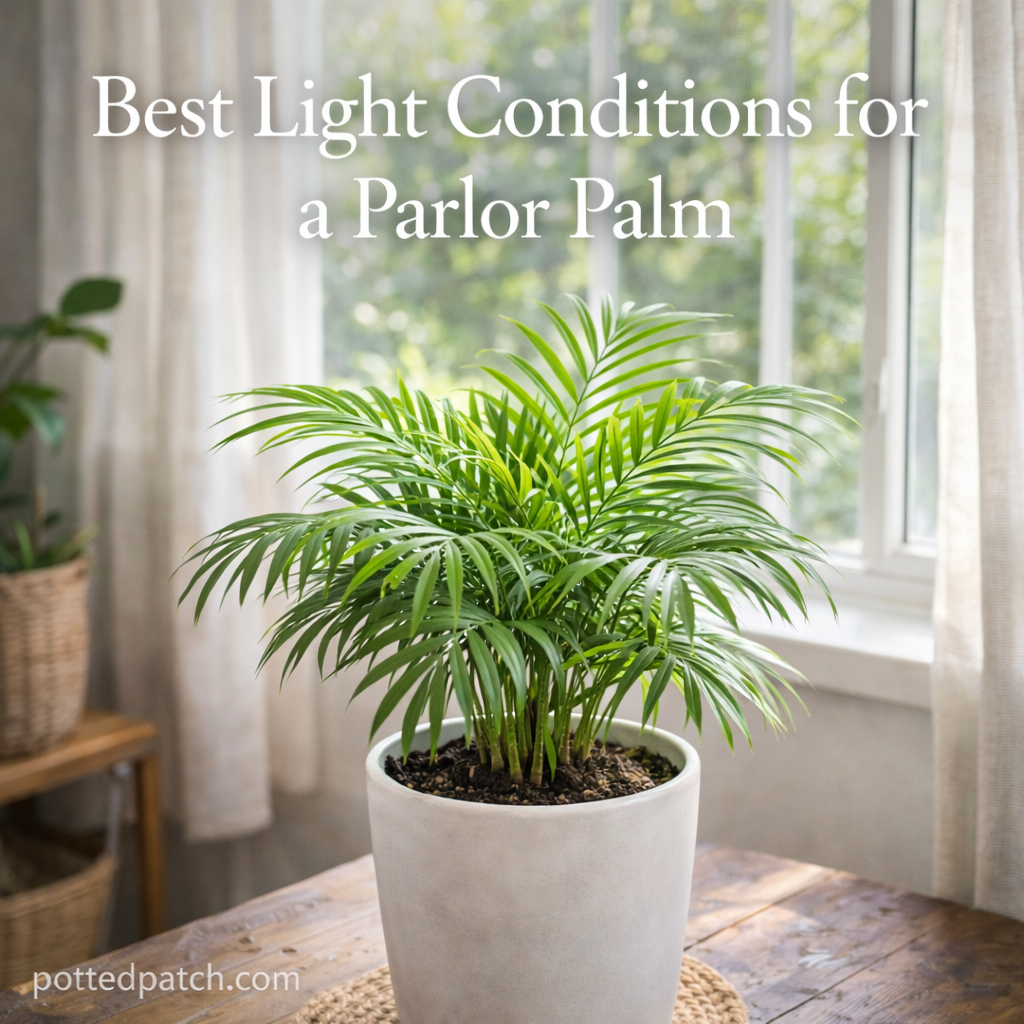
Best Light Conditions for a Parlor Palm

Parlor Palm placed near a bright window with indirect sunlight indoors.
Parlor Palm positioned in bright, indirect light near a window. pottedpatch.com

Parlor Palms are popular because they tolerate lower light better than many houseplants. But “low light tolerant” doesn’t mean they thrive in dark corners.

If you want fuller growth, deeper green fronds, and steady health, understanding the right light conditions makes all the difference.

Here’s exactly what kind of light a Parlor Palm needs indoors.

Continue reading “Best Light Conditions for a Parlor Palm”

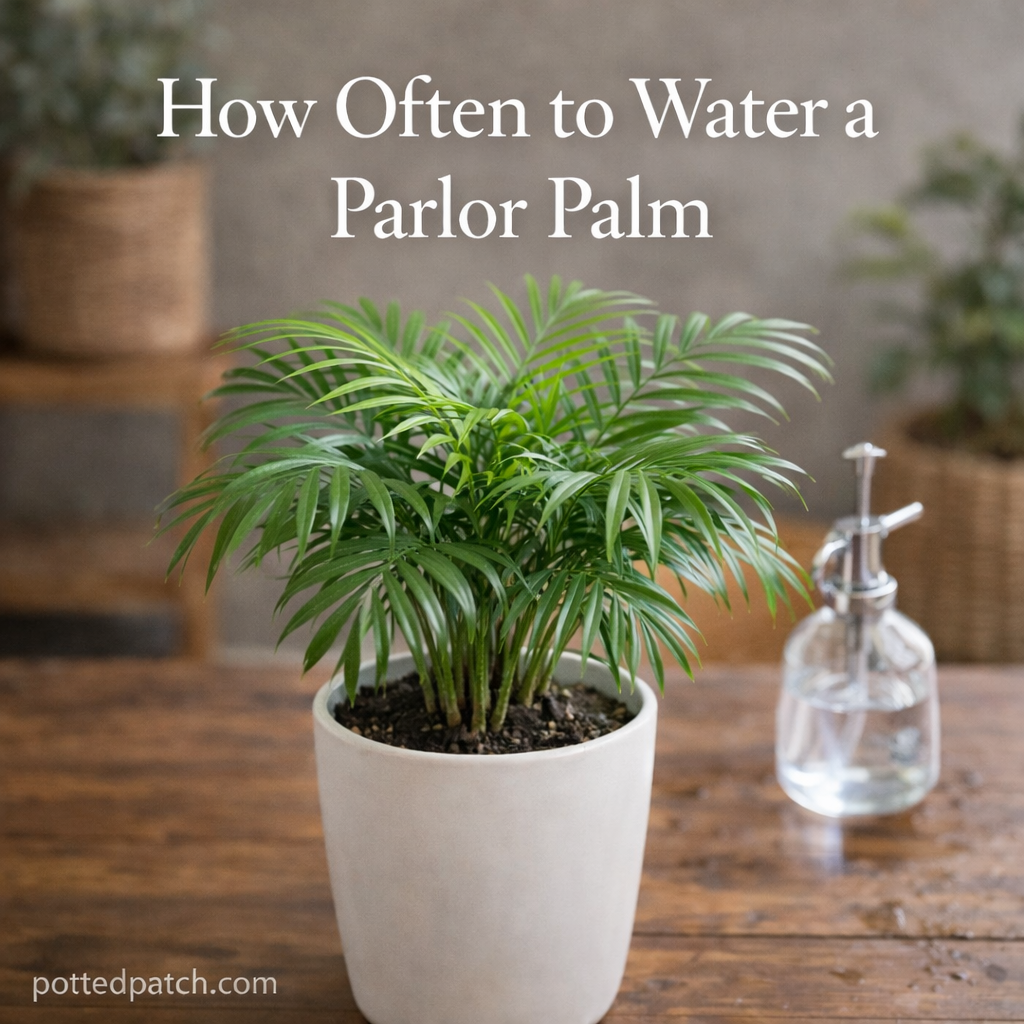
How Often to Water a Parlor Palm

Indoor Parlor Palm in white pot with watering spray bottle nearby.
Parlor Palm indoors ready for proper watering care. pottedpatch.com

Watering is the most important part of Parlor Palm care — and the most common place people go wrong.

Parlor Palms prefer slightly moist soil, but they do not tolerate soggy conditions. The key is balance. Water too often and roots can rot. Water too little and fronds turn brown and dry.

Here’s exactly how often to water a Parlor Palm indoors and how to adjust throughout the year.

Continue reading “How Often to Water a Parlor Palm”

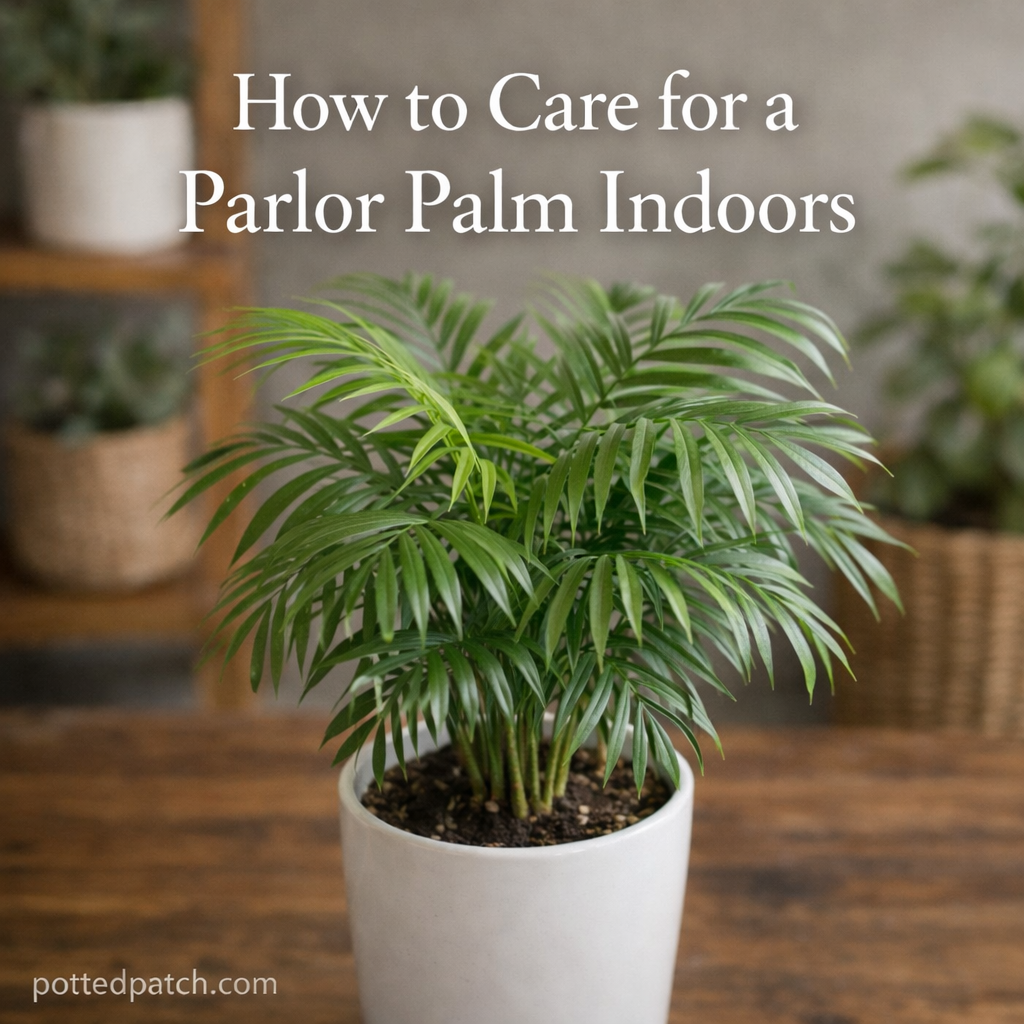
How to Care for a Parlor Palm Indoors

Healthy Parlor Palm in white pot indoors with lush green fronds.
Parlor Palm thriving indoors with proper care. pottedpatch.com

The Parlor Palm is one of the easiest and most elegant houseplants you can grow indoors. With its soft, feathery fronds and compact size, it thrives in typical home conditions and tolerates lower light better than many tropical plants.

If you want a low-maintenance plant that adds instant greenery to your space, the Parlor Palm is a perfect choice. Here’s how to care for it properly so it stays lush and healthy year round.

Continue reading “How to Care for a Parlor Palm Indoors”

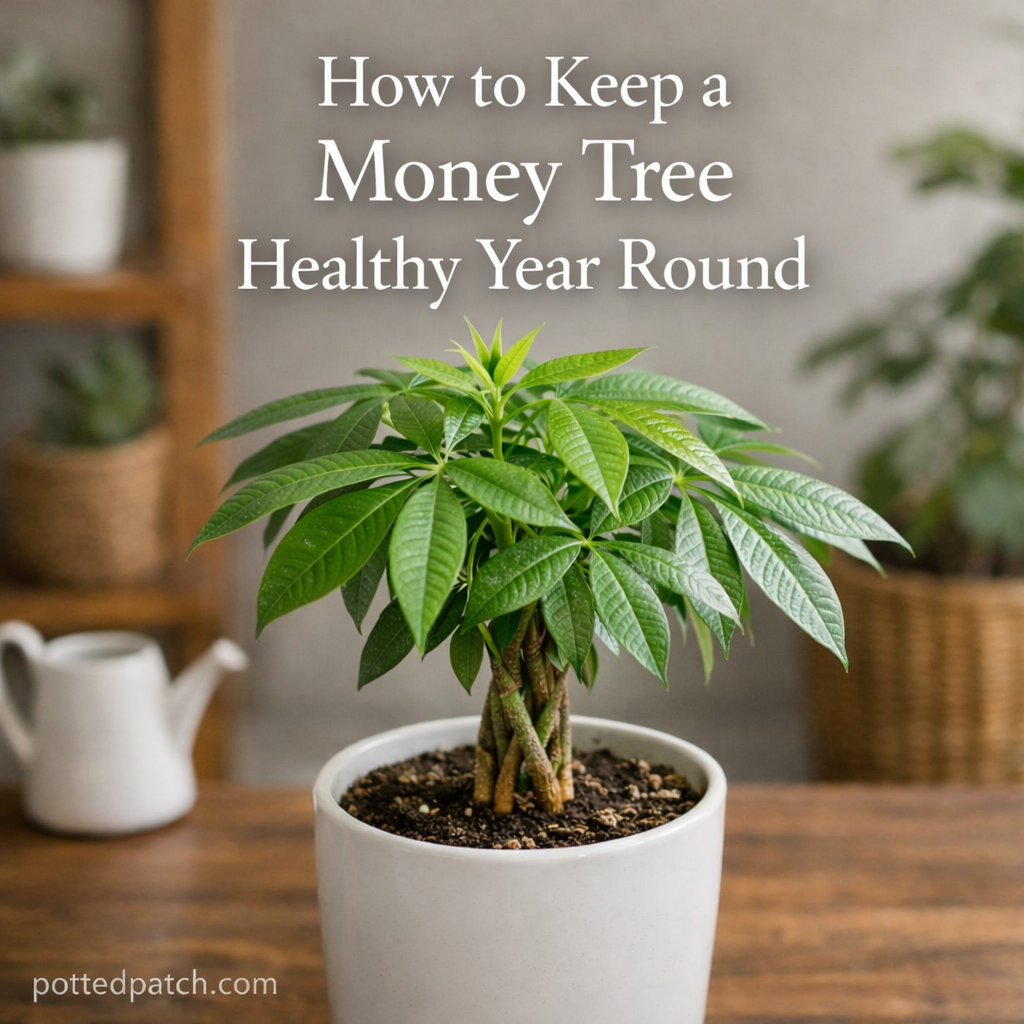
How to Keep a Money Tree Healthy Year Round

Healthy indoor Money Tree in white pot with vibrant green leaves on wooden table.
Healthy Money Tree thriving indoors year round. pottedpatch.com

A Money Tree is known for its braided trunk and lush green leaves — but keeping it healthy all year requires a little seasonal awareness.

The good news? Money Trees are relatively low-maintenance once you understand their light, water, and temperature needs. With a few simple adjustments throughout the year, you can maintain steady growth and prevent common problems like yellowing leaves or root rot.

Here’s your complete year-round care guide.

Continue reading “How to Keep a Money Tree Healthy Year Round”

How to Encourage New Growth on a Money Tree

Healthy indoor Money Tree in white pot showing fresh new leaf growth on a wooden table.
Money Tree with fresh new growth indoors. pottedpatch.com

If your Money Tree (Pachira aquatica) looks healthy but isn’t producing much new growth, don’t worry — it’s usually a simple care adjustment.

Money Trees are naturally vigorous growers indoors when their basic needs are met. With the right light, watering routine, pruning strategy, and feeding schedule, you can stimulate fuller foliage and stronger new stems within a few weeks.

Here’s exactly how to encourage new growth on a Money Tree — step by step.

Continue reading “How to Encourage New Growth on a Money Tree”

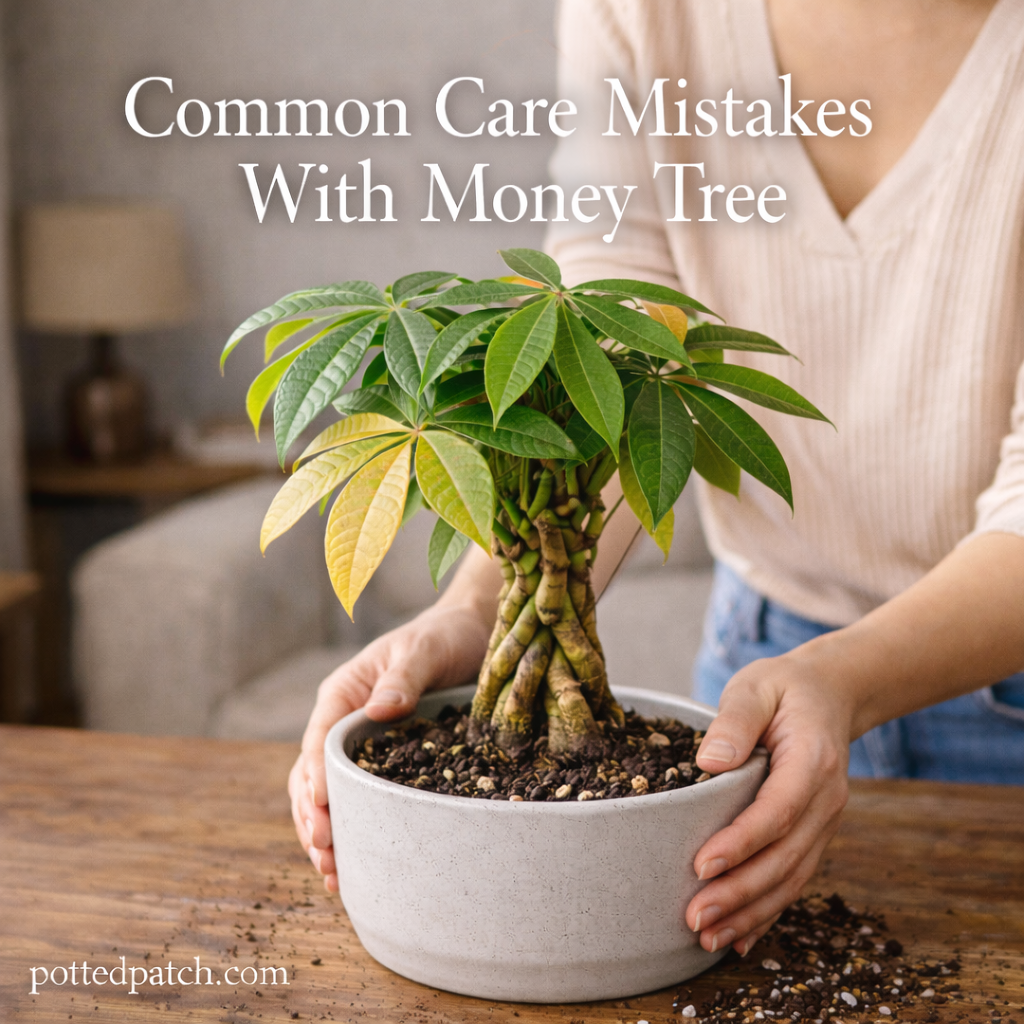
Common Care Mistakes With Money Tree

Indoor money tree (Pachira aquatica) with yellowing leaves showing signs of common care mistakes.
Money Tree showing early signs of care stress such as yellowing leaves from common indoor mistakes. pottedpatch.com

Money Trees are often labeled as “easy indoor plants,” but many common care mistakes can lead to yellowing leaves, root rot, and stalled growth.

The good news? Most issues are preventable — and reversible — once you understand what to avoid.

This guide covers the most common Money Tree care mistakes and how to fix them before long-term damage occurs.

Continue reading “Common Care Mistakes With Money Tree”