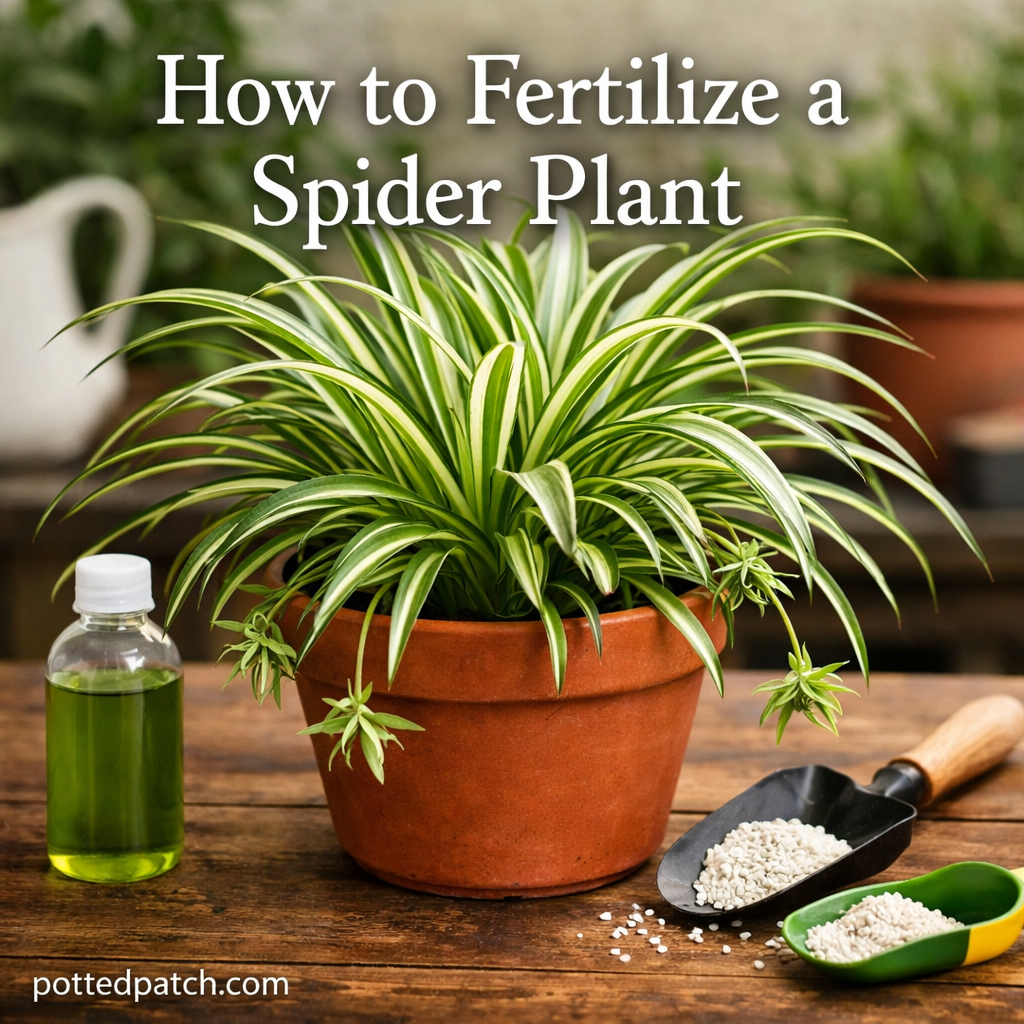
How to Fertilize a Spider Plant

Healthy spider plant in a terracotta pot with fertilizer and gardening tools on a wooden table.
Spider plant in a terracotta pot with fertilizer and tools for proper feeding. pottedpatch.com.

Spider plants are famous for being low-maintenance, adaptable, and beginner-friendly. But even hardy houseplants need nutrients to stay vibrant. If your plant looks pale, slow-growing, or less full than usual, it may simply need feeding.

In this guide, you’ll learn exactly how to fertilize a spider plant, when to do it, and how to avoid common mistakes that can damage the roots.

Continue reading “How to Fertilize a Spider Plant”
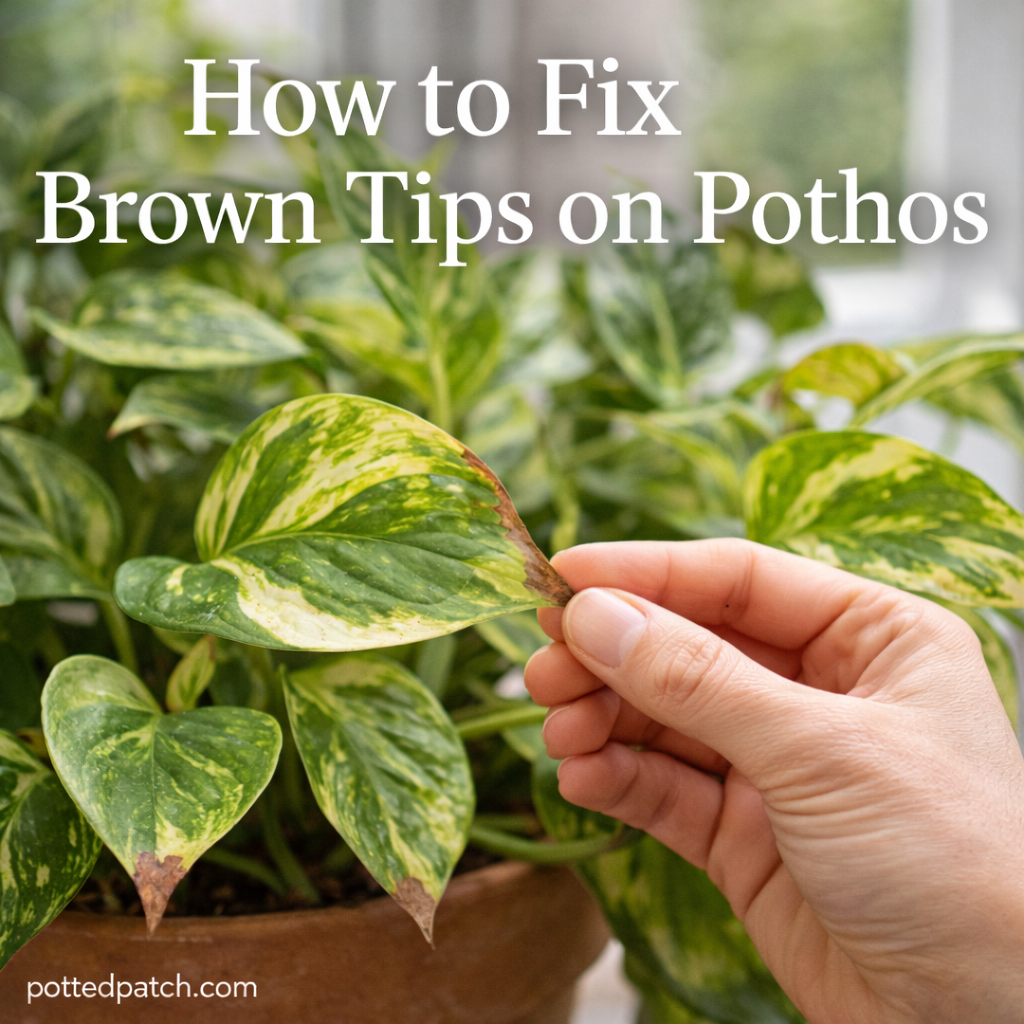
How to Fix Brown Tips on Pothos

Close-up of a pothos leaf with brown, crispy tips being examined by hand.
Brown tips on pothos leaves can be corrected with proper watering and humidity care. pottedpatch.com

Brown tips on pothos are one of the most common (and frustrating) plant problems. The good news? In most cases, they’re easy to fix once you identify the cause.

If your pothos has crispy, dry edges, here’s exactly how to correct the issue and prevent it from happening again.

Continue reading “How to Fix Brown Tips on Pothos”

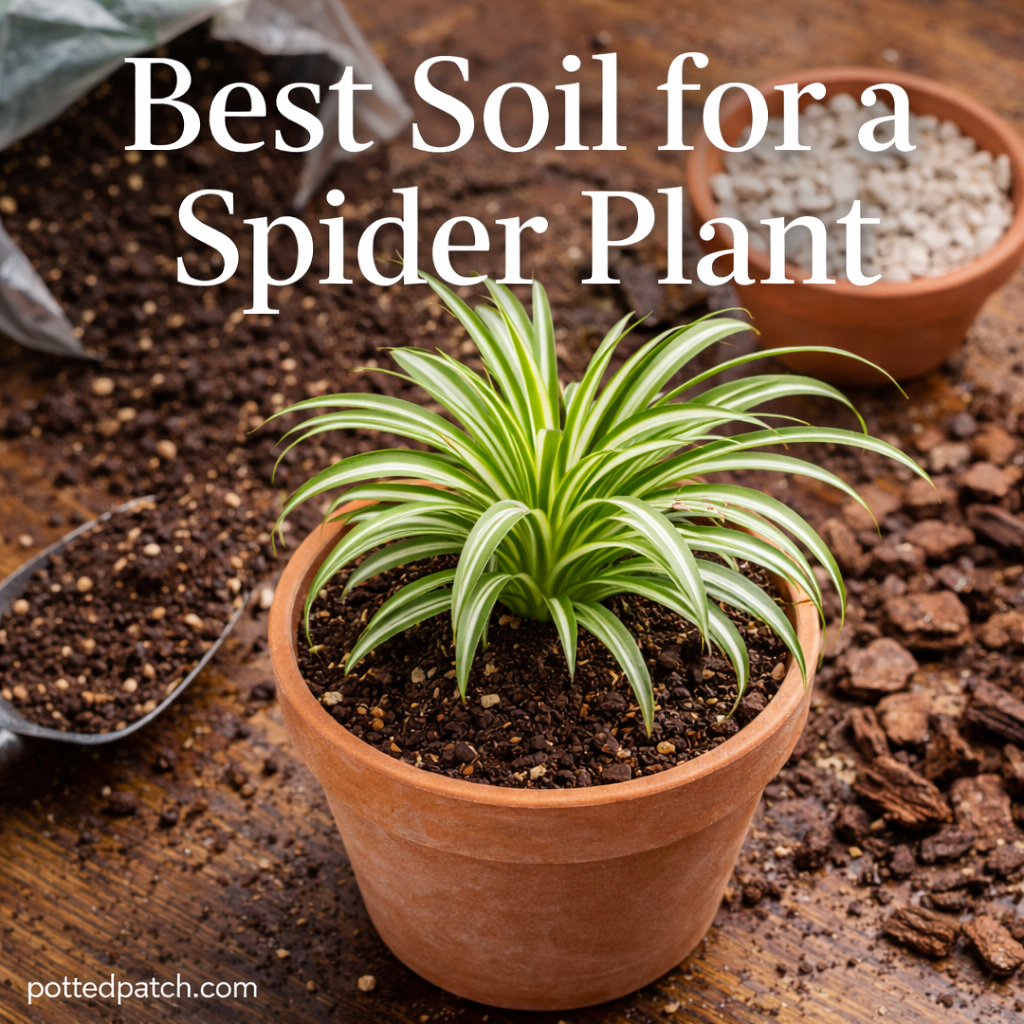
Best Soil for a Spider Plant

Spider plant in a terracotta pot surrounded by potting soil, perlite, and orchid bark.
Using a well-draining soil mix helps spider plants develop strong, healthy roots. pottedpatch.com

Spider plants are forgiving, fast-growing houseplants — but the right soil makes a noticeable difference in their health.

If your spider plant has yellowing leaves, slow growth, or drainage issues, your soil mix could be the reason.

Here’s how to choose (or create) the best soil for a spider plant.

Continue reading “Best Soil for a Spider Plant”

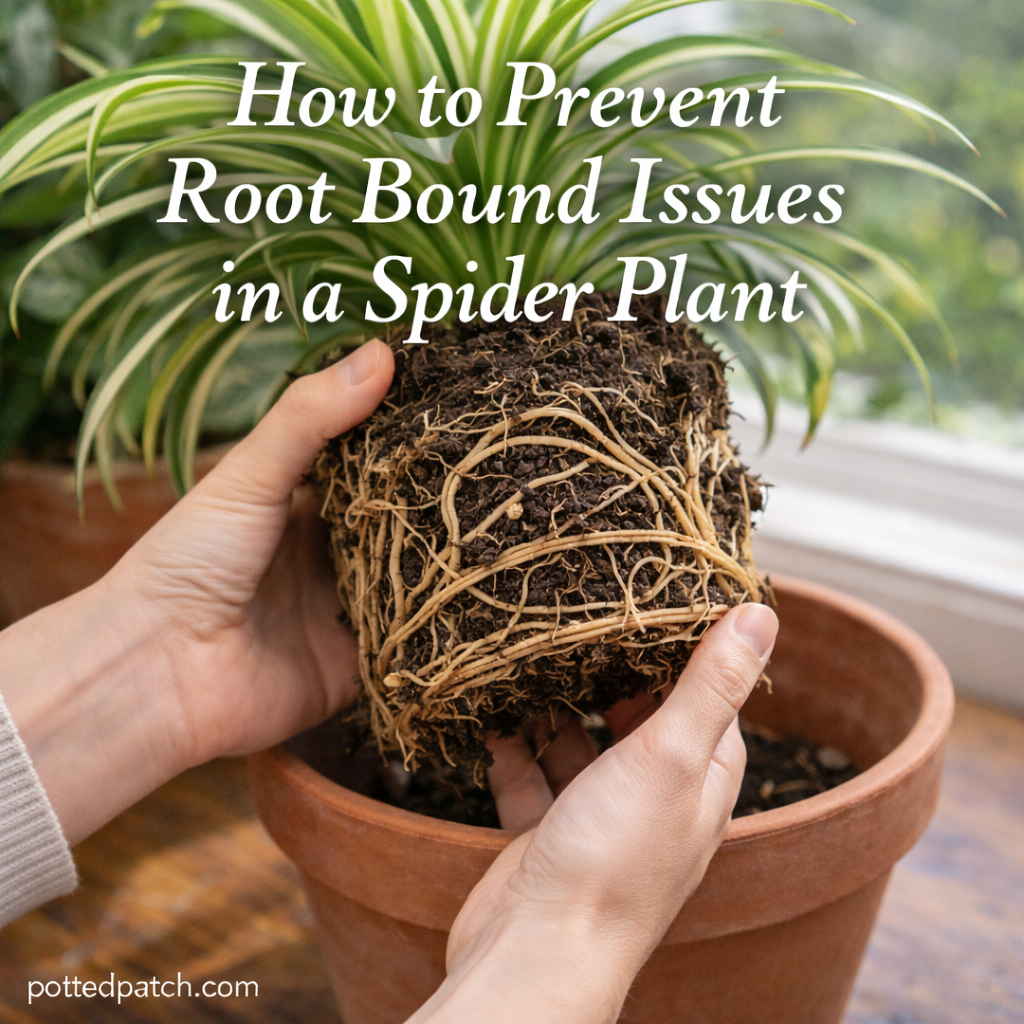
How to Prevent Root Bound Issues in a Spider Plant

Spider plant being lifted from a pot showing tightly circling roots indicating root bound condition.
Checking spider plant roots to prevent severe root bound issues and improve growth. pottedpatch.com

Spider plants grow fast — especially when they’re happy. But that rapid growth can quickly lead to root bound issues if the plant outgrows its container.

While spider plants tolerate being slightly snug, severely cramped roots can limit growth, reduce drainage, and cause stress symptoms.

Here’s how to prevent root bound problems before they affect your plant’s health.

Continue reading “How to Prevent Root Bound Issues in a Spider Plant”

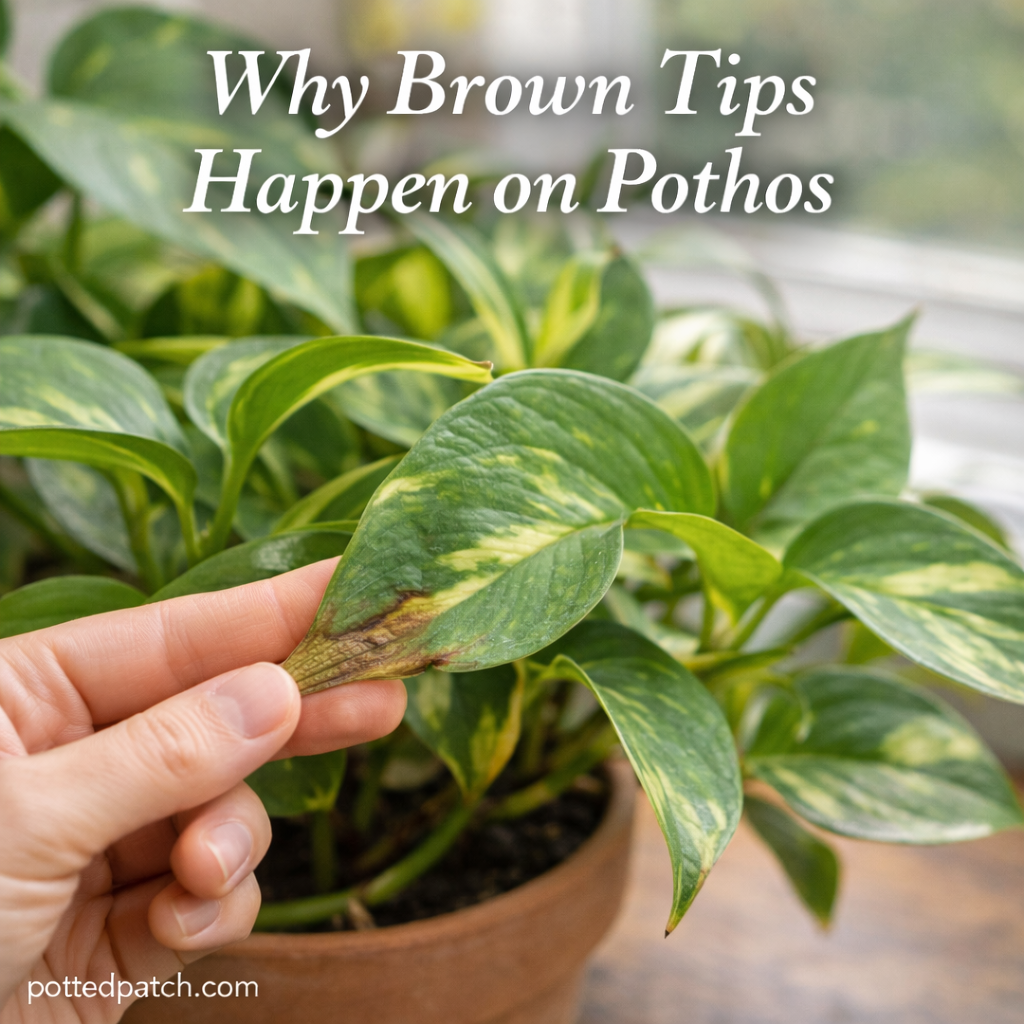
Why Brown Tips Happen on Pothos

Close-up of a pothos leaf with brown, crispy tips being examined by hand.
Brown tips on pothos leaves are often caused by watering, humidity, or mineral issues. pottedpatch.com

Brown tips on pothos leaves are one of the most common houseplant complaints. The good news? They’re usually a sign of a minor care imbalance — not a dying plant.

If you’ve noticed crispy, dry edges forming on your pothos leaves, here’s what causes it and how to fix it.

Continue reading “Why Brown Tips Happen on Pothos”

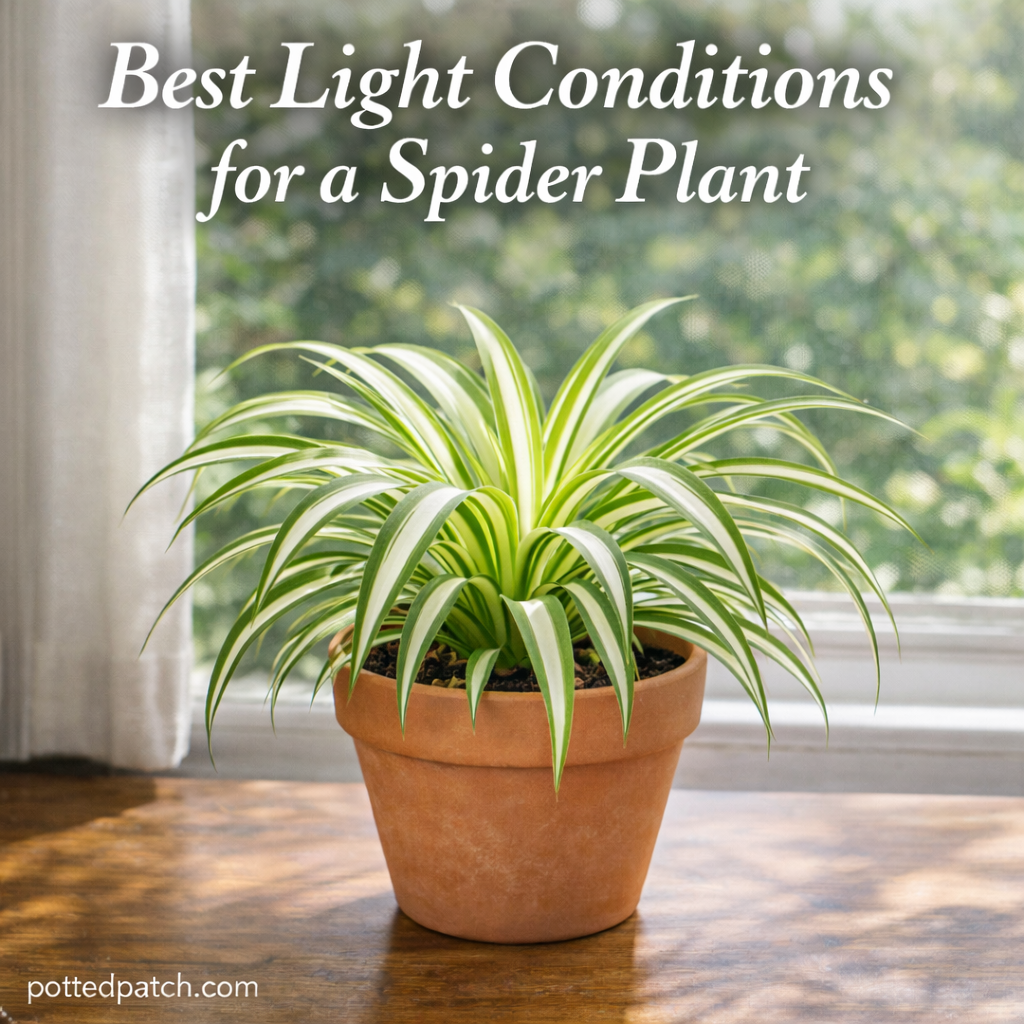
Best Light Conditions for a Spider Plant

Spider plant in a terracotta pot placed near a bright window with indirect sunlight.
Spider plant thriving in bright, indirect light near a window. pottedpatch.com

Spider plants are known for their adaptability, but light plays a major role in how full, vibrant, and fast-growing they become.

If your spider plant looks dull, pale, or stretched out, lighting may be the issue.

Here’s exactly how to give your spider plant the best light conditions for strong, healthy growth.

Continue reading “Best Light Conditions for a Spider Plant”

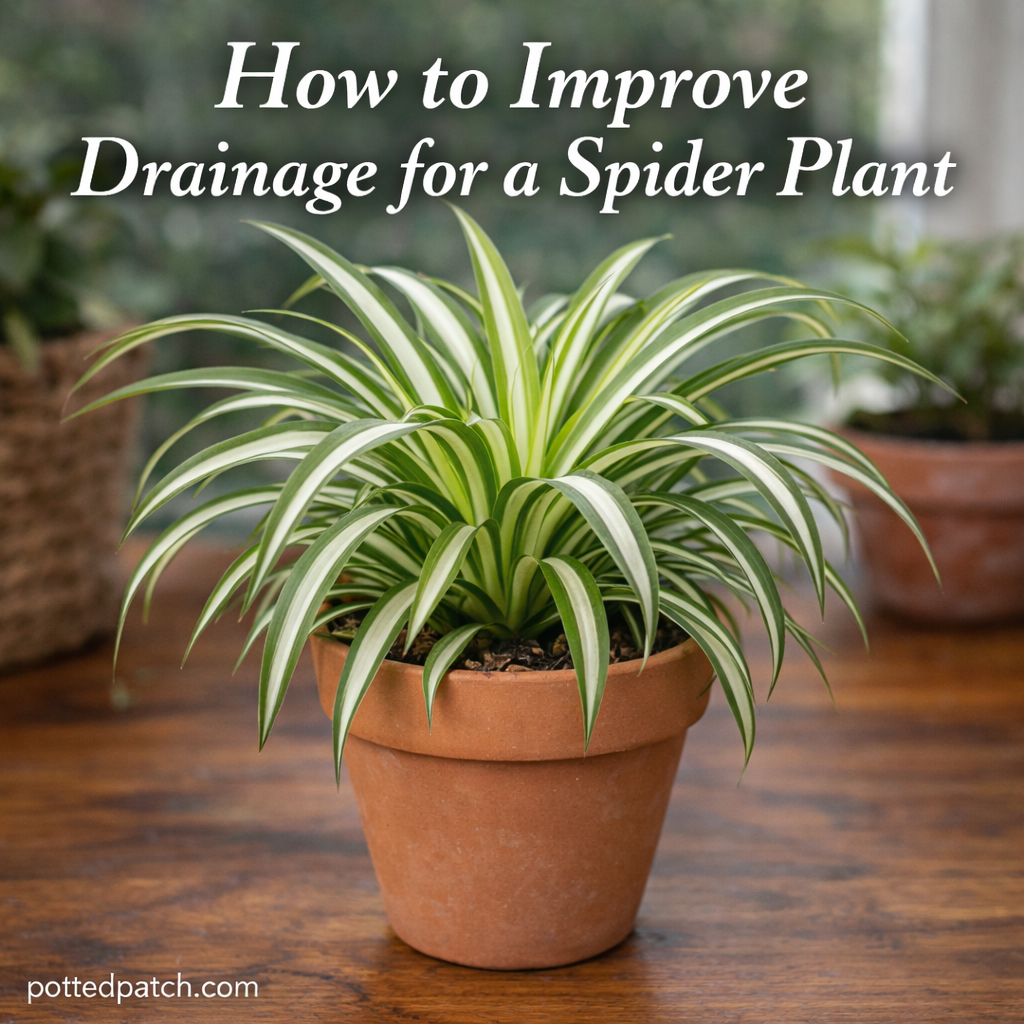
How to Improve Drainage for a Spider Plant

Healthy spider plant in a terracotta pot with improved drainage setup indoors.
Proper drainage helps spider plants thrive and prevents root rot. pottedpatch.com

Spider plants are resilient, beginner-friendly houseplants. But even hardy plants struggle when their roots sit in water too long.

If your spider plant has yellowing leaves, brown tips, or drooping growth, poor drainage may be the culprit.

The good news? Improving drainage is simple and can dramatically boost your plant’s health.

Continue reading “How to Improve Drainage for a Spider Plant”

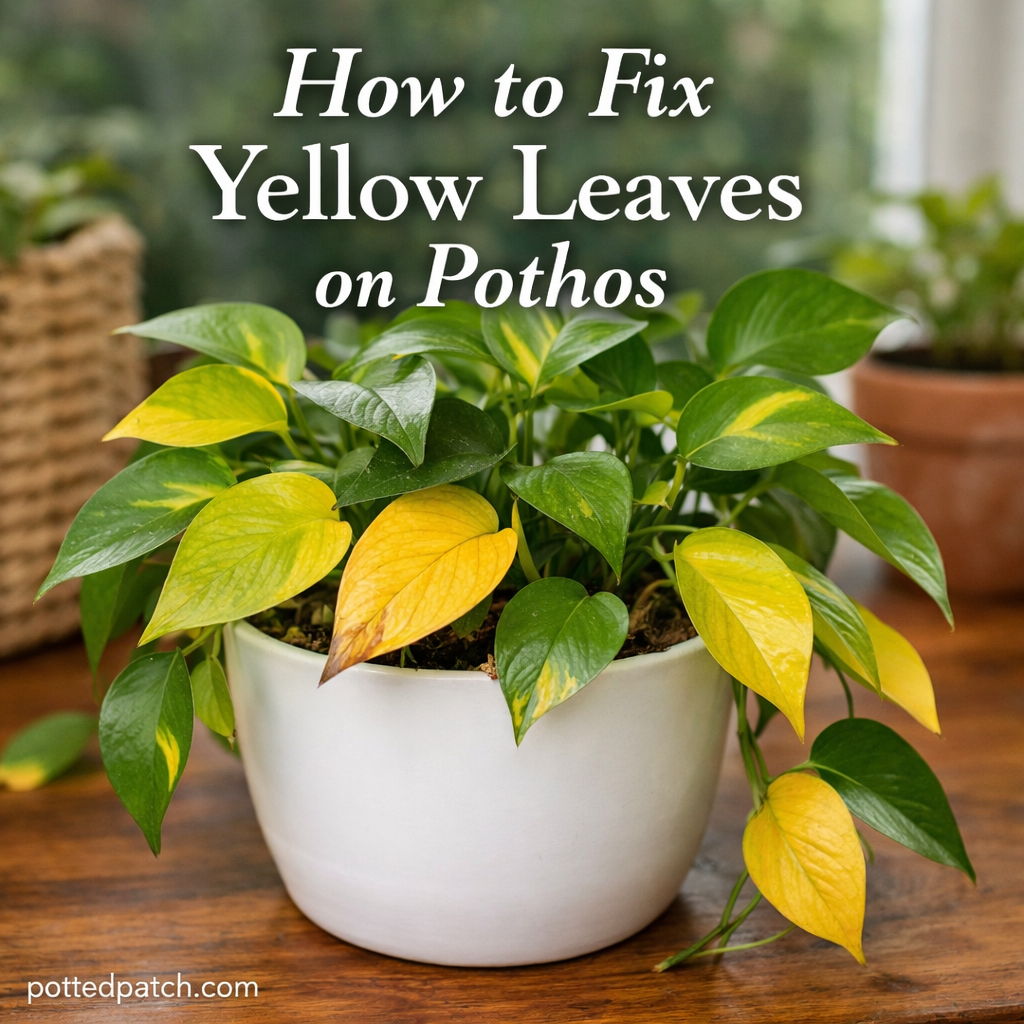
How to Fix Yellow Leaves on Pothos

Pothos plant with several yellow leaves in a white pot, illustrating common causes and fixes for yellowing foliage.
Yellow leaves on a pothos plant can signal watering, light, or nutrient issues. pottedpatch.com

Pothos plants are known for being easygoing and beginner-friendly. So when those glossy green leaves start turning yellow, it can feel frustrating and confusing.

The good news? Yellow leaves on pothos are usually fixable.

In this guide, you’ll learn the most common causes, how to diagnose the issue, and step-by-step fixes to help your plant bounce back quickly.

Continue reading “How to Fix Yellow Leaves on Pothos”

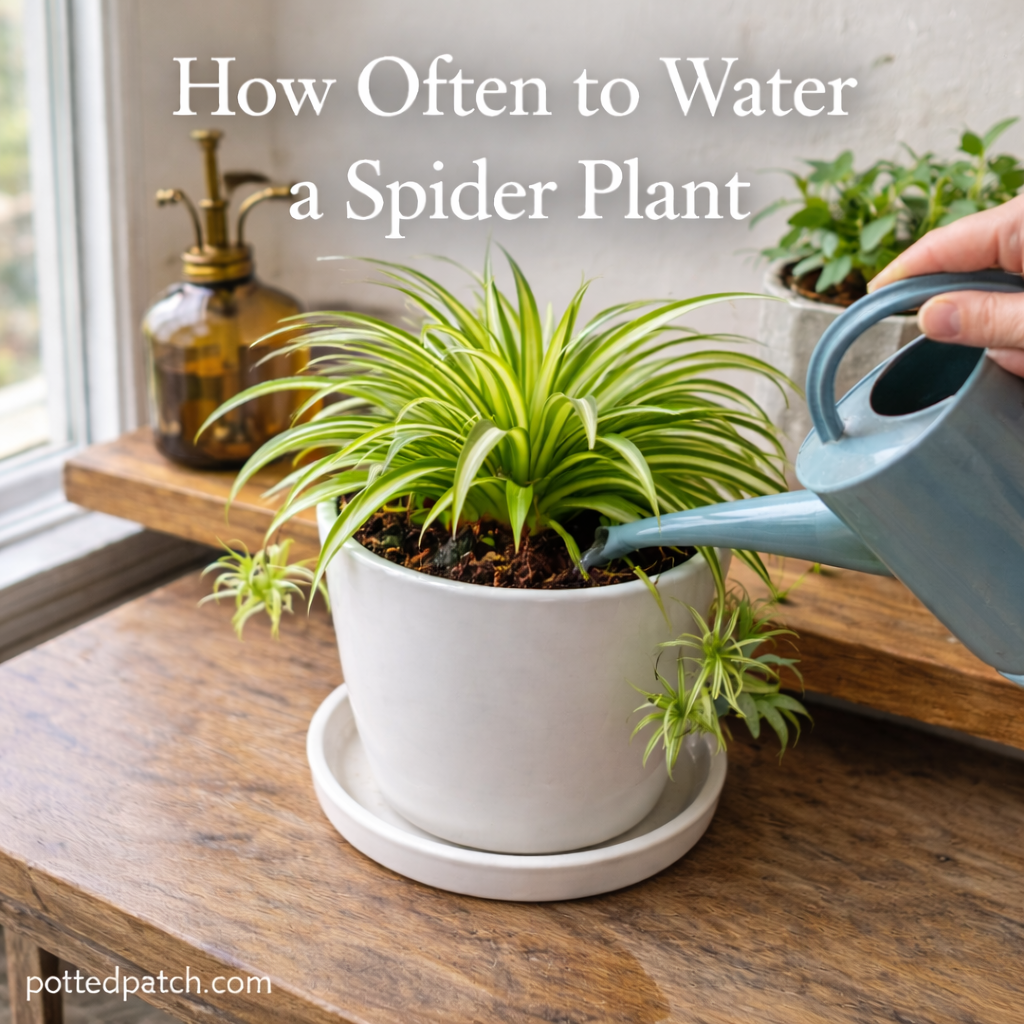
How Often to Water a Spider Plant

Person watering a spider plant indoors with water pouring directly into the soil and overlay title How Often to Water a Spider Plant.
Watering a spider plant properly by directing water into the soil for healthy indoor growth. pottedpatch.com

Spider plants are known for being easy to care for, but watering mistakes are still one of the most common reasons they struggle. Too much water can lead to root rot, while too little can cause brown tips and drooping leaves.

If you’re wondering how often to water a spider plant, this guide will help you find the right balance.

Continue reading “How Often to Water a Spider Plant”

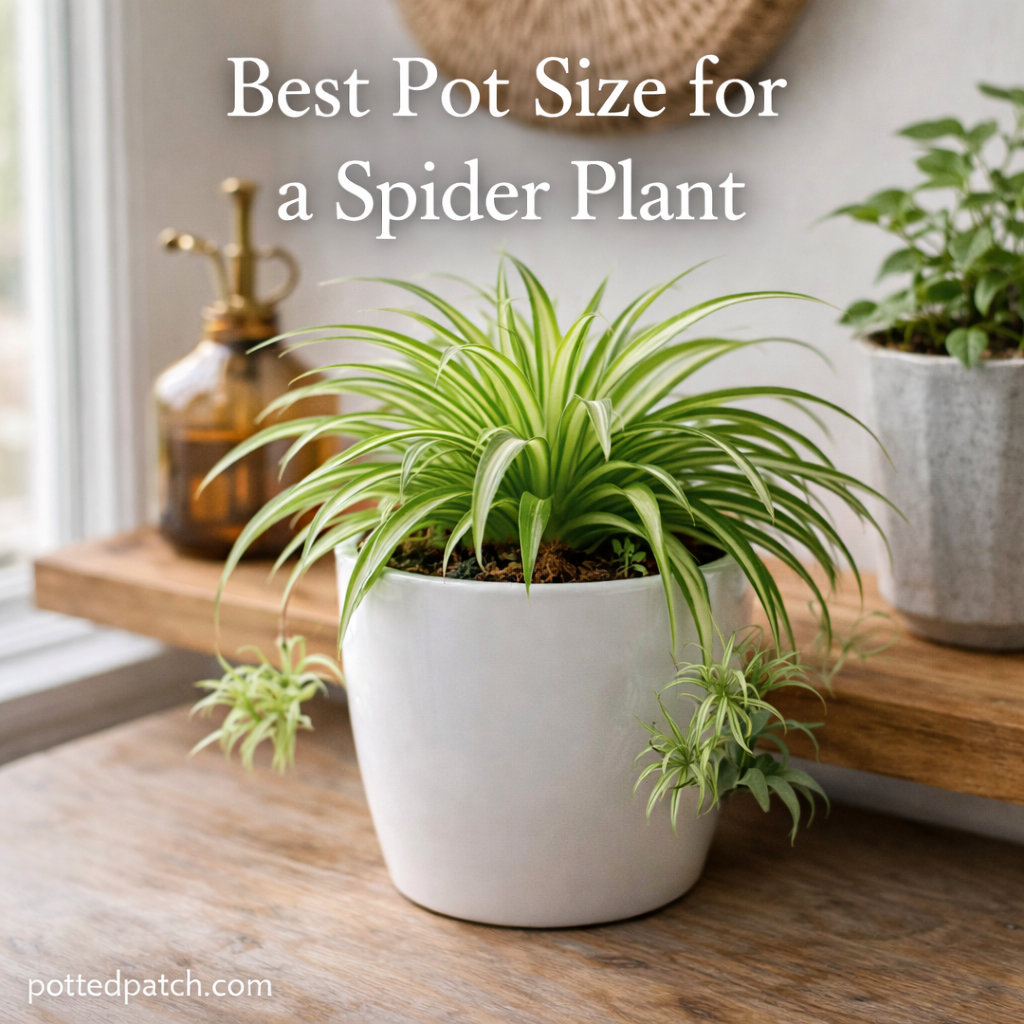
Best Pot Size for a Spider Plant

Healthy spider plant in a white pot indoors with overlay title Best Pot Size for a Spider Plant.
Choosing the right container size helps spider plants grow strong and healthy indoors. pottedpatch.com

Choosing the right pot size is one of the most important decisions you’ll make for a spider plant. Too small, and it becomes root-bound too quickly. Too large, and the soil may stay wet too long, increasing the risk of root rot.

In this guide, you’ll learn exactly how to choose the best pot size for a spider plant at every growth stage.

Continue reading “Best Pot Size for a Spider Plant”