Why Yellow Leaves Happen on ZZ Plant

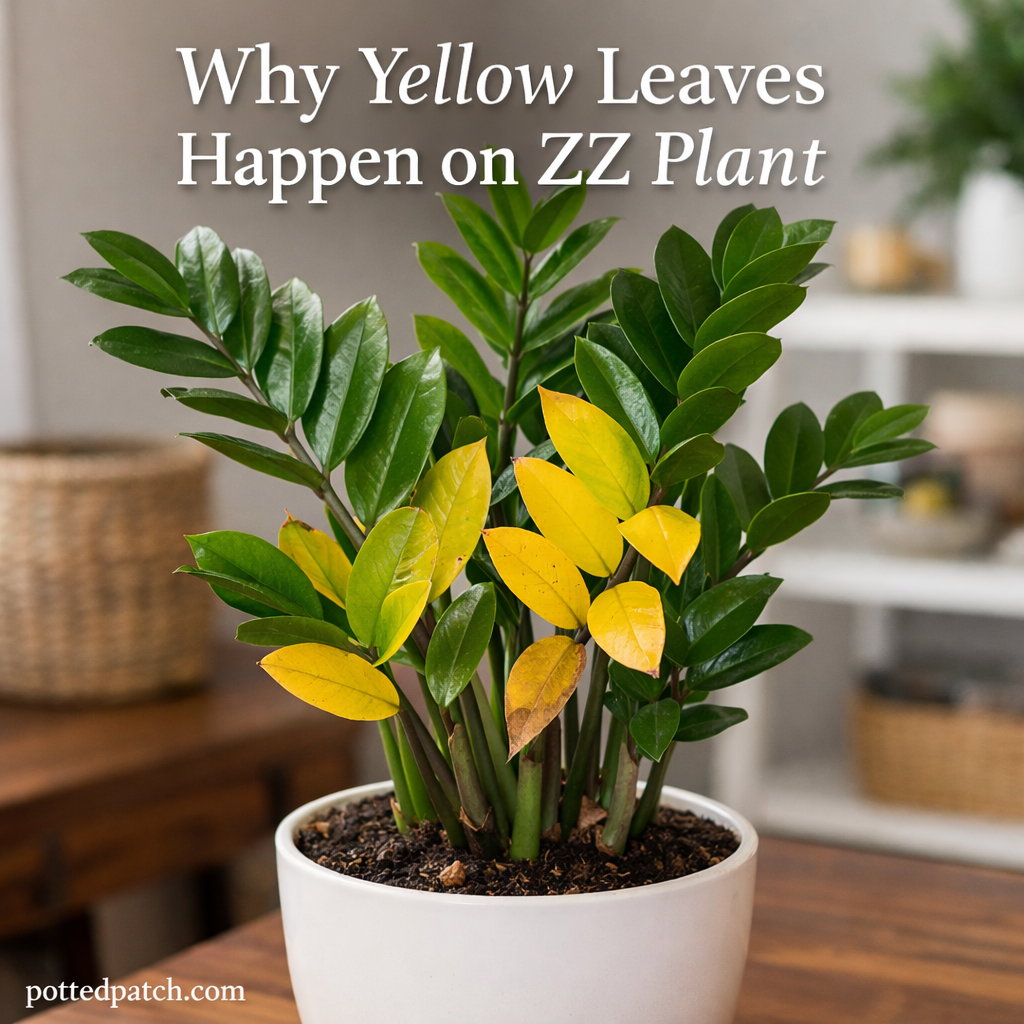
ZZ plant with several yellow leaves in a white pot indoors with overlay title Why Yellow Leaves Happen on ZZ Plant and pottedpatch.com watermark.
ZZ plant showing yellow leaves due to common care issues. pottedpatch.com

The ZZ plant (Zamioculcas zamiifolia) is famous for being nearly indestructible. It tolerates low light, irregular watering, and dry indoor air better than most houseplants.

So when you notice yellow leaves on your ZZ plant, it can feel confusing.

The good news? Yellowing leaves are usually a fixable issue. In this guide, you’ll learn why ZZ plant leaves turn yellow, how to diagnose the cause, and exactly what to do to restore your plant’s health.

Continue reading “Why Yellow Leaves Happen on ZZ Plant”
When and How to Repot a Rubber Plant

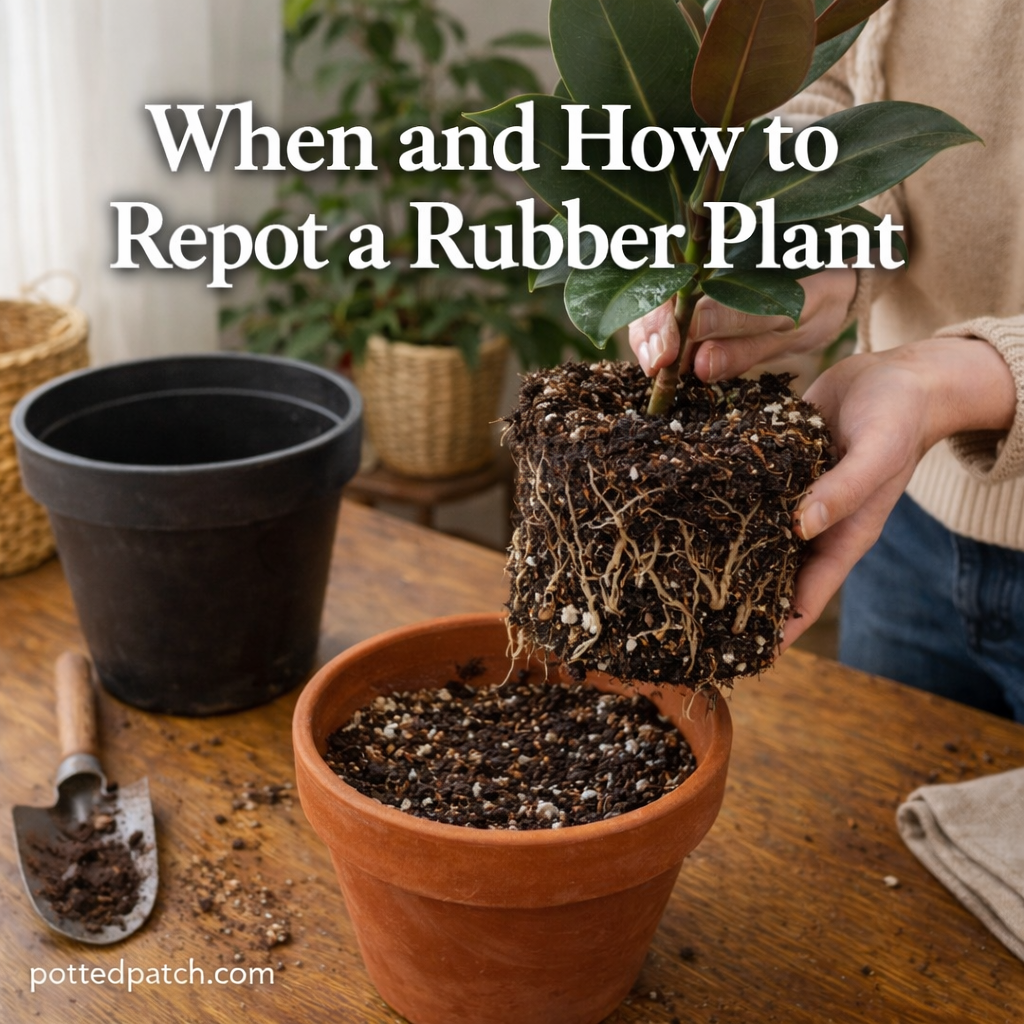
Person repotting a rubber plant into a larger terracotta pot with fresh soil indoors.
Repotting a rubber plant into a slightly larger pot with fresh, well-draining soil. pottedpatch.com

Rubber plants are strong, resilient houseplants — but even the healthiest one will eventually outgrow its pot.

If your plant’s growth has slowed, roots are circling the bottom, or water runs straight through the pot, it may be time to repot.

In this guide, you’ll learn when to repot a rubber plant, how to do it properly, and how to help it adjust afterward.

Continue reading “When and How to Repot a Rubber Plant”

How to Fertilize a Rubber Plant

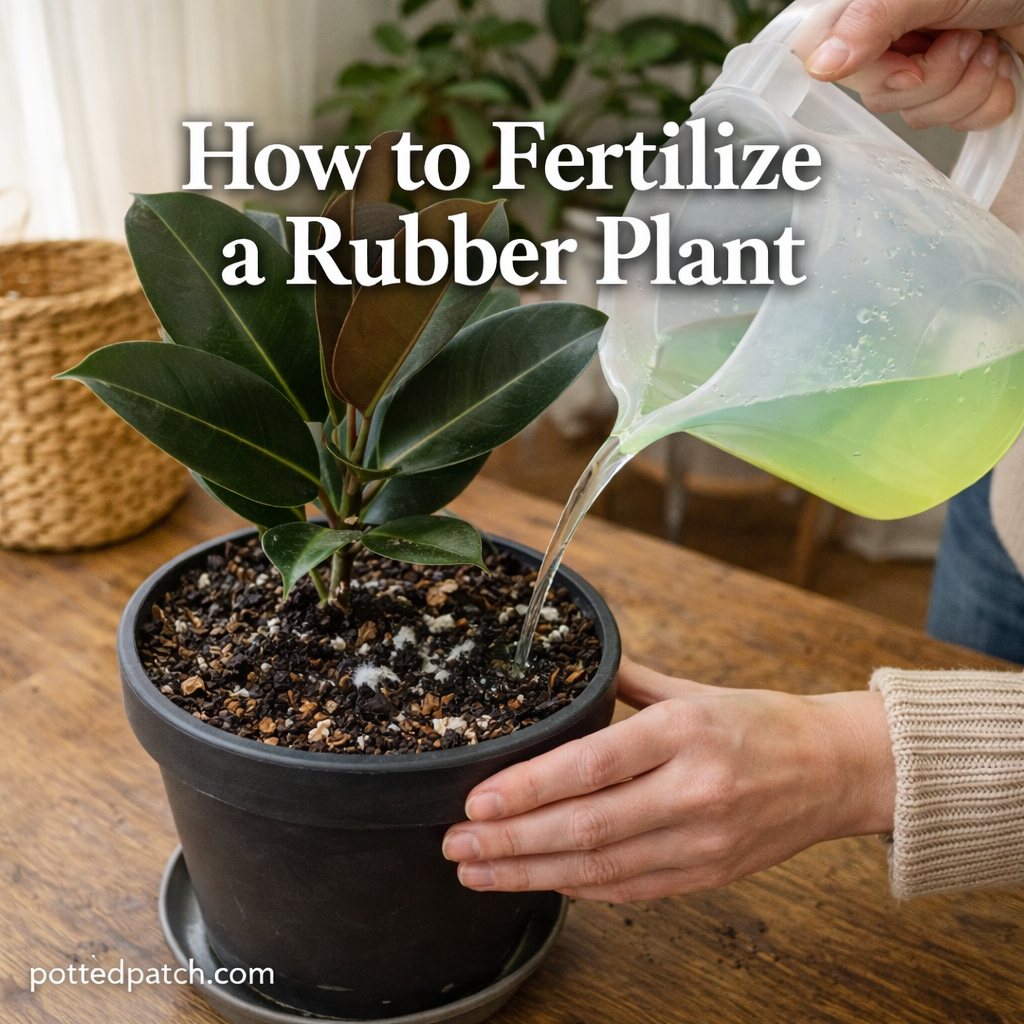
Person applying diluted liquid fertilizer to a rubber plant in a black pot indoors.
Fertilizing a rubber plant with diluted liquid plant food during growing season. pottedpatch.com

Rubber plants are known for their thick, glossy leaves and steady indoor growth. While they’re fairly low-maintenance, proper fertilizing can dramatically improve leaf size, color, and overall vigor.

If your rubber plant has slowed down, looks pale, or hasn’t produced new leaves in a while, it may be time to feed it.

In this guide, you’ll learn when to fertilize, what type of fertilizer to use, how often to apply it, and common mistakes to avoid.

Continue reading “How to Fertilize a Rubber Plant”

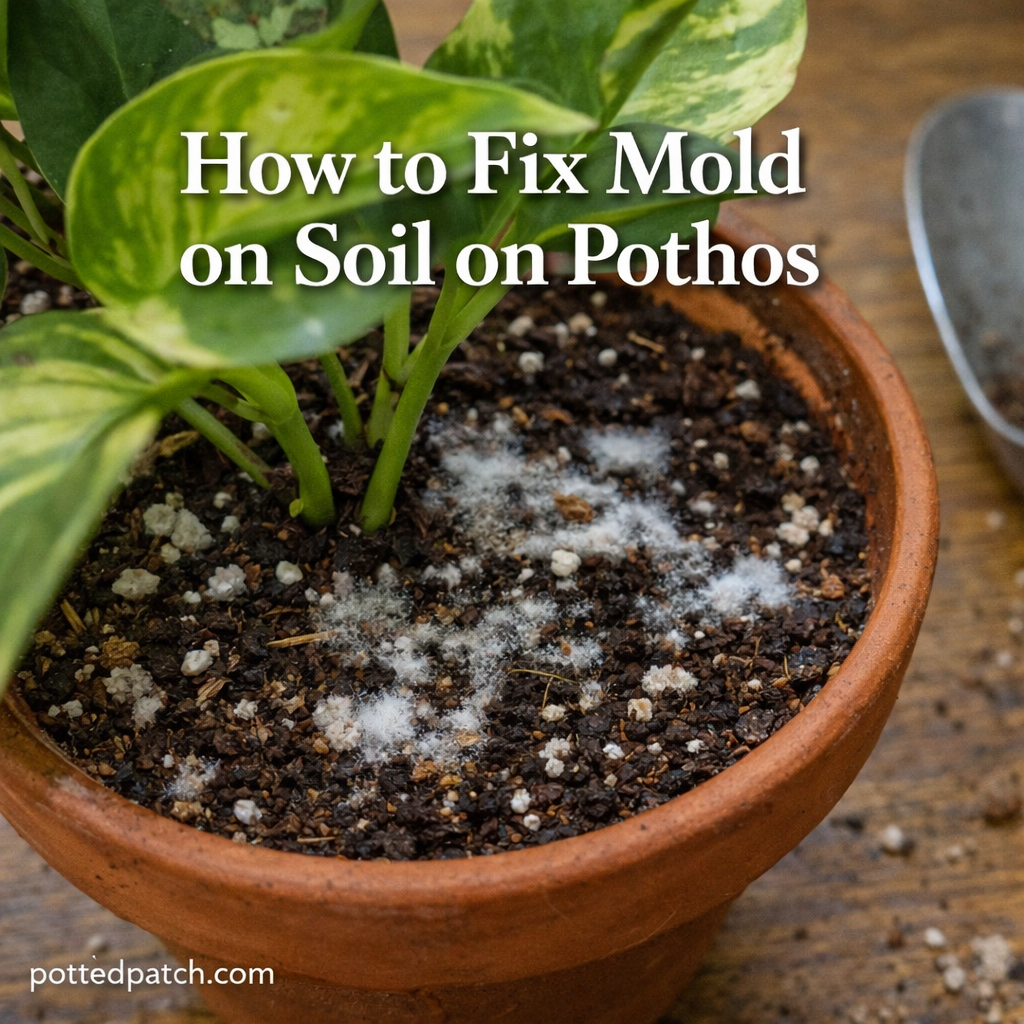
How to Fix Mold on Soil on Pothos

White mold growing on the surface of pothos soil in a terracotta pot indoors.
Surface mold forming on pothos soil from excess moisture. pottedpatch.com

If you’ve noticed white or gray fuzzy growth on the soil of your pothos plant, don’t panic. Mold on soil is a common issue for indoor plants — especially moisture-loving varieties like pothos.

The good news? It’s usually easy to fix.

In this guide, you’ll learn why mold appears, how to remove it safely, and how to prevent it from coming back.

Continue reading “How to Fix Mold on Soil on Pothos”

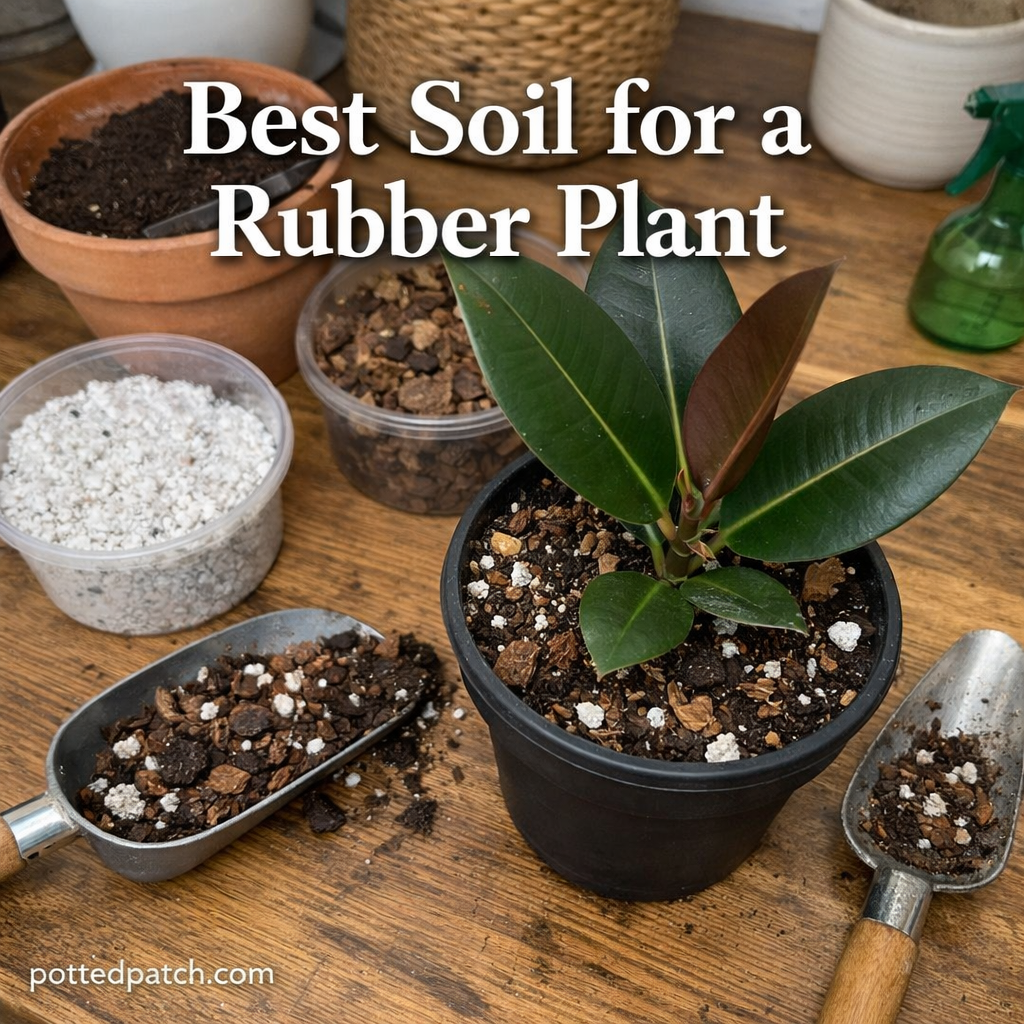
Best Soil for a Rubber Plant

Rubber plant in white pot with well-draining soil mix including perlite and bark for healthy indoor growth.
Rubber plant potted in a well-draining soil mix with perlite and bark. pottedpatch.com

Rubber plants (Ficus elastica) are known for their glossy leaves, strong growth, and ability to adapt to indoor spaces. But if you want thick stems, vibrant foliage, and steady growth, the right soil makes all the difference.

Choosing the best soil for a rubber plant isn’t complicated — but it does require the right balance of drainage, aeration, and moisture retention. In this guide, you’ll learn exactly what type of soil works best, what to avoid, and how to create the perfect mix for long-term health.

Continue reading “Best Soil for a Rubber Plant”

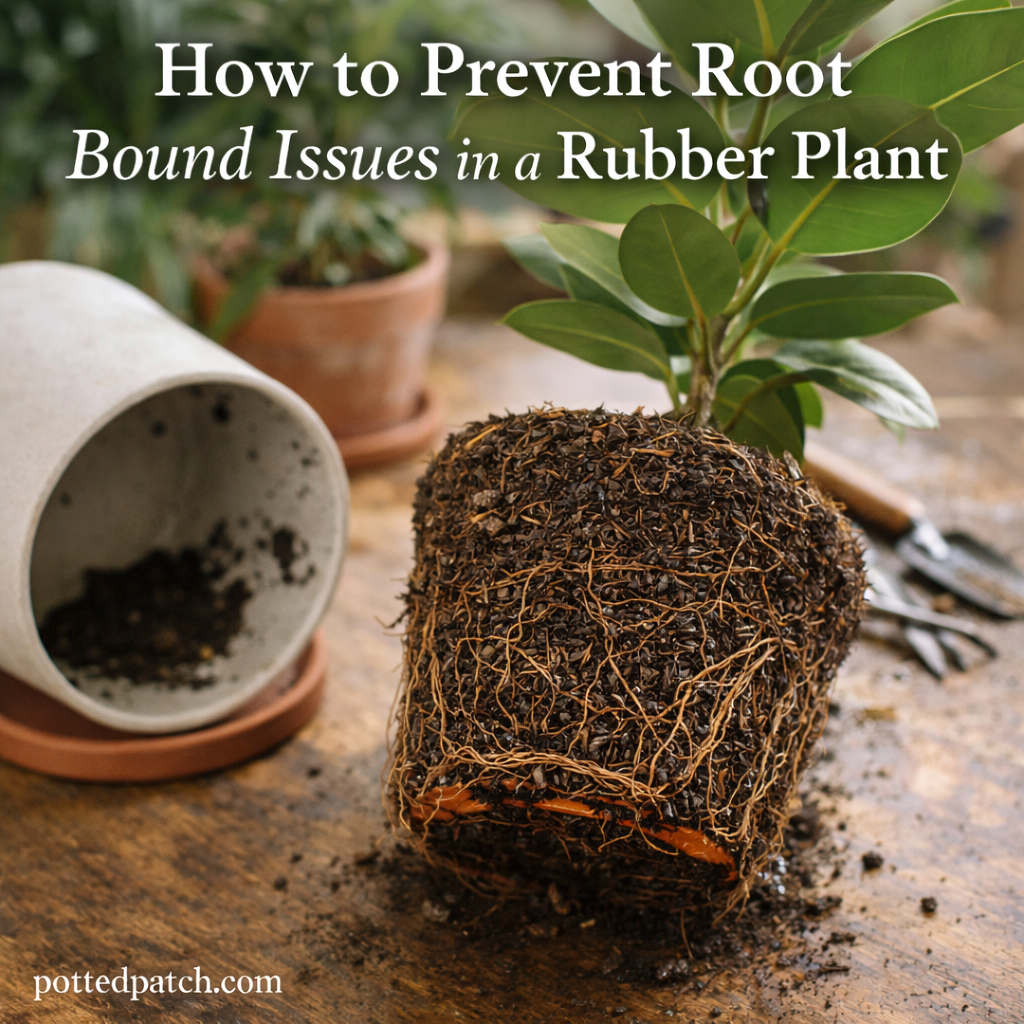
How to Prevent Root Bound Issues in a Rubber Plant

Rubber plant removed from its pot showing tightly bound roots to illustrate root bound issues, with pottedpatch.com watermark.
Rubber plant with tightly bound roots removed from pot to show early signs of becoming root bound. pottedpatch.com

Rubber plants are strong growers. Over time, their roots expand quickly and can outgrow their container. When this happens, the plant becomes root bound — meaning the roots circle tightly inside the pot with little room to expand.

Preventing root bound issues in a rubber plant keeps growth steady, leaves healthy, and watering predictable.

Here’s how to stay ahead of the problem.

Continue reading “How to Prevent Root Bound Issues in a Rubber Plant”

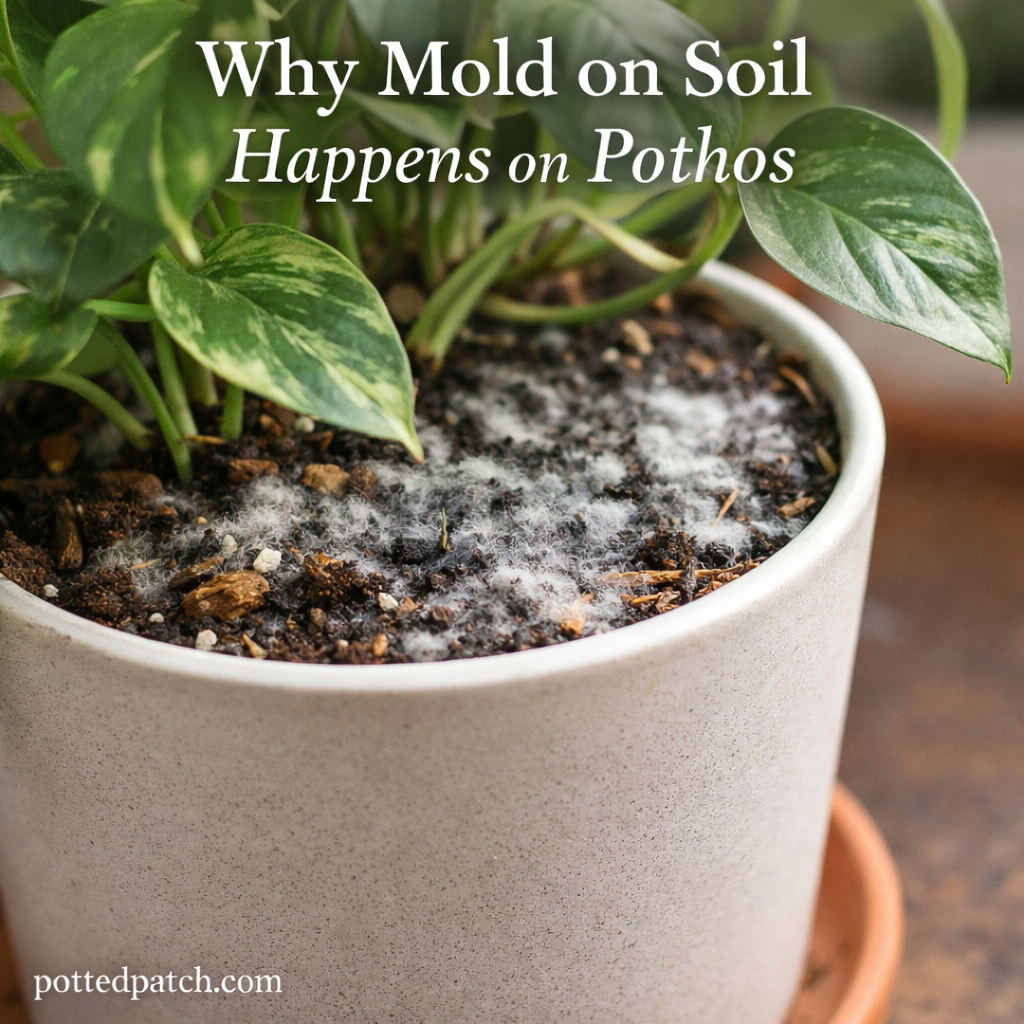
Why Mold on Soil Happens on Pothos

Pothos plant in a white pot showing white mold growing on the soil surface, with pottedpatch.com watermark.
White mold forming on pothos soil due to excess moisture and poor airflow. pottedpatch.com

Noticing white or fuzzy growth on the surface of your pothos soil can be alarming. The good news? In most cases, mold on soil is more of a care issue than a plant disease.

Understanding why mold forms on pothos soil helps you fix the root cause and prevent it from coming back.

Let’s break it down.

Continue reading “Why Mold on Soil Happens on Pothos”

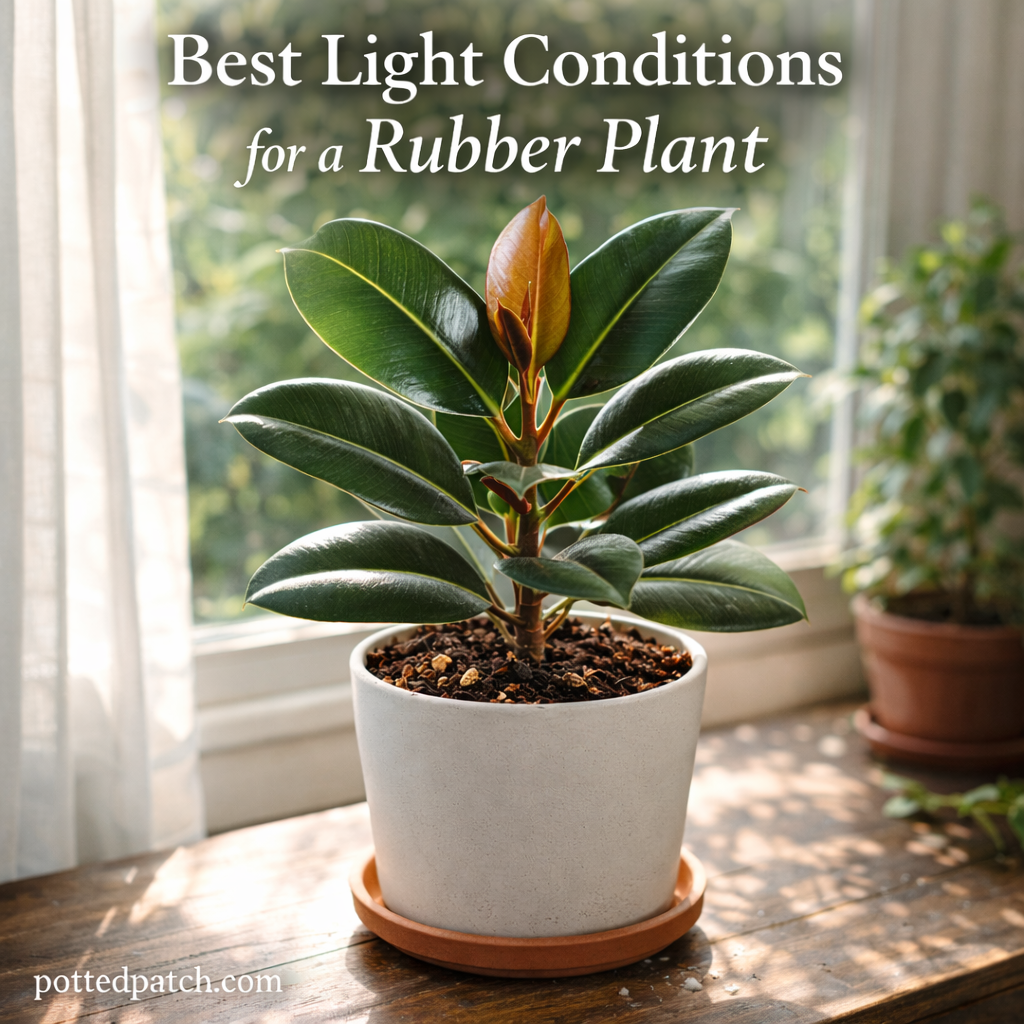
Best Light Conditions for a Rubber Plant

Rubber plant in a white pot placed near a bright window with filtered sunlight, showing ideal light conditions, with pottedpatch.com watermark.
Rubber plant positioned in bright, indirect sunlight near a window. pottedpatch.com

Rubber plants are known for their bold, glossy leaves and upright growth. But if your plant isn’t thriving, light is usually the reason.

Understanding the best light conditions for a rubber plant can mean the difference between steady growth and stalled, drooping leaves.

Let’s break down exactly what your rubber plant needs.

Continue reading “Best Light Conditions for a Rubber Plant”

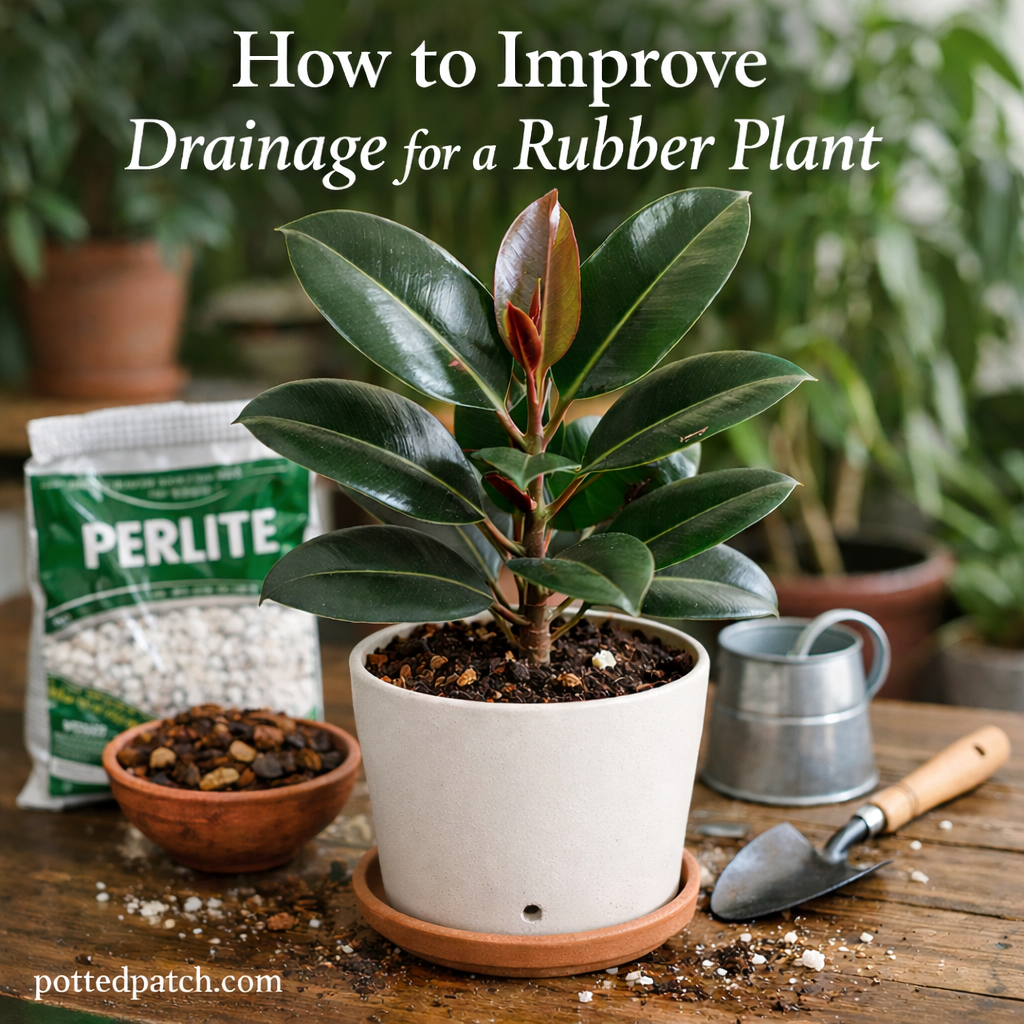
How to Improve Drainage for a Rubber Plant

Healthy rubber plant in a white pot with a subtle drainage hole and soil amendments for improved drainage, with pottedpatch.com watermark.
Rubber plant in a well-draining pot setup with subtle drainage hole and soil amendments. pottedpatch.com

Rubber plants are loved for their glossy leaves and bold presence—but they’re very sensitive to soggy soil. If water sits around the roots too long, your plant can quickly develop yellowing leaves, soft stems, or even root rot.

The good news? Improving drainage is simple once you understand what your rubber plant needs.

In this guide, you’ll learn how to improve drainage for a rubber plant using the right soil mix, container choices, and watering habits.

Continue reading “How to Improve Drainage for a Rubber Plant”

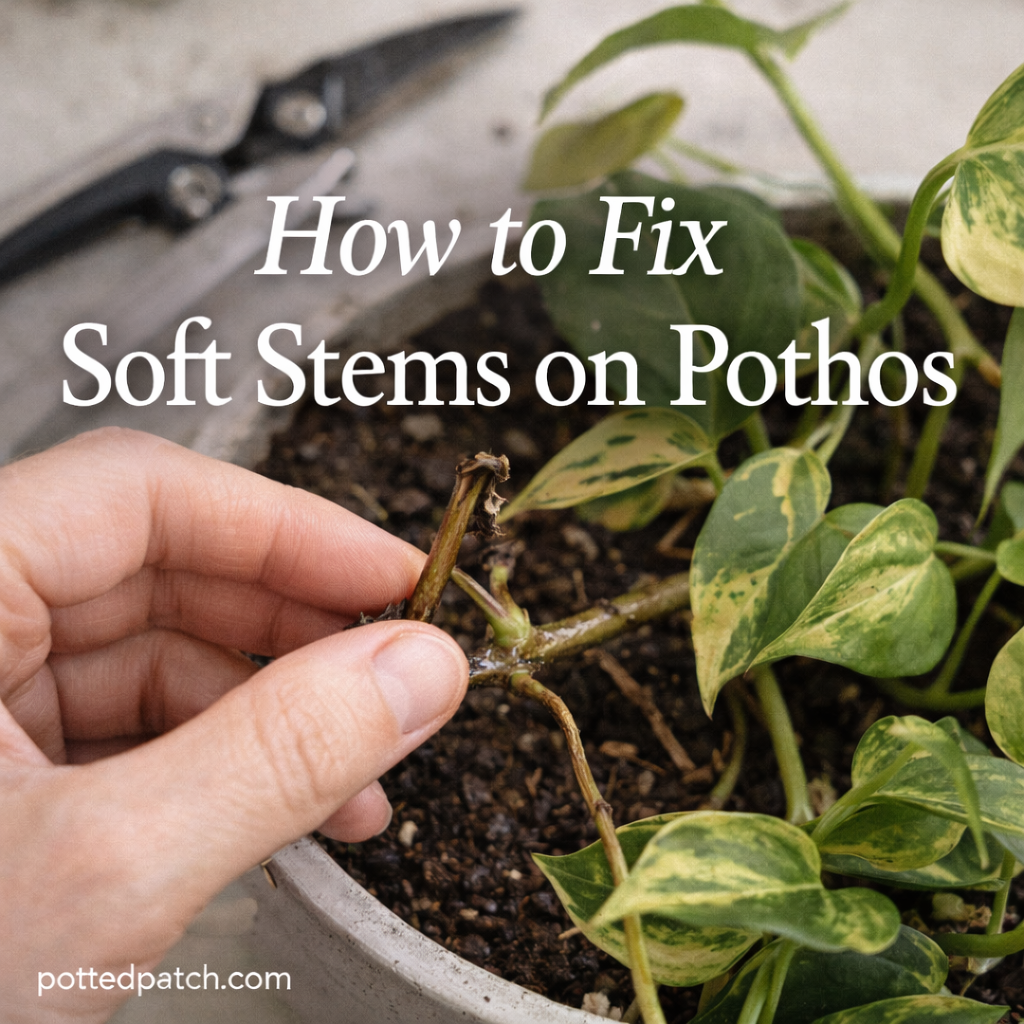
How to Fix Soft Stems on Pothos

Close-up of a hand holding a soft, damaged pothos stem with overlay title How to Fix Soft Stems on Pothos.
Soft stems on pothos are often caused by overwatering and root rot but can be fixed with quick action. pottedpatch.com.

Soft stems on pothos can be alarming. What should feel firm and slightly flexible suddenly becomes mushy, weak, or discolored.

The good news? Pothos are resilient plants. If you act quickly, you can often save them.

Here’s exactly how to fix soft stems on pothos — and prevent the problem from coming back.

Continue reading “How to Fix Soft Stems on Pothos”