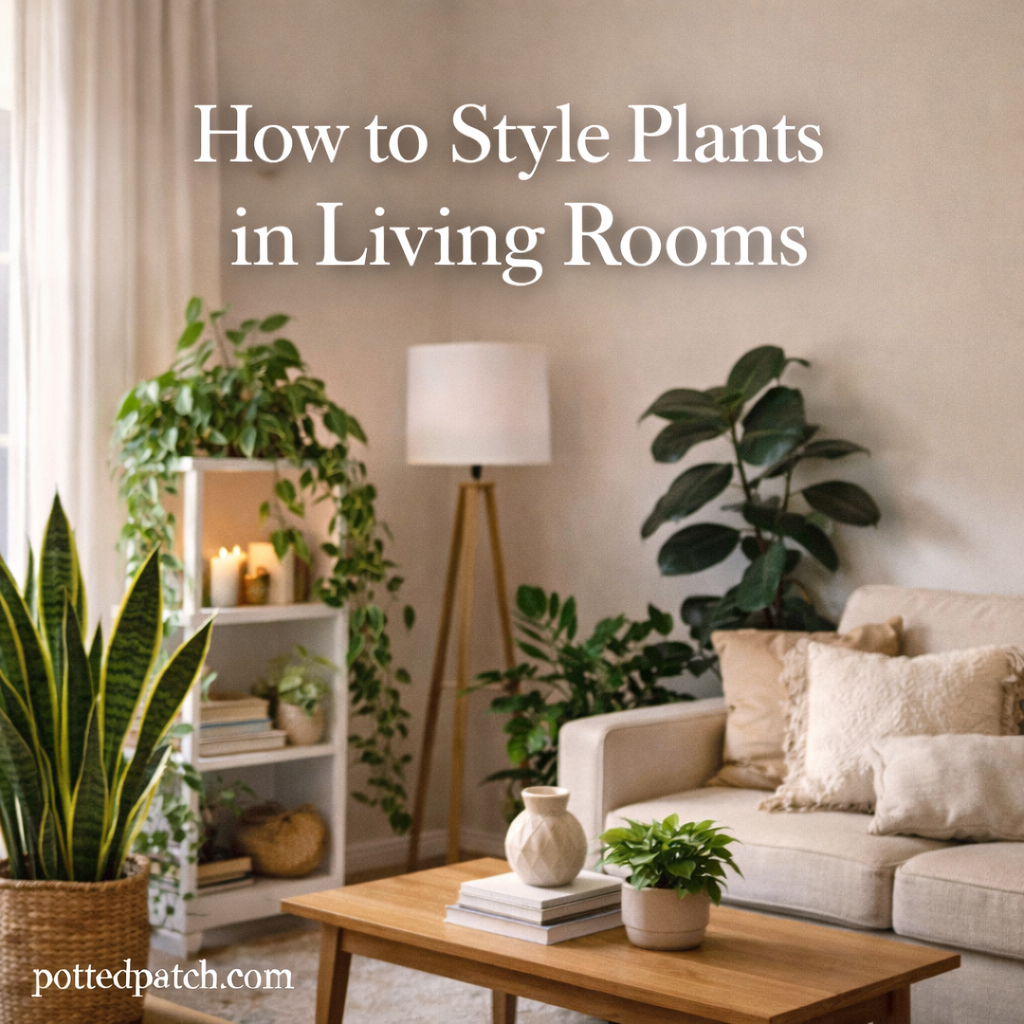
Plants can completely change the feel of a living room. They soften hard lines, add movement, and make a space feel lived-in and welcoming. The key isn’t just owning plants—it’s placing and styling them in a way that works with your layout, light, and lifestyle.
This guide walks through practical, beginner-friendly ways to style plants in living rooms so they look intentional, balanced, and easy to maintain.
Start With the Light Your Living Room Gets
Before choosing placement, understand the light in your space.
Ask yourself:
- Which areas get bright indirect light?
- Which corners stay shaded most of the day?
- Are there windows facing north, south, east, or west?
This determines where plants can realistically thrive—not just where they look good.
Use Plants to Anchor Empty Spaces
Large plants work best as visual anchors.
Good spots include:
- Empty corners near windows
- Beside sofas or armchairs
- Near TV consoles or bookshelves
Tall plants help fill vertical space and prevent rooms from feeling flat.
Layer Plants at Different Heights
The most natural-looking living rooms use height variation.
Ways to layer plants:
- Floor plants for structure
- Tabletop plants for detail
- Shelves or stands for elevation
Avoid placing everything at floor level. Mixing heights adds depth and movement.
Choose the Right Pot Style for Your Decor
Pots matter just as much as the plants themselves.
Match Pots to Your Living Room Style
Modern:
- Neutral colors
- Clean lines
- Matte ceramic or concrete
Boho or cozy:
- Textured clay
- Woven baskets
- Warm earth tones
Minimal:
- Simple shapes
- Limited color palette
- Consistent materials
When in doubt, neutral pots let the plant be the focus.
Group Plants in Odd Numbers
Plants look more natural when grouped intentionally.
Styling tips:
- Group plants in sets of 3 or 5
- Vary leaf shape and height
- Keep pot colors consistent
Avoid lining plants up evenly—clusters feel more organic.
Use Plants to Soften Furniture Edges
Plants can visually break up heavy furniture.
Good placements:
- A plant beside a sofa arm
- A trailing plant near shelving
- A floor plant next to a media console
This softens straight lines and balances bulky pieces.
Incorporate Trailing Plants for Flow
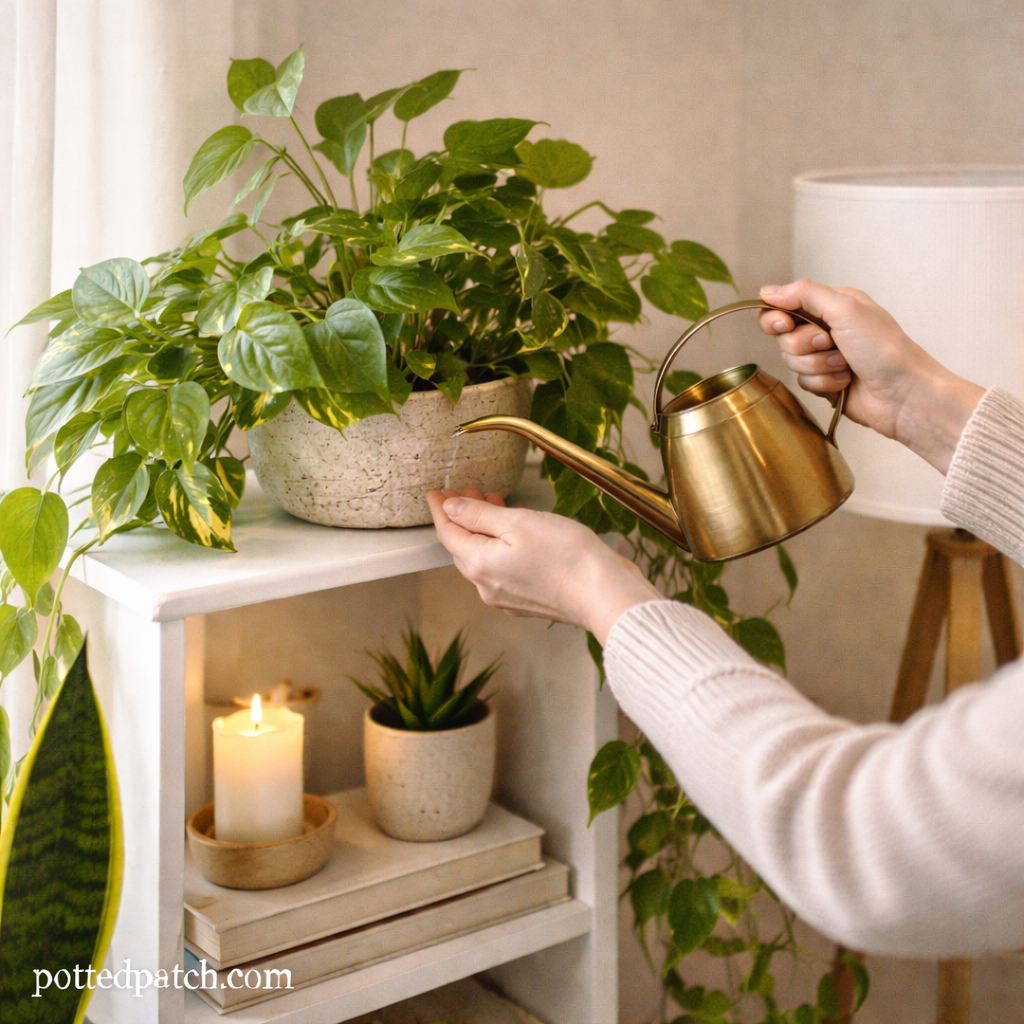
Trailing plants add movement and softness.
Best places for trailing plants:
- Shelves
- Side tables
- Plant stands
- High bookcases
Let vines drape naturally rather than trimming them too short.
Don’t Overcrowd the Space
More plants doesn’t always mean better styling.
Signs you’ve added too many:
- Walking paths feel tight
- Plants block light sources
- The room feels cluttered
Leave negative space so plants can stand out.
Balance Plants With Other Decor
Plants work best when styled alongside other elements.
Pair plants with:
- Books
- Lamps
- Artwork
- Sculptural objects
Think of plants as part of the decor, not separate from it.
Choose Low-Maintenance Plants for Living Areas
Living rooms are shared spaces, so easy care matters.
Good choices include:
- Snake plants
- Pothos
- ZZ plants
- Philodendrons
Low-maintenance plants stay attractive without constant attention.
Rotate and Adjust Over Time
Living room styling isn’t permanent.
Revisit placement:
- When seasons change
- As plants grow
- After rearranging furniture
Small adjustments keep the space fresh and balanced.
Final Thoughts
Styling plants in living rooms is about intention, not perfection. By paying attention to light, scale, and balance, plants can enhance your living space without overwhelming it. Start with a few well-placed plants, build layers slowly, and let the room guide your choices.
Well-styled plants don’t just decorate a living room—they make it feel like home. 🌿