
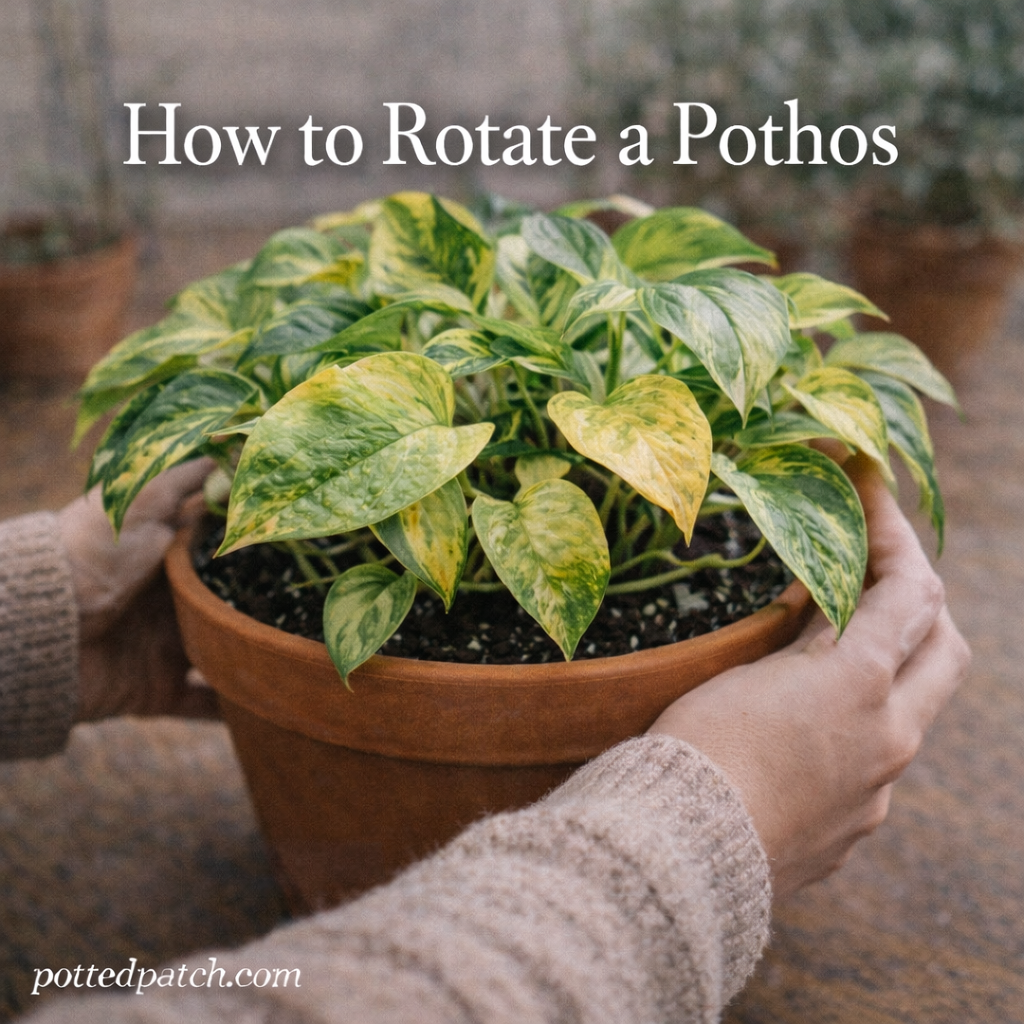
Rotating a pothos is one of the simplest care habits you can adopt—and one of the most overlooked. While pothos plants are tolerant and forgiving, they naturally grow toward light. Without rotation, this can lead to uneven growth, lopsided vines, and sparse areas over time.
This guide explains why rotating a pothos matters, how often to do it, and how to rotate your plant correctly to keep growth balanced and healthy.
Why Rotating a Pothos Is Important
Pothos plants are phototropic, meaning they grow toward their light source. When light consistently comes from one direction, the plant focuses growth on that side.
Without rotation, this can cause:
- Uneven or leaning growth
- Longer vines on one side
- Sparse or bare areas on the shaded side
- Increased risk of stems stretching or weakening
Rotation helps distribute light evenly across the plant, encouraging fuller and more symmetrical growth.
How Pothos Responds to Light Direction
Pothos leaves and stems subtly reposition themselves toward light over time. This is normal and healthy behavior—but it needs occasional correction indoors.
Indoors, light usually comes from:
- One window
- One side of a room
- A fixed light source
Because that direction rarely changes, rotation becomes essential.
How Often Should You Rotate a Pothos?
You don’t need a strict schedule, but consistency helps.
General guidelines:
- Rotate every 1–2 weeks for even growth
- Rotate monthly for low-light placements
- Rotate sooner if you notice leaning or uneven vines
Frequent small adjustments work better than occasional large turns.
How to Rotate a Pothos Correctly
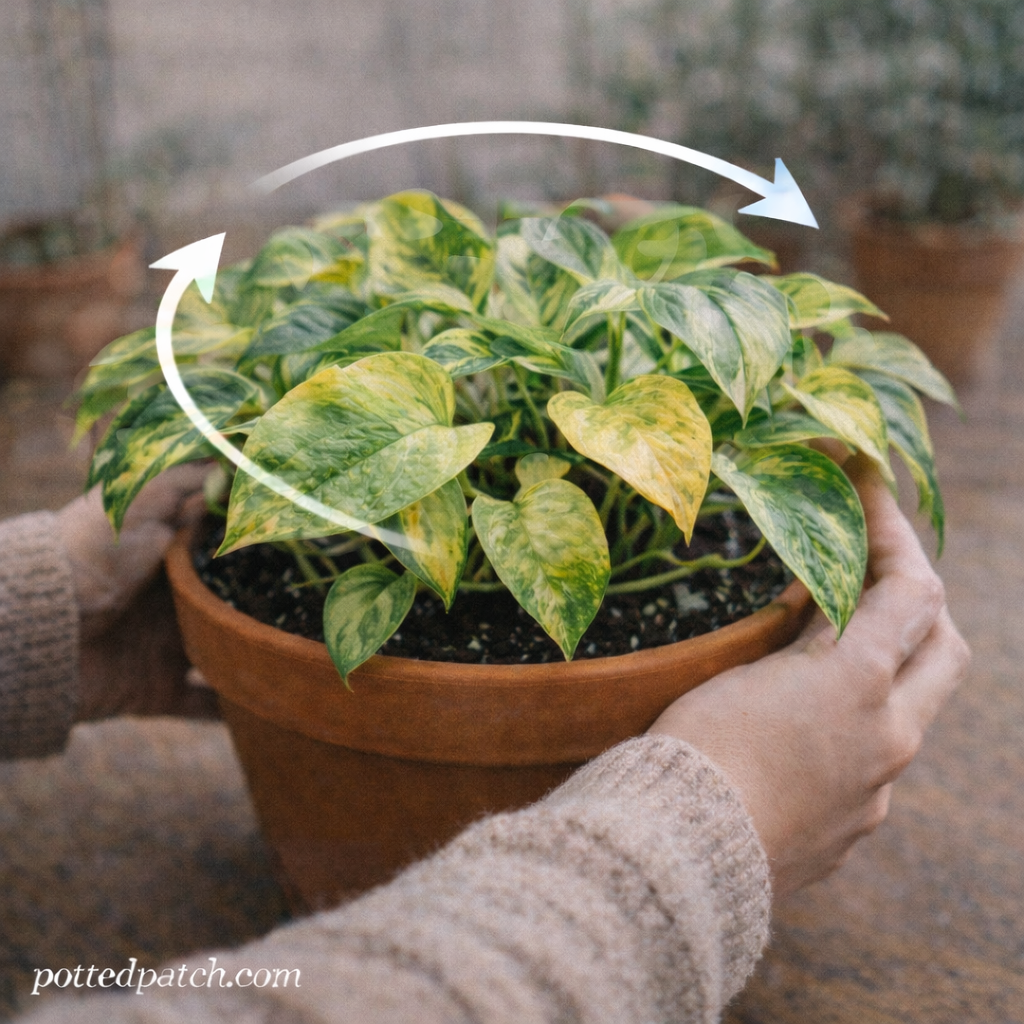
Rotating a pothos is simple, but there’s a right way to do it.
Step 1: Turn the Pot Slightly
Rotate the pot about ¼ turn (90 degrees) at a time.
Avoid spinning the plant completely around in one move. Gradual turns help the plant adjust without stress.
Step 2: Keep the Light Source Consistent
Rotation works best when:
- The light source stays the same
- Only the plant changes position
Moving the plant and rotating it simultaneously can confuse growth patterns.
Step 3: Observe Growth Between Rotations
After rotating:
- Watch which areas produce new leaves
- Check for improved balance
- Adjust timing if growth still favors one side
The plant will guide how often rotation is needed.
Does Hanging Pothos Need Rotation?
Yes—just as much, sometimes more.
Hanging pothos often receive light from:
- One window direction
- Overhead lighting
- A single side of a room
To rotate a hanging pothos:
- Turn the hook or hanger slightly
- Rotate the pot within the hanger if possible
- Adjust vines so shaded areas face the light
This prevents all vines from trailing toward one side.
Rotating Pothos in Low Light
In low-light environments, rotation becomes even more important.
Without rotation, pothos in low light can develop:
- Long, thin vines
- Widely spaced leaves
- Reduced fullness
Rotating ensures whatever light is available reaches all sides evenly.
When Rotation Matters Less
Rotation is still helpful, but less critical when:
- Light is evenly distributed from multiple directions
- The plant sits under grow lights
- The pothos is regularly pruned and propagated
Even then, occasional rotation improves overall symmetry.
Common Rotation Mistakes to Avoid
Avoid these simple errors:
- Rotating too aggressively (180° every time)
- Forgetting rotation for months
- Moving the plant frequently instead of rotating
- Expecting instant visual results
Rotation works gradually—patience is part of the process.
Pair Rotation With Pruning for Best Results
Rotation works best alongside light pruning.
Why the combination helps:
- Rotation balances light exposure
- Pruning encourages branching
- Together, they promote fuller growth
If one side looks sparse, prune lightly and rotate so that side faces the light.
A Simple Rotation Habit
An easy way to remember:
- Rotate when you water
- Rotate when you dust leaves
- Rotate on the same day each week
Attaching rotation to an existing habit keeps it consistent.
Final Thoughts
Rotating a pothos is a small action with a big impact. By turning the plant slightly on a regular basis, you encourage balanced growth, fuller vines, and a healthier overall shape.
It takes seconds, costs nothing, and prevents many common pothos issues before they start. With consistent rotation, your pothos will grow evenly and look its best year-round. 🌿