

Philodendrons naturally grow toward light. If you leave your plant in the same position for too long, it will start leaning, stretching, or becoming uneven.
Rotating your philodendron is a simple habit that keeps it:
- Balanced and symmetrical
- Fuller and bushier
- Less leggy
- Stronger over time
Here’s exactly how to rotate your philodendron correctly — and how often to do it.
Why Philodendrons Need Rotation
Philodendrons are phototropic, meaning they grow toward their light source.
If light comes from one direction (like a window), the plant will:
- Lean toward the window
- Stretch longer vines in that direction
- Develop uneven foliage
- Lose its compact shape
Regular rotation ensures all sides receive equal light exposure.
How Often Should You Rotate a Philodendron?
For most indoor settings:
- Rotate every 1–2 weeks
- Or rotate each time you water
During active growing season (spring and summer), rotation is especially helpful.
In low light conditions, rotating becomes even more important to prevent leggy growth.
Step-by-Step: How to Rotate a Philodendron
Step 1: Identify the Light Source
Check where light enters the room:
- Window direction
- Nearby lamps
- Skylights
Determine which side of the plant faces the strongest light.
Step 2: Turn the Pot Gradually
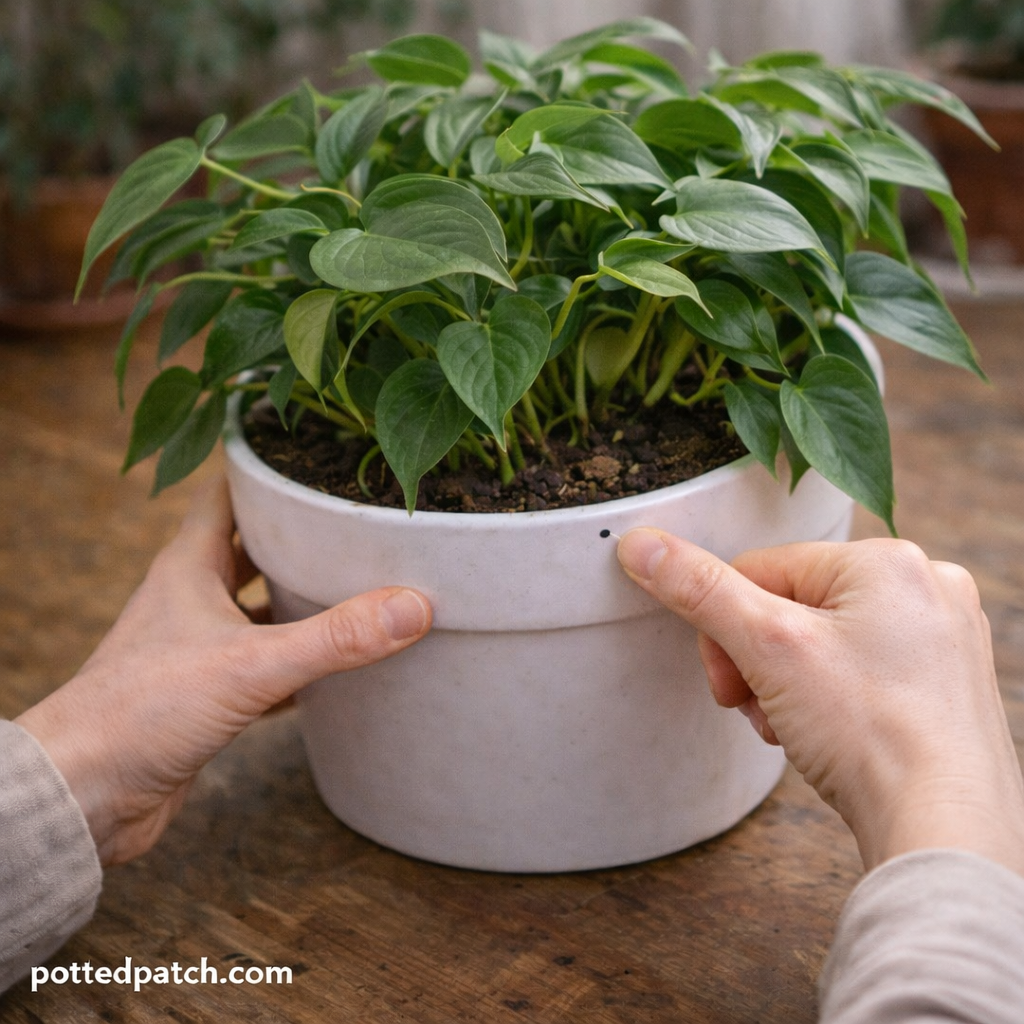
Rotate the pot:
- About a quarter turn (90 degrees)
- In the same direction each time
Avoid sudden full rotations, which can temporarily stress the plant.
Small, consistent turns are best.
Step 3: Monitor Plant Response
Over the next week or two, look for:
- More upright stems
- Balanced leaf spacing
- Reduced leaning
If the plant was heavily leaning, it may take several rotations to correct.
Signs Your Philodendron Needs Rotation
- Noticeable lean toward the window
- One side fuller than the other
- Sparse or leggy growth on the back side
- Twisting stems
The earlier you rotate, the easier it is to maintain symmetry.
Should You Rotate Climbing Philodendrons?
Yes — but with extra care.
If your plant is attached to a moss pole or trellis:
- Rotate the entire pot and support together
- Avoid twisting or stressing stems
- Make small adjustments instead of dramatic turns
Climbing types can still become uneven if ignored.
What If the Plant Is Already Leaning?
If your philodendron is strongly angled:
- Rotate it 90 degrees.
- Support the leaning side if necessary.
- Allow several weeks for correction.
- Prune leggy vines if needed.
In severe cases, trimming and propagating can help restore balance.
Can You Rotate Too Much?
Rotating too frequently (every few days) can cause mild stress.
Stick to:
- Every 1–2 weeks
- Or during watering sessions
Consistency matters more than frequency.
Bonus Tips for Balanced Growth
To maximize results:
- Ensure bright, indirect light
- Avoid placing directly against walls
- Prune stretched vines
- Repot if root-bound
Rotation works best as part of a balanced care routine.
Final Thoughts
Rotating your philodendron is one of the simplest ways to maintain an attractive, full shape.
With small, consistent quarter turns every couple of weeks, you’ll prevent leaning and encourage even growth on all sides.
It’s a small habit that makes a noticeable difference — especially over time.