Plant care tags are meant to help, but they often confuse beginners more than they clarify. Vague symbols, broad instructions, and one-size-fits-all advice can lead to overwatering, poor placement, or unnecessary stress for your plant.
This guide explains how to correctly read plant care tags, what each section really means, and how to translate tag information into practical care for your home.
What Plant Care Tags Are (and What They Aren’t)
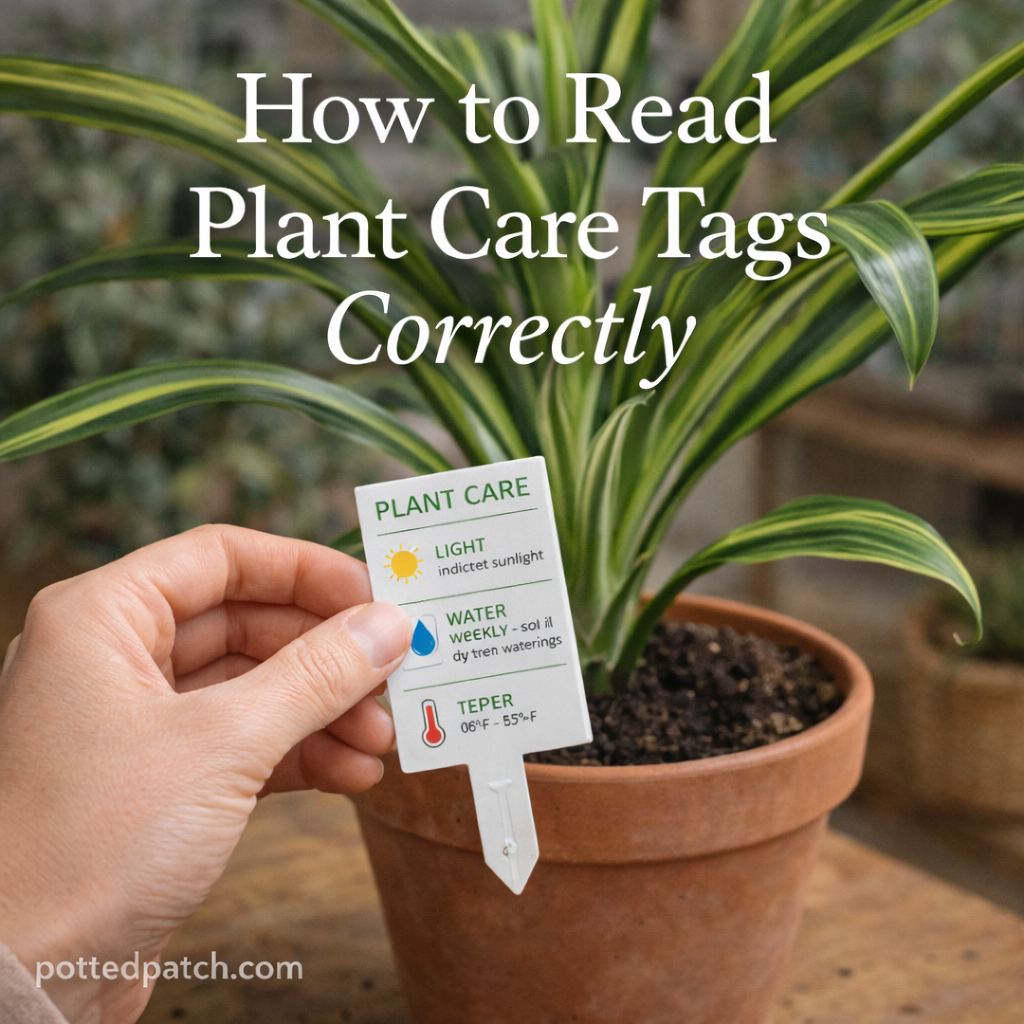
Plant tags provide general guidelines, not custom instructions for your specific home.
They are:
- Designed for retail environments
- Written to apply to many homes and climates
- Simplified for quick reference
They are not:
- Tailored to your lighting conditions
- Adjusted for your humidity or temperature
- A guarantee of perfect care
Think of tags as a starting point, not a strict rulebook.
Understanding Light Instructions on Plant Tags
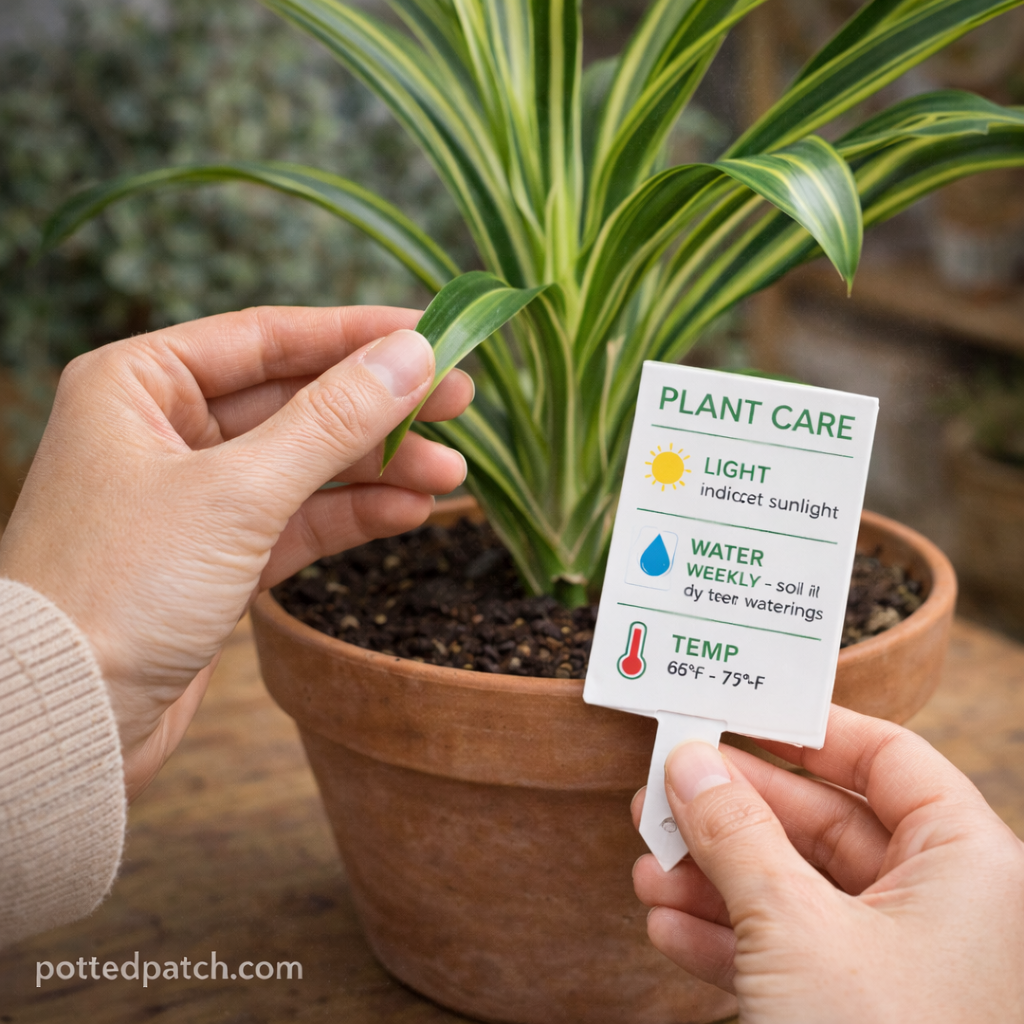
Light is one of the most misunderstood sections on plant tags.
Common light terms and what they really mean
Bright light
- A well-lit room with lots of natural light
- Not direct sun on the leaves
- Usually near a window, but not touching it
Indirect light
- Light that is filtered or reflected
- A few feet away from a bright window
- Ideal for most houseplants
Low light
- Areas where you can read comfortably without turning on a lamp
- No direct sunlight
- Often overused on tags to make plants seem easier
If a tag says “low light” but the plant looks like a tropical species, it likely means low light tolerance, not preference.
How to Interpret Watering Instructions
Watering advice on tags is often oversimplified.
Common phrases and how to read them
Water weekly
- Assumes average conditions
- Should always be adjusted based on soil dryness
- Not a strict schedule
Keep soil moist
- Soil should feel lightly damp, not soggy
- Often misunderstood and leads to overwatering
Allow soil to dry between waterings
- Usually refers to the top 1–2 inches of soil
- Not complete dryness unless specified
Instead of following the schedule on the tag, always check the soil with your finger before watering.
Decoding Humidity and Temperature Information
Many tags either ignore humidity or oversimplify it.
What “average humidity” usually means
- Normal indoor conditions
- No special equipment required
- Not extremely dry or drafty areas
Temperature ranges on tags
- Often listed as a wide range
- Designed to cover most homes
- Cold drafts matter more than exact numbers
If your home feels comfortable to you, most houseplants will tolerate the temperature just fine.
Fertilizer Instructions: What to Take Seriously
Fertilizer recommendations are often vague for a reason.
Common fertilizer tag advice
- Feed monthly
- Use balanced fertilizer
- Fertilize during growing season
What this actually means:
- Fertilizer is optional, not mandatory
- Less is safer than more
- Most beginners over-fertilize
If you’re unsure, skip fertilizing for the first few months and focus on light and watering first.
Pot Size and Drainage Warnings
Some tags include icons or notes about pot size and drainage.
Key things to look for
- Drainage holes are essential
- Decorative pots need an inner draining pot
- “Well-draining soil” usually means a loose, airy mix
Tags rarely explain drainage well, but poor drainage is one of the most common causes of plant failure.
Why Plant Tags Can Be Misleading
Plant tags are written to sell plants, not diagnose problems.
They often:
- Understate light needs
- Oversimplify watering
- Ignore seasonal changes
- Assume ideal conditions
This doesn’t make them useless—it just means they need interpretation.
How to Use Plant Tags the Right Way
The best approach is to combine tag information with observation.
A simple system that works
- Use the tag to identify basic needs
- Place the plant according to light guidance
- Water based on soil dryness, not the tag
- Watch how the plant responds
- Adjust care gradually
Your plant’s leaves, stems, and growth patterns will tell you more than the tag ever could.
What to Do If a Tag Is Missing or Incomplete
Many plants lose their tags after purchase.
If that happens:
- Identify the plant type if possible
- Look up care based on the species
- Start with bright indirect light and light watering
- Adjust slowly as you observe growth
Most common houseplants are more forgiving than their tags suggest.
Final Thoughts
Plant care tags are helpful guides, but they’re only the beginning. Learning how to interpret them correctly helps you avoid common mistakes and build confidence as a plant owner. Once you understand what the tag is really saying—and what it leaves out—you’ll rely less on printed instructions and more on your plant itself.
That’s when plant care starts to feel intuitive instead of confusing.