Pruning a peace lily keeps it healthy, attractive, and blooming consistently. While these plants don’t require heavy trimming, occasional pruning removes dead growth, encourages airflow, and redirects energy to new leaves and flowers.
If your peace lily has yellow leaves, faded blooms, or crowded growth, a simple pruning session can refresh the entire plant.
Here’s exactly when and how to prune a peace lily the right way.
Why Pruning Is Important
Pruning helps:
- Remove yellow or brown leaves
- Eliminate spent flowers
- Prevent disease spread
- Improve airflow
- Encourage new growth
Peace lilies grow from the base, so removing old growth allows fresh leaves to emerge more easily.
When to Prune a Peace Lily
You can prune lightly any time of year, but the best time is during active growth in spring and summer.
Prune when you notice:
- Yellowing or browning leaves
- Wilted or blackened stems
- Faded or green spent blooms
- Crowded or damaged foliage
Avoid heavy pruning during winter dormancy.
Tools You’ll Need
Use:
- Clean, sharp scissors or pruning shears
- Rubbing alcohol for sterilizing blades
Always sterilize tools before and after pruning to prevent spreading bacteria or fungus.
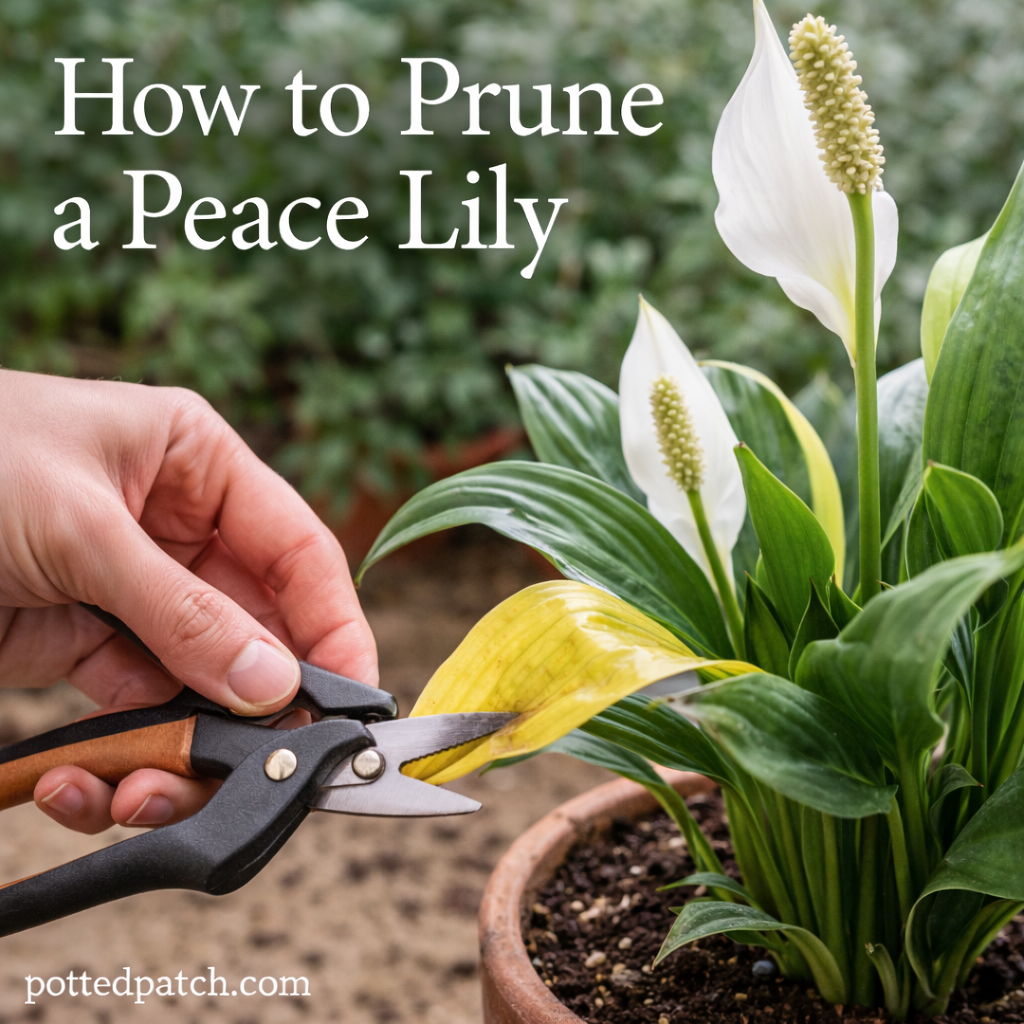
How to Remove Yellow or Brown Leaves
Yellow leaves are usually old or stressed growth.
Step-by-Step
- Locate the leaf at the base of the plant.
- Follow the stem down to the soil line.
- Cut the stem as close to the base as possible.
Do not cut halfway up the leaf — remove it fully from the base.
How to Prune Spent Flowers
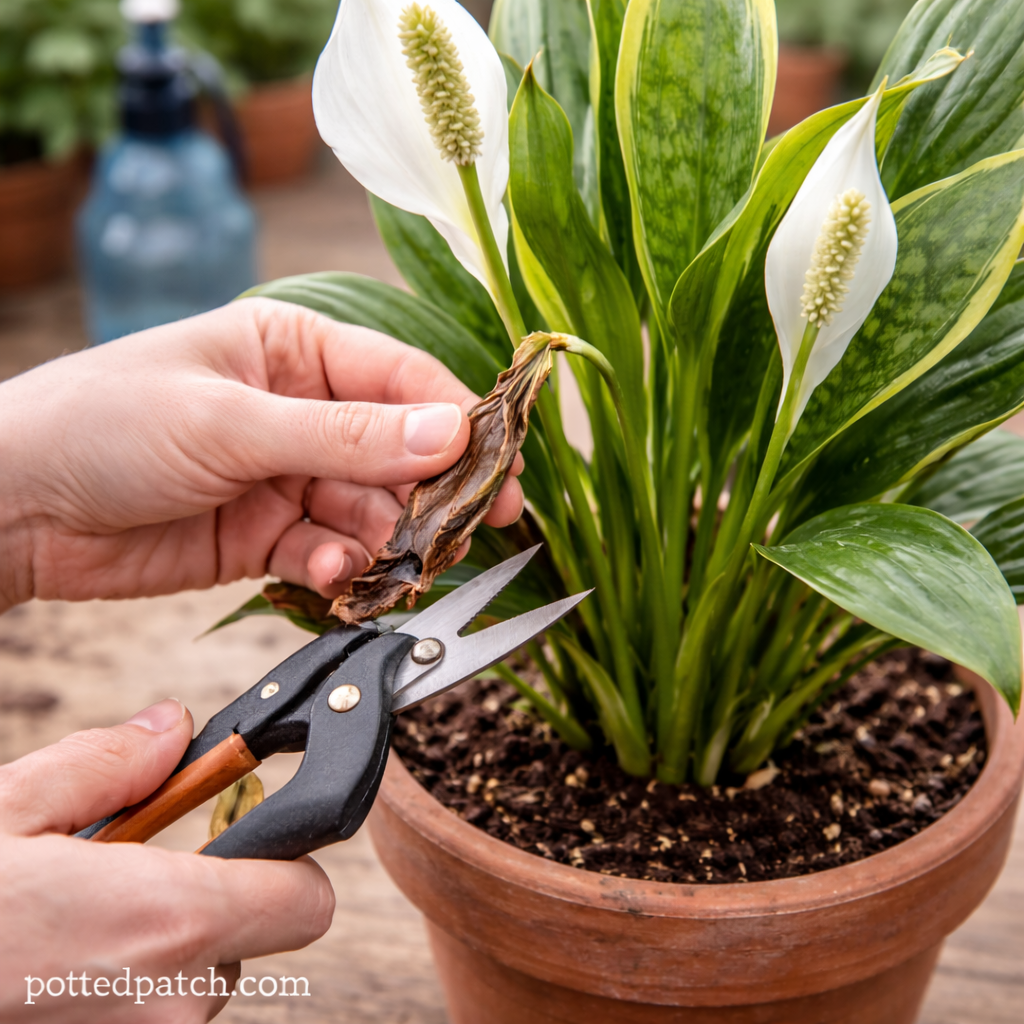
Peace lily flowers eventually turn green and then brown.
Once a bloom fades:
- Follow the flower stem down to the base.
- Cut the entire stem near the soil line.
Removing old blooms encourages the plant to focus energy on new growth.
How Much Should You Prune?
Never remove more than one-third of the plant at once.
Light, gradual pruning reduces stress and helps the plant recover quickly.
If the plant is severely overcrowded, consider dividing it during repotting instead of excessive trimming.
What If the Plant Is Overgrown?
If your peace lily looks too dense:
- Remove outer, older leaves first
- Improve airflow by thinning crowded stems
- Consider dividing the plant into separate pots
Overcrowding can reduce blooming and increase moisture retention around the base.
Aftercare Following Pruning
After pruning:
- Water lightly if soil is dry
- Place in bright, indirect light
- Avoid fertilizing immediately
- Monitor for new leaf growth
Healthy peace lilies often respond with new shoots within a few weeks.
Common Pruning Mistakes
- Cutting leaves halfway instead of at the base
- Using dull or dirty tools
- Removing too much foliage at once
- Ignoring yellow leaves
- Pruning during severe stress (like active root rot)
Gentle, strategic cuts are best.
Can You Trim Brown Tips?
Yes — but only for cosmetic reasons.
If a leaf has minor brown tips:
- Trim just the brown portion
- Follow the natural leaf shape
- Avoid cutting into healthy green tissue
This improves appearance but does not fix underlying care issues.
Final Thoughts
Pruning a peace lily is simple and highly beneficial when done correctly. Remove yellow leaves and faded blooms at the base, thin overcrowded growth carefully, and use clean tools.
With regular light pruning, your peace lily will stay lush, balanced, and more likely to produce beautiful white blooms.