
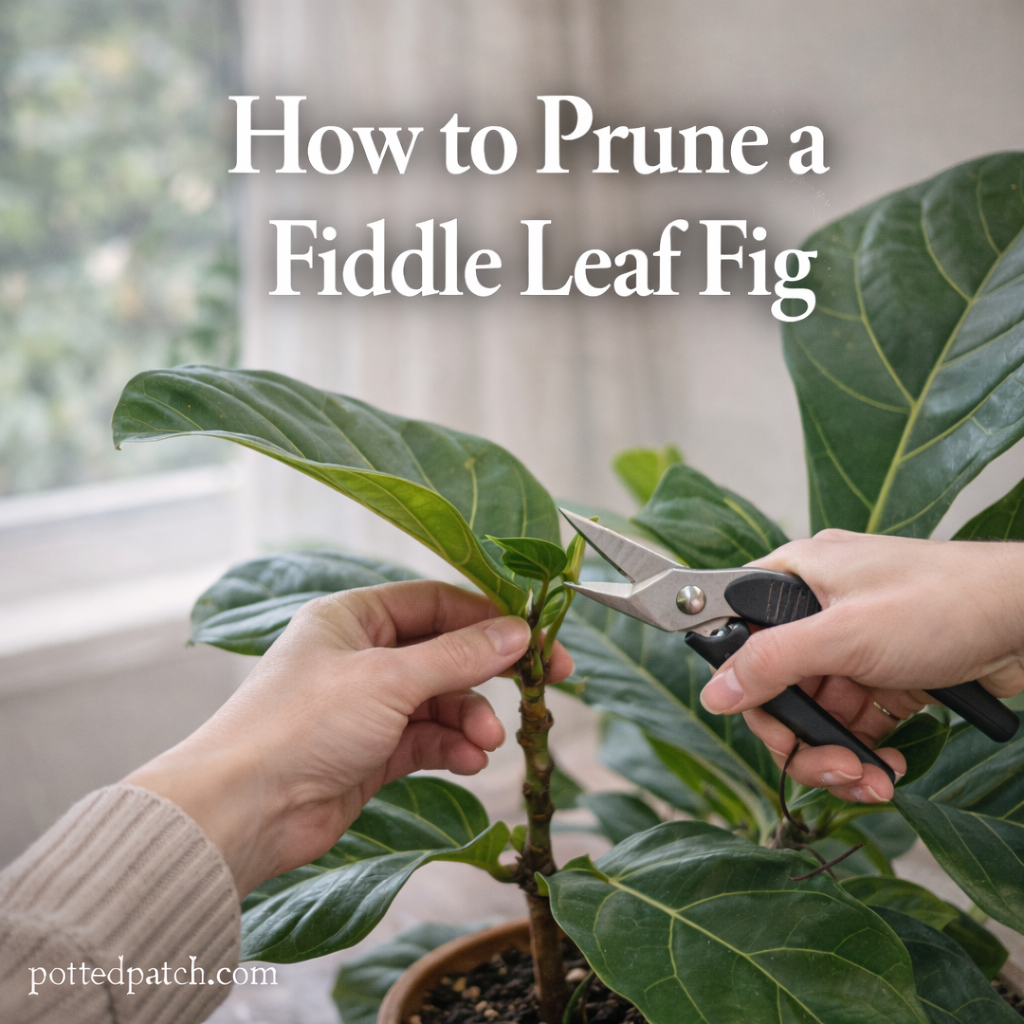
Pruning a fiddle leaf fig can feel intimidating. After all, those large glossy leaves are the plant’s main feature.
But when done correctly, pruning encourages fuller growth, improves shape, and prevents your plant from becoming tall and leggy.
Here’s exactly how and when to prune your fiddle leaf fig safely.
Why Prune a Fiddle Leaf Fig?
Pruning isn’t just about aesthetics. It helps:
- Encourage branching
- Control height
- Remove damaged leaves
- Improve airflow
- Maintain balanced growth
Without pruning, fiddle leaf figs often grow tall with sparse lower leaves.
When Is the Best Time to Prune?
The ideal time to prune is:
- Spring
- Early summer
This is when the plant is actively growing and can recover quickly.
Avoid heavy pruning during fall or winter when growth slows.
Light removal of damaged leaves can be done anytime.
Tools You’ll Need
Before pruning, gather:
- Sharp pruning shears or scissors
- Rubbing alcohol (to sanitize blades)
- Gloves (optional)
Clean tools reduce the risk of spreading disease.
Step-by-Step: How to Prune a Fiddle Leaf Fig
Follow these steps carefully.
Step 1: Sanitize Your Tools
Wipe blades with rubbing alcohol before making cuts.
Step 2: Identify Where to Cut
To encourage branching, cut just above a node (the small bump where a leaf grows from the stem).
New branches will often grow from that point.
Step 3: Make Clean Cuts
Use sharp tools to avoid crushing the stem.
Remove:
- Leggy top growth
- Yellow or damaged leaves
- Crowded interior branches
Do not remove more than 20–30% of the plant at once.
Step 4: Allow the Plant to Heal
Place the plant back in bright, indirect light.
Avoid fertilizing immediately after pruning.
How to Encourage Bushier Growth
If your fiddle leaf fig is growing straight up with no side branches:
- Trim the top 2–4 inches of the main stem.
- Cut above a healthy leaf node.
- Wait for new shoots to emerge.
This technique encourages branching and fuller shape.
Removing Damaged Leaves
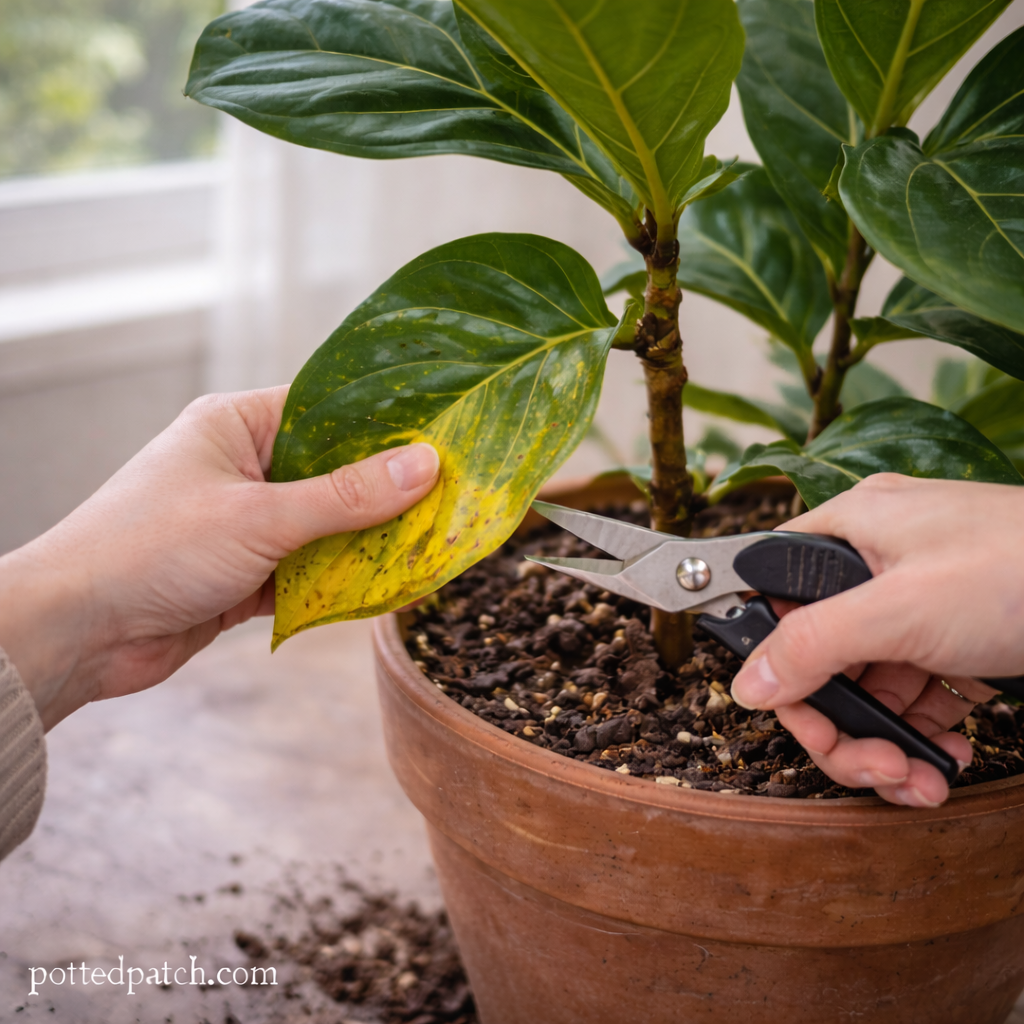
You can remove:
- Yellowing leaves
- Brown-spotted leaves
- Torn or diseased foliage
Cut the leaf stem close to the main trunk without damaging it.
Healthy leaves help the plant photosynthesize, so avoid removing too many at once.
Can You Propagate From Cuttings?
Yes.
To propagate:
- Cut a healthy stem section with at least one node.
- Remove lower leaves.
- Place the cutting in water or moist soil.
- Wait for roots to develop.
This is a great way to create new plants from pruning.
Common Pruning Mistakes to Avoid
- Cutting too much at once
- Using dull tools
- Pruning during winter dormancy
- Removing too many healthy leaves
- Forgetting to sanitize tools
Moderation and clean cuts are key.
What to Expect After Pruning
After pruning, you may notice:
- Slight temporary drooping
- Sap leaking from cuts (normal)
- New growth within several weeks
Keep lighting consistent and watering stable.
Final Thoughts
Pruning a fiddle leaf fig helps maintain shape, size, and overall plant health.
By:
- Cutting above nodes
- Pruning during active growth
- Avoiding over-pruning
- Using clean tools
You can encourage fuller, stronger growth.
With proper care, your fiddle leaf fig will respond with beautiful new branches and lush foliage.