ZZ plants (Zamioculcas zamiifolia) are famously low-maintenance, but even this tough indoor plant can struggle if it becomes root bound. When roots outgrow their container and begin circling tightly, water, nutrients, and overall growth can suffer.
The good news? Root bound issues are easy to prevent once you know what to watch for and how to manage container care correctly. This guide walks you through early warning signs, smart pot choices, repotting timing, and long-term prevention strategies to keep your ZZ plant healthy and thriving.
What Does “Root Bound” Mean for a ZZ Plant?
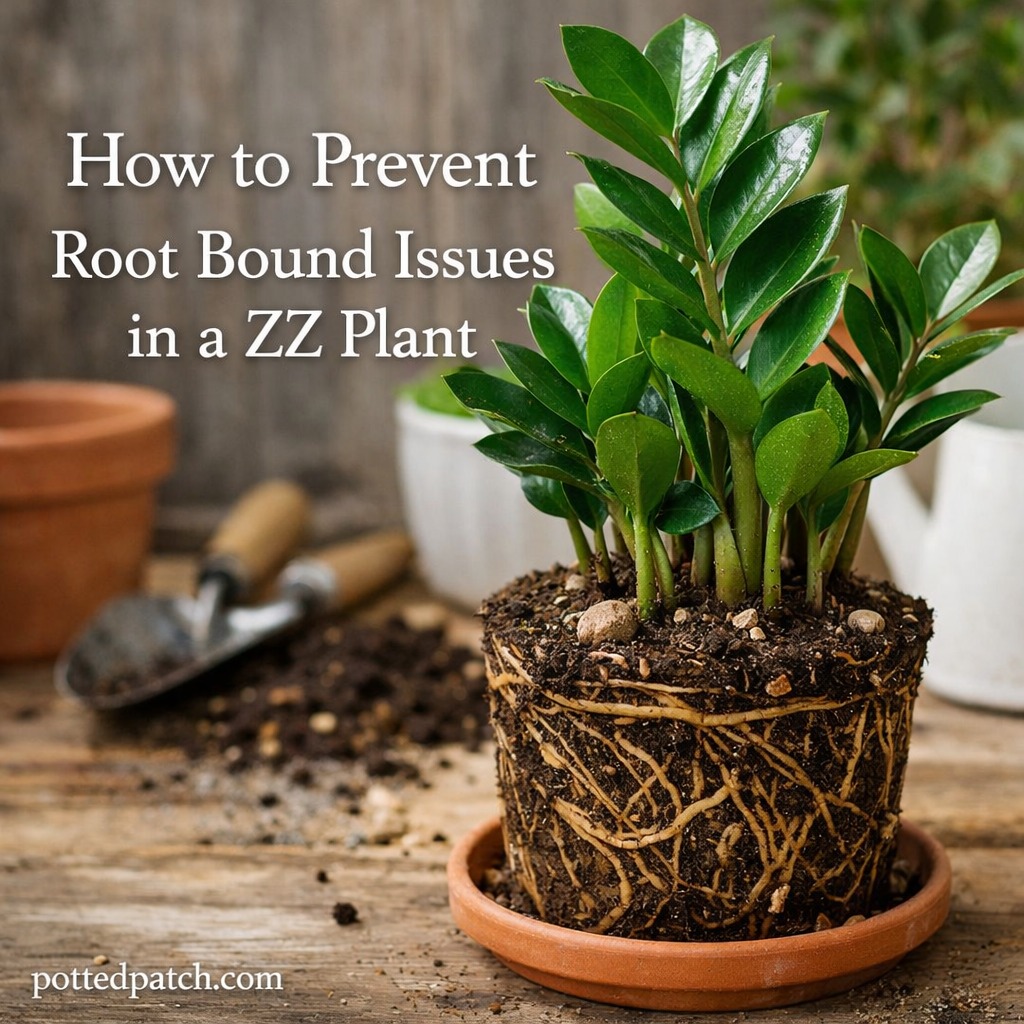
A plant is considered root bound when its roots have filled the entire pot and have no room left to expand. In ZZ plants, this happens slowly because of their thick rhizomes, but once it starts, the plant can decline faster than expected.
Root bound ZZ plants often experience:
- Restricted water absorption
- Poor nutrient uptake
- Slower or stalled growth
- Increased risk of root rot after watering
Because ZZ plants tolerate stress quietly, the problem often goes unnoticed until symptoms become obvious.
Signs Your ZZ Plant Is Becoming Root Bound
Catching the issue early makes prevention much easier. Look for these common indicators:
- Roots growing out of drainage holes
- Soil drying out much faster than usual
- New growth appearing smaller or weaker
- Leaves yellowing despite proper care
- Rhizomes pushing upward and distorting the soil surface
If you notice two or more of these signs, your plant is likely running out of space.
Why ZZ Plants Are Prone to Root Binding
ZZ plants store water and nutrients in thick rhizomes rather than fine roots. This adaptation helps them survive drought, but it also means they fill pots internally long before showing above-soil growth.
Contributing factors include:
- Slow top growth masking underground expansion
- Small starter pots used for long periods
- Heavy, compacted soil limiting root movement
- Infrequent repotting due to “low-maintenance” reputation
Understanding this growth pattern is key to prevention.
Choose the Right Pot Size from the Start
One of the most effective ways to prevent root bound issues is proper pot selection.
Ideal Pot Size Guidelines
- Choose a pot that is 1–2 inches wider than the root ball
- Avoid oversized pots that retain excess moisture
- Always use containers with drainage holes
A slightly snug pot is fine, but tight compression accelerates root binding.
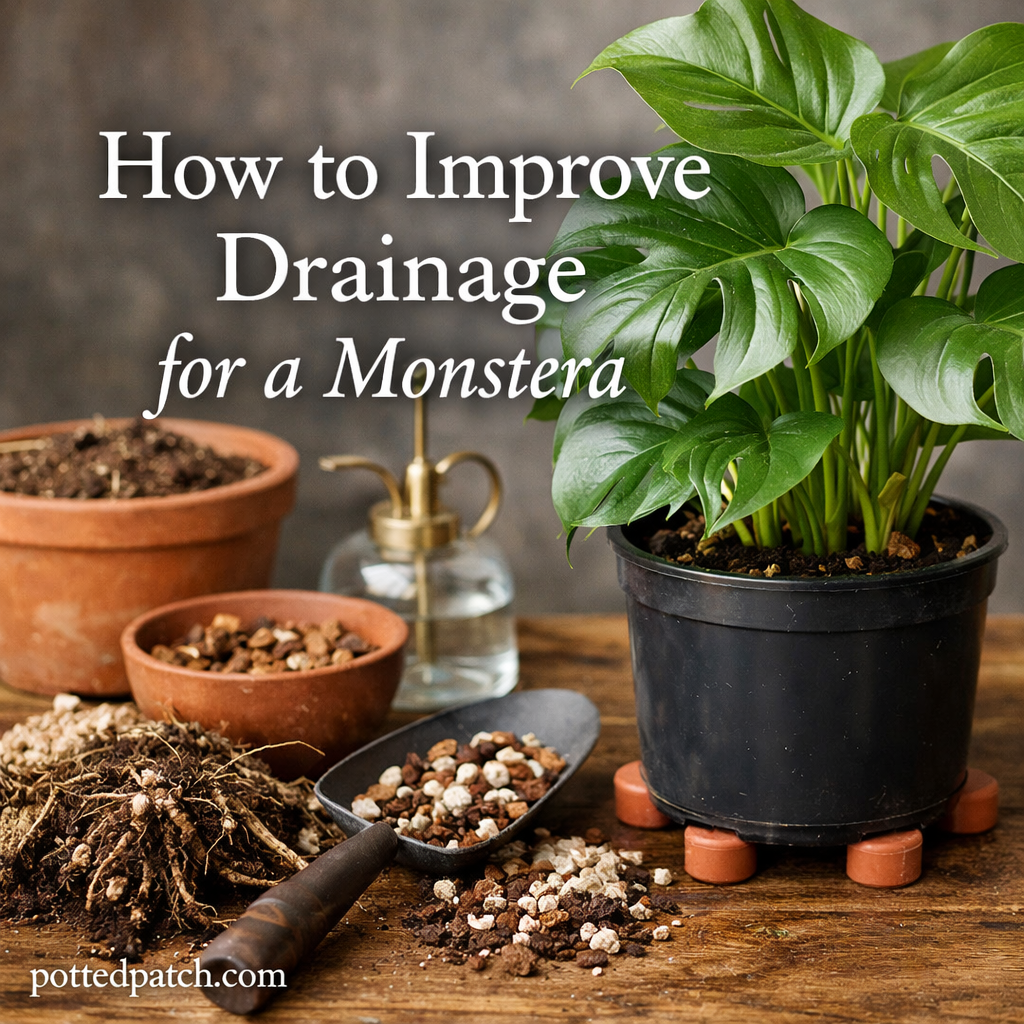
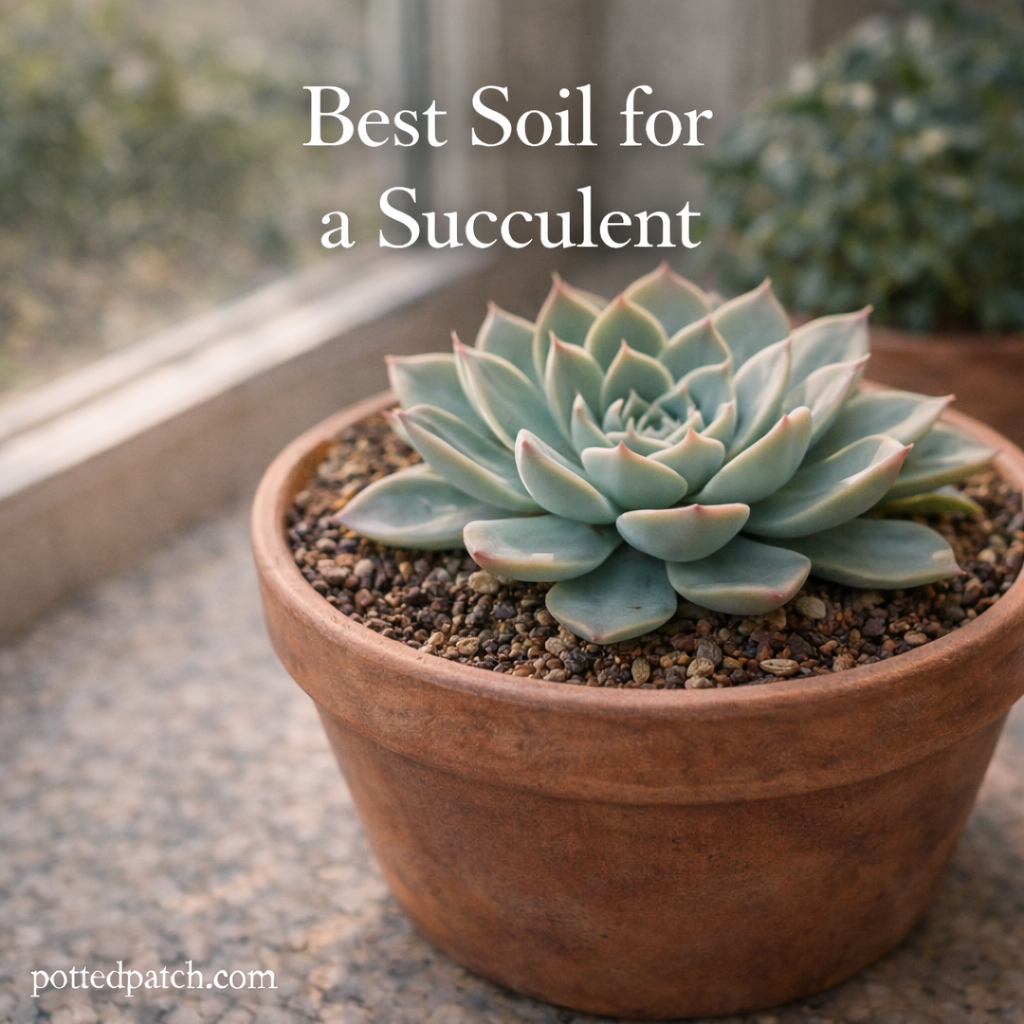
Use a Well-Draining Soil Mix
Soil choice plays a major role in how roots spread.
Best Soil Characteristics for ZZ Plants
- Light and airy texture
- Excellent drainage
- Slight moisture retention without compaction
A good mix may include:
- Potting soil
- Perlite or pumice
- Coarse sand or orchid bark
Avoid dense garden soil, which encourages circling roots and waterlogging.
Repot on a Preventive Schedule
Waiting for visible stress is one of the biggest mistakes with ZZ plants.
How Often to Repot a ZZ Plant
- Every 2–3 years for mature plants
- Every 1–2 years for younger or faster-growing plants
Spring and early summer are ideal times, as the plant recovers more quickly.
How to Repot Without Causing Stress
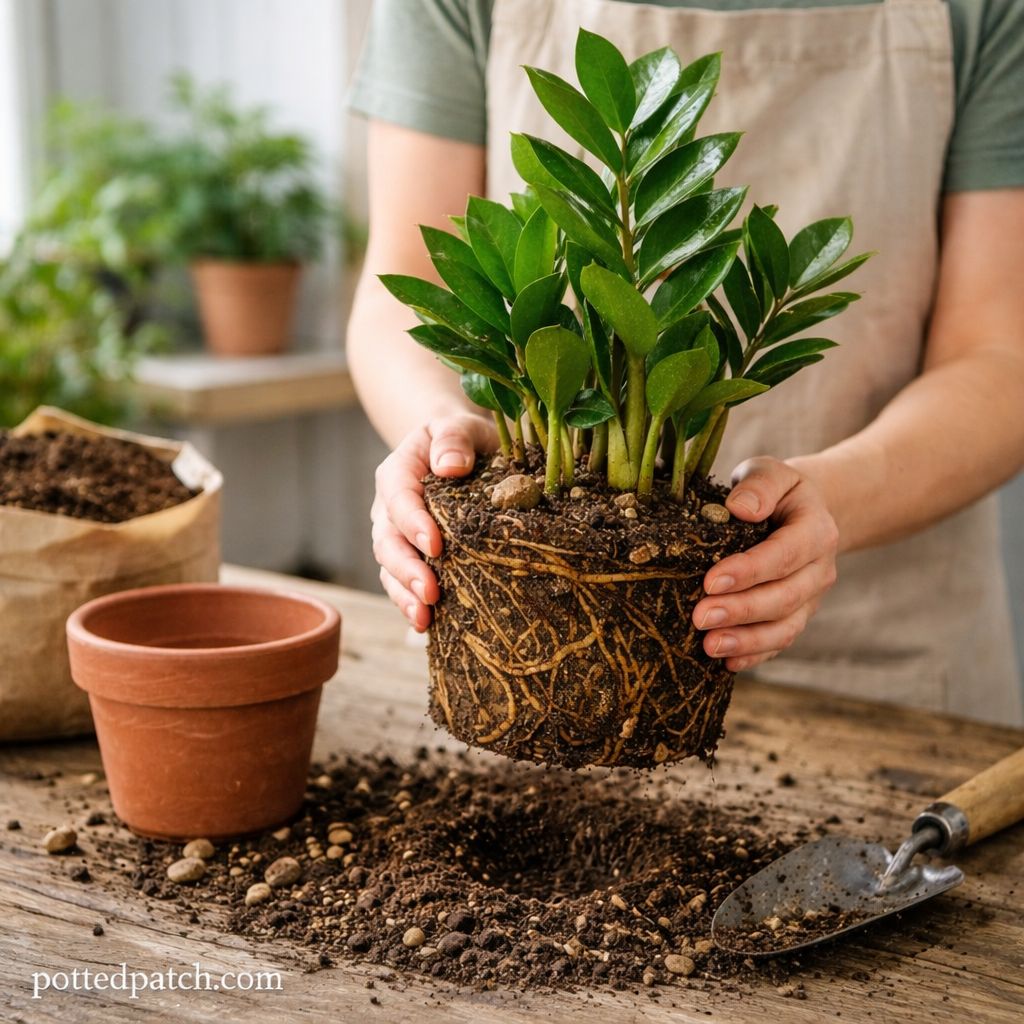
Proper technique prevents shock and future root issues.
Step-by-Step Repotting Process
- Gently remove the plant from its current pot
- Inspect the root system and rhizomes
- Loosen tightly circling roots by hand
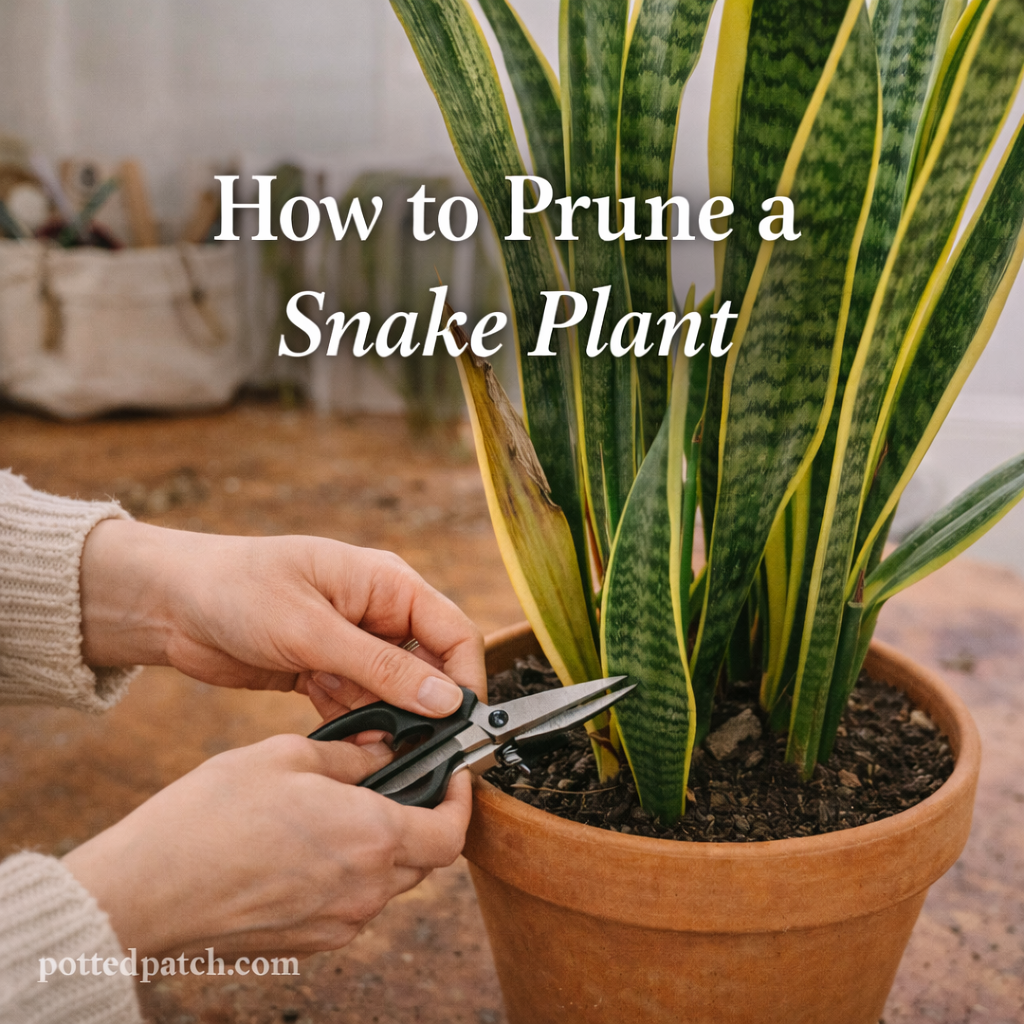
- Trim only damaged or rotting roots if needed
- Place in a slightly larger pot with fresh soil
- Water lightly after repotting
Do not aggressively cut healthy roots—ZZ plants recover slowly from heavy pruning.
Avoid Overpotting
While tight pots are a problem, oversized containers can be just as harmful.
Overpotting leads to:
- Excess moisture retention
- Increased risk of root rot
- Slower establishment and growth
ZZ plants prefer gradual increases in space rather than large jumps in pot size.
Monitor Watering Patterns
Root bound plants dry out unevenly, which often leads to incorrect watering.
Smart Watering Tips
- Water only when the top 2–3 inches of soil are dry
- Adjust frequency after repotting
- Reduce watering if growth slows temporarily
Consistent overwatering in a root-bound pot is a common cause of sudden decline.
Rotate and Check the Plant Periodically
Routine inspection helps catch issues early.
Every few months:
- Lift the pot to check for exposed roots
- Look for soil heaving or cracking
- Rotate the plant for even growth
These small habits prevent long-term root congestion.
Use Pot Materials Wisely
Pot type affects airflow and root behavior.
Best Pot Options
- Terracotta: Allows airflow and moisture evaporation
- Plastic: Lightweight but monitor watering carefully
- Ceramic (with drainage): Stable and decorative
Avoid containers without drainage, even if the plant appears tolerant.
What to Do If Your ZZ Plant Is Already Root Bound
If your plant is severely root bound, take action promptly.
- Repot into a slightly larger container
- Replace old soil completely
- Separate large rhizomes if the plant is overcrowded
- Allow a brief recovery period before fertilizing
With proper care, ZZ plants usually bounce back well.
Long-Term Prevention Tips
To keep root binding from returning:
- Track repotting dates
- Refresh soil every few years
- Avoid letting rhizomes press against pot walls
- Choose containers that balance size and drainage
Preventive care is easier than recovery.
Final Thoughts
Preventing root bound issues in a ZZ plant comes down to thoughtful container care. Choosing the right pot size, repotting on schedule, using well-draining soil, and monitoring root growth all work together to keep your plant healthy.
With these strategies in place, your ZZ plant can continue growing steadily—without hidden stress beneath the soil.