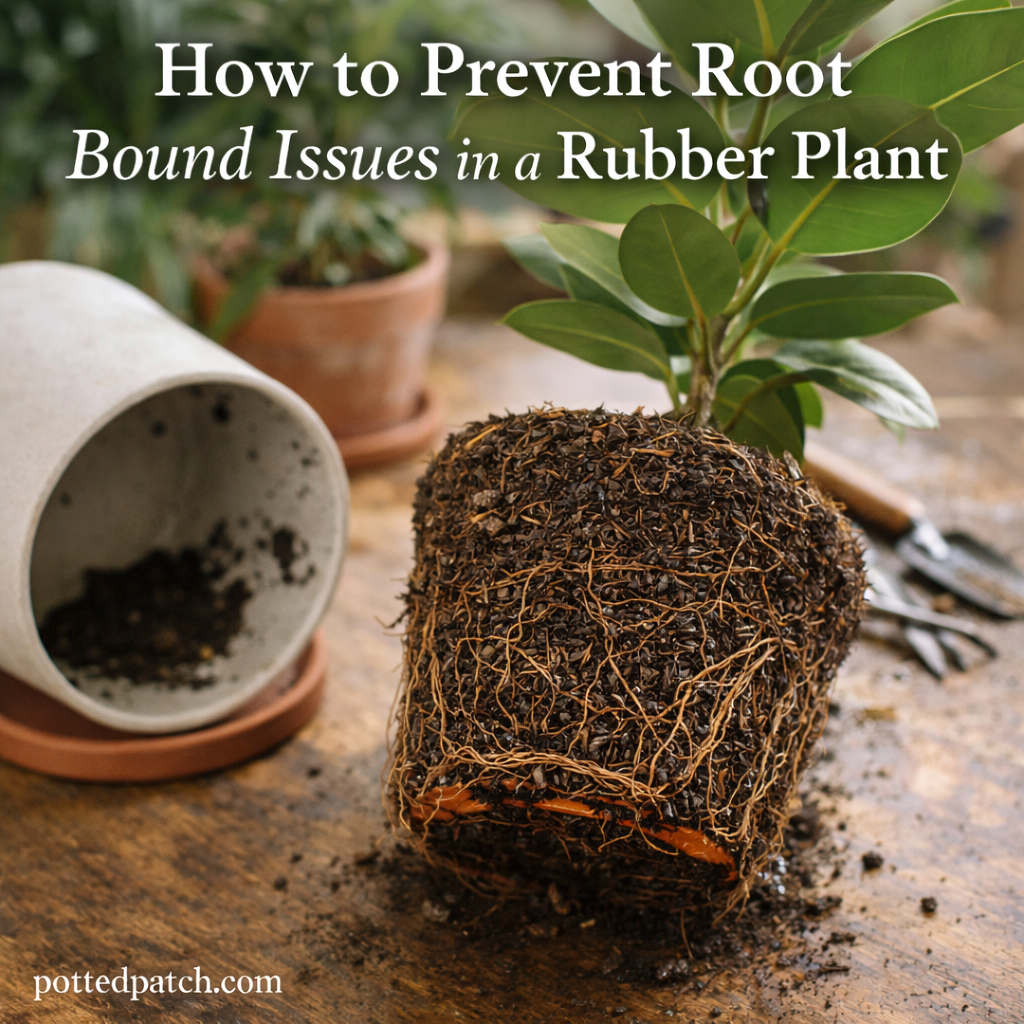
Rubber plants are strong growers. Over time, their roots expand quickly and can outgrow their container. When this happens, the plant becomes root bound — meaning the roots circle tightly inside the pot with little room to expand.
Preventing root bound issues in a rubber plant keeps growth steady, leaves healthy, and watering predictable.
Here’s how to stay ahead of the problem.
What Does “Root Bound” Mean?
A plant is root bound when its roots:
- Circle tightly around the inside of the pot
- Form a dense root ball
- Push up against drainage holes
- Leave little room for soil
When roots run out of space, the plant struggles to absorb water and nutrients efficiently.
Signs Your Rubber Plant Is Becoming Root Bound
Watch for these early warning signs:
- Water runs straight through the pot
- Soil dries out very quickly
- Roots appear through drainage holes
- Slower growth despite proper light
- Leaves droop shortly after watering
Catching these signs early makes prevention much easier.
Why Rubber Plants Become Root Bound
Rubber plants (Ficus elastica) grow upright and develop strong root systems. In ideal indoor conditions, they can outgrow their pots within 1–2 years.
Factors that speed this up:
- Bright light
- Frequent fertilizing
- Warm temperatures
- Small starter pots
Healthy growth is great — but it requires occasional upgrades.
Step 1: Choose the Right Pot Size From the Start
Avoid pots that are:
- Too small for the plant’s current root system
- Only slightly larger than a nursery container
When repotting, choose a container:
- 1–2 inches larger in diameter than the current pot
- With proper drainage holes
- Deep enough to support root expansion
Going too large isn’t ideal either. Oversized pots hold excess moisture.
Step 2: Repot Every 1–2 Years
Rubber plants benefit from regular inspection.
Best Time to Repot
- Early spring
- Early summer
This is when the plant is actively growing and can adjust quickly.
Even if you don’t size up every year, gently remove the plant to inspect the root ball.
Step 3: Loosen Roots During Repotting
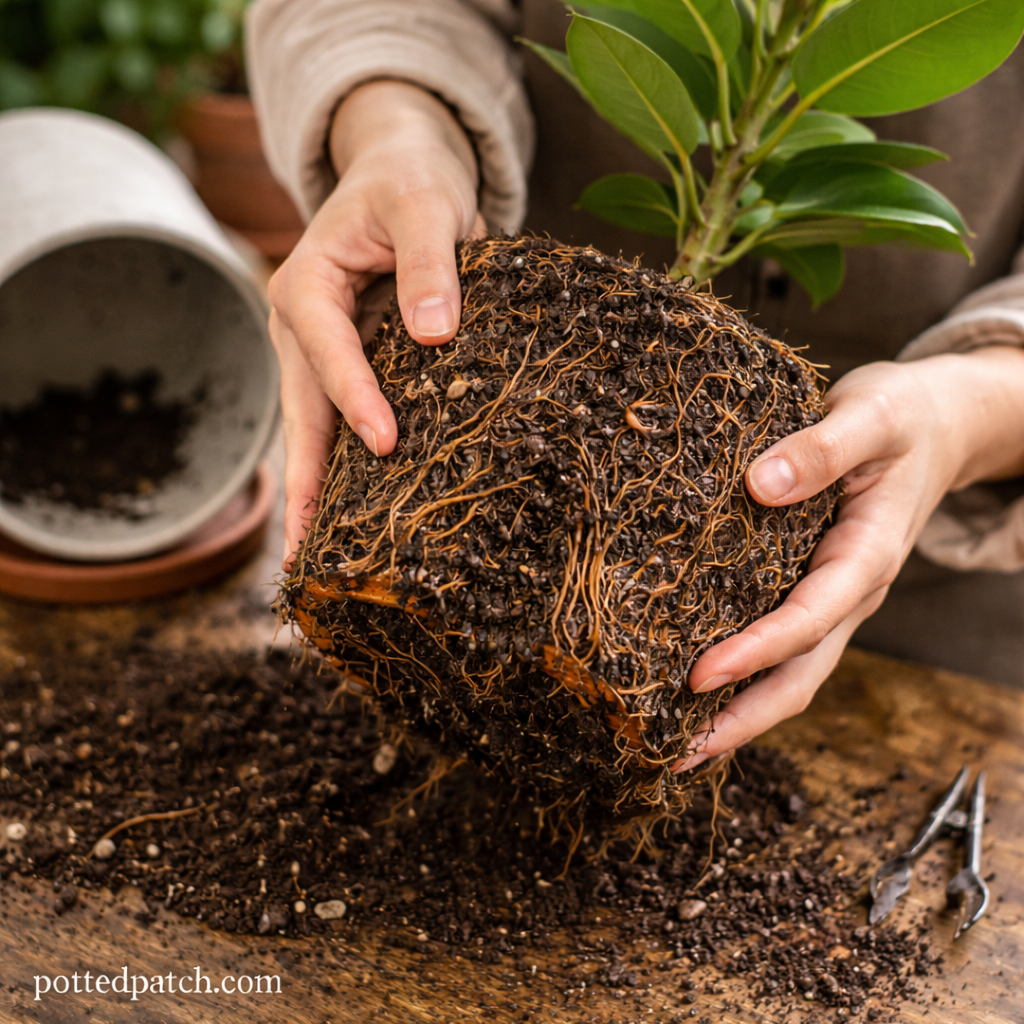
If roots are circling tightly, don’t just place them into a new pot as-is.
Gently:
- Tease apart outer roots
- Loosen compacted sections
- Trim any damaged or overly long roots
This encourages outward growth instead of continued circling.
Step 4: Refresh the Soil
Old soil compacts over time, restricting root movement.
Use a fresh, well-draining mix that includes:
- Quality indoor potting soil
- Perlite
- Orchid bark
Fresh soil improves airflow and supports healthy root expansion.
Step 5: Monitor Growth Rate
If your rubber plant grows quickly during spring and summer, check the pot mid-season.
Signs you may need to act sooner:
- Soil pulling away from the pot edges
- Frequent watering needed
- Roots visible on the surface
Being proactive prevents stress.
Can a Root Bound Rubber Plant Recover?
Yes — if addressed early.
Once repotted properly:
- Leaves perk up
- Growth resumes
- Watering stabilizes
However, severe cases may require trimming roots and downsizing top growth slightly to rebalance the plant.
Preventative Care Checklist
To prevent root bound issues long-term:
- Inspect roots yearly
- Repot every 1–2 years
- Avoid decorative pots without drainage
- Use airy, well-draining soil
- Don’t ignore rapid growth
Prevention is easier than correction.
Final Thoughts
Rubber plants thrive when their roots have space to grow. By choosing the right pot size, refreshing soil regularly, and inspecting roots annually, you can prevent root bound issues before they become serious.
Healthy roots support strong stems and glossy leaves — and that’s the goal.