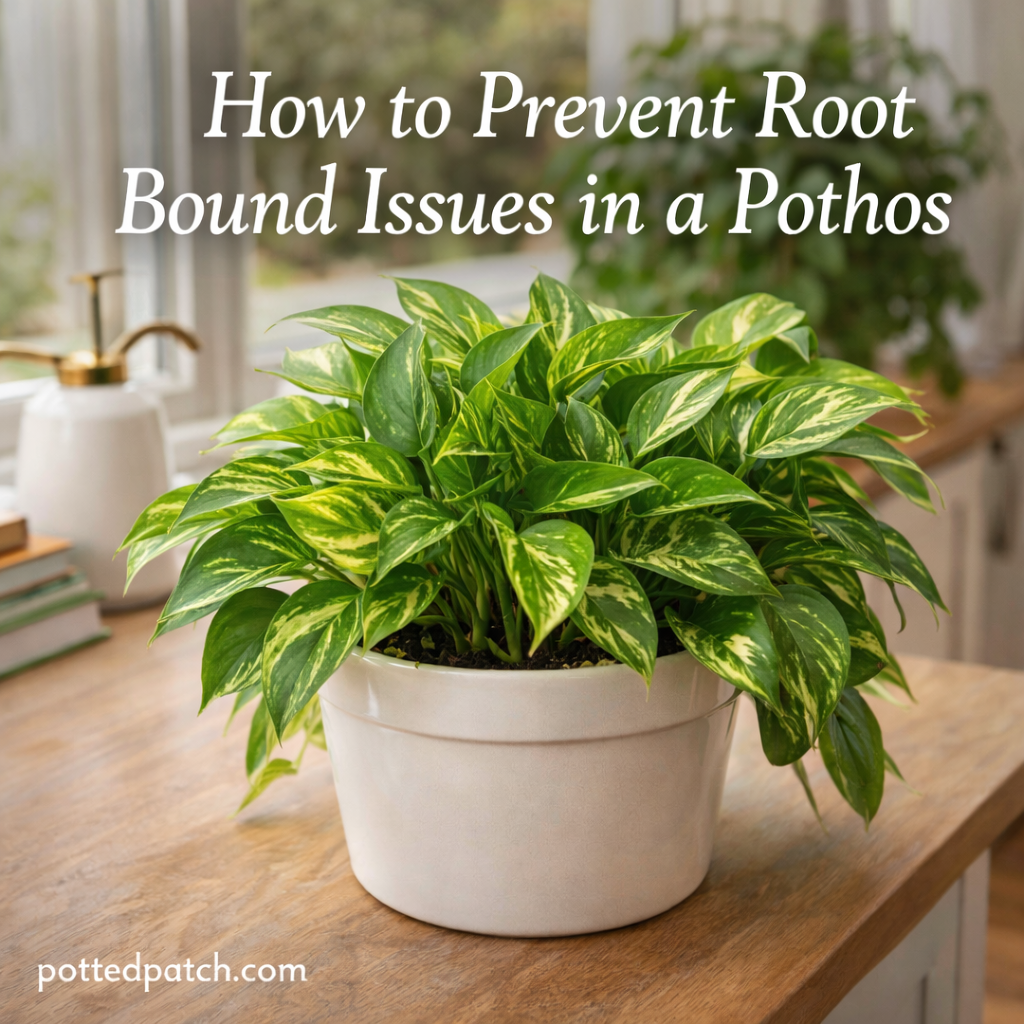
Pothos is a fast-growing, resilient houseplant, but even this easygoing plant can struggle when it becomes root bound. When the roots outgrow their container, water absorption, nutrient uptake, and overall growth can suffer.
Understanding how root binding happens—and how to prevent it—keeps your pothos healthy, flexible, and thriving long term.
What Does “Root Bound” Mean for Pothos?
A pothos becomes root bound when its roots have filled the pot completely and begin circling or tangling tightly around themselves. With little room left to grow, the plant struggles to access water and nutrients efficiently.
Root binding doesn’t happen overnight. It’s usually the result of long-term growth in the same container without enough space to expand.
Signs Your Pothos Is Becoming Root Bound
Catching root issues early makes prevention much easier.
Common signs include:
- Roots growing out of drainage holes
- Water running straight through the pot without soaking in
- Slow or stalled growth despite proper light
- Leaves wilting soon after watering
- Soil drying out unusually fast
If multiple signs appear together, it’s likely time to intervene.
Why Pothos Plants Become Root Bound
Fast Growth in Small Containers
Pothos grows quickly, especially in bright, indirect light. When kept in smaller pots, healthy root systems can outgrow their space faster than expected.
Delayed Repotting
Even if a plant looks fine above the soil, roots may already be crowded below. Waiting too long to repot is one of the most common causes of root binding.
Compact or Heavy Soil Mixes
Dense soil restricts airflow and root movement, encouraging roots to coil tightly instead of spreading evenly.
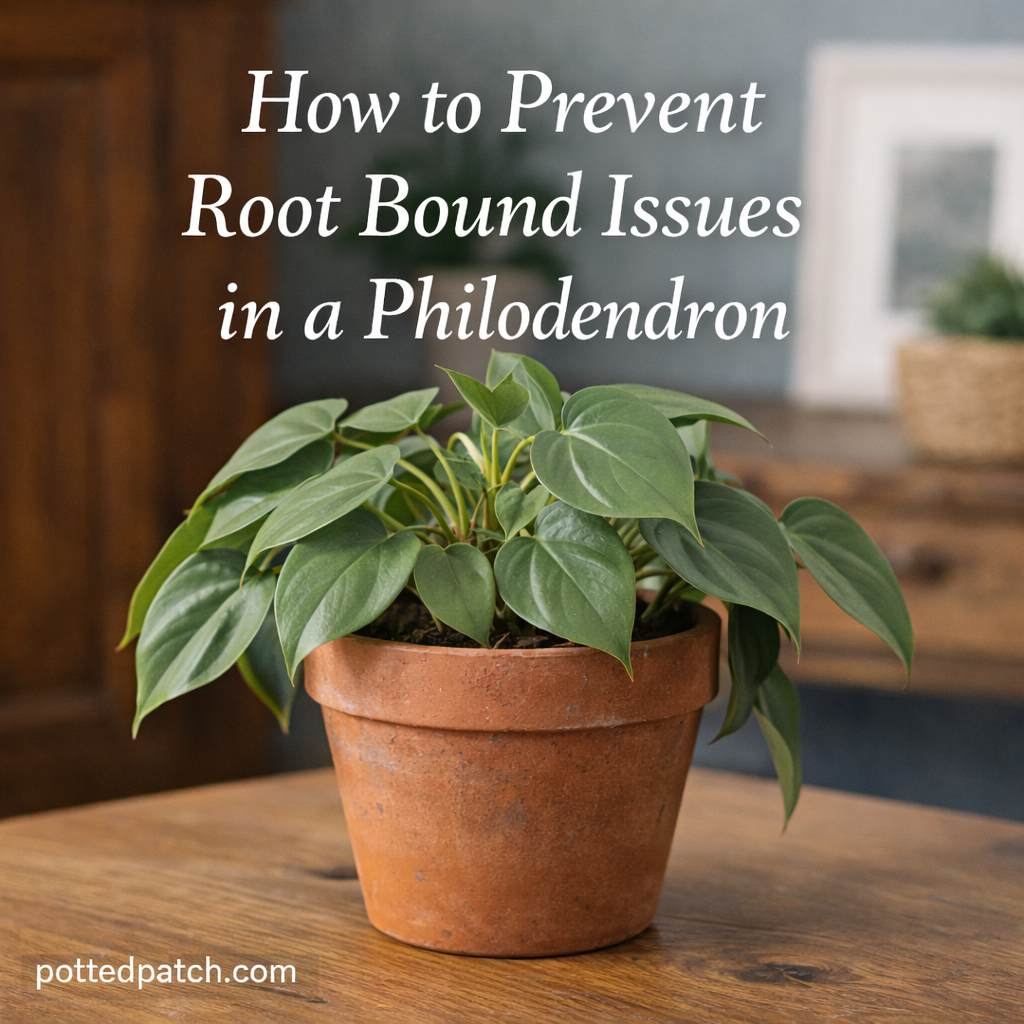
How to Prevent Root Bound Issues in Pothos
Choose the Right Pot Size
When repotting, always size up gradually.
Best practice:
- Choose a pot 1–2 inches wider than the current one
- Avoid jumping to oversized containers, which can trap moisture
Gradual increases allow roots to expand naturally without stressing the plant.
Repot on a Consistent Schedule
Most pothos plants benefit from repotting every 12–18 months.
Repot sooner if:
- Growth is rapid
- Roots are visible at drainage holes
- Watering issues develop
Spring and early summer are ideal repotting seasons.
Use a Well-Draining Soil Mix
Good soil prevents roots from circling excessively.
A pothos-friendly mix includes:
- Standard indoor potting soil
- Perlite for airflow
- Orchid bark or coco chips for structure
This combination encourages outward root growth instead of tight spirals.
Loosen Roots During Repotting
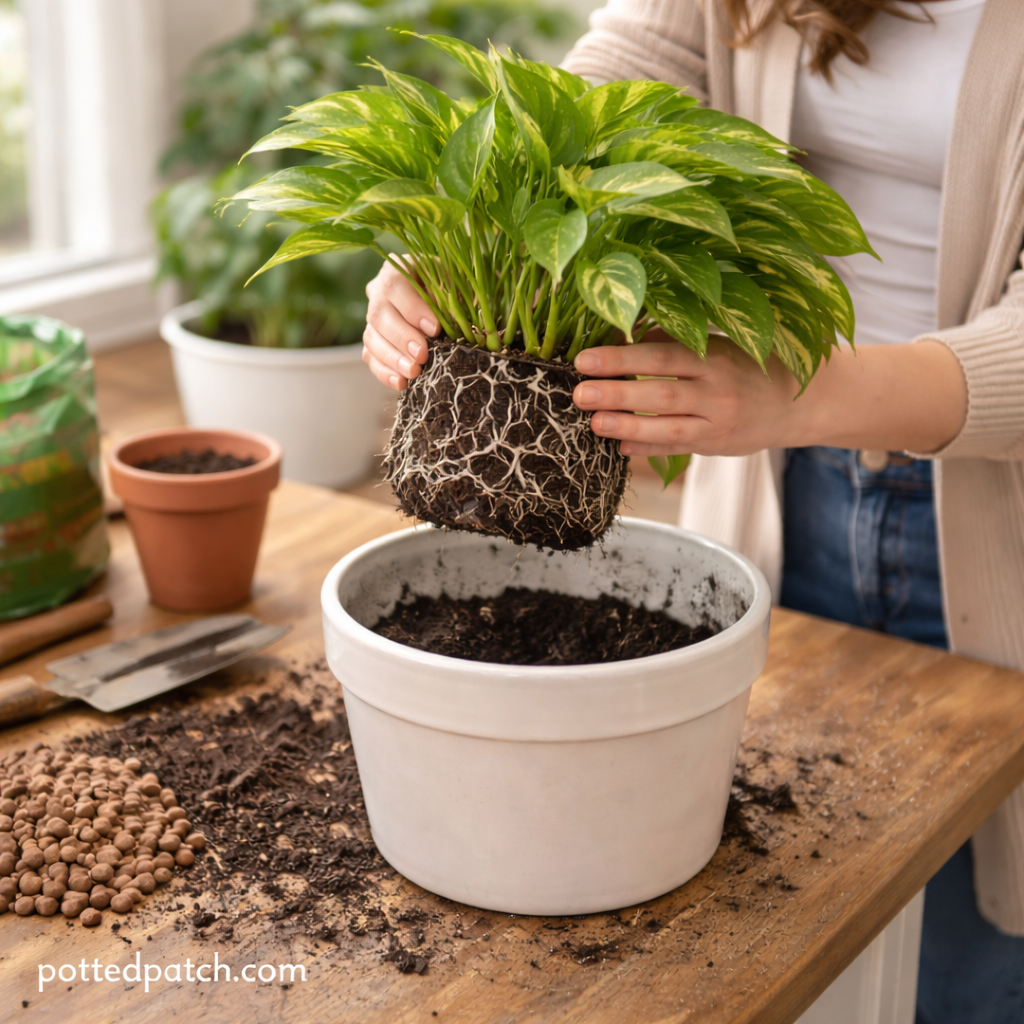
Before placing your pothos into a new pot, gently loosen the root ball.
Steps to follow:
- Remove the plant from its pot
- Lightly tease apart circling roots with your fingers
- Trim any dead or mushy roots if present
This signals the plant to grow outward into fresh soil.
Avoid Letting the Plant Dry Out Too Often
Frequent extreme drying can cause roots to harden and circle tightly.
Water consistently by:
- Allowing the top few inches of soil to dry
- Watering thoroughly until excess drains out
- Emptying saucers after watering
Balanced moisture supports healthier root expansion.
Can You Fix a Root Bound Pothos Without Repotting?
In mild cases, yes—temporarily.
Short-term solutions include:
- Root pruning (trimming outer roots carefully)
- Refreshing the top layer of soil
- Increasing watering frequency slightly
However, these are temporary fixes. Repotting is the only long-term solution for a truly root bound pothos.
How Pot Choice Affects Root Health
Container style matters more than many people realize.
Choose pots that:
- Have drainage holes
- Are proportionate to the plant size
- Allow airflow (terracotta works well)
Avoid decorative pots without drainage unless used as cache pots with removable liners.
Final Thoughts
Preventing root bound issues in pothos comes down to proactive care. Regular repotting, proper pot sizing, well-draining soil, and gentle root maintenance all work together to keep roots healthy and growing freely.
A pothos with room to grow below the soil will reward you with fuller vines, larger leaves, and fewer care problems over time.