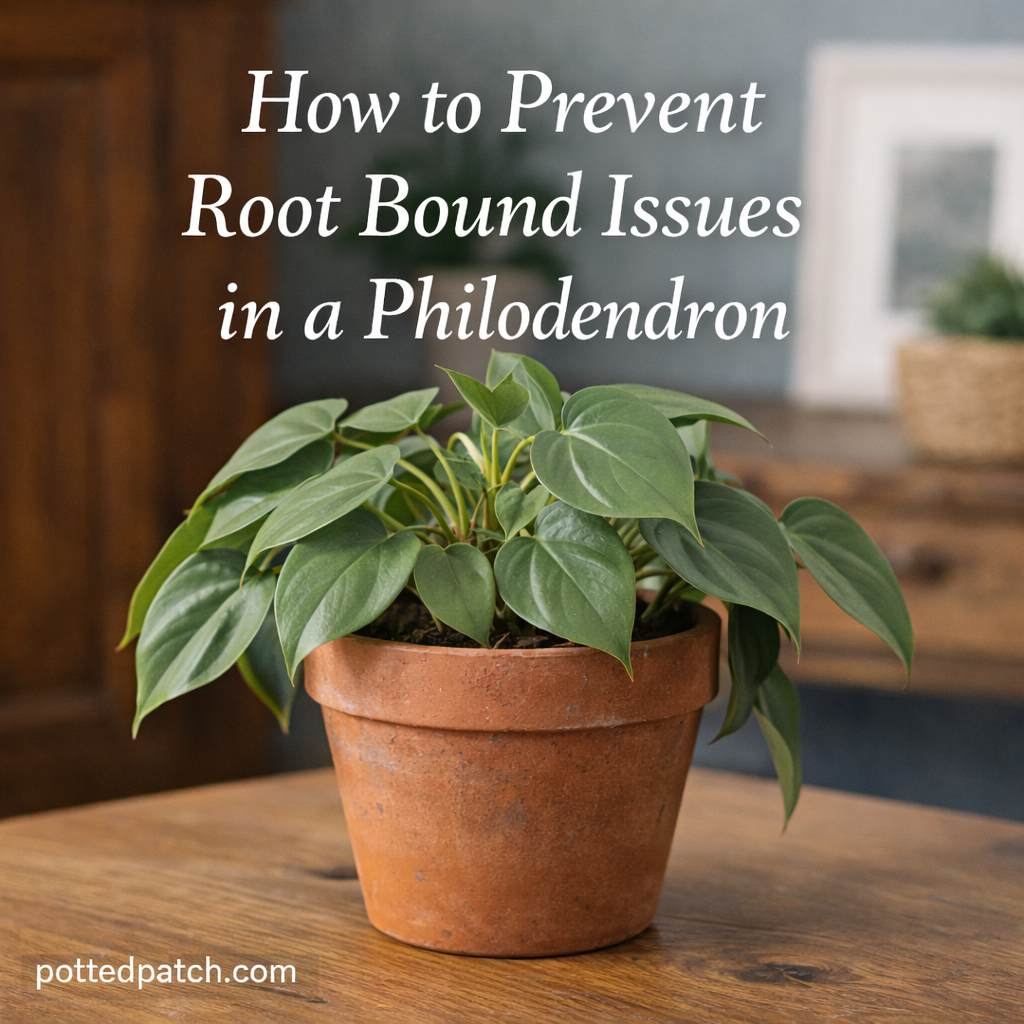
Philodendrons are fast growers. Whether you’re growing a trailing heartleaf variety or a large upright type, their roots can quickly fill a container.
When a philodendron becomes root bound, growth slows, leaves shrink, and watering problems begin. The good news? Root binding is easy to prevent with a few proactive habits.
Here’s exactly how to keep your philodendron healthy and unrestricted.
What Does “Root Bound” Mean?
A plant is root bound when its roots have completely filled the pot and begin circling tightly around the root ball.
Instead of spreading into fresh soil, roots:
- Wrap around themselves
- Grow upward toward the surface
- Push against the pot walls
- Block proper water absorption
Over time, this stresses the plant.
Why Philodendrons Become Root Bound Quickly
Philodendrons grow aggressively under good conditions. Warm temperatures, bright indirect light, and regular watering encourage rapid root development.
They also:
- Adapt easily to indoor environments
- Produce thick, exploratory root systems
- Fill smaller nursery pots fast
If you don’t repot periodically, root binding is inevitable.
Signs Your Philodendron Is Becoming Root Bound
Catching it early prevents stress.
Look for:
- Roots growing out of drainage holes
- Soil drying out extremely fast
- Water running straight through the pot
- Slowed or stunted growth
- Smaller new leaves
- Yellowing despite proper watering
If you gently slide the plant out and see tightly circling roots, it’s time to act.
How to Prevent Root Bound Issues
1. Choose the Right Pot Size From the Start
Avoid pots that are too small.
When purchasing or repotting:
- Select a container 1–2 inches wider than the root ball
- Ensure proper drainage holes
- Avoid oversized pots (this can cause overwatering issues)
Gradual size increases are best.
2. Repot Every 1–2 Years
Most philodendrons need repotting every 12–24 months.
Fast growers may need it yearly.
The best time to repot:
- Early spring
- Beginning of the growing season
This allows the plant to adjust during active growth.
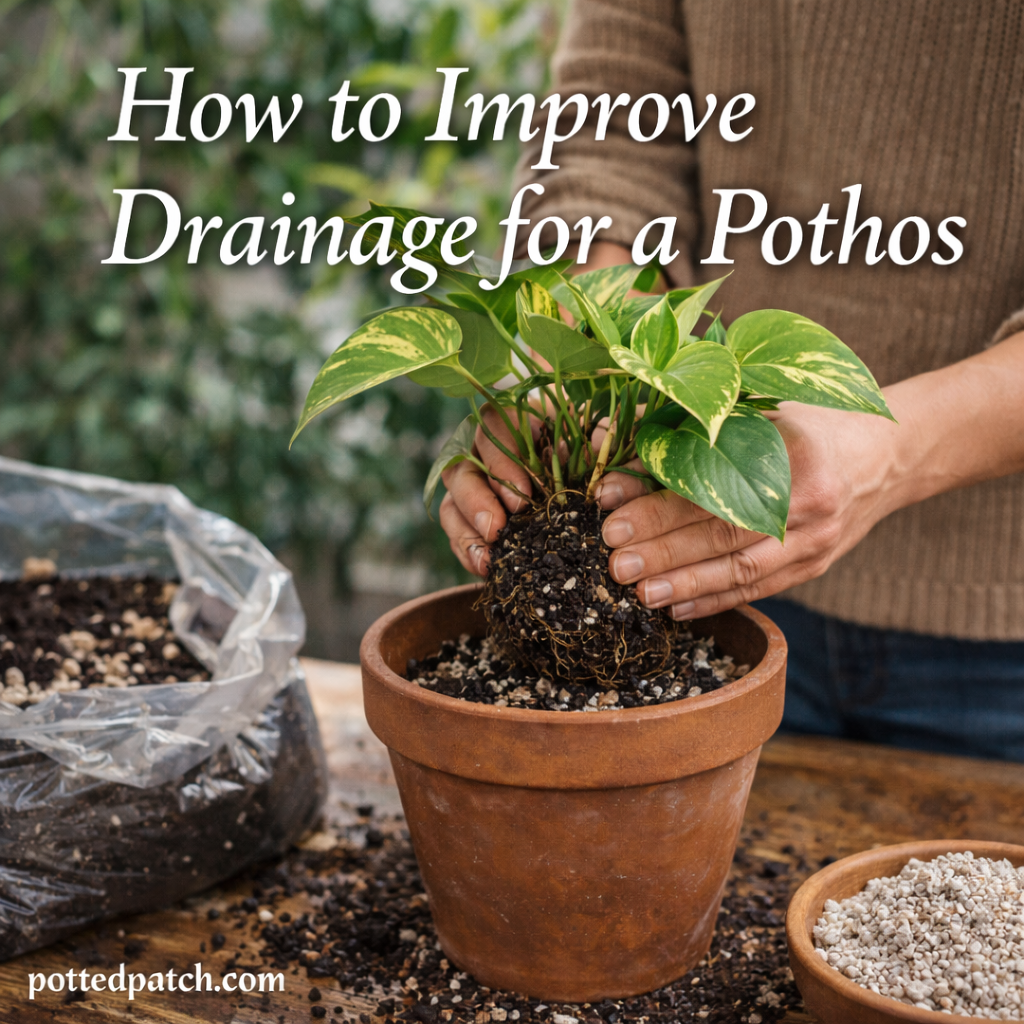
3. Loosen Roots During Repotting
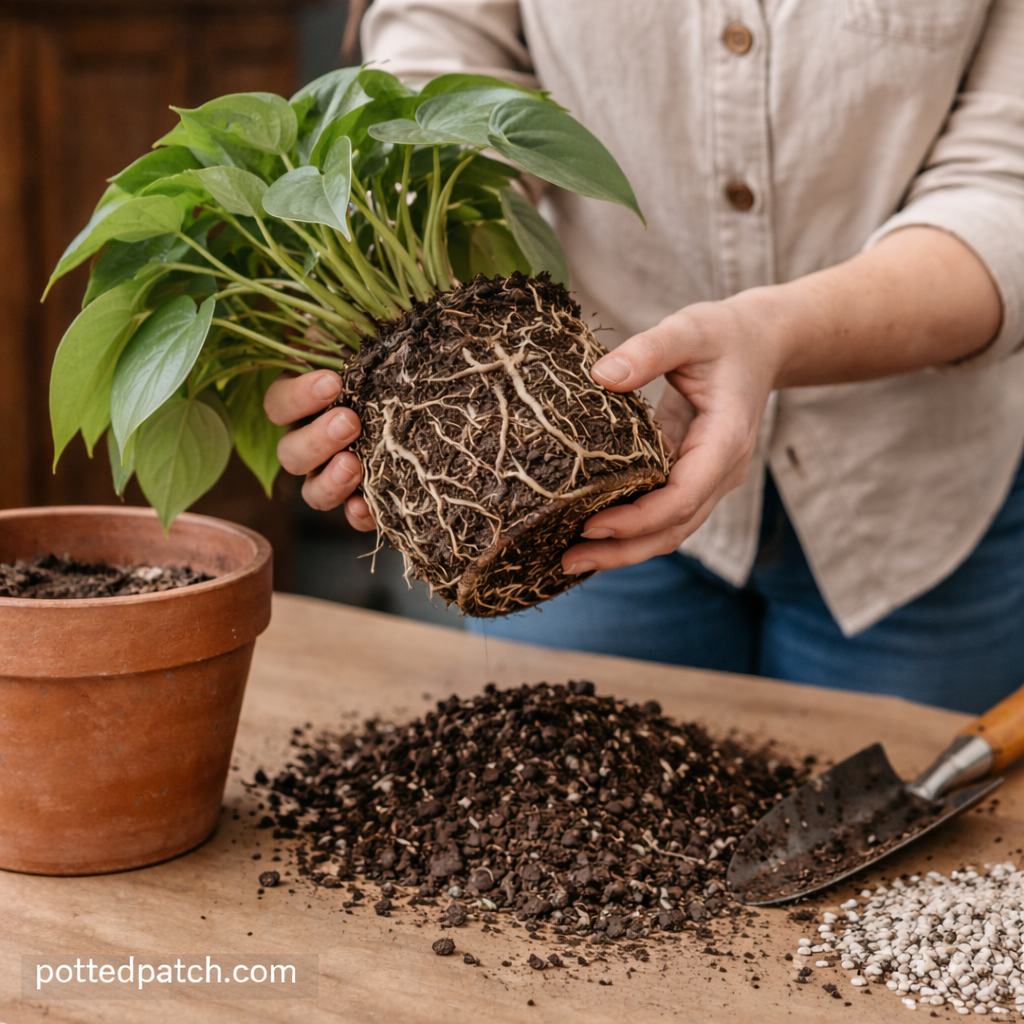
If roots are beginning to circle, gently loosen them before placing into fresh soil.
You can:
- Massage the root ball with your fingers
- Trim excessively long circling roots
- Break apart dense outer layers carefully
This encourages outward growth into new soil instead of continued spiraling.
4. Use a Well-Draining Soil Mix
Compact soil accelerates root binding.
Use a chunky, airy mix such as:
- Potting soil
- Perlite
- Orchid bark
- Coco coir
Good aeration allows roots to spread comfortably.
5. Monitor Growth Rate
Fast leaf production often means fast root expansion.
If your philodendron is putting out large, frequent leaves, inspect the root system sooner rather than later.
A quick check once a year prevents surprise stress.
6. Don’t Ignore Watering Changes
If you suddenly notice:
- Water draining too quickly
- Needing to water more frequently
- Soil pulling away from the pot sides
These are early warnings of tight roots.
Address it before the plant declines.
What Happens If You Ignore Root Binding?
Left untreated, a root bound philodendron may:
- Stop producing new growth
- Develop yellow or browning leaves
- Experience nutrient deficiencies
- Become top-heavy and unstable
Severe cases can lead to root damage and long-term stress.
Can Philodendrons Tolerate Being Slightly Root Bound?
Yes — mildly root bound plants often continue growing well.
In fact, some indoor growers prefer a slightly snug pot to prevent overwatering.
However, once roots are densely circling and compacted, it’s time to repot.
Step-by-Step Preventative Repotting Guide
- Water the plant lightly the day before.
- Gently remove it from the pot.
- Inspect roots for tight circling.
- Loosen or trim if necessary.
- Place in a pot 1–2 inches larger.
- Add fresh, well-draining soil.
- Water thoroughly and allow excess to drain.
Keep the plant in bright, indirect light while it adjusts.
Final Thoughts
Preventing root bound issues in a philodendron comes down to timing and observation.
Regular inspection, gradual pot upgrades, and proper soil make all the difference.
Stay proactive, and your philodendron will reward you with strong roots, lush leaves, and steady growth for years to come.