Peace lilies are popular for their glossy leaves and elegant white blooms. They’re also known for tolerating slightly tight pots.
However, when a peace lily becomes severely root bound, growth slows, watering becomes difficult, and overall health declines.
The good news? Preventing root bound problems is simple when you understand what to look for and when to repot.
What Does “Root Bound” Mean?
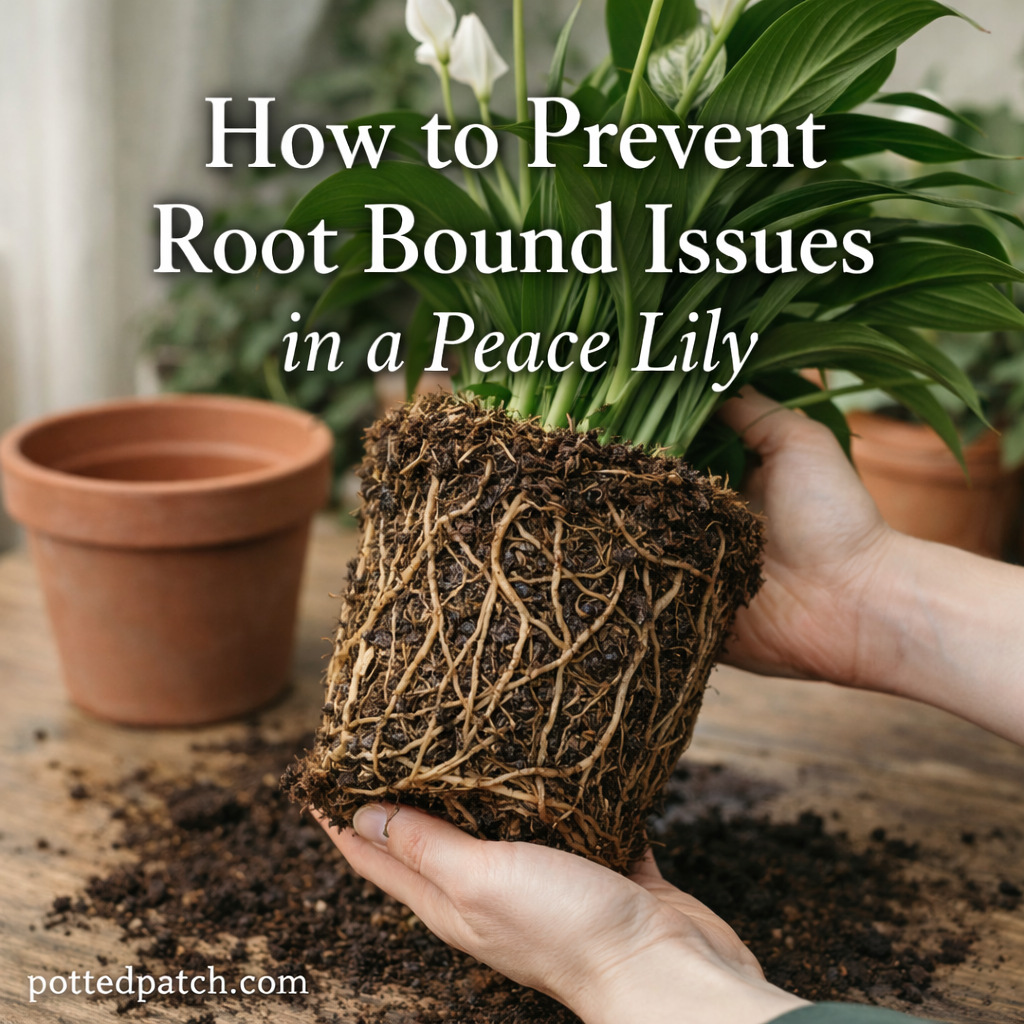
A plant becomes root bound when its roots outgrow the container and begin circling tightly around the inside of the pot.
Instead of spreading into fresh soil, the roots:
- Wrap around themselves
- Fill nearly all available space
- Limit water and nutrient absorption
Mild root binding isn’t always harmful for peace lilies. But extreme root congestion can stress the plant.
Signs Your Peace Lily Is Becoming Root Bound
Watch for these common warning signs:
- Roots growing out of drainage holes
- Soil drying out very quickly
- Water running straight through the pot
- Slower leaf growth
- Fewer blooms
- Roots visible at the soil surface
If you notice two or more of these signs, it’s likely time to take action.
Why Root Bound Issues Matter
A severely root bound peace lily may experience:
- Stunted growth
- Increased wilting between waterings
- Nutrient deficiencies
- Compacted root mass that repels water
When roots are tightly packed, soil volume decreases — meaning less moisture retention and fewer nutrients available to support healthy foliage.
How to Prevent Root Bound Problems
1. Repot on a Regular Schedule
Peace lilies typically need repotting every 12–24 months.
A good rule of thumb:
- Younger, fast-growing plants: check annually
- Mature plants: check every 18–24 months
Spring is the best time to repot, when active growth begins.
2. Choose the Right Pot Size
When repotting, avoid jumping too large in size.
Move up only:
- 1–2 inches wider in diameter
- One pot size larger
Oversized pots hold excess moisture, which can lead to root rot.
Balance is key — enough space for growth without overdoing it.
3. Use Well-Draining Potting Mix
A light, airy soil blend helps prevent compaction.
Ideal mix components:
- Standard indoor potting soil
- Perlite or pumice
- A small amount of orchid bark
This improves airflow and allows roots to expand naturally instead of compressing tightly.
4. Loosen Roots During Repotting
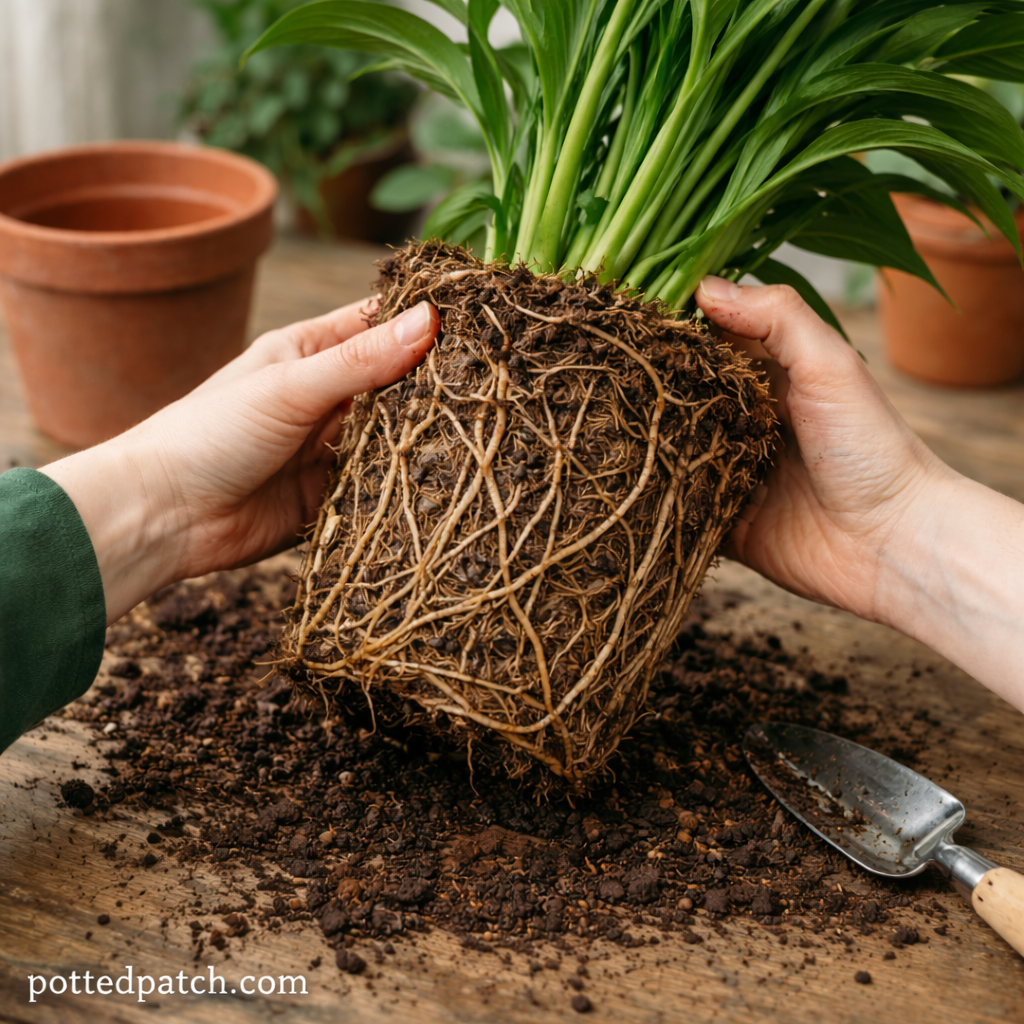
When you remove the plant from its pot, gently loosen circling roots with your fingers.
If roots are extremely dense:
- Tease them apart carefully
- Trim small sections if necessary
- Remove dead or mushy roots
This encourages outward growth into fresh soil.
5. Monitor Watering Patterns
Root bound plants dry out faster.
If you find yourself watering more often than usual, check the roots.
Consistent moisture — without letting the plant sit in water — keeps roots healthy and encourages steady growth.
6. Divide Overgrown Plants
Large, mature peace lilies can be divided during repotting.
To divide:
- Remove the plant from its pot.
- Separate natural clumps of stems and roots.
- Replant each section in its own container.
Division prevents overcrowding and gives you multiple healthy plants.
When a Peace Lily Likes Being Slightly Root Bound
Interestingly, peace lilies often bloom better when mildly snug in their pots.
Light root restriction can encourage flowering.
But once roots dominate the entire container, growth declines.
The goal isn’t to eliminate all tightness — just prevent extreme congestion.
Common Mistakes to Avoid
- Waiting too long between repotting
- Moving into a pot that’s too large
- Ignoring roots growing from drainage holes
- Using dense, heavy soil
- Skipping root loosening during transplant
Preventative care is much easier than reviving a severely stressed plant.
Final Thoughts
Root bound issues in a peace lily are easy to prevent with simple observation and routine repotting.
Check roots annually, size up gradually, and use well-draining soil.
With proper container care, your peace lily will continue producing lush foliage and beautiful blooms for years.