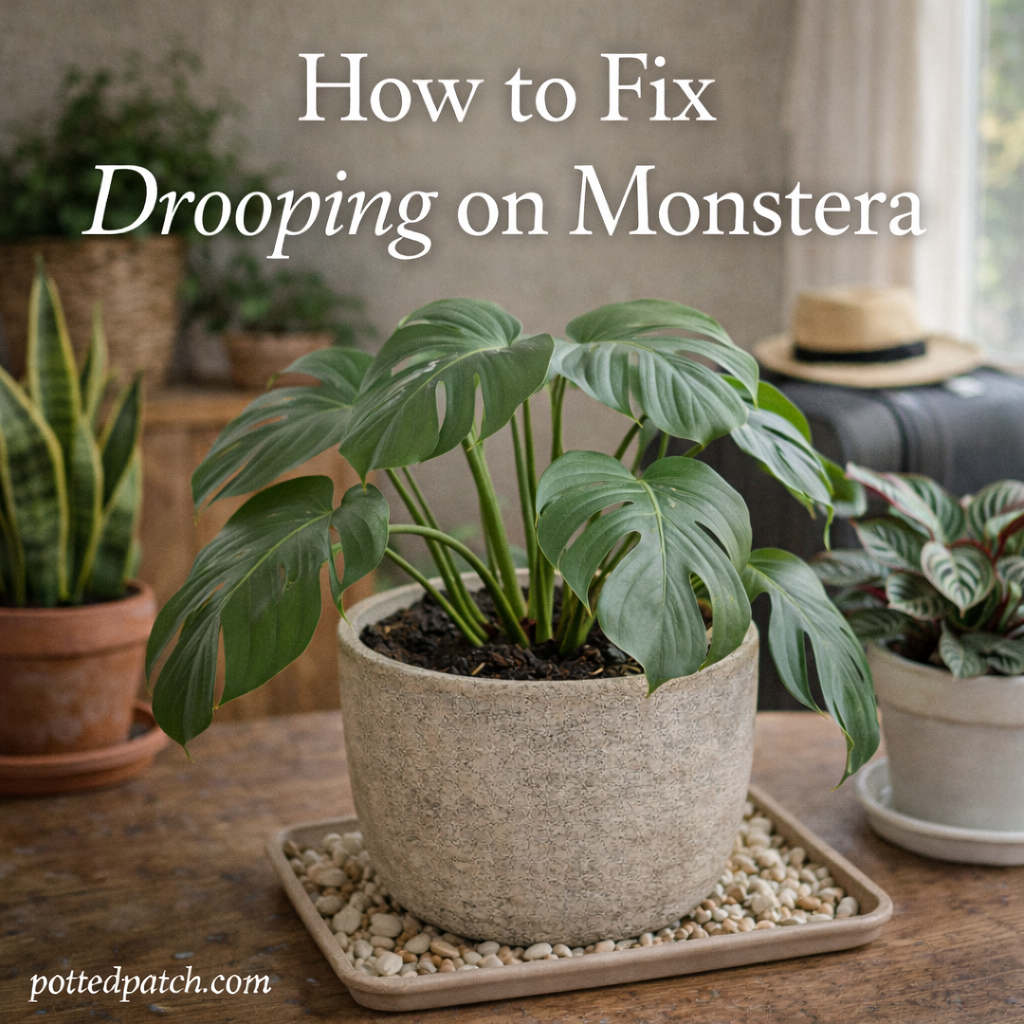

Fiddle leaf figs grow quickly when they’re happy. But over time, that growth can lead to a common problem: becoming root bound.
When a plant becomes root bound, its roots circle tightly inside the pot with little room to expand. This restricts water absorption, slows growth, and can eventually stress the entire plant.
The good news? Root bound issues are easy to prevent with a few simple habits.
What Does “Root Bound” Mean?
A fiddle leaf fig is root bound when:
- Roots fill the entire pot
- There’s little soil left between roots
- Roots begin circling the bottom or pushing against the sides
In severe cases, roots may even grow out of the drainage holes.
Mild root crowding isn’t always harmful—but extreme root binding limits healthy growth.
Signs Your Fiddle Leaf Fig Is Becoming Root Bound
Watch for these warning signs:
- Soil drying out very quickly
- Slowed or stalled growth
- Leaves drooping even after watering
- Roots visible at the soil surface
- Cracked or bulging pot
If you notice two or more of these symptoms, it’s time to inspect the roots.
How Often Should You Repot?
Most fiddle leaf figs need repotting every:
- 12–18 months (young plants)
- 18–24 months (mature plants)
Spring and early summer are the best times to repot because the plant is actively growing.
Avoid repotting during winter dormancy unless absolutely necessary.
Choose the Right Pot Size
One of the biggest mistakes is jumping to a pot that’s too large.
Instead:
- Select a pot 1–2 inches larger in diameter
- Ensure it has drainage holes
- Avoid oversized containers
Going too big can increase root rot risk because excess soil retains moisture.
How to Check If It’s Root Bound
To inspect:
- Gently tip the pot sideways.
- Slide the root ball out carefully.
- Examine the root structure.
Healthy roots should be:
- Light-colored
- Firm
- Slightly flexible
If roots are tightly circling with little soil visible, it’s time to repot.
Repotting the Right Way
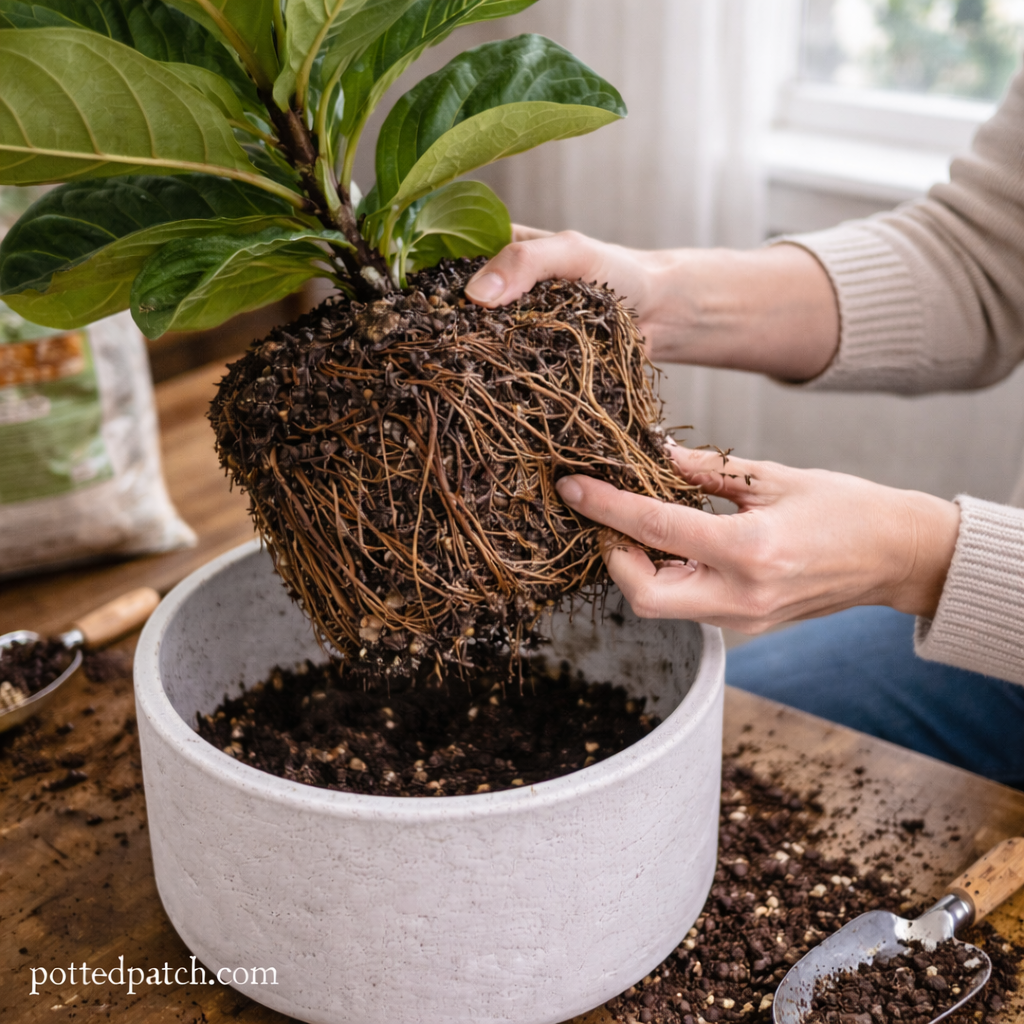
Follow these steps:
- Loosen tightly circling roots gently with your fingers.
- Trim excessively long roots if necessary.
- Place fresh, well-draining soil in the new pot.
- Position the plant at the same soil depth as before.
- Water thoroughly after repotting.
Avoid compacting the soil too tightly.
Improve Soil to Prevent Future Issues
Using the right soil mix reduces compaction and supports healthy roots.
Ideal soil blend:
- High-quality indoor potting mix
- Perlite for aeration
- Orchid bark for drainage
Well-aerated soil allows roots to expand naturally instead of circling tightly.
Don’t Ignore Drainage
Poor drainage accelerates root stress.
Always:
- Use pots with drainage holes
- Empty saucers after watering
- Avoid decorative pots without airflow
Healthy roots need both moisture and oxygen.
Can a Root Bound Fiddle Leaf Fig Recover?
Yes—if corrected early.
After repotting, you may notice:
- Faster growth
- Larger new leaves
- Improved overall vigor
Severely root bound plants may take several weeks to adjust, but recovery is common.
Preventive Care Routine
To prevent root bound problems long-term:
- Inspect roots annually.
- Repot every 1–2 years.
- Use well-draining soil.
- Choose appropriately sized pots.
- Monitor watering frequency.
Simple consistency prevents major issues.
Final Thoughts
Root bound issues in fiddle leaf figs happen naturally over time—but they’re easy to manage with routine care.
By:
- Repotting on schedule
- Choosing the correct pot size
- Improving soil aeration
- Monitoring root health
You’ll keep your fiddle leaf fig growing strong, balanced, and stress-free.
Healthy roots support healthy leaves—and that’s the foundation of a thriving plant.