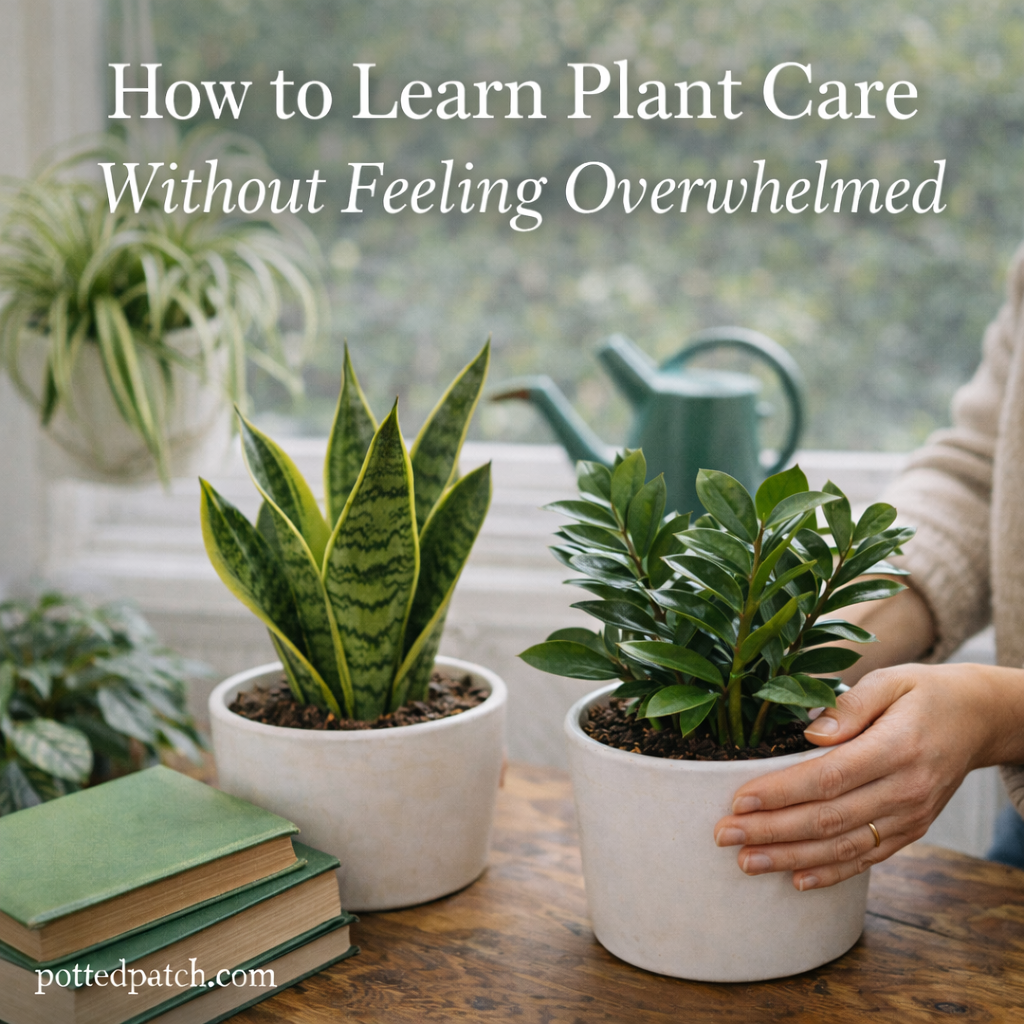
If you’ve ever brought home a plant only to panic-Google every leaf change, you’re not alone.
Plant care can feel overwhelming at first — watering schedules, lighting requirements, humidity levels, soil types. It’s easy to think you need to become a botany expert overnight.
You don’t.
Learning plant care is about building confidence step by step — not mastering everything at once.
Here’s how to simplify the process and actually enjoy it.
1. Start With One or Two Easy Plants
The fastest way to feel overwhelmed is to buy five plants at once.
Instead, begin with one or two beginner-friendly varieties that tolerate mistakes.
Good starter plants include:
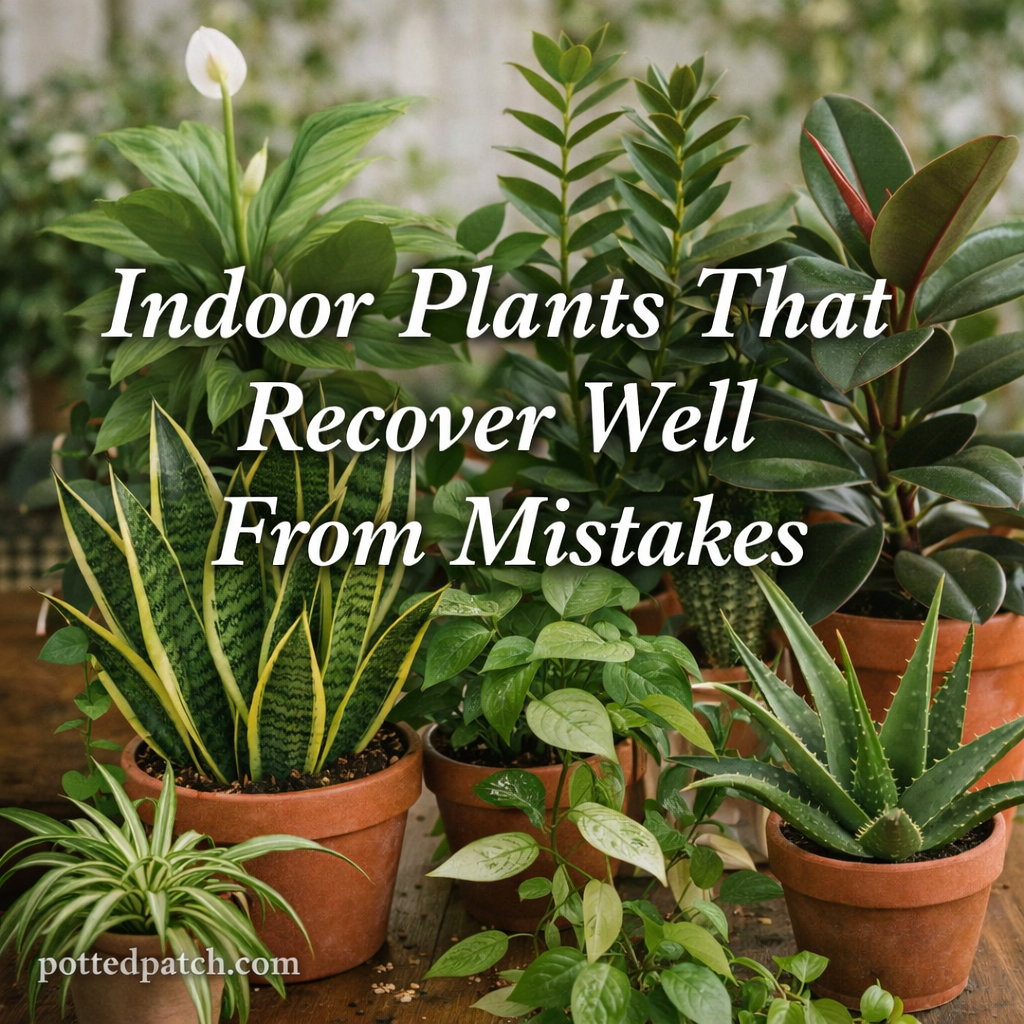
- Snake plant
- ZZ plant
- Pothos
- Spider plant
- Cast iron plant
These plants forgive missed waterings and adapt to common indoor conditions.
Master a couple first. Then expand.
2. Focus on the Big Three: Light, Water, Drainage
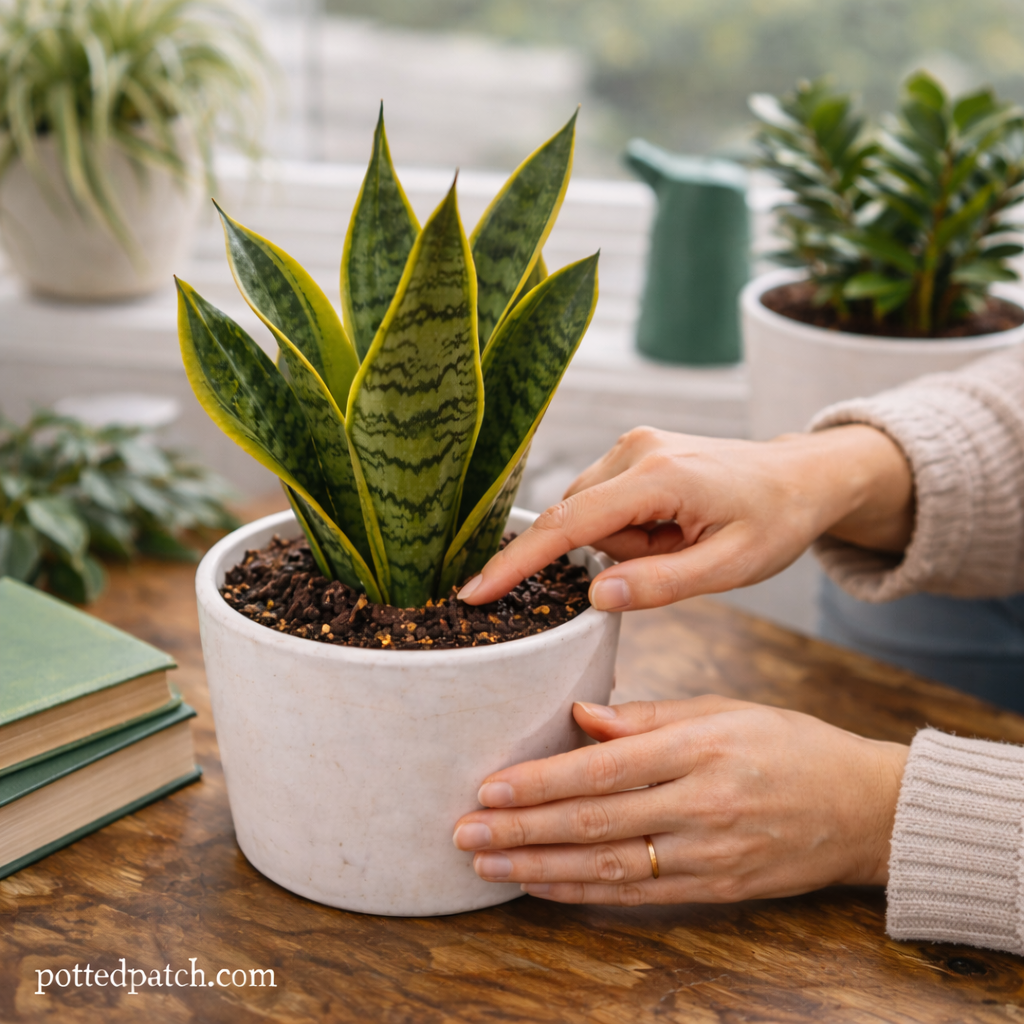
You don’t need to memorize everything. Most plant care problems trace back to three basics:
Light
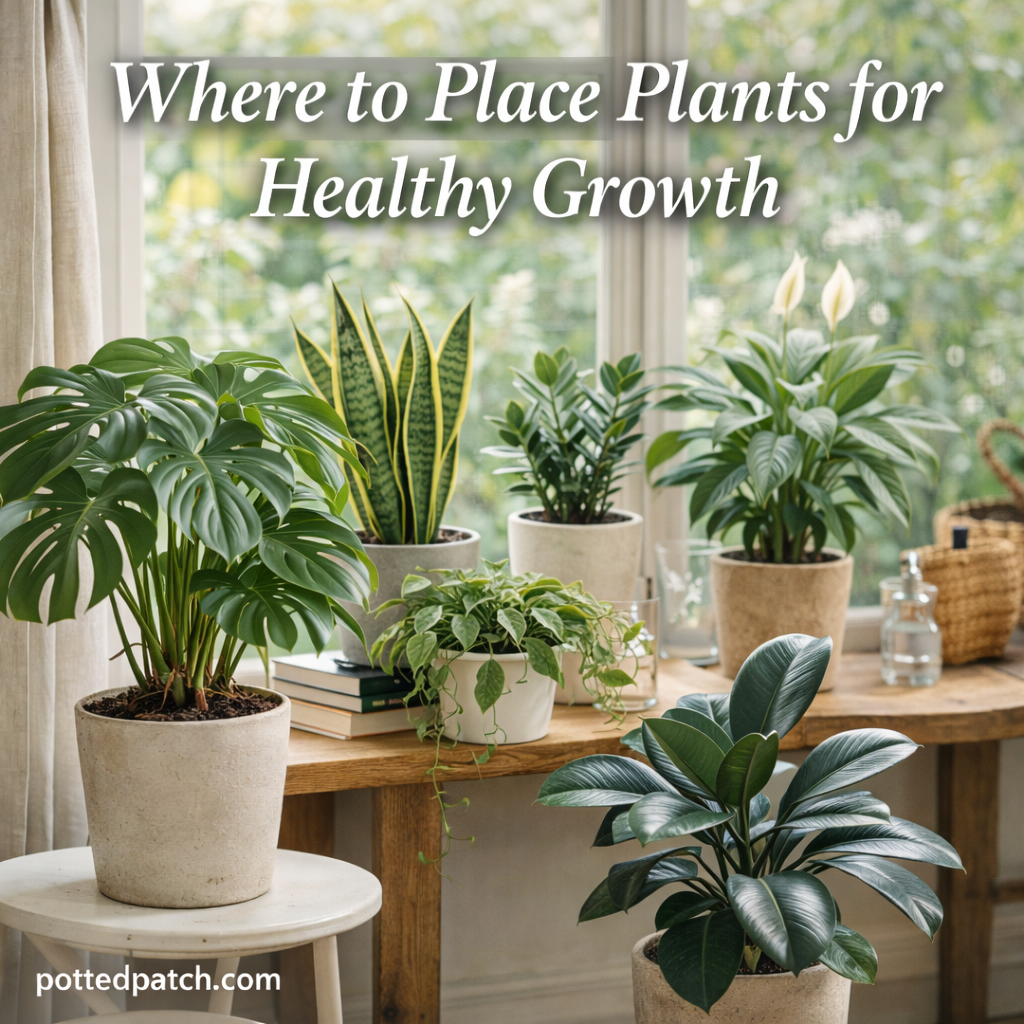
Is your plant in bright, indirect light? Low light? Direct sun?
Understanding light solves half of plant stress issues.
Water
Are you checking the soil before watering — or following a calendar?
Most houseplants prefer drying out slightly between waterings.
Drainage
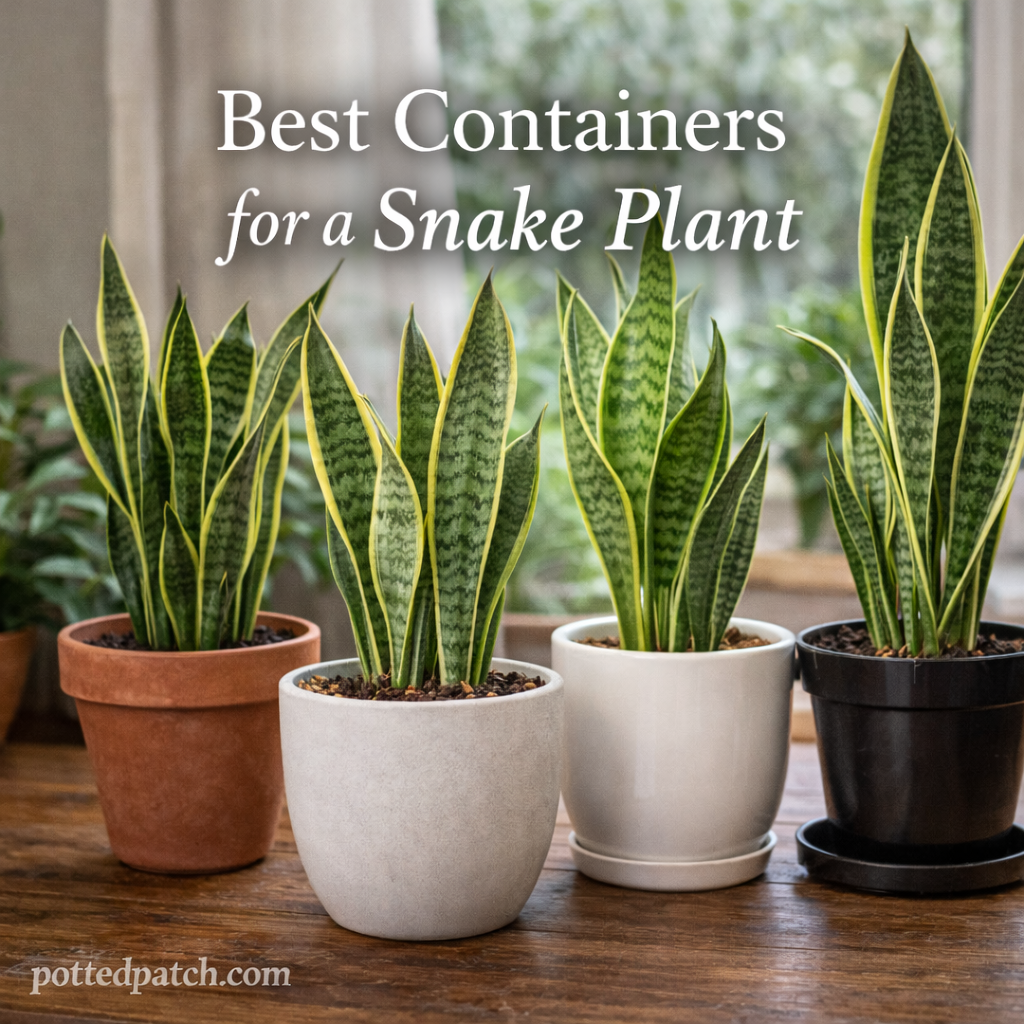
Does your pot have drainage holes?
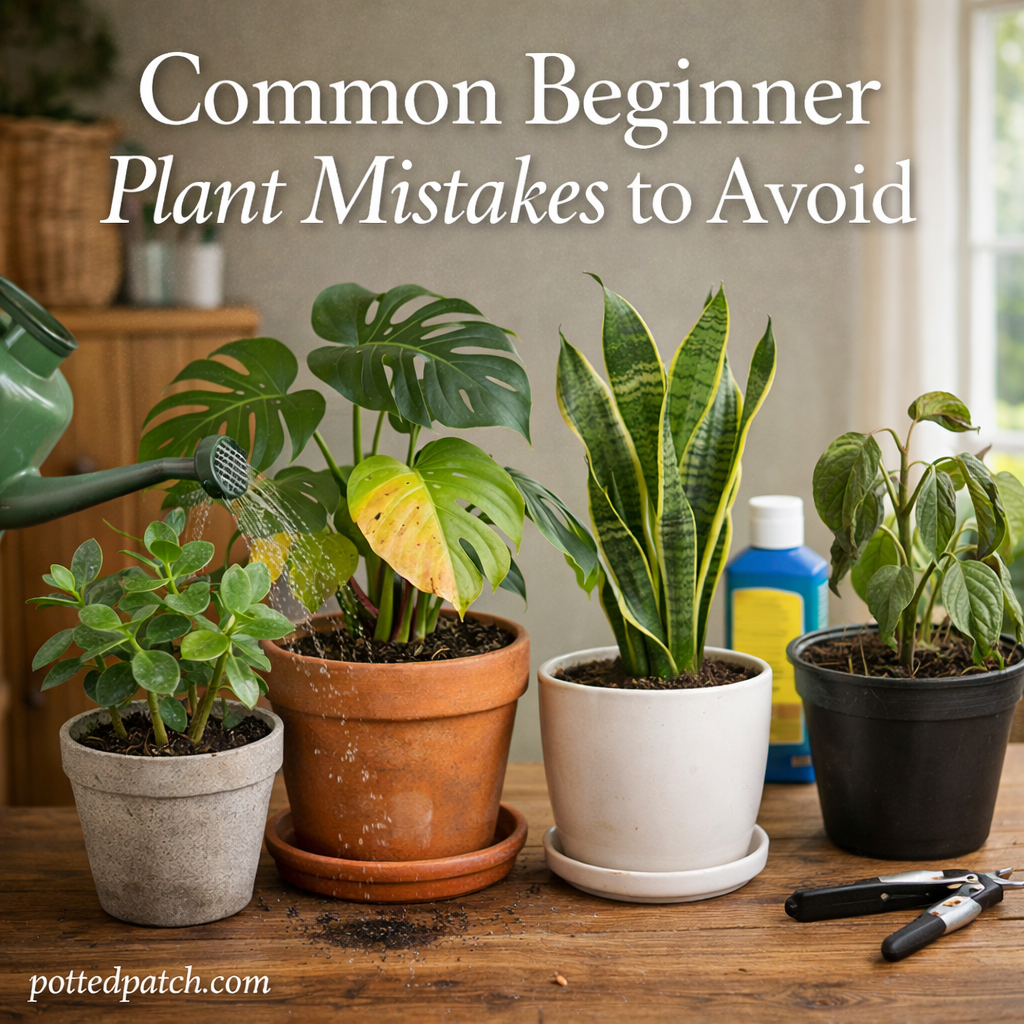
No drainage is one of the most common beginner mistakes.
Master these three areas and you’ll avoid most problems.
3. Learn One Skill at a Time
Instead of trying to understand humidity, fertilizing, pruning, repotting, pest control, and propagation all at once, break it down.
Week 1: Learn proper watering technique.
Week 2: Understand light placement in your home.
Week 3: Learn how to recognize overwatering signs.
Small learning blocks build confidence quickly.
4. Expect Imperfection
Every plant owner kills a plant at some point.
It’s not failure — it’s part of the learning curve.
Plants are living things. Sometimes:
- Lighting isn’t ideal
- You overwater once
- Travel disrupts care
- Soil stays wet longer than expected
Mistakes teach you more than perfect streaks ever will.
5. Observe Before You React
Beginners often panic at small changes.
Instead of immediately repotting or fertilizing, pause.
Ask yourself:
- Is the soil dry or wet?
- Has lighting changed recently?
- Is this normal seasonal shedding?
Observation builds skill faster than constant intervention.
6. Create a Simple Routine
Consistency reduces overwhelm.
Try this low-stress routine:
- Check soil moisture once per week
- Rotate plants every few weeks
- Wipe leaves monthly
- Fertilize lightly during growing season
No complicated charts required.
7. Avoid Information Overload
Plant care advice online can conflict.
One source says water weekly. Another says monthly.
Instead of chasing every opinion:
- Stick to a few trusted resources
- Focus on your plant’s response
- Adjust based on what you observe
Your home environment matters more than generalized rules.
8. Understand That Slow Growth Is Normal
Many beginner plants grow slowly — especially indoors.
If your plant isn’t exploding with growth, that doesn’t mean you’re doing something wrong.
Healthy signs include:
- Firm leaves
- Stable color
- Gradual new growth
- No soft or mushy areas
Steady is success.
9. Keep Tools Minimal
You don’t need expensive gadgets.
Basic tools include:
- A pot with drainage
- Well-draining soil
- A watering can
- Indirect natural light
That’s enough to grow confidently.
10. Shift From Perfection to Curiosity
Instead of asking, “Am I doing this perfectly?” ask:
“What is my plant telling me?”
Curiosity reduces pressure and builds real understanding.
Over time, you’ll recognize subtle cues — and plant care will feel intuitive rather than stressful.
A Simple Beginner Action Plan
If you’re just starting, here’s your reset:
- Choose one easy plant.
- Place it in indirect light.
- Water only when soil is dry.
- Observe for two weeks.
- Adjust gently if needed.
That’s it.
Plant care doesn’t have to be complicated to be successful.
Final Thoughts
Learning plant care without feeling overwhelmed is about slowing down, simplifying, and trusting the process.
You don’t need to know everything. You just need to understand the basics and build from there.
Plants are resilient. You’re learning.
Give yourself permission to grow alongside them.