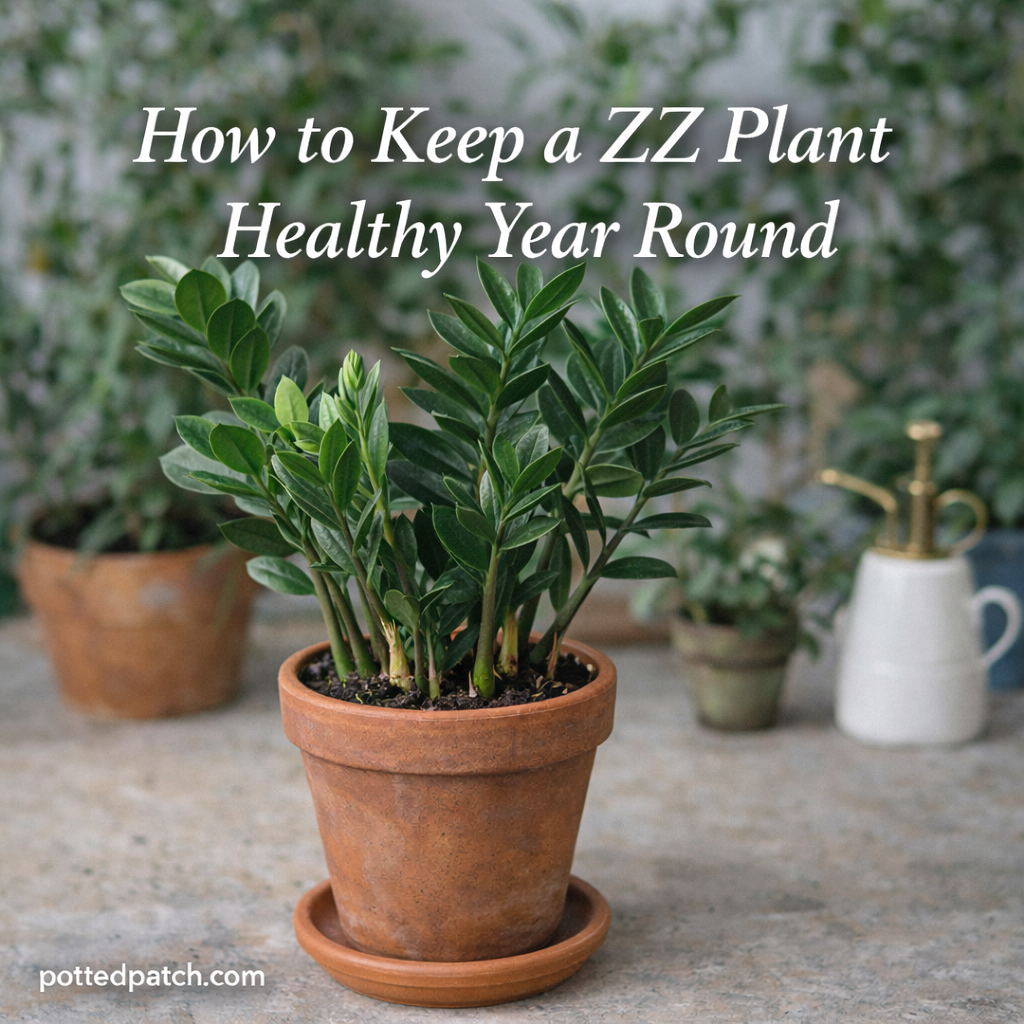
ZZ plants are known for being tough, adaptable, and beginner-friendly. But even resilient plants need consistent care to stay glossy, upright, and thriving throughout the year.
The key to keeping a ZZ plant healthy year round isn’t complicated — it’s about adjusting care slightly with the seasons and avoiding common overcare mistakes.
Here’s your complete guide to maintaining a strong, healthy ZZ plant in every season.
Understand How ZZ Plants Grow
ZZ plants (Zamioculcas zamiifolia) grow from thick underground rhizomes that store water and nutrients.
This means:
- They tolerate drought.
- They dislike soggy soil.
- They grow slowly.
- They produce new shoots in bursts (mostly spring and summer).
Because they store water, they need less attention than most houseplants.
Light: Keep It Bright but Indirect
ZZ plants tolerate low light, but they stay healthiest in bright, indirect light.
Best placement:
- Near an east- or north-facing window.
- A few feet from a south- or west-facing window.
- In a room with consistent natural light.
Avoid:
- Harsh, direct afternoon sun.
- Deep, dark corners for long periods.
Year-Round Tip
Rotate the plant every few weeks so stems grow evenly.
Watering: The Most Important Factor
Overwatering is the most common cause of ZZ plant decline.
Follow this rule:
Water only when the soil is completely dry.
How to check:
- Insert your finger 2–3 inches into the soil.
- Use a moisture meter if needed.
- Lift the pot — dry soil feels much lighter.
Seasonal Watering Guide:
Spring/Summer
Water every 2–3 weeks (depending on light and temperature).
Fall/Winter
Water every 3–4 weeks or even less.
Always allow excess water to drain fully.
Soil: Keep It Well-Draining
ZZ plants need airy soil that dries efficiently.
Ideal mix:
- Cactus or succulent potting mix.
- 25–40% perlite or pumice.
- Optional orchid bark for added airflow.
Heavy, compacted soil increases the risk of root rot.
Refresh soil every 2–3 years when repotting.
Containers: Prioritize Drainage
Choose pots with drainage holes.
Best options:
- Terracotta (helps soil dry faster).
- Ceramic with drainage.
- Nursery plastic pots inside decorative cachepots.
Avoid:
- Self-watering pots.
- Sealed containers without drainage.
- Oversized pots.
Snug pots help control excess moisture.
Temperature and Humidity
ZZ plants prefer typical indoor conditions.
Ideal temperature range:
65–80°F (18–27°C)
They tolerate normal household humidity and do not require misting.
Keep away from:
- Cold drafts.
- Heating vents.
- AC airflow.
- Temperatures below 50°F.
Stable temperatures help maintain year-round health.
Fertilizing for Balanced Growth
ZZ plants are light feeders.
Fertilize only during active growing months (spring and summer):
- Use balanced liquid fertilizer (10-10-10 or similar).
- Dilute to half strength.
- Apply every 4–6 weeks.
Do not fertilize in fall or winter.
Overfeeding can damage roots and cause leaf tip burn.
Cleaning Leaves for Better Health
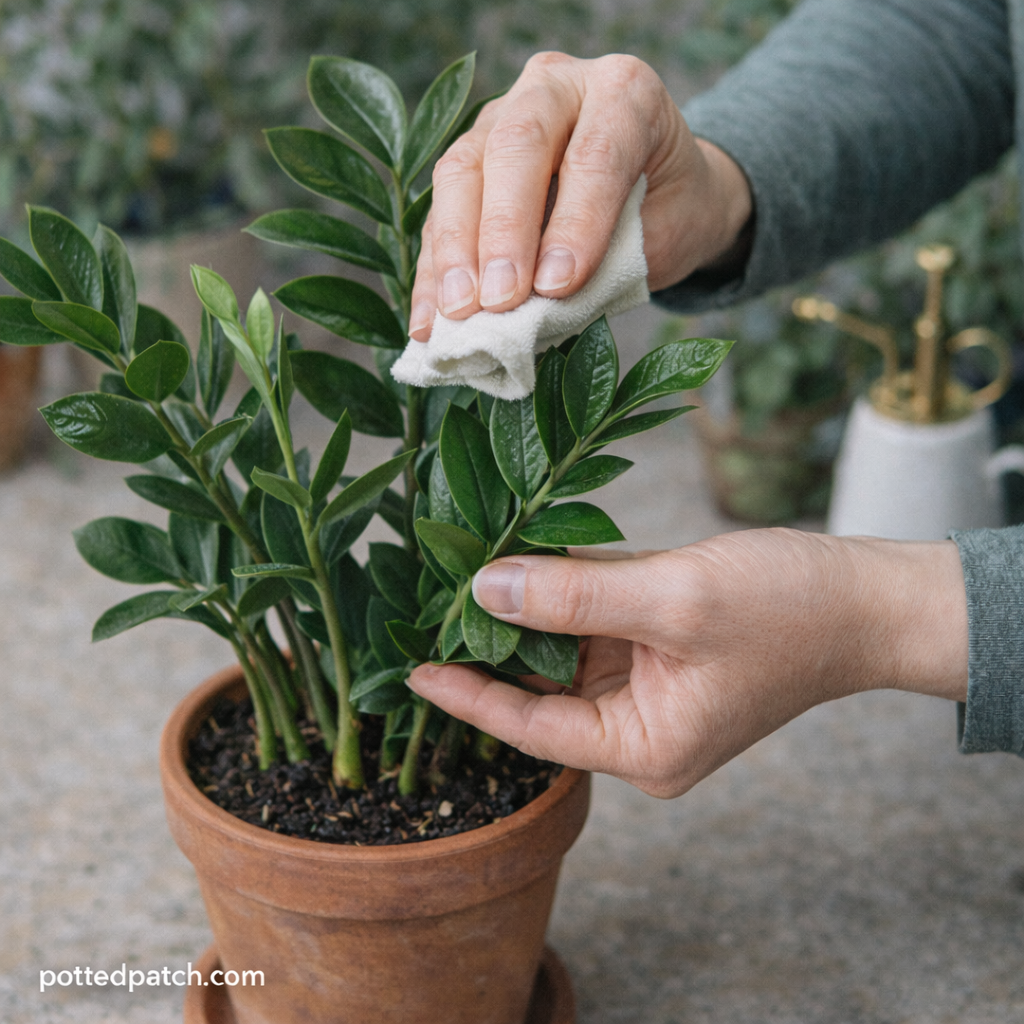
Dust can build up on glossy ZZ leaves and block light absorption.
Once a month:
- Wipe leaves gently with a damp cloth.
- Support stems while cleaning.
- Avoid leaf shine sprays.
Clean leaves improve photosynthesis and appearance.
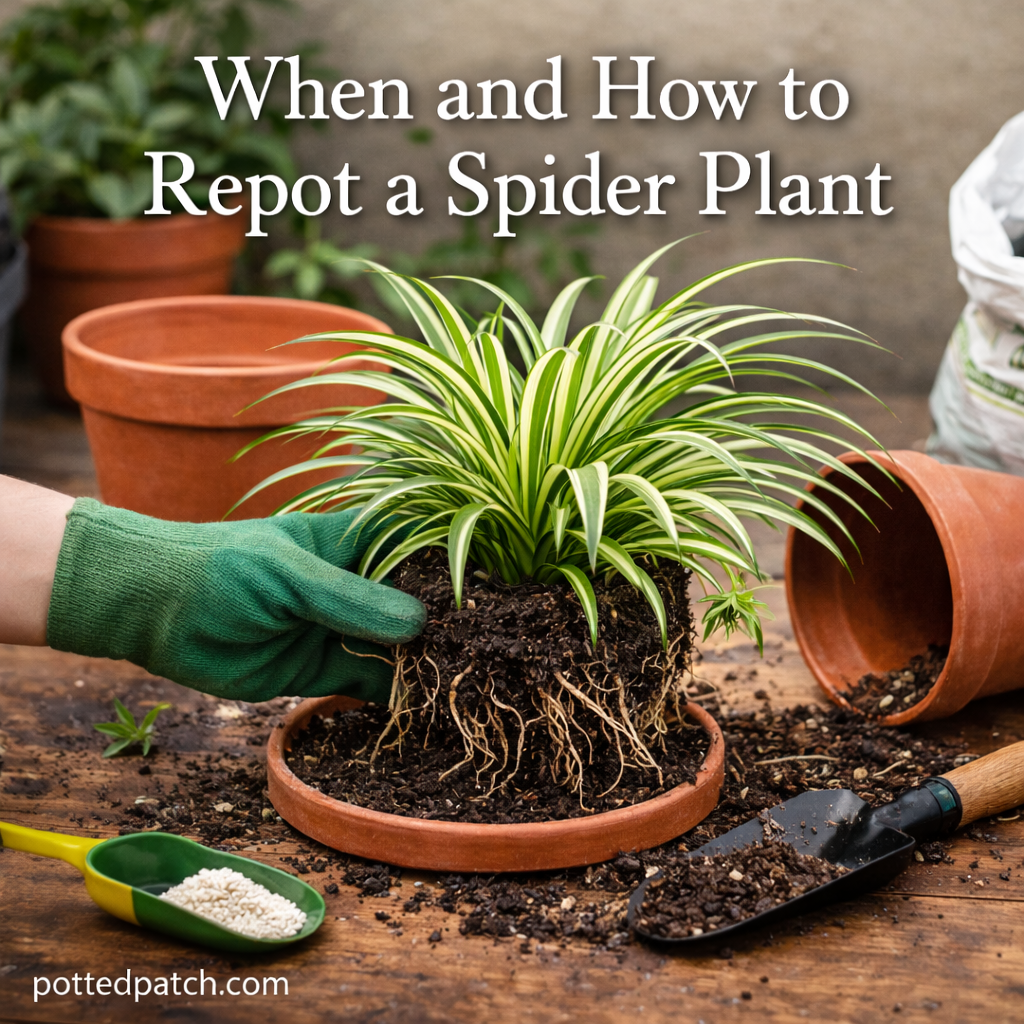
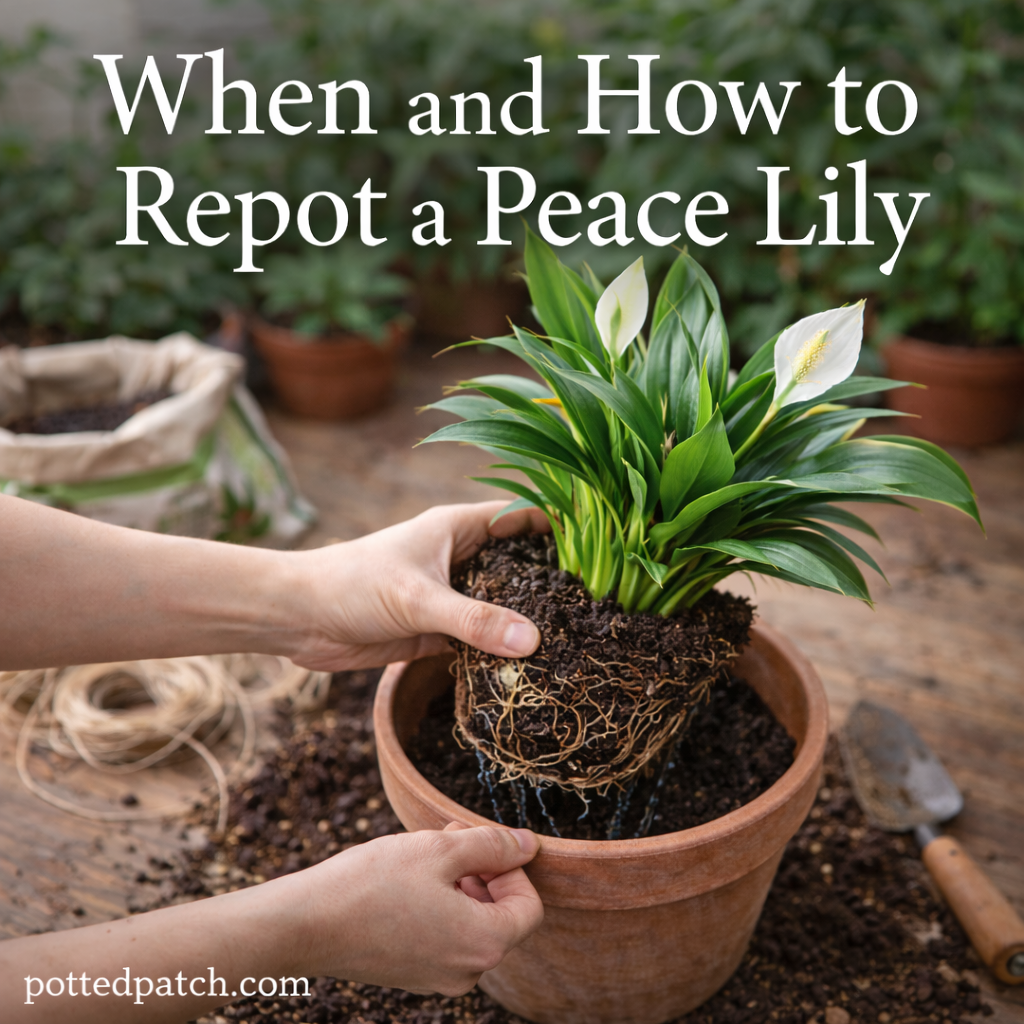
Repotting Schedule
ZZ plants prefer being slightly rootbound.
Repot only when:
- Roots are tightly circling.
- Rhizomes press against the pot.
- Soil drains poorly.
- The container cracks.
Typical repotting interval:
Every 2–3 years.
Choose a pot only 1–2 inches larger.
Seasonal Care Adjustments
Spring
Expect new shoots. Increase light exposure if possible.
Summer
Monitor watering frequency. Growth may speed up.
Fall
Reduce watering gradually as light decreases.
Winter
Water sparingly. Growth may pause entirely.
Adapting to seasonal light changes keeps your plant balanced.
Common Year-Round Problems to Avoid
- Overwatering.
- Poor drainage soil.
- Using oversized pots.
- Leaving water in saucers.
- Fertilizing during dormancy.
- Ignoring low light conditions.
Most ZZ plant issues come from too much attention, not too little.
Signs Your ZZ Plant Is Thriving
- Upright, firm stems.
- Glossy deep green leaves.
- Occasional new shoots in growing season.
- No yellowing at the base.
- Soil drying at a steady pace.
Healthy ZZ plants grow slowly — steady is normal.
Final Thoughts
Keeping a ZZ plant healthy year round is simple:
- Provide bright, indirect light.
- Water only when soil is fully dry.
- Use well-draining soil.
- Choose breathable containers.
- Adjust care slightly with the seasons.
Consistency matters more than complexity.
With the right balance, your ZZ plant can remain healthy, glossy, and resilient for many years.