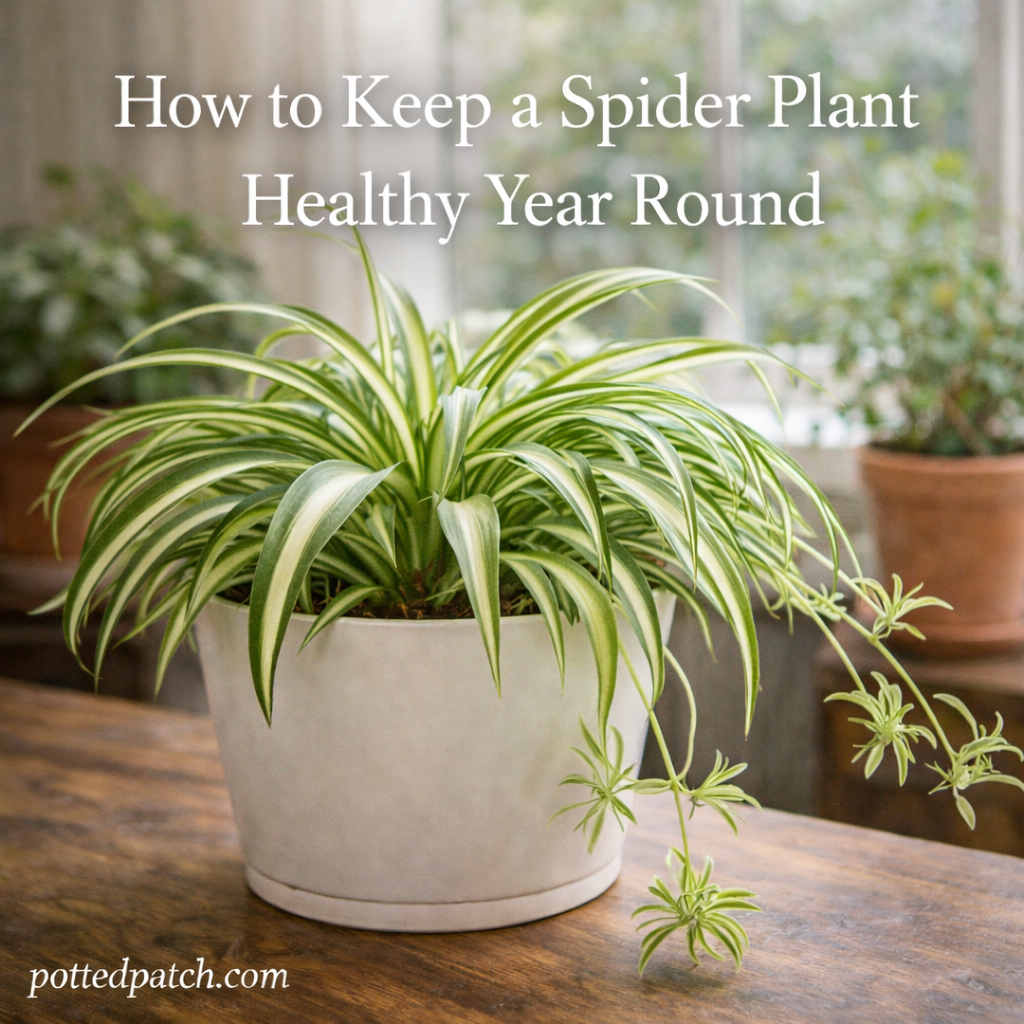
Spider plants are among the most adaptable and beginner-friendly houseplants. Their arching green-and-white leaves brighten indoor spaces, and with the right care, they thrive all year long.
While spider plants are forgiving, consistent seasonal adjustments help maintain vibrant foliage, strong roots, and steady growth throughout the year.
Here’s how to keep a spider plant healthy year round.
Understand the Spider Plant Growth Cycle
Spider plants have natural growth rhythms:
- Spring & Summer: Active growth phase
- Fall: Slowing down
- Winter: Resting period
Adjusting care based on these phases keeps your plant balanced and stress-free.
Provide Consistent Bright, Indirect Light
Light is the foundation of year-round health.
Spider plants prefer:
- Bright, indirect sunlight
- A few feet from a south- or west-facing window
- Near an east-facing window
Avoid intense direct sun, which can scorch leaves. During darker winter months, move the plant slightly closer to a light source if needed.
If leaves fade or growth slows dramatically, lighting may be insufficient.
Maintain a Balanced Watering Routine
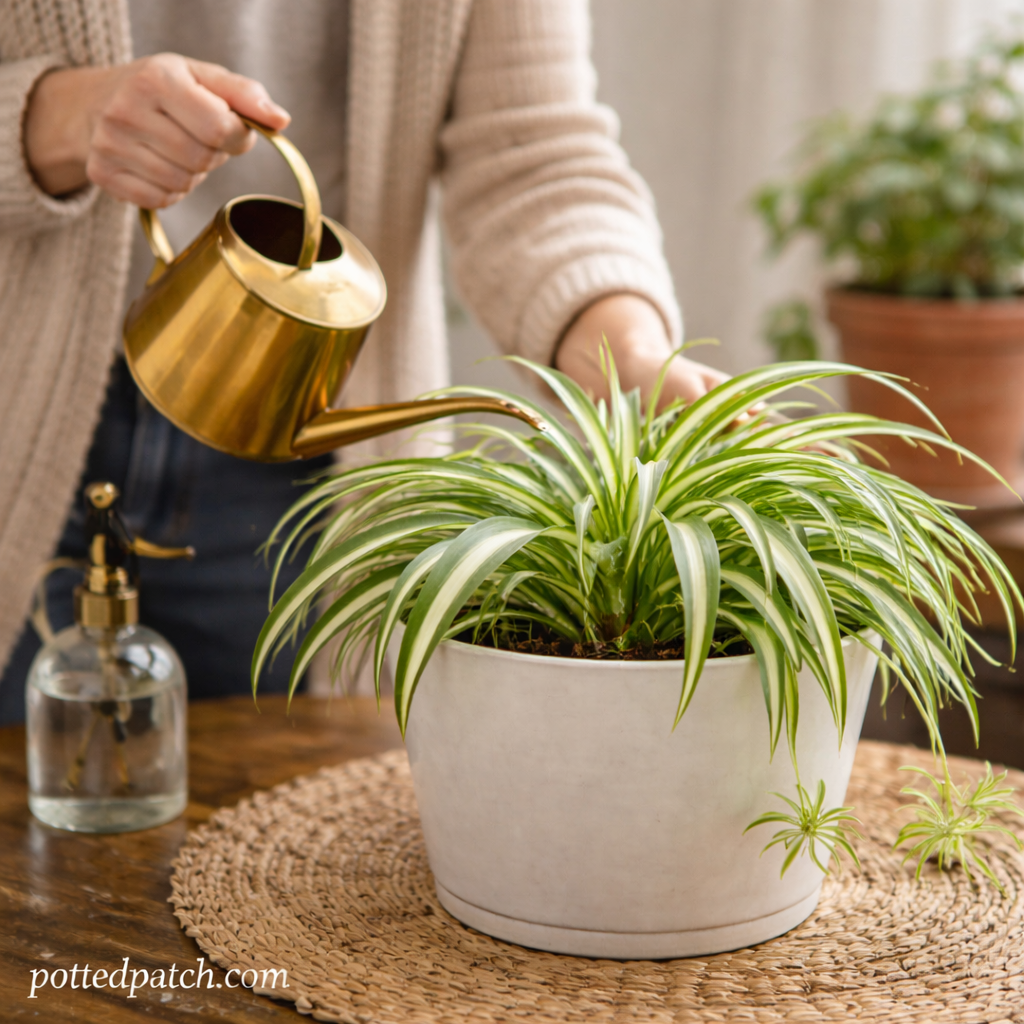
Spider plants store water in their roots, which makes them tolerant of short dry periods.
Year-round watering guidelines
- Water when the top 1–2 inches of soil feel dry
- Water thoroughly until excess drains out
- Never allow the plant to sit in standing water
Seasonal adjustments
- Spring/Summer: Water more frequently as growth increases
- Fall/Winter: Reduce watering as soil dries more slowly
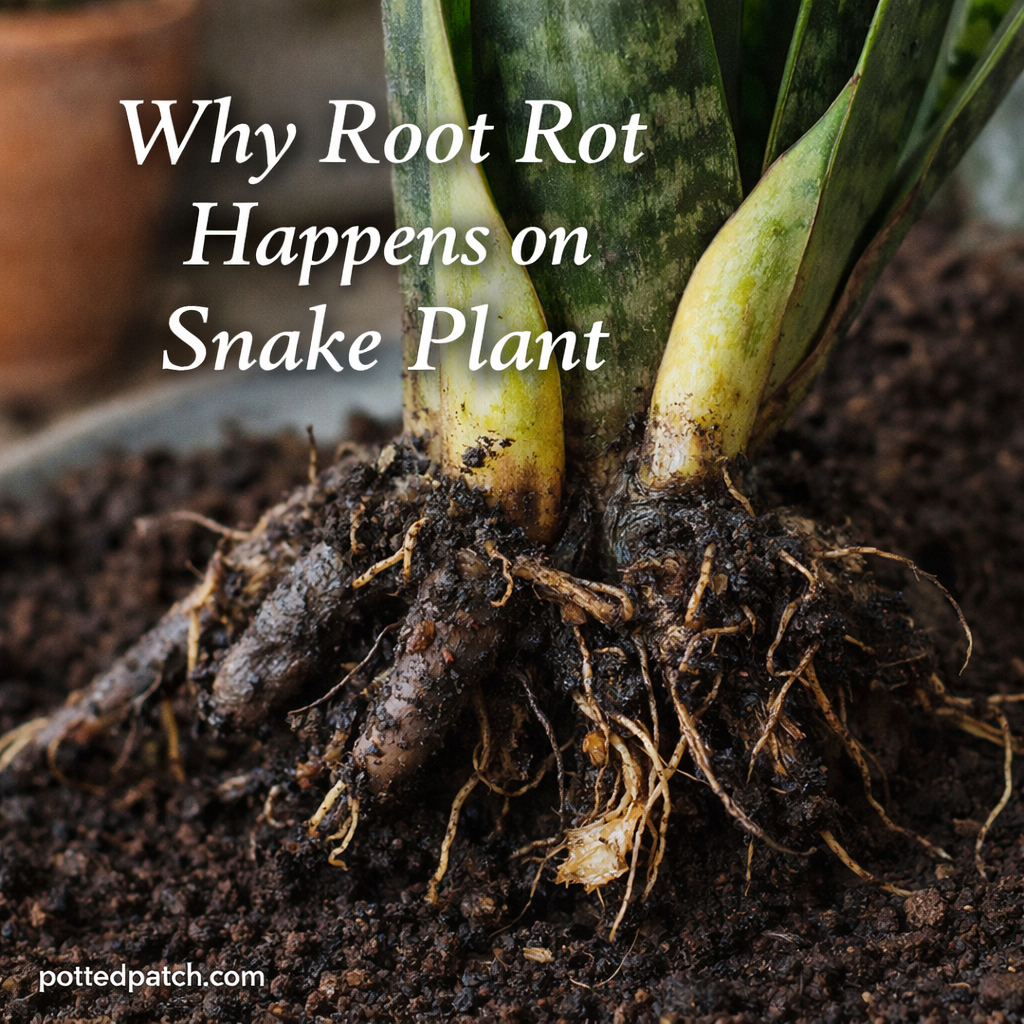
Overwatering is the most common mistake and can lead to root rot.
Use Well-Draining Soil
Healthy roots are the key to consistent growth.
Choose a loose potting mix that drains well. You can improve standard houseplant soil by adding:
- Perlite
- Orchid bark
- Coarse sand
Good drainage prevents soggy roots and encourages oxygen flow.
Fertilize During the Growing Season
Spider plants benefit from light feeding during active growth.
Feeding schedule
- Fertilize every 4–6 weeks in spring and summer
- Use a balanced liquid houseplant fertilizer
- Dilute to half strength
Avoid fertilizing in fall and winter when the plant naturally slows down.
Excess fertilizer can cause brown leaf tips.
Keep Temperatures Stable
Spider plants prefer temperatures between 65–80°F.
Avoid placing them near:
- Drafty windows
- Exterior doors
- Heating vents
- Air conditioning units
Sudden temperature changes can stress the plant and affect leaf firmness.
Maintain Moderate Humidity
Spider plants tolerate average indoor humidity, but they appreciate slightly higher moisture in the air.
If your home is very dry, especially in winter:
- Group plants together
- Use a pebble tray
- Run a humidifier nearby
Avoid excessive misting, as consistently wet leaves can create problems.
Repot When Necessary
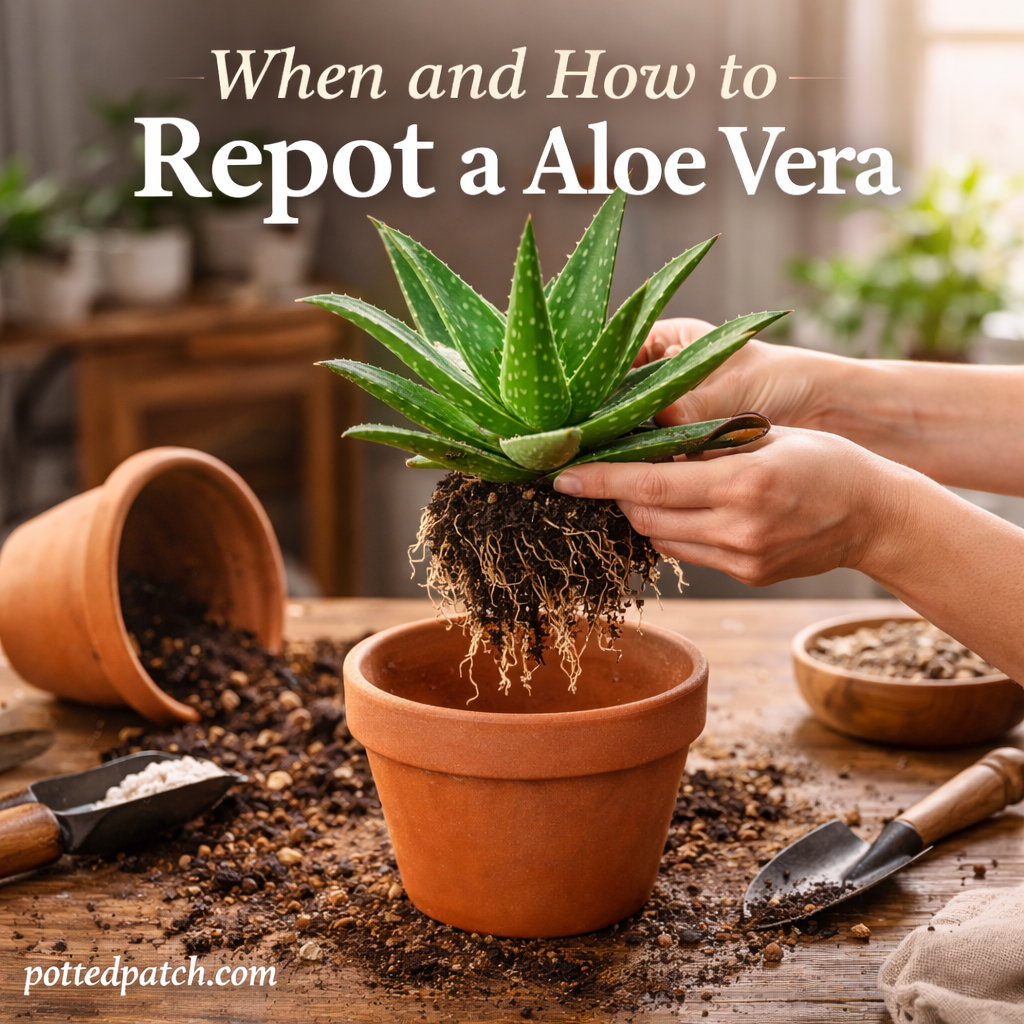
Spider plants grow quickly and can become root bound.
Signs it’s time to repot:
- Roots growing through drainage holes
- Soil drying out very quickly
- Slowed growth
Choose a container only 1–2 inches larger in diameter. Spider plants actually prefer being slightly snug in their pots.
Repotting every 1–2 years refreshes soil and maintains strong growth.
Trim Brown Tips and Dead Leaves
Brown tips are common and often caused by:
- Fluoride in tap water
- Overfertilizing
- Inconsistent watering
Trim damaged tips with clean scissors, following the natural leaf shape.
Pruning keeps the plant looking fresh and encourages new growth from the center.
Encourage Spiderettes (Baby Plants)
Healthy, mature spider plants produce long stems with baby plants.
To encourage spiderettes:
- Provide bright light
- Keep the plant slightly root bound
- Feed lightly during spring
Spiderettes are a sign your plant is thriving.
Watch for Common Problems
Stay proactive by monitoring:
- Drooping leaves (watering issues)
- Yellow leaves (overwatering)
- Pale leaves (low light)
- Mushy stems (root rot)
Early detection makes correction simple.
Seasonal Care Checklist
Spring & Summer
- Increase watering frequency
- Fertilize monthly
- Check for rapid root growth
Fall
- Reduce feeding
- Monitor soil moisture carefully
Winter
- Water less frequently
- Move closer to light if needed
- Avoid cold drafts
Small seasonal adjustments make a big difference.
Final Thoughts
Keeping a spider plant healthy year round isn’t complicated — it’s about consistency.
Provide bright, indirect light.
Water only when needed.
Use well-draining soil.
Adjust care with the seasons.
With steady attention and minor seasonal changes, your spider plant will stay lush, vibrant, and productive all year long.