

Snake plants (Sansevieria, also known as Dracaena trifasciata) are famous for being tough, adaptable, and forgiving—but “hard to kill” doesn’t mean “thrives on neglect.” With the right year-round care, your snake plant can stay upright, vibrant, and steadily growing in every season.
This guide walks through everything you need to know to keep a snake plant healthy all year, including light, watering, temperature, seasonal adjustments, and common mistakes to avoid.
Why Snake Plants Are So Resilient
Snake plants are native to dry, warm regions of West Africa. Their thick, upright leaves store water, making them naturally drought-tolerant and adaptable to indoor environments.
What makes them special:
- Thick leaves that retain moisture
- Slow growth that doesn’t demand constant feeding
- Tolerance for a wide range of light conditions
- Ability to handle occasional missed care
That said, consistency—not perfection—is the secret to long-term health.
Light Requirements Throughout the Year
Snake plants adapt well to different lighting conditions, but their growth and appearance depend heavily on light quality.
Best Light Conditions
- Bright, indirect light encourages faster growth and stronger leaves
- Medium light works well for maintenance
- Low light is tolerated, but growth slows and leaves may thin
Seasonal Light Tips
- Spring & summer: Protect from harsh direct sun, especially near south- or west-facing windows
- Fall & winter: Move closer to windows to compensate for shorter days
If your snake plant starts leaning, stretching, or losing color, it’s usually asking for more light.
How to Water a Snake Plant Properly
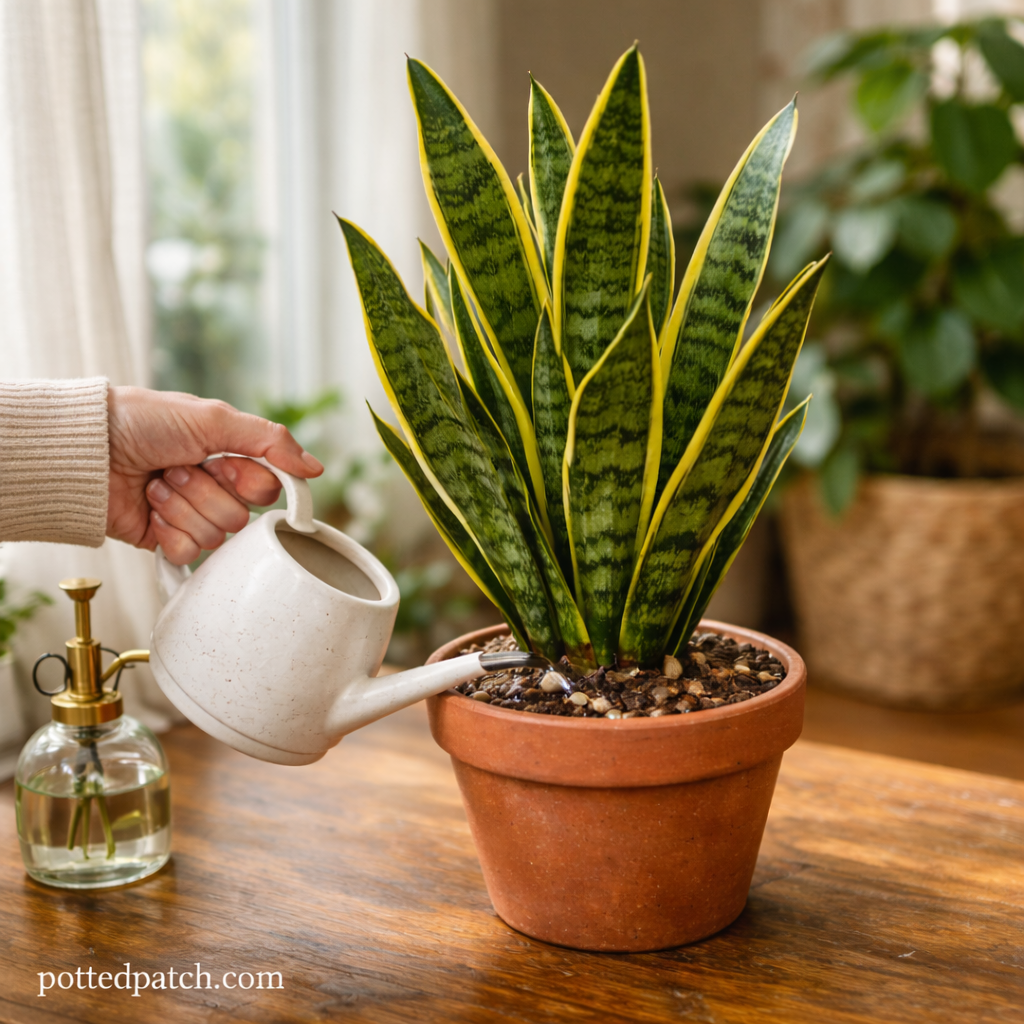
Overwatering is the number one reason snake plants struggle indoors. Their roots are highly sensitive to excess moisture.
General Watering Rule
Water only when the soil is completely dry from top to bottom.
For most homes, this means:
- Every 2–3 weeks in spring and summer
- Every 4–6 weeks in fall and winter
Always check the soil before watering—never rely solely on a schedule.
Best Watering Technique
- Use room-temperature water
- Water slowly until it drains from the bottom
- Empty the saucer completely
- Let the soil dry fully before watering again
If in doubt, wait a few more days. Snake plants prefer slight underwatering to soggy soil.
Choosing the Right Soil and Pot
Good drainage is essential for year-round health.
Ideal Soil Mix
- Well-draining cactus or succulent mix
- Optional: add perlite or coarse sand for extra airflow
Best Pot Choice
- Pots with drainage holes are non-negotiable
- Terracotta pots help wick excess moisture
- Avoid oversized pots, which hold water too long
A snug pot keeps roots healthier and reduces the risk of rot.
Temperature and Humidity Needs
Snake plants prefer stable indoor conditions and don’t like extremes.
Ideal Temperature Range
- 65°F to 85°F (18°C to 29°C)
- Avoid temperatures below 55°F
Keep plants away from:
- Drafty windows in winter
- Heating vents or radiators
- Air conditioning blasts
Humidity Considerations
Snake plants thrive in normal household humidity and don’t need misting. High humidity combined with low airflow can actually increase the risk of rot.
Fertilizing Snake Plants (Less Is More)
Snake plants are light feeders and only need minimal fertilization.
When to Fertilize
- Spring and summer only
- Once every 6–8 weeks
What to Use
- Balanced houseplant fertilizer diluted to half strength
- Or a cactus/succulent fertilizer
Do not fertilize in fall or winter. Feeding during dormancy can stress the plant and damage roots.
Seasonal Care Breakdown
Adjusting care slightly by season keeps your snake plant stable year round.
Spring: Growth Restart
- Increase light exposure gradually
- Resume light fertilizing
- Check roots for crowding
This is the best time to repot or divide if needed.
Summer: Active Growth
- Water more often, but only when soil is dry
- Rotate the plant every few weeks for even growth
- Watch for sun scorch near windows
Growth should be steady but still slow.
Fall: Slowdown Phase
- Reduce watering frequency
- Stop fertilizing
- Maintain consistent temperatures
This transition period sets the plant up for winter success.
Winter: Rest Mode
- Water sparingly
- Move closer to light sources
- Avoid cold drafts and temperature drops
Minimal intervention is best during winter.
Repotting and Root Health
Snake plants like being slightly root-bound, so repotting isn’t frequent.
When to Repot
- Roots growing out of drainage holes
- Pot cracking or bulging
- Soil drying out extremely fast
Usually every 2–4 years is sufficient.
Repotting Tips
- Go up only one pot size
- Use fresh, well-draining soil
- Let the plant rest for a week before watering
Common Snake Plant Problems and Solutions
Even tough plants show stress when something’s off.
Yellowing Leaves
Possible causes:
- Overwatering
- Poor drainage
- Cold exposure
Solution:
Let soil dry completely and improve drainage.
Soft or Mushy Base
Cause:
- Root or crown rot
Solution:
Remove affected areas, repot in dry soil, and reduce watering.
Wrinkled or Curling Leaves
Cause:
- Prolonged underwatering
Solution:
Water thoroughly and resume a consistent dry-then-water cycle.
Leaning or Falling Leaves
Cause:
- Insufficient light
- Uneven growth
Solution:
Increase light and rotate the plant regularly.
Cleaning and Routine Maintenance
Dusty leaves can block light and slow growth.
Simple Maintenance Routine
- Wipe leaves with a damp cloth every few weeks
- Inspect for pests during cleaning
- Remove damaged or bent leaves at the base
Healthy leaves should be firm, upright, and richly colored.
Final Thoughts
Keeping a snake plant healthy year round isn’t about doing more—it’s about doing less, consistently. Provide bright indirect light, allow the soil to dry fully between waterings, avoid cold temperatures, and resist the urge to fuss.
When cared for properly, a snake plant can live for decades, quietly improving indoor air quality and adding structure to your space with minimal effort.