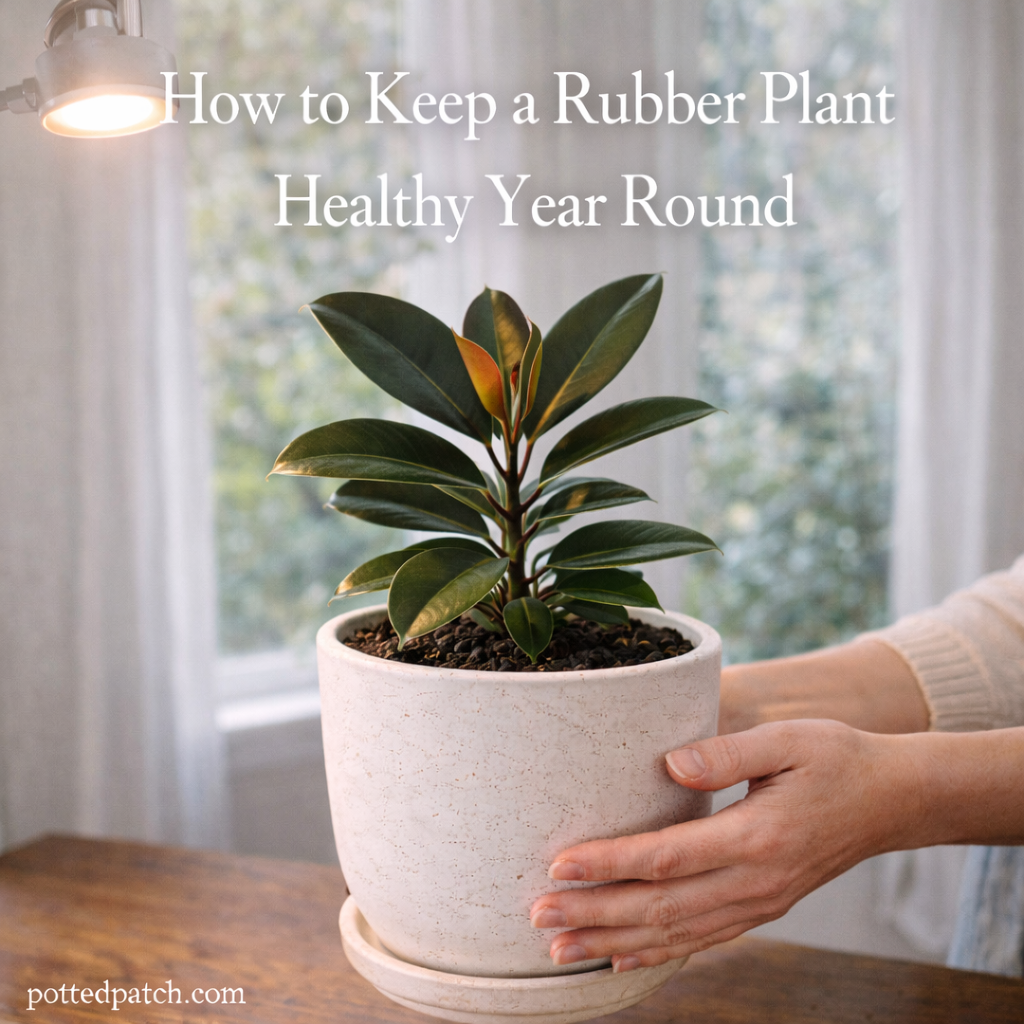
Rubber plants are hardy and adaptable, but their needs shift slightly with the seasons. If you want consistent growth, glossy leaves, and fewer problems, year-round care adjustments make a big difference.
The key isn’t complicated routines — it’s consistency and seasonal awareness.
Here’s how to keep your rubber plant (Ficus elastica) healthy all year long.
Provide Bright, Consistent Light
Light is the foundation of healthy growth.
Rubber plants thrive in bright, indirect light. While they tolerate moderate light, low-light conditions lead to slower growth and leggy stems.
Year-Round Light Tips
- Place near an east- or south-facing window with filtered light
- Rotate the plant every 1–2 weeks
- Supplement with a grow light during darker winter months
Consistent light keeps leaves bold and vibrant.
Adjust Watering by Season
Rubber plants do not need the same watering schedule year-round.
Spring & Summer
- Water when the top 1–2 inches of soil are dry
- Growth is active, so watering is more frequent
Fall & Winter
- Allow soil to dry slightly more between waterings
- Water less often due to slower growth
Overwatering in winter is one of the most common mistakes.
Maintain Proper Drainage
Healthy roots are the foundation of a healthy plant.
Always use:
- Pots with drainage holes
- Well-draining soil
- Saucers emptied after watering
Root rot can develop quickly if soil stays soggy.
Feed During the Growing Season
Rubber plants benefit from light feeding during active growth.
Fertilizing Schedule
- Once a month in spring and summer
- Skip fertilizing in fall and winter
Use a balanced liquid houseplant fertilizer diluted to half strength.
Overfeeding can cause leaf damage.
Keep Temperatures Stable
Rubber plants prefer temperatures between 65–80°F.
Avoid placing your plant near:
- Drafty windows
- Heating vents
- Air conditioning units
Sudden temperature changes can cause leaf drop.
Monitor Humidity
Rubber plants tolerate normal indoor humidity, but extremely dry air can cause brown edges.
During winter heating months:
- Group plants together
- Keep away from direct heat
- Use a humidifier if necessary
Moderate humidity helps maintain healthy foliage.
Clean the Leaves Regularly
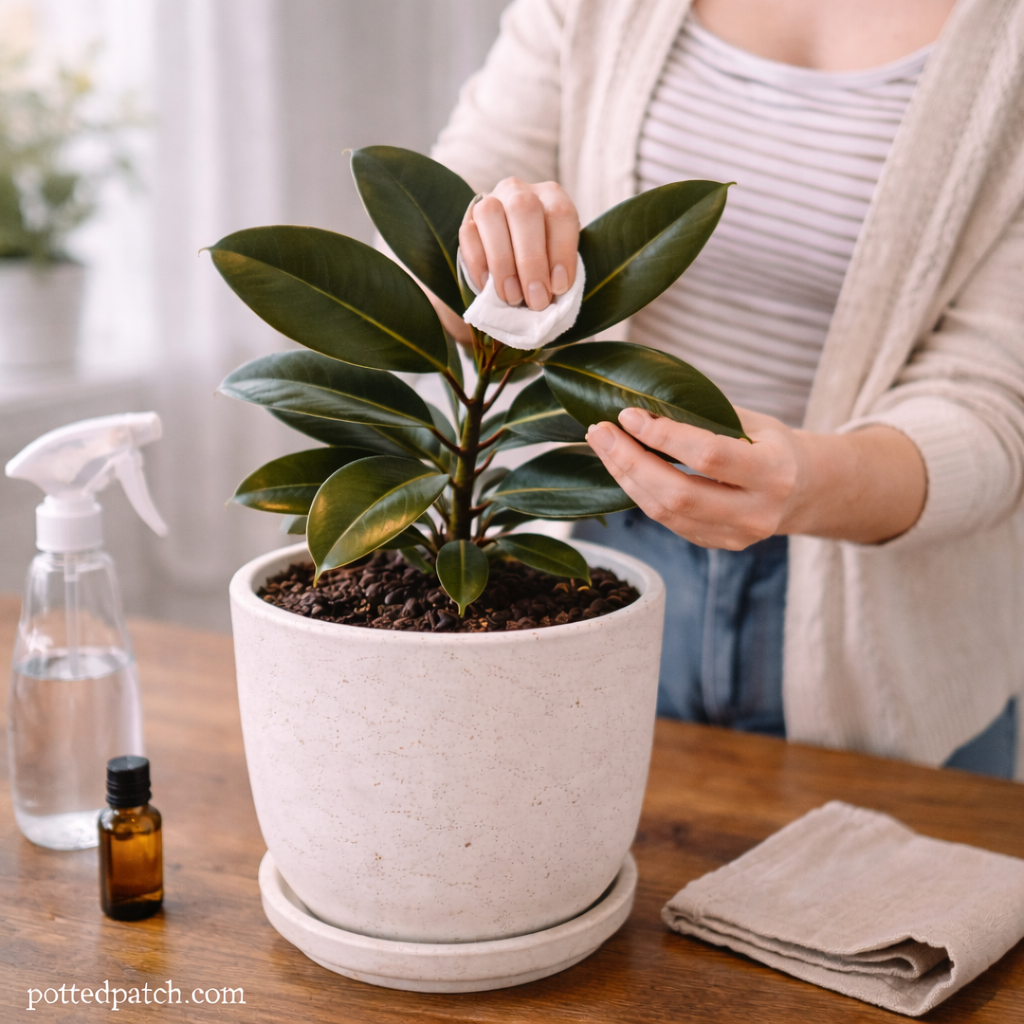
Large rubber plant leaves collect dust easily.
Dust blocks light and reduces photosynthesis.
Simple Maintenance Routine
- Wipe leaves with a damp cloth every few weeks
- Inspect for pests while cleaning
Clean leaves grow better.
Prune for Shape and Strength
Light pruning during spring encourages branching and fuller growth.
Trim just above a node to stimulate new shoots.
Avoid heavy pruning during winter dormancy.
Watch for Early Warning Signs
Year-round health means paying attention.
Look for:
- Yellowing leaves
- Brown tips
- Sudden leaf drop
- Leaning growth
Early intervention prevents bigger issues later.
Seasonal Quick Guide
Spring
- Increase watering
- Begin fertilizing
- Prune if needed
Summer
- Maintain bright light
- Monitor soil moisture
- Rotate regularly
Fall
- Reduce watering
- Stop fertilizing
- Watch temperature changes
Winter
- Water sparingly
- Provide maximum available light
- Avoid drafts
Small seasonal shifts keep your plant thriving.
Final Thoughts
Keeping a rubber plant healthy year round comes down to consistent light, proper watering, stable temperatures, and seasonal adjustments.
You don’t need complex care routines — just balanced habits and attention to changes in growth.
With steady care, your rubber plant will reward you with strong stems, glossy leaves, and vibrant growth every season.