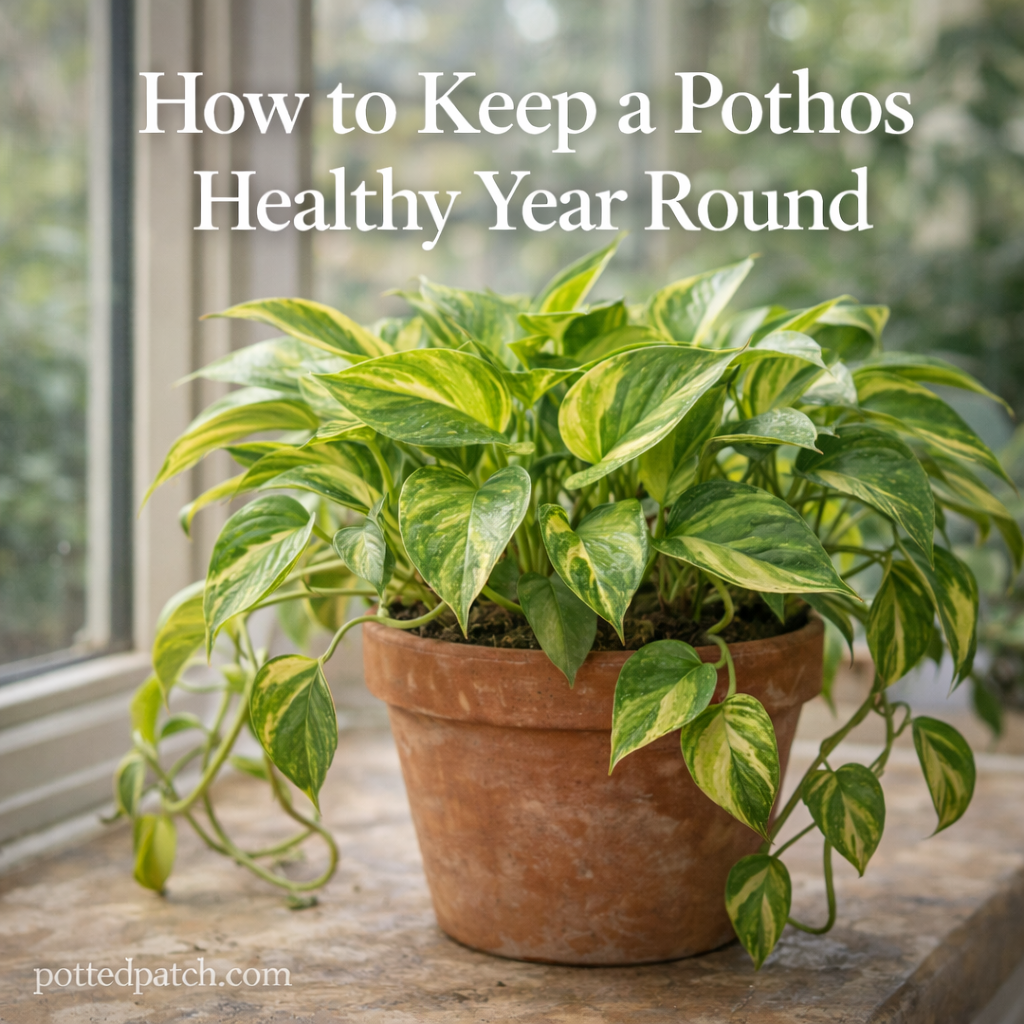
Pothos are famous for being easy, but keeping one truly healthy all year—not just surviving—requires a little seasonal awareness. Changes in light, temperature, and growth patterns affect how pothos behave throughout the year. When care stays the same while conditions change, problems like yellowing leaves, slow growth, or leggy vines can show up.
This guide walks you through how to keep a pothos healthy year round with simple, consistent adjustments that work in every season.
What a Healthy Pothos Looks Like
Before fine-tuning care, it helps to know what you’re aiming for.
A healthy pothos has:
- Firm, flexible vines
- Glossy leaves with good color
- New growth during warmer months
- No persistent yellowing or mushy stems
Occasional leaf loss is normal, but repeated issues usually point to care mismatches.
Provide Consistent, Bright Indirect Light
Light is the biggest factor in year-round pothos health.
Best light conditions:
- Bright, indirect light near a window
- Filtered sunlight through curtains
- Stable placement rather than frequent moving
Seasonal adjustment:
- In winter, move pothos closer to windows
- In summer, pull back slightly if sun becomes harsh
Pothos tolerate low light, but brighter conditions lead to fuller growth and stronger vines.
Adjust Watering by Season
Pothos don’t need the same amount of water all year.
General watering rules:
- Water when the top 1–2 inches of soil are dry
- Always use pots with drainage holes
- Empty saucers after watering
Seasonal changes:
- Spring & summer: Water more often as growth increases
- Fall & winter: Water less as growth slows
Overwatering in winter is one of the most common pothos problems.
Use Well-Draining Soil Year Round
Soil quality affects roots every day of the year.
Good pothos soil:
- Drains easily
- Holds light moisture without staying wet
- Contains perlite or bark for airflow
If soil stays damp for days, roots struggle even if watering frequency is correct.
Refreshing soil every 1–2 years keeps roots healthy and oxygenated.
Feed Lightly During Active Growth
Pothos benefit from nutrients, but only when they’re actively growing.
Fertilizing guidelines:
- Use a balanced liquid houseplant fertilizer
- Dilute to half strength
- Feed every 4–6 weeks in spring and summer
Avoid fertilizing:
- In winter
- When the plant is stressed
- Right after repotting
Too much fertilizer causes salt buildup, which damages roots and leaf tips.
Prune Regularly to Maintain Shape and Health
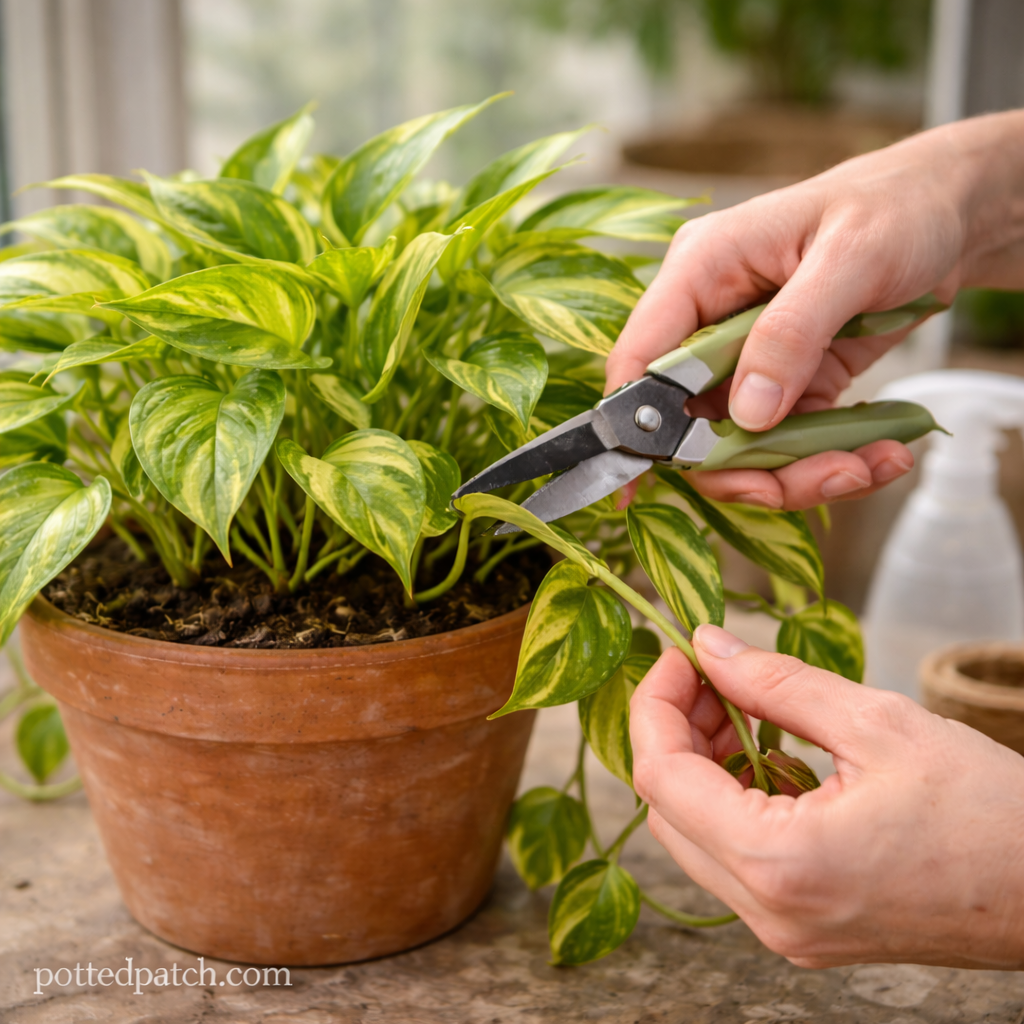
Pruning isn’t just cosmetic—it encourages stronger growth.
Benefits of pruning:
- Prevents leggy vines
- Encourages branching
- Removes weak or damaged growth
How to prune:
- Trim just above a leaf node
- Remove yellowing or bare sections
- Never prune more than 25–30% at once
Light pruning throughout the year keeps pothos balanced and full.
Rotate the Plant for Even Growth
Pothos naturally grow toward light.
To prevent uneven growth:
- Rotate the pot every 2–4 weeks
- Watch for leaning or one-sided vines
This small habit helps maintain symmetry and reduces stress on stems.
Maintain Stable Temperature and Airflow
Pothos prefer steady indoor conditions.
Ideal range:
- 65–85°F (18–29°C)
- Moderate humidity
Avoid placing pothos near:
- Cold drafts
- Heating vents
- Air conditioning units
Sudden temperature swings can cause leaf drop or stalled growth.
Keep Leaves Clean and Inspect Often
Dust blocks light and slows photosynthesis.
Simple care:
- Wipe leaves monthly with a damp cloth
- Check leaf undersides for pests
- Remove damaged leaves promptly
Early detection prevents small issues from becoming long-term problems.
Repot Only When Needed
Pothos don’t mind being slightly rootbound.
Signs repotting is needed:
- Roots growing out of drainage holes
- Water running straight through the pot
- Slowed growth despite good care
When repotting:
- Choose a pot 1–2 inches larger
- Use fresh, well-draining soil
- Repot in spring or early summer if possible
Oversized pots increase the risk of overwatering.
Year-Round Pothos Care Checklist
For quick reference:
- Bright, indirect light
- Seasonal watering adjustments
- Well-draining soil
- Light feeding in warm months
- Occasional pruning
- Stable temperature
- Clean leaves
Consistency beats perfection.
Final Thoughts
Keeping a pothos healthy year round isn’t about complicated routines—it’s about paying attention to seasonal changes and responding gently. When light, water, and environment stay balanced, pothos remain resilient, lush, and fast-growing in every season.
Once you dial in these basics, pothos truly become one of the easiest and most rewarding indoor plants to grow. 🌿