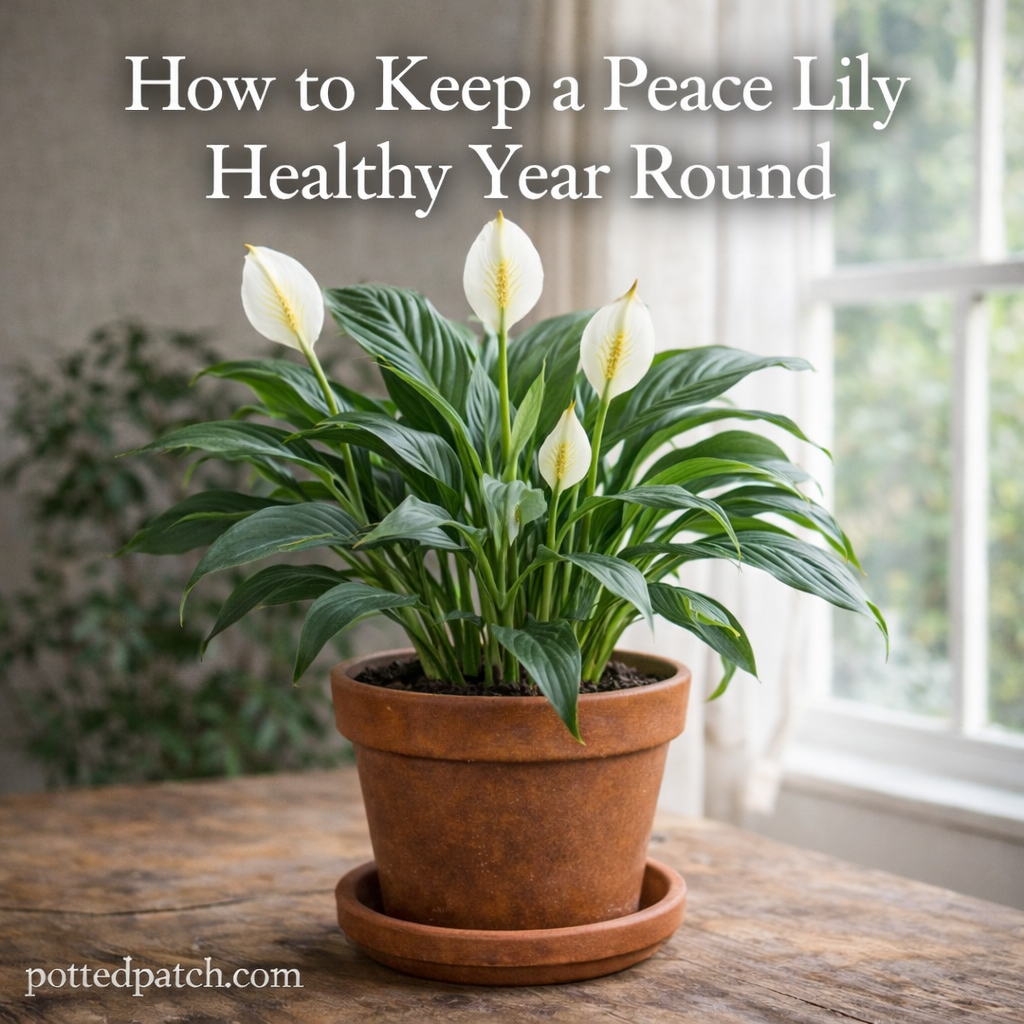
Peace lilies are known for their elegant white blooms and deep green foliage. While they’re relatively low-maintenance, keeping them healthy year round requires small seasonal adjustments.
With the right balance of light, watering, feeding, and temperature control, your peace lily can thrive in every season.
Here’s how to keep it strong, vibrant, and blooming throughout the year.
Provide Consistent Bright, Indirect Light
Light is the foundation of peace lily health.
For best results:
- Place near east- or north-facing windows
- Keep 3–6 feet from brighter south-facing windows
- Avoid direct afternoon sunlight
Too little light reduces flowering. Too much direct sun can scorch leaves.
If natural light drops in winter, consider moving the plant slightly closer to a window.
Adjust Watering by Season
Peace lilies prefer evenly moist soil — but not soggy.
Spring & Summer:
- Water when the top 1–2 inches are dry
- Expect more frequent watering during active growth
Fall & Winter:
- Allow soil to dry slightly more between waterings
- Water less often as growth slows
Always empty saucers after watering to prevent root rot.
Maintain Proper Humidity
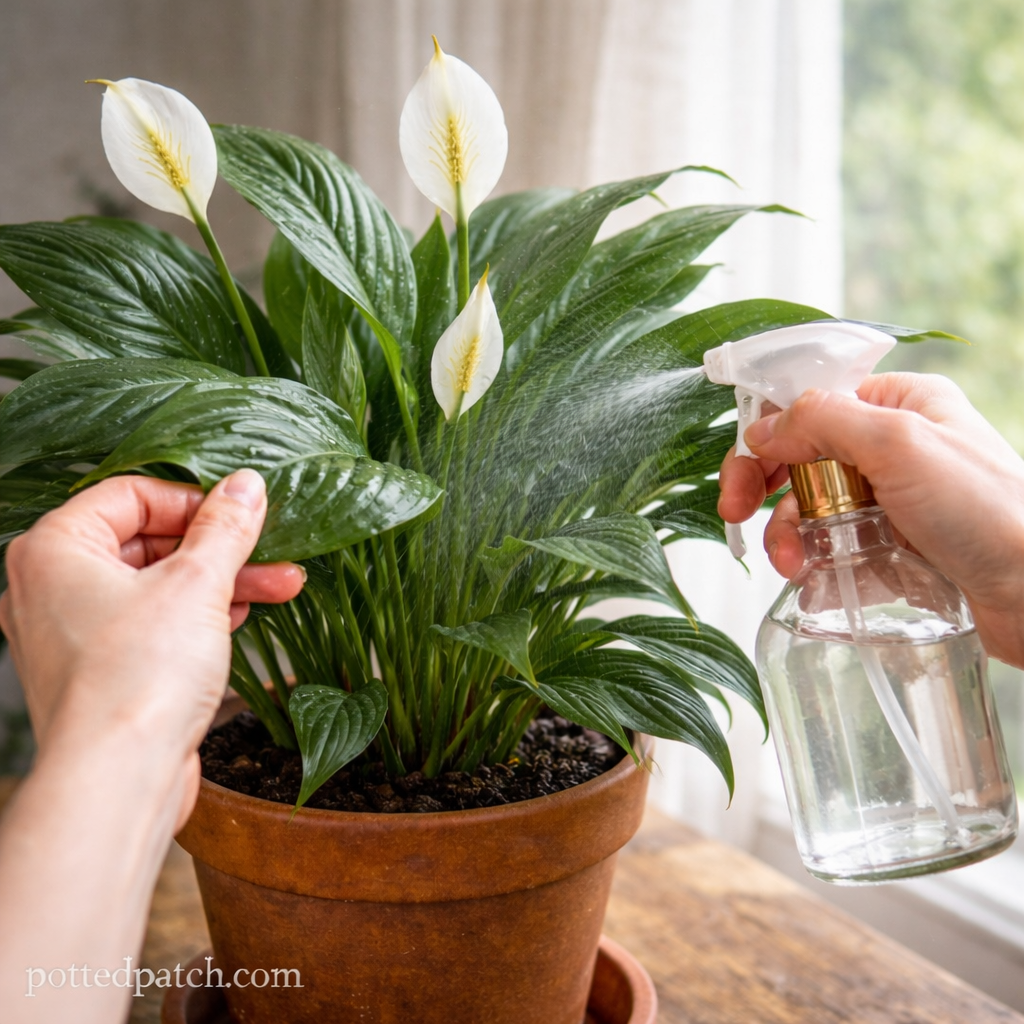
As tropical plants, peace lilies appreciate moderate humidity.
Ideal humidity range:
- 40–60%
To maintain humidity:
- Group plants together
- Use a pebble tray
- Run a humidifier in dry winter months
Low humidity often causes brown leaf tips.
Keep Temperatures Stable
Peace lilies prefer steady indoor temperatures between:
- 65–80°F (18–27°C)
Avoid:
- Cold drafts
- Heating vents
- Air conditioning blasts
Sudden temperature swings stress the plant and slow growth.
Fertilize During Active Growth
Feed your peace lily during spring and summer.
Use:
- Balanced liquid houseplant fertilizer
- Diluted to half strength
- Every 4–6 weeks
Stop fertilizing in fall and winter when the plant enters a resting phase.
Overfeeding can damage roots and reduce flowering.
Rotate for Balanced Growth
Peace lilies grow toward light.
Rotate the pot ¼ turn every 1–2 weeks to:
- Prevent leaning
- Encourage even leaf growth
- Maintain a symmetrical shape
Consistent rotation supports long-term structural health.
Prune and Clean Regularly
Routine grooming keeps your plant healthy.
- Remove yellow or aging leaves
- Cut spent flowers at the base
- Wipe dust from leaves monthly
Clean leaves absorb light more efficiently and support year-round growth.
Repot When Needed
Peace lilies prefer being slightly rootbound, but eventually need fresh soil.
Repot when:
- Roots grow out of drainage holes
- Growth slows noticeably
- Water runs straight through the pot
Spring is the best time to repot.
Watch for Common Problems
Year-round monitoring helps prevent bigger issues.
Check for:
- Drooping leaves (often underwatering)
- Yellow leaves (possible overwatering)
- Brown tips (low humidity or mineral buildup)
- No blooms (insufficient light)
Early correction keeps the plant healthy long term.
Seasonal Care Summary
Spring
Increase watering, fertilize, expect new growth.
Summer
Maintain moisture and humidity, rotate regularly.
Fall
Reduce feeding, adjust watering slightly.
Winter
Water less, maintain warmth, maximize available light.
Final Thoughts
Keeping a peace lily healthy year round is about consistency and seasonal awareness.
Small adjustments in light, watering, feeding, and humidity make a noticeable difference. With steady care, your peace lily will reward you with lush foliage and graceful blooms in every season.
A little attention throughout the year ensures long-term plant health.