Fiddle leaf figs are stunning indoor plants — but they can be sensitive if their care routine isn’t consistent. The key to keeping a fiddle leaf fig healthy year round is understanding how its needs shift with the seasons.
In this guide, you’ll learn exactly how to adjust light, watering, feeding, and maintenance so your plant stays strong and vibrant all year long.
Provide Consistent, Bright Light
Light is the foundation of fiddle leaf fig health.
These plants thrive in bright, indirect light. Inconsistent lighting can lead to leaf drop, slow growth, and leaning.
Year-Round Light Tips
- Place near a south- or east-facing window
- Rotate the plant every 1–2 weeks
- Avoid harsh afternoon sun directly on leaves
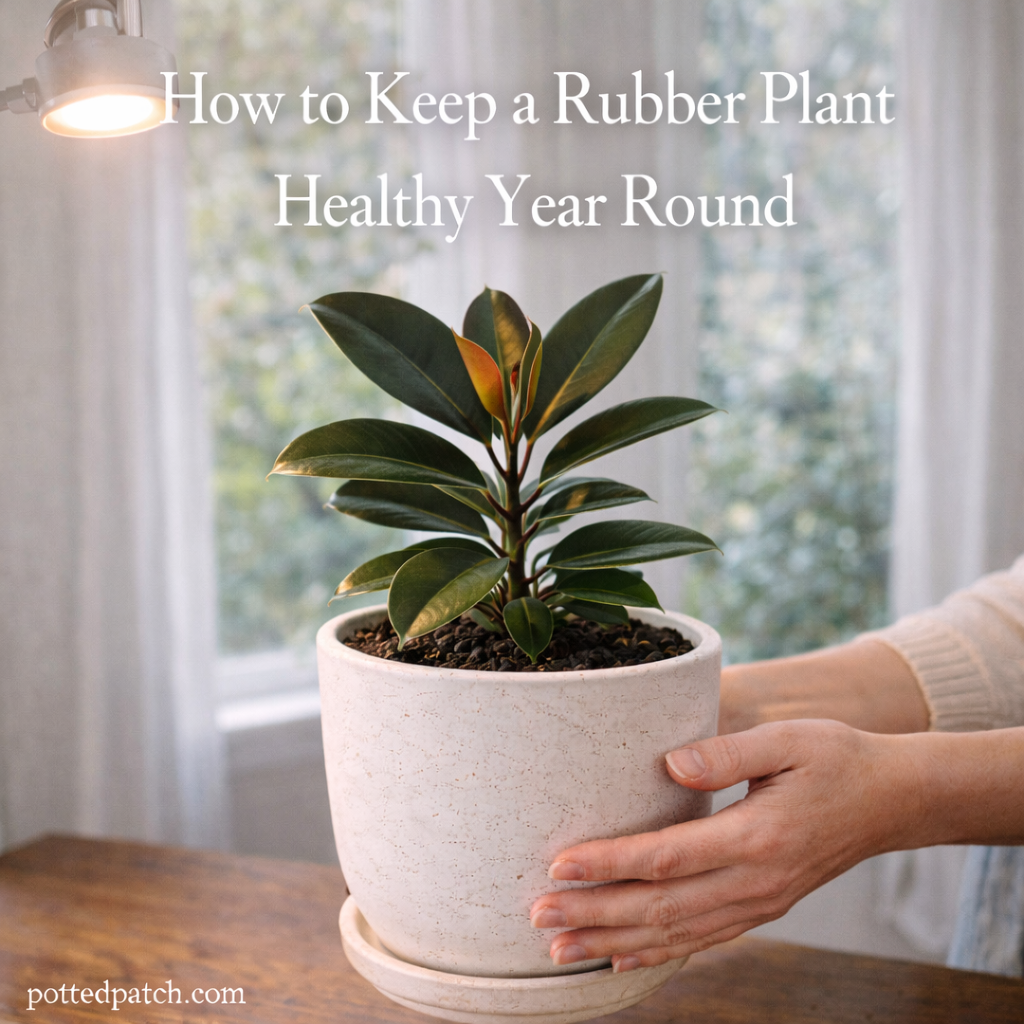
- Use a grow light during darker winter months
If your plant is stretching or losing lower leaves, light may be insufficient.
Adjust Watering by Season
Water needs change throughout the year.
Spring & Summer (Active Growth)
- Water when the top 1–2 inches of soil are dry
- Expect slightly more frequent watering
- Ensure full drainage each time
Fall & Winter (Slower Growth)
- Allow soil to dry a bit more between waterings
- Reduce watering frequency
- Avoid letting roots sit in cold, soggy soil
Overwatering in winter is one of the most common causes of problems.
Maintain Proper Humidity
Fiddle leaf figs prefer moderate indoor humidity.
Dry air — especially during winter heating — can cause:
- Brown leaf edges
- Leaf curling
- Slowed growth
Easy Ways to Improve Humidity
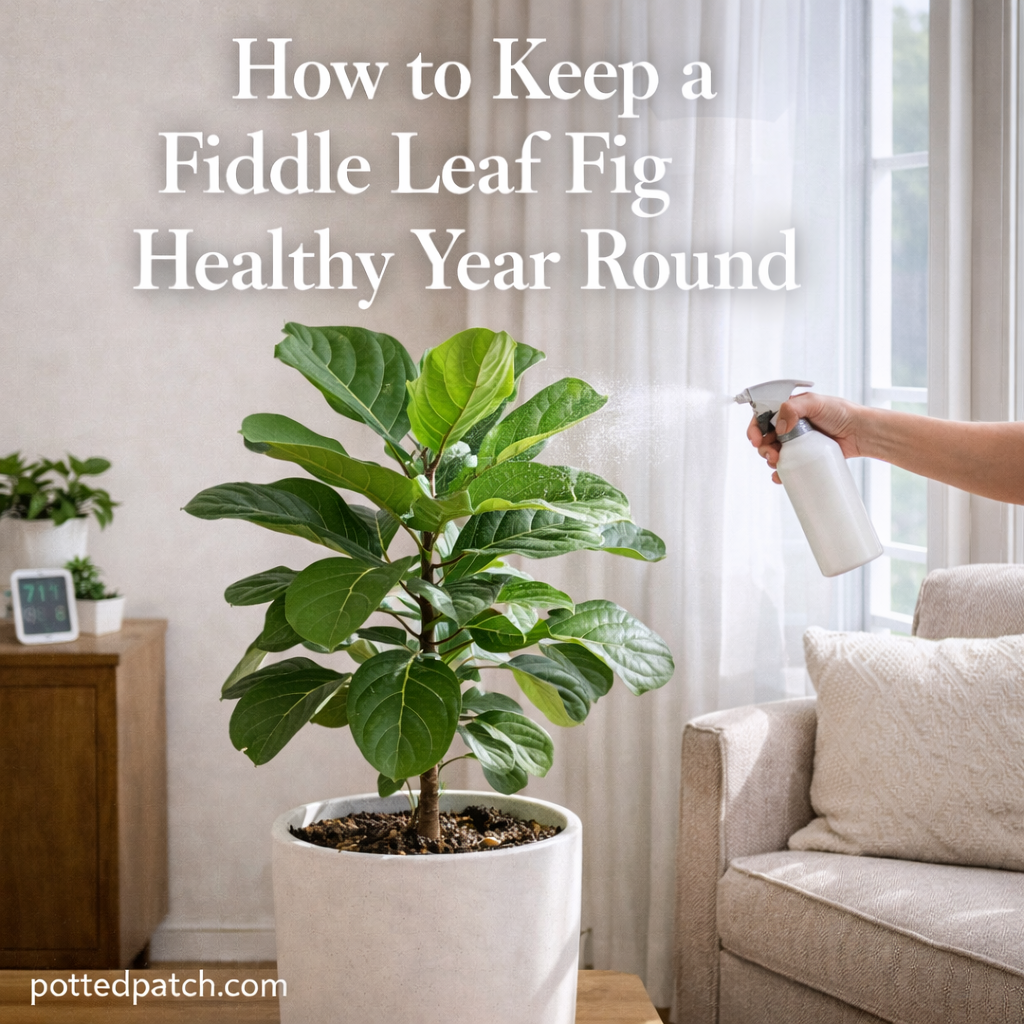
- Run a humidifier nearby
- Group plants together
- Use a pebble tray
Aim for 40–60% humidity for optimal health.
Fertilize During the Growing Season
Your plant needs nutrients to produce new leaves.
Fertilizing Schedule
- Feed once per month in spring and summer
- Use a balanced liquid houseplant fertilizer
- Stop fertilizing in late fall and winter
Feeding during dormancy can cause salt buildup and stress roots.
Keep Temperatures Stable
Fiddle leaf figs prefer steady indoor temperatures between 65–85°F.
Avoid placing your plant near:
- Air conditioning vents
- Heating units
- Drafty doors
- Cold windows
Sudden temperature swings often trigger leaf drop.
Prune and Clean Regularly
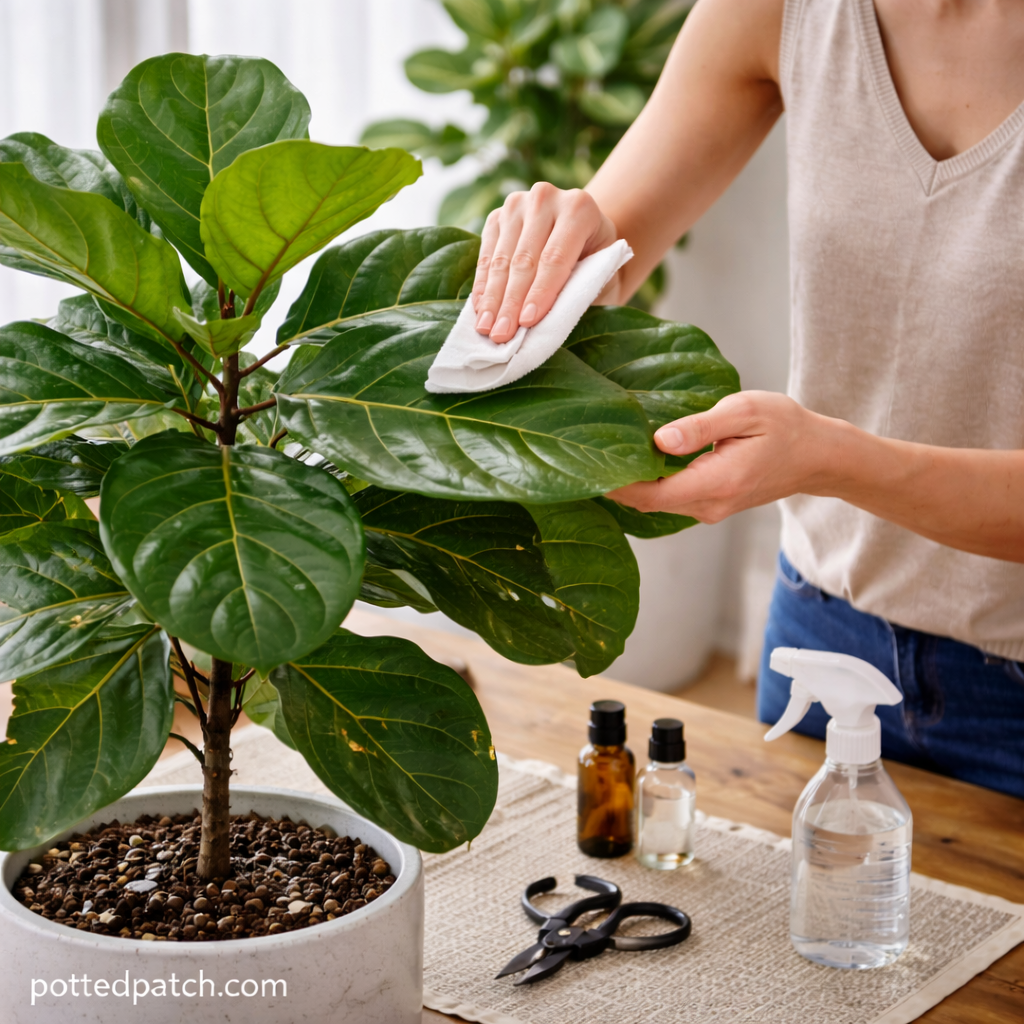
Maintenance helps keep your plant healthy long term.
Pruning Benefits
- Encourages branching
- Controls height
- Removes damaged leaves
Only prune during spring or summer for best results.
Leaf Cleaning
Dust blocks sunlight from reaching leaf surfaces.
Wipe leaves gently with a damp cloth every few weeks to maintain efficient photosynthesis.
Repot When Necessary
Root health directly impacts year-round growth.
Signs It’s Time to Repot
- Roots growing from drainage holes
- Soil drying out too quickly
- Slowed growth despite good care
Repot into a container 1–2 inches larger with well-draining soil.
Spring is the ideal time to repot.
Monitor for Pests
Healthy plants are more resistant to pests, but regular checks are important.
Look for:
- Tiny webs
- Sticky residue
- Yellow speckled leaves
Early detection prevents larger infestations.
Seasonal Care Summary
Here’s a quick overview:
Spring & Summer:
- Bright light
- Regular watering
- Monthly fertilizing
- Prune if needed
Fall & Winter:
- Maintain light exposure
- Reduce watering
- Stop fertilizing
- Increase humidity
Small seasonal adjustments make a big difference.
Final Thoughts
Keeping a fiddle leaf fig healthy year round comes down to consistency. Bright light, proper drainage, seasonal watering adjustments, and stable temperatures prevent most common issues.
With steady care and minor seasonal tweaks, your fiddle leaf fig can stay lush, upright, and thriving throughout the year.