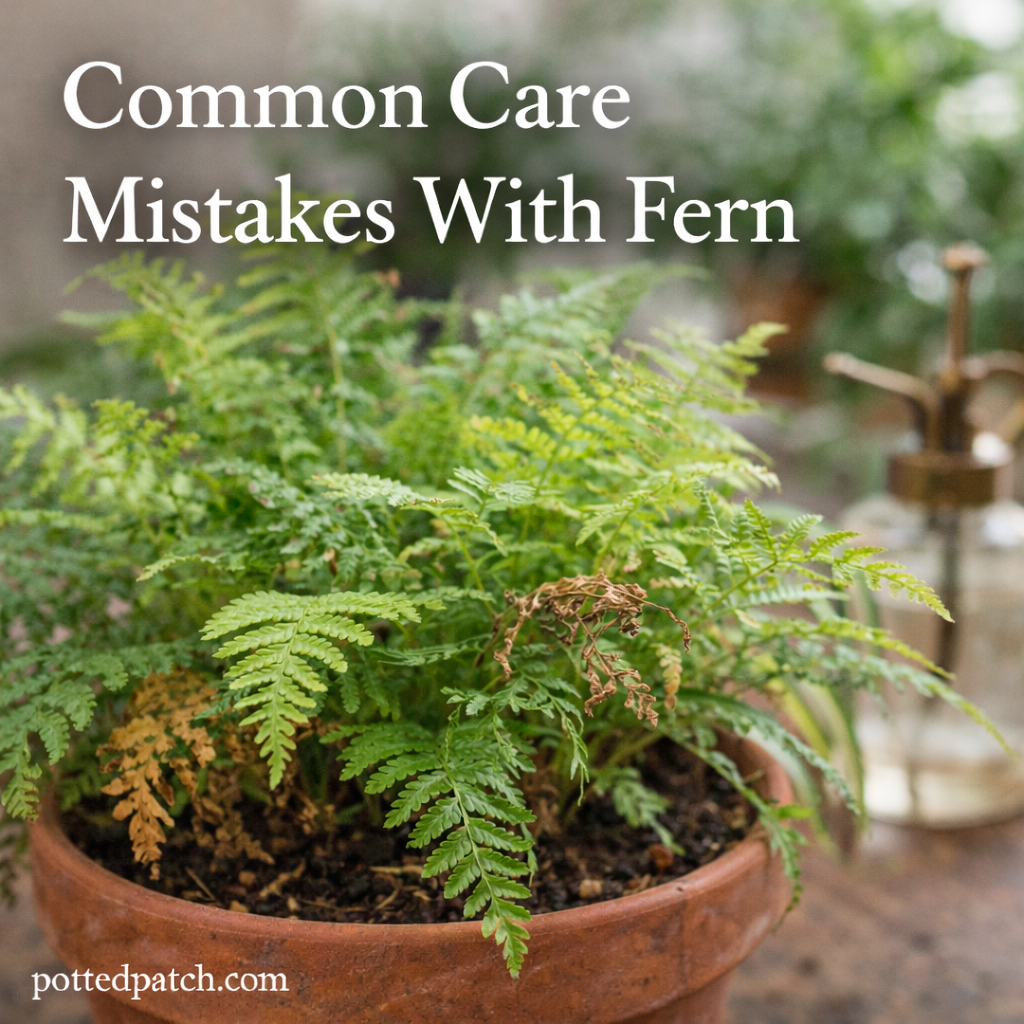

Ferns are one of the most rewarding indoor plants you can grow. Their lush, feathery fronds instantly soften a space and add a calm, natural feel to any room. But unlike tougher houseplants, ferns need consistent care to stay vibrant.
If you’ve ever struggled with crispy tips, drooping fronds, or thinning growth, this guide will show you exactly how to keep a fern healthy year round — no matter the season.
Understanding What Ferns Need
Most popular indoor ferns like the Boston fern, maidenhair fern, and bird’s nest fern share similar needs:
- Indirect light
- Consistent moisture
- High humidity
- Stable temperatures
- Gentle feeding
The key to year-round success is adjusting care slightly as seasons change.
Light: Bright but Indirect
Ferns naturally grow beneath forest canopies. That means they prefer filtered or indirect light rather than direct sun.
Best Placement
- Near an east-facing window
- A few feet back from a south or west window
- In bright rooms with sheer curtains
Avoid direct sunlight, which can scorch fronds and cause browning.
If your fern starts looking pale or leggy, it likely needs a bit more light — but still not direct sun.
Watering: Keep Soil Consistently Moist
Ferns do not tolerate drying out completely. Unlike many houseplants, they prefer evenly moist soil.
How to Water Properly
- Check soil with your finger.
- If the top inch feels slightly dry, water thoroughly.
- Allow excess water to drain out.
- Never let the plant sit in standing water.
The goal is moist — not soggy.
Seasonal Watering Adjustments
- Spring & Summer: Water more frequently as growth increases.
- Fall & Winter: Reduce frequency slightly, but never let soil fully dry.
If fronds turn brown and crispy, underwatering or low humidity is usually the cause.
Humidity: The Secret to Lush Growth
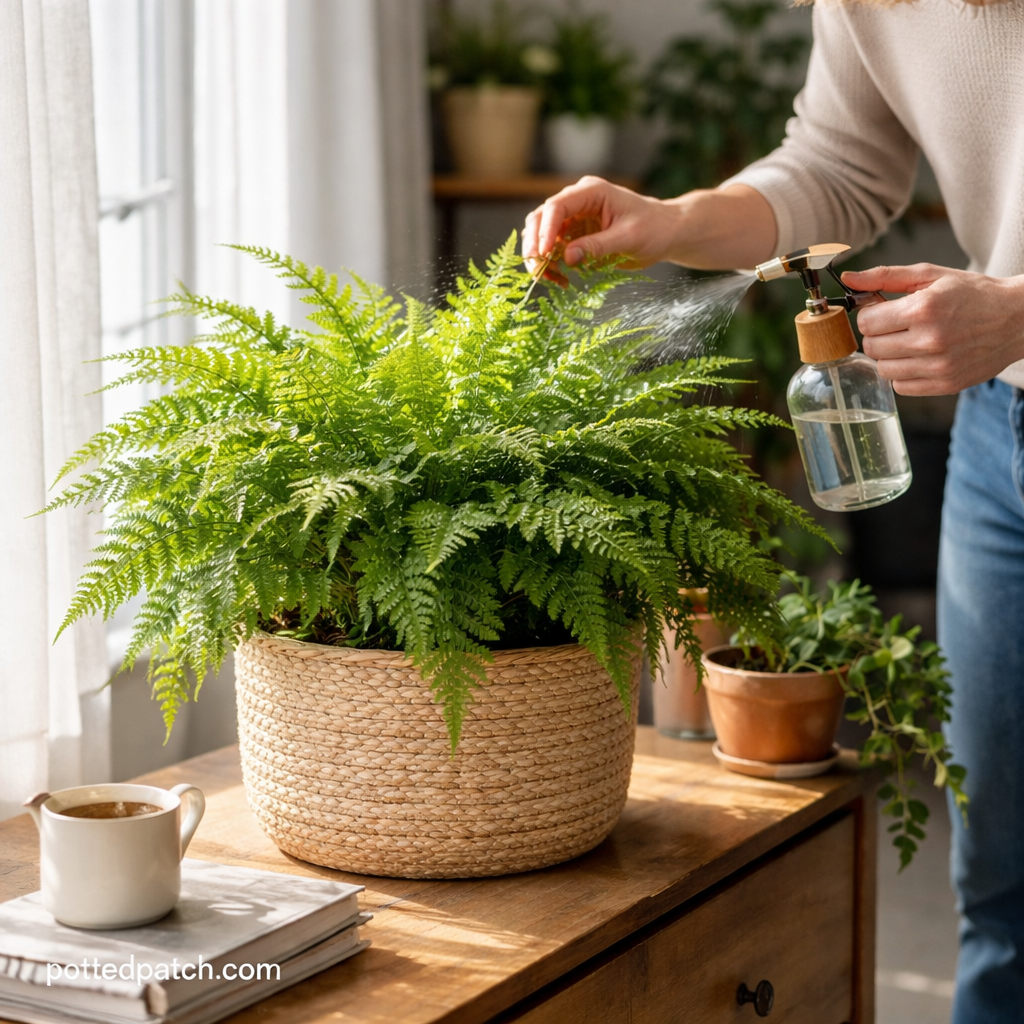
Humidity is the most overlooked factor in fern care.
Most indoor air, especially in winter, is far too dry for ferns.
How to Increase Humidity
- Use a humidifier nearby
- Place the pot on a pebble tray with water
- Group plants together
- Keep ferns in naturally humid rooms (like bathrooms with windows)
Aim for humidity levels above 50% for best results.
If frond tips are turning brown, humidity is likely too low.
Temperature: Keep It Stable
Ferns prefer temperatures between 60–75°F.
Avoid:
- Cold drafts
- Heat vents
- Sudden temperature swings
In winter, move your fern away from doors and windows that let in cold air.
Consistency is more important than perfection.
Feeding: Light but Regular
Ferns are not heavy feeders, but they benefit from light fertilizing during active growth.
Fertilizing Schedule
- Spring through early fall: Feed once a month
- Winter: Pause or reduce feeding
Use a diluted, balanced liquid houseplant fertilizer (half strength works well).
Too much fertilizer can burn roots and cause browning.
Pruning and Maintenance
Regular grooming keeps your fern looking full and healthy.
What to Remove
- Brown fronds
- Yellowing leaves
- Damaged stems
Always trim at the base using clean scissors.
Pruning encourages new growth and prevents energy waste.
Repotting When Needed
Ferns like being slightly root-bound, but eventually they need fresh soil.
Signs It’s Time to Repot
- Roots growing out of drainage holes
- Soil drying out too quickly
- Stunted growth
Repot in spring using a well-draining, peat-based potting mix. Choose a pot only 1–2 inches larger than the current one.
Seasonal Care Breakdown
Spring
- Increase watering
- Begin monthly feeding
- Check for new growth
Summer
- Maintain humidity
- Monitor soil moisture closely
- Protect from harsh sunlight
Fall
- Gradually reduce fertilizer
- Keep watering consistent
Winter
- Increase humidity
- Reduce feeding
- Protect from cold drafts
Common Problems and Quick Fixes
Brown Tips
- Increase humidity
- Check watering consistency
Yellow Leaves
- Overwatering
- Poor drainage
Drooping Fronds
- Underwatering
- Sudden temperature change
Thin, Sparse Growth
- Not enough light
- Nutrient deficiency
Addressing issues early makes recovery much easier.
Final Thoughts
Keeping a fern healthy year round isn’t complicated — it just requires consistency.
Focus on:
- Bright, indirect light
- Even moisture
- High humidity
- Stable temperatures
- Light seasonal feeding
When those basics are in place, your fern will reward you with lush, vibrant fronds in every season.
With steady care, ferns can thrive indoors for years and become one of the most beautiful plants in your home.