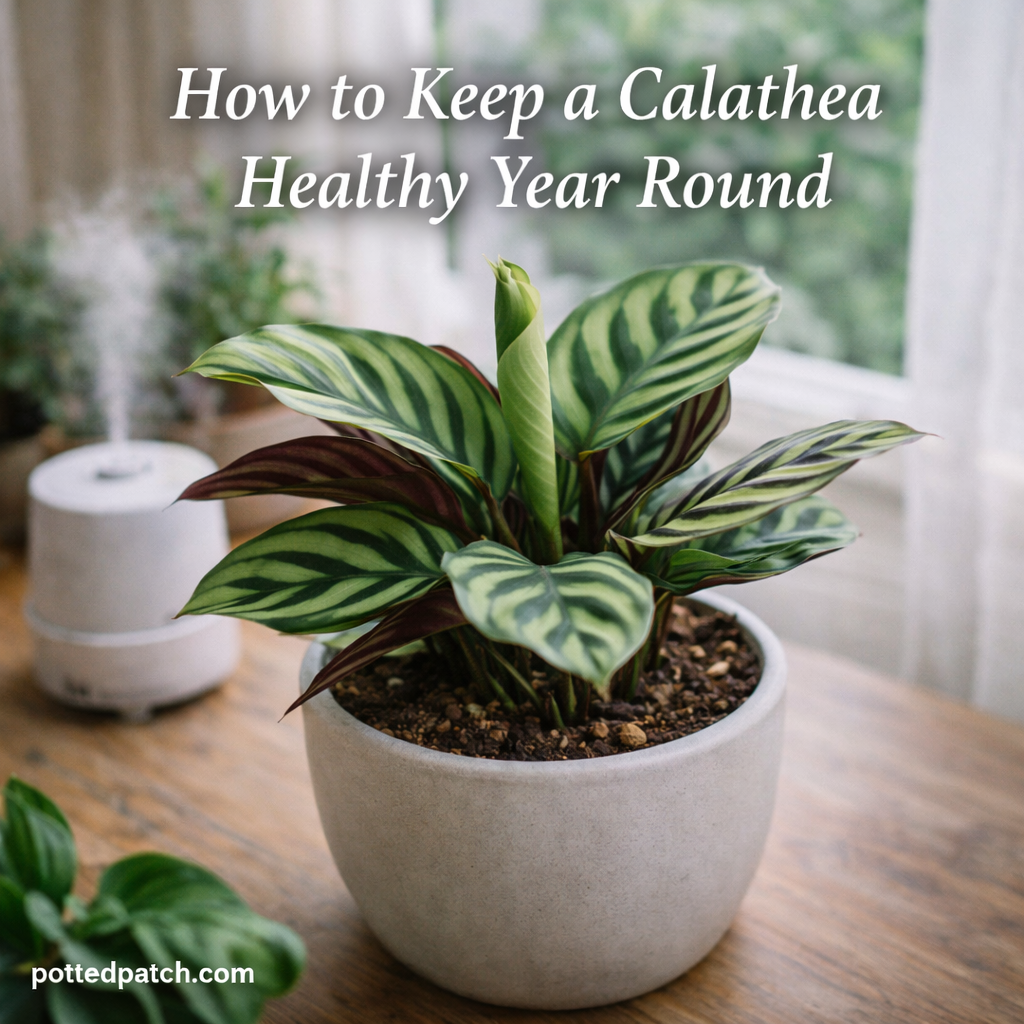
Calatheas are known for their striking leaf patterns and dramatic daily leaf movements. But they also have a reputation for being “fussy.”
The truth? Calatheas aren’t difficult — they’re just specific.
If you understand their seasonal needs and keep their environment consistent, you can maintain lush, vibrant growth all year long.
Here’s exactly how to keep a Calathea healthy in every season.
Understand What Calatheas Need
Calatheas are tropical plants. In their natural habitat, they grow:
- Under tree canopies
- In warm temperatures
- In consistently humid air
- In evenly moist, well-draining soil
When you recreate those conditions indoors, they thrive.
The key is stability.
Provide Bright, Indirect Light
Light is one of the biggest factors in long-term Calathea health.
They need:
- Bright but filtered light
- No direct midday sun
- Consistent exposure year-round
Best Placement Options
- Near an east-facing window
- A few feet from a south or west window with sheer curtains
- Under a grow light in darker rooms
Too much sun causes:
- Faded patterns
- Crispy edges
- Leaf curling
Too little light leads to:
- Slow growth
- Smaller leaves
- Drooping stems
Rotate the plant every few weeks to promote even growth.
Maintain Proper Humidity (This Is Essential)
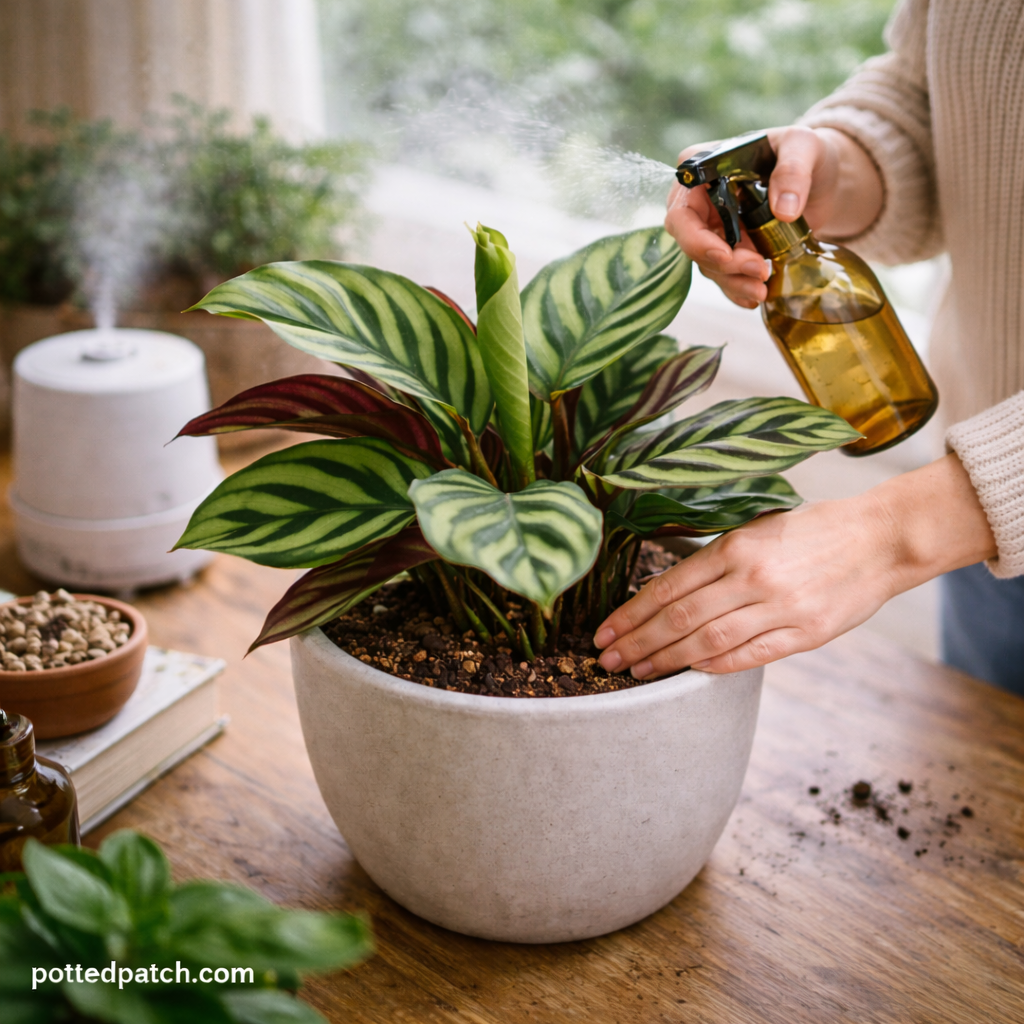
Calatheas prefer humidity levels above 60%.
Most homes fall below that — especially in winter.
Low humidity results in:
- Brown leaf tips
- Curling edges
- Stunted growth
How to Increase Humidity
- Use a humidifier nearby
- Group plants together
- Place on a pebble tray
- Keep in naturally humid rooms (if lighting allows)
Humidity is often the difference between a struggling plant and a thriving one.
Water Consistently — Not Excessively
Calatheas like evenly moist soil.
They do not tolerate:
- Bone-dry soil
- Soggy, waterlogged roots
Ideal Watering Routine
- Check the top inch of soil.
- Water thoroughly when it feels slightly dry.
- Let excess water drain completely.
Avoid letting the plant sit in standing water.
Use filtered, distilled, or rainwater when possible. Calatheas are sensitive to minerals in tap water.
Use the Right Soil Mix
Healthy roots equal healthy leaves.
Calatheas prefer soil that retains some moisture but drains well.
Ideal Mix
- 2 parts peat-based potting soil
- 1 part perlite
- 1 part orchid bark or coco coir
This combination:
- Prevents root rot
- Encourages airflow
- Supports steady growth
Repot every 1–2 years in spring to refresh the soil.
Feed During the Growing Season
Calatheas don’t need heavy feeding, but nutrients help sustain vibrant foliage.
Fertilizing Tips
- Use a balanced liquid fertilizer
- Dilute to half strength
- Feed once per month in spring and summer
- Pause fertilizing in fall and winter
Overfertilizing can cause leaf burn, so stay conservative.
Keep Temperatures Stable
Calatheas thrive in:
- 65–80°F (18–27°C)
Avoid:
- Cold drafts
- Sudden temperature swings
- Air vents blowing directly on the plant
Temperature stress often shows up as curling or drooping leaves.
Consistency matters more than perfection.
Clean the Leaves Regularly
Dust blocks light absorption and can attract pests.
Every few weeks:
- Gently wipe leaves with a damp cloth
- Check undersides for spider mites
Clean leaves stay healthier and maintain bold patterns.
Seasonal Care Adjustments
Calatheas don’t need drastic changes, but small seasonal tweaks help.
Spring & Summer
- Increase watering frequency
- Resume fertilizing
- Monitor for active growth
Fall & Winter
- Reduce watering slightly
- Stop fertilizing
- Increase humidity if indoor heating dries the air
Growth slows in winter — this is normal.
Focus on maintaining stability rather than pushing growth.
Watch for Early Warning Signs
Healthy Calatheas communicate through their leaves.
Here’s what to look for:
Brown tips → Low humidity or mineral buildup
Yellow leaves → Overwatering
Drooping → Watering imbalance
Faded patterns → Too much light
Address small issues quickly to prevent bigger problems.
Long-Term Health Checklist
For year-round success:
- Bright indirect light
- 60%+ humidity
- Evenly moist soil
- Well-draining mix
- Light monthly feeding (growing season)
- Stable temperatures
When these conditions stay consistent, Calatheas remain full, vibrant, and resilient.
Final Thoughts
Keeping a Calathea healthy year round isn’t about constant adjustment — it’s about balance.
These plants respond beautifully to steady care. Once you dial in light, humidity, watering, and soil, maintenance becomes simple.
Give them consistency, and they’ll reward you with bold, living artwork every day of the year.