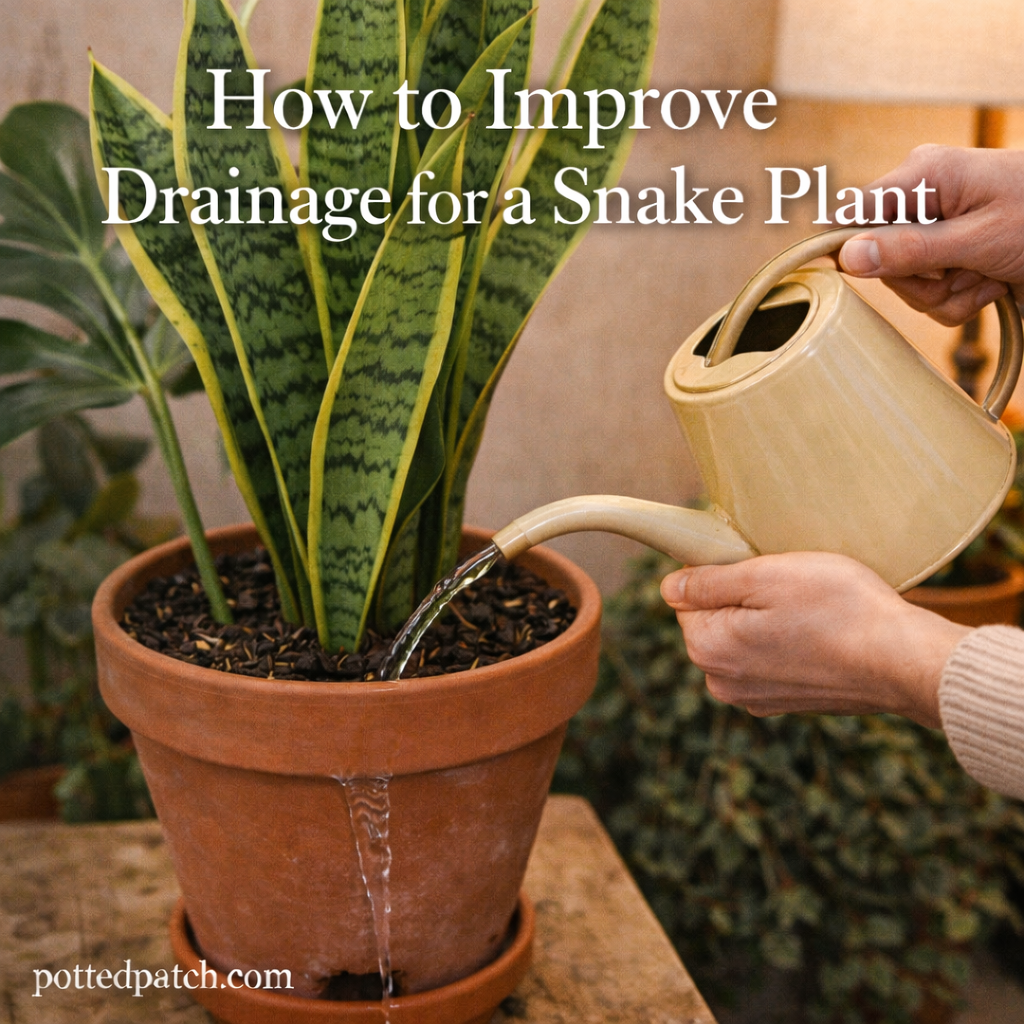
Snake plants are tough, forgiving houseplants, but they have one firm requirement: excellent drainage. Poor drainage is the fastest way to cause root rot, mushy leaves, and long-term decline. If your snake plant’s soil stays wet for days or the pot never seems to dry out, drainage is the problem—not watering frequency alone.
This guide explains how to improve drainage for a snake plant step by step, covering soil mixes, pots, and common mistakes to avoid.
Why Drainage Is Critical for Snake Plants
Snake plants store water in their thick leaves and underground rhizomes. Because of this, they prefer soil that dries out quickly and evenly.
Poor drainage can lead to:
- Root rot
- Fungal growth
- Yellowing or collapsing leaves
- Slow or halted growth
Improving drainage allows excess water to exit the pot and lets oxygen reach the roots.
Signs Your Snake Plant Has Poor Drainage
Before making changes, confirm drainage is the issue.
Common signs include:
- Soil stays wet for more than 7–10 days
- Water pools on the soil surface
- Musty or sour smell from the pot
- Leaves turning yellow or soft at the base
- Fungus gnats appearing around the soil
If you notice more than one of these, drainage needs improvement.
Use a Fast-Draining Soil Mix
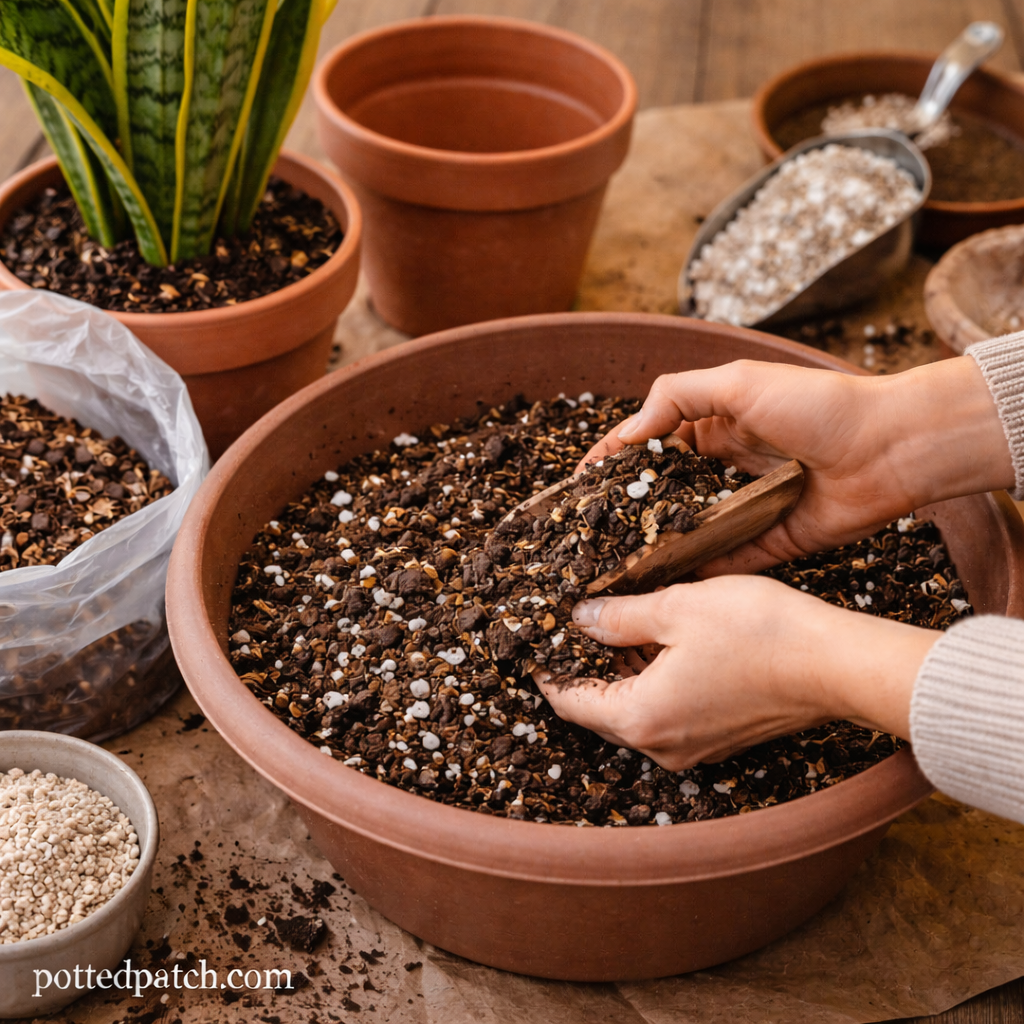
Best Soil Ingredients for Snake Plants
Standard potting soil alone holds too much moisture. Snake plants need a gritty, airy mix.
A good snake plant soil blend includes:
- 2 parts regular potting soil
- 1 part perlite or pumice
- 1 part coarse sand or orchid bark
This combination improves airflow and prevents water from compacting around the roots.
Avoid Heavy or Moisture-Retaining Additives
Do not use soil mixes with:
- Peat-heavy blends without amendments
- Moisture-control potting soil
- Garden soil
- Compost-heavy mixes
These trap water and suffocate roots over time.
Choose the Right Pot for Drainage
Always Use Drainage Holes
This is non-negotiable.
A pot must have:
- At least one drainage hole at the bottom
- Enough space for water to exit freely
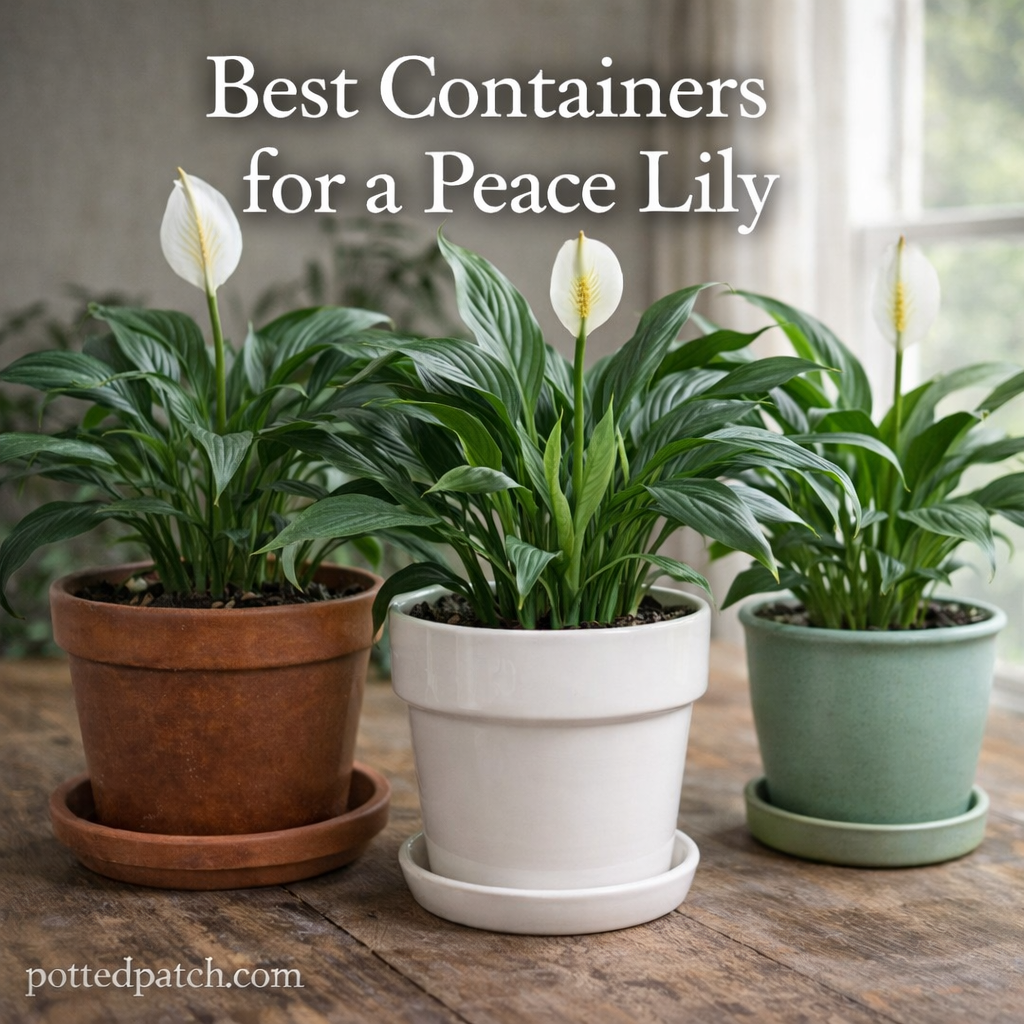
Decorative pots without holes should only be used as cache pots, with the plant kept in a separate draining container inside.
Best Pot Materials for Drainage
Some materials dry out faster than others.
Best options:
- Terracotta (breathable and moisture-wicking)
- Unglazed ceramic
Use caution with:
- Plastic (holds moisture longer)
- Glazed ceramic (slower drying)
Material doesn’t replace drainage holes, but it does affect how quickly soil dries.
Improve Drainage in an Existing Pot
If you don’t want to repot immediately, there are still ways to help.
Steps to improve drainage without repotting:
- Check that drainage holes aren’t blocked
- Remove any decorative stones from the soil surface
- Loosen compacted soil gently with a chopstick
- Reduce watering until soil dries properly
These are temporary fixes. Long-term improvement usually requires better soil.
Should You Add Rocks or Gravel to the Bottom?
This is a common myth.
Adding rocks to the bottom:
- Does not improve drainage
- Raises the water table
- Can increase root rot risk
Proper soil mix and drainage holes are far more effective.
Repotting for Better Drainage
If drainage issues persist, repotting is the best solution.
How to Repot a Snake Plant for Drainage
- Choose a pot only 1–2 inches wider than the current one
- Use a fast-draining soil mix
- Inspect roots and trim any mushy sections
- Place the plant at the same depth as before
- Water lightly after repotting
- Allow soil to dry before watering again
Avoid upsizing the pot too much, as excess soil holds extra moisture.
Watering Practices That Support Drainage
Drainage and watering work together.
Best practices:
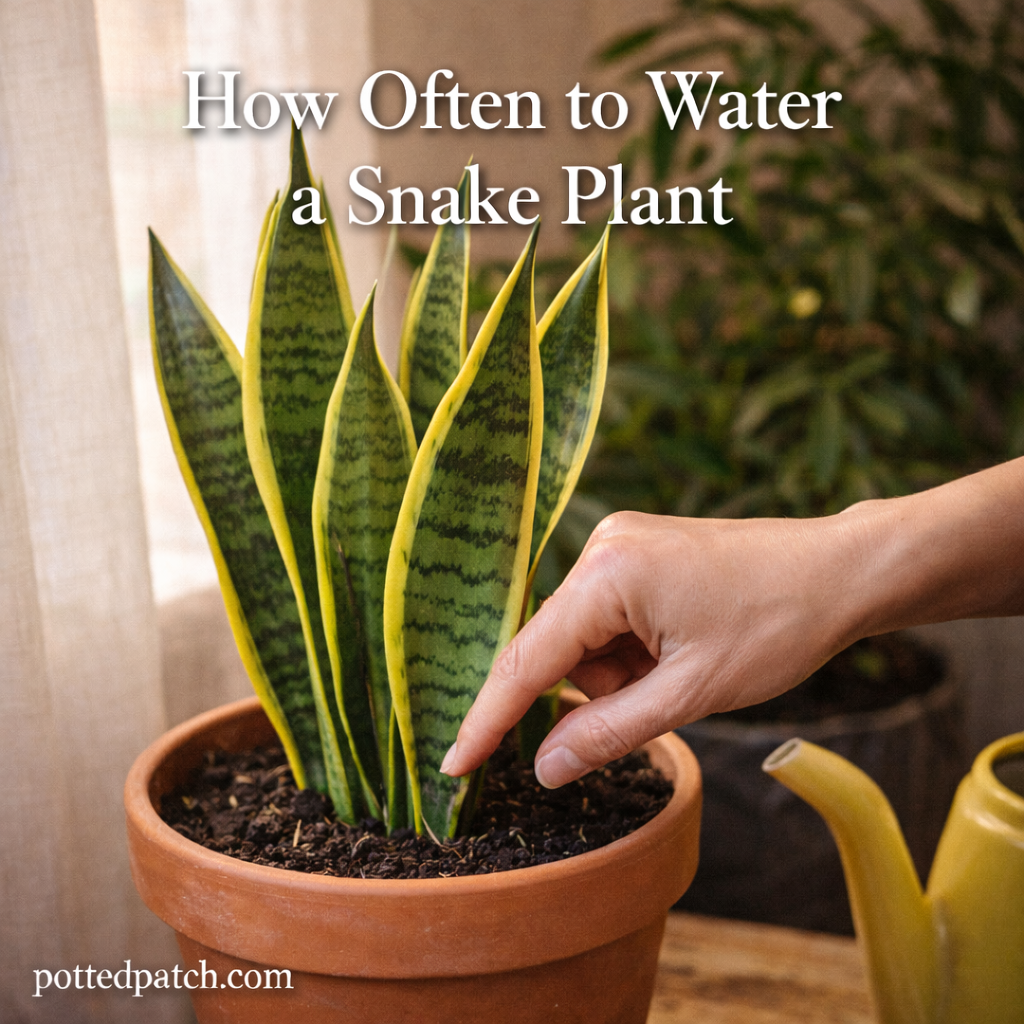
- Water only when soil is mostly dry
- Water thoroughly, then let excess drain out
- Empty saucers after watering
- Never let the pot sit in standing water
Good drainage doesn’t mean frequent watering—it means safe watering.
Common Drainage Mistakes to Avoid
- Using pots without drainage holes
- Relying on moisture-control soil
- Adding gravel layers at the bottom
- Repotting into oversized containers
- Watering before soil has dried
Most snake plant problems trace back to these errors.
Final Thoughts
Improving drainage for a snake plant is one of the best long-term care decisions you can make. With the right soil mix, proper pot choice, and mindful watering, snake plants thrive with minimal effort and fewer problems.
If your snake plant has struggled despite careful watering, fixing drainage is often the missing step.