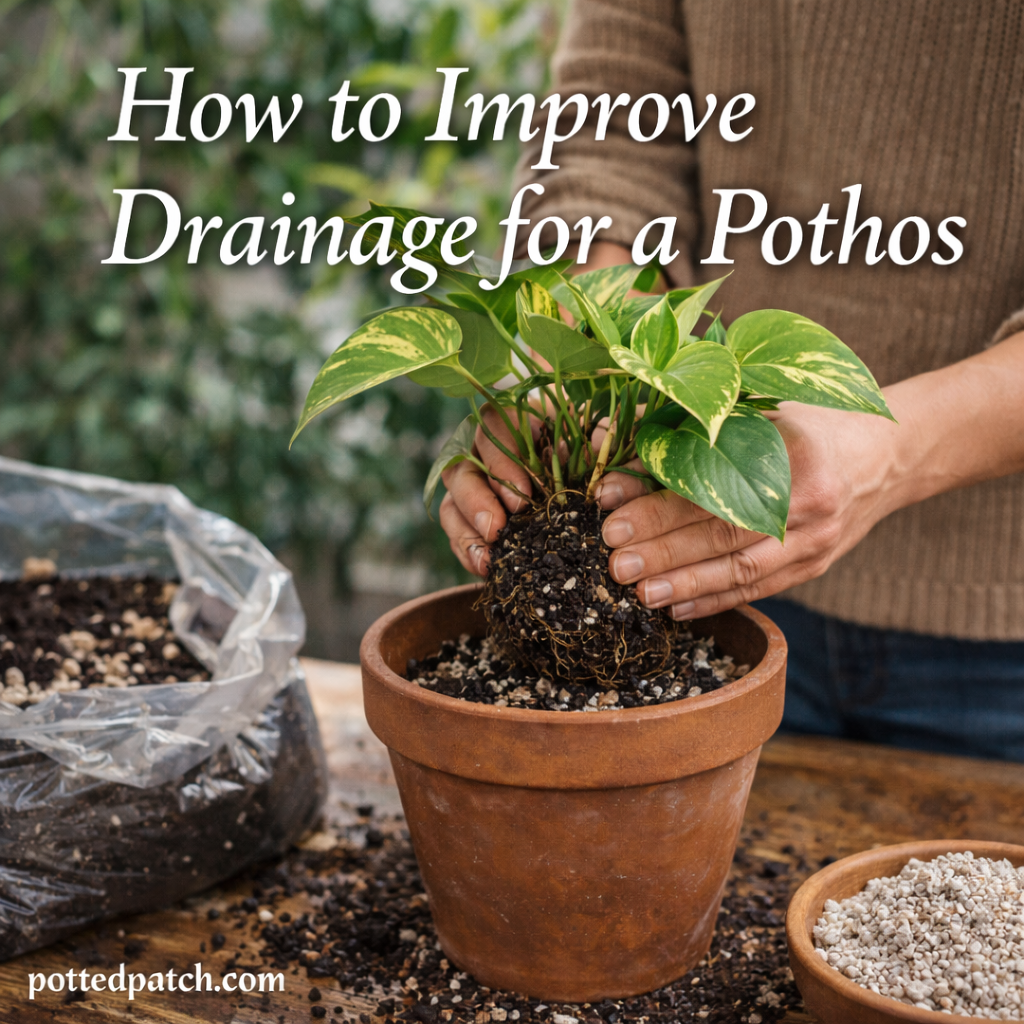
Good drainage is one of the most important factors in keeping a pothos healthy. While pothos are tolerant plants, consistently wet soil can quickly lead to yellowing leaves, soft stems, and root rot. Improving drainage helps excess water escape, keeps roots oxygenated, and prevents many common pothos problems.
This guide explains how to improve drainage for a pothos step by step, whether your plant is already struggling or you want to prevent issues before they start.
Why Drainage Matters for Pothos
Pothos naturally grow in loose, airy environments where water drains freely. When soil stays wet too long, roots can’t breathe.
Poor drainage can lead to:
- Root rot
- Yellow or drooping leaves
- Slow or stalled growth
- Foul-smelling soil
- Fungus gnats and mold
Improving drainage creates a healthier root environment and supports steady growth.
Use a Pot with Drainage Holes
The fastest way to improve drainage is choosing the right container.
A proper pothos pot should:
- Have at least one drainage hole at the bottom
- Allow excess water to flow out freely
- Be paired with a saucer, not a sealed outer pot
Avoid decorative containers with no drainage unless you use them strictly as cache pots and remove the plant for watering.
Choose the Right Soil Mix
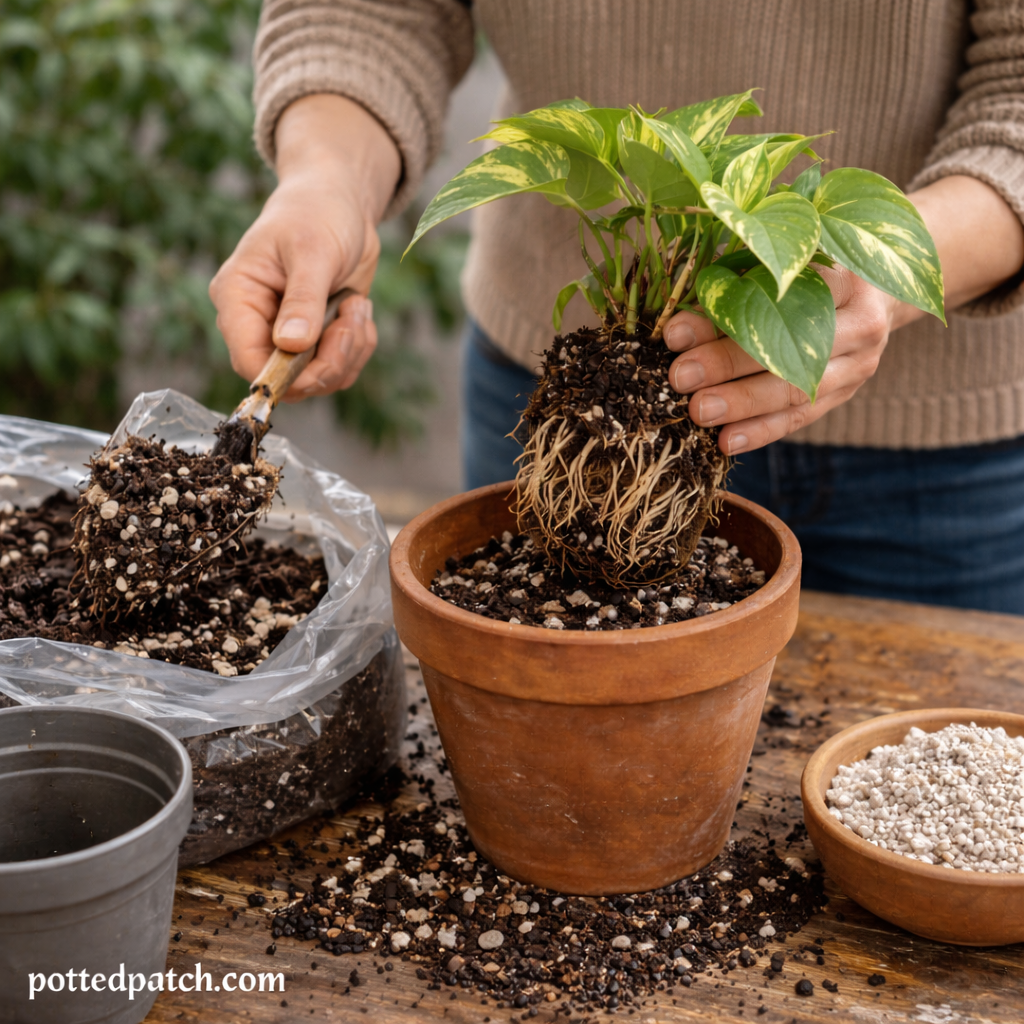
Soil plays a bigger role in drainage than most people realize.
Standard potting soil alone often holds too much moisture for pothos. A well-draining mix should feel light and airy, not dense or muddy.
A good pothos soil blend includes:
- Indoor potting mix
- Perlite or pumice for airflow
- Orchid bark or coco chips for structure
This combination allows water to pass through while retaining enough moisture for the roots.
Avoid Adding Rocks to the Bottom of the Pot
A common myth is that rocks or gravel at the bottom improve drainage. In reality, they can make drainage worse.
Rocks create a perched water table, causing moisture to sit higher in the soil and increasing the risk of root rot.
Instead of rocks:
- Improve drainage throughout the entire soil mix
- Focus on pot holes and soil structure
Repot If the Soil Stays Wet Too Long
If your pothos soil stays wet for more than a week, repotting may be necessary.
When repotting:
- Remove the plant gently from its pot
- Shake off old, compacted soil
- Inspect roots and trim any mushy sections
- Repot using fresh, well-draining soil
- Water lightly and allow excess to drain
Repotting refreshes airflow around the roots and corrects long-term drainage issues.
Adjust Watering Habits to Match Drainage
Even well-draining soil can cause problems if watering habits don’t match.
To support good drainage:
- Water only when the top 1–2 inches of soil are dry
- Water thoroughly, not lightly
- Empty saucers after watering
- Avoid watering on a fixed schedule
Letting soil partially dry prevents water from lingering around the roots.
Pot Size Affects Drainage
Oversized pots hold more soil and moisture, which slows drying.
Choose a pot that:
- Is only 1–2 inches wider than the root ball
- Matches the plant’s current size
- Allows roots to fill the space gradually
Right-sized pots dry more evenly and reduce the risk of soggy soil.
Improve Airflow Around the Plant
Air circulation helps soil dry evenly after watering.
To improve airflow:
- Avoid overcrowding plants
- Place pothos in open areas rather than tight corners
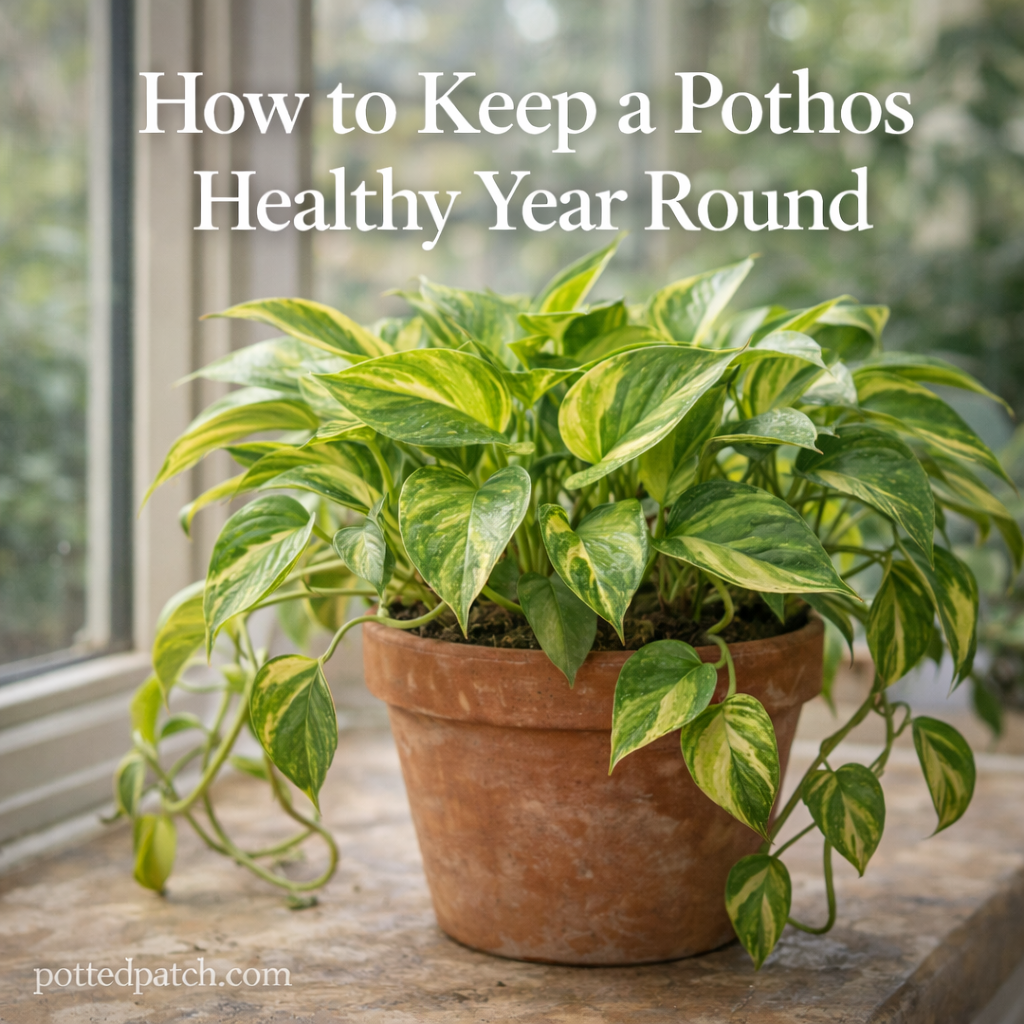
- Use breathable pots like terracotta when possible
Terracotta pots naturally wick moisture and are excellent for pothos prone to overwatering.
Signs Your Drainage Has Improved
Once drainage is corrected, pothos typically respond quickly.
Positive signs include:
- Firmer stems
- New leaf growth
- Leaves staying green and glossy
- Soil drying evenly between waterings
Consistent improvement means the root system is recovering.
Final Thoughts on Improving Pothos Drainage
Improving drainage for a pothos doesn’t require complicated tools or techniques. The biggest improvements come from using the right pot, upgrading soil quality, and adjusting watering habits.
When drainage is dialed in, pothos become easier to care for, more resilient, and far less likely to develop root-related problems. 🌱