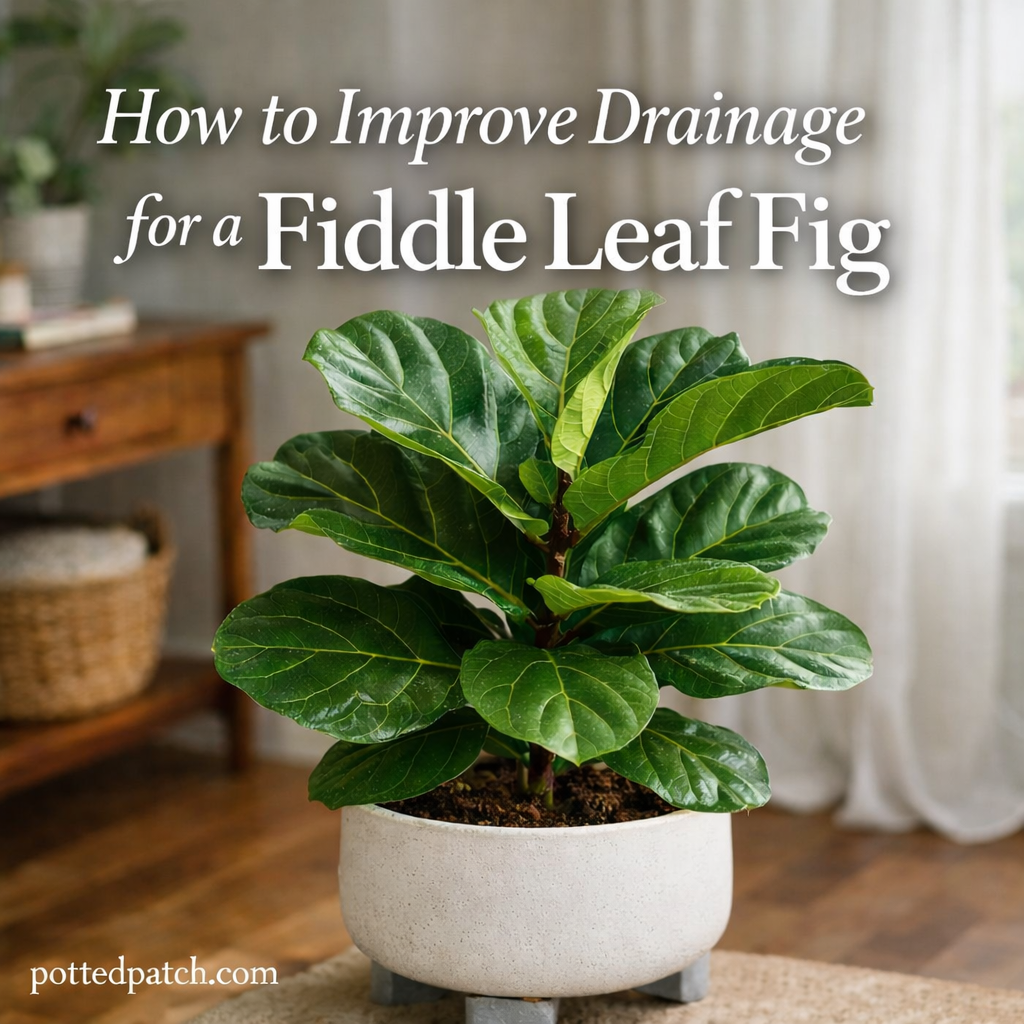
Fiddle leaf figs are beautiful, bold plants—but they’re extremely sensitive to poor drainage. If your plant has yellowing leaves, brown spots, or a musty soil smell, drainage could be the problem.
Healthy roots need oxygen. When soil stays wet too long, roots suffocate and begin to rot.
The good news? Improving drainage is simple once you understand what to adjust.
Why Drainage Matters for Fiddle Leaf Figs
Fiddle leaf figs prefer soil that:
- Drains quickly
- Holds some moisture (but not soggy)
- Allows airflow around roots
Without proper drainage, water builds up at the bottom of the pot. Over time, this leads to:
- Root rot
- Fungus gnats
- Yellow leaves
- Leaf drop
Good drainage protects the root system and stabilizes growth.
Step 1: Use a Pot With Drainage Holes
This is non-negotiable.
If your pot does not have drainage holes, excess water has nowhere to escape.
What to Do:
- Choose a pot with at least one large drainage hole.
- If using a decorative planter, keep the plant in a nursery pot inside it.
- Empty the outer pot after watering.
Avoid adding rocks at the bottom of pots without holes. This does not fix drainage—it creates a water reservoir.
Step 2: Upgrade Your Soil Mix
Standard indoor potting soil can sometimes hold too much moisture.
For better drainage, create a well-aerated mix:
Ideal Soil Blend:
- 2 parts high-quality potting soil
- 1 part perlite
- 1 part orchid bark
This combination allows water to flow through while still retaining enough moisture for roots.
If your soil feels dense or stays wet for more than 10 days, it’s time to refresh it.
Step 3: Check Pot Size
An oversized pot holds more soil—and more moisture.
If the pot is too large for the root system, the soil may stay wet for too long.
Choose a Pot That:
- Is 1–2 inches larger than the root ball
- Matches the plant’s size
- Doesn’t overwhelm the roots
Proper sizing improves drying time and prevents rot.
Step 4: Improve Watering Technique
Even with good soil and drainage holes, watering incorrectly can cause issues.
Correct Watering Method:
- Check that the top 2 inches of soil are dry.
- Water thoroughly until it drains from the bottom.
- Empty the saucer immediately.
- Do not water again until the top layer dries.
Avoid frequent light watering. Deep watering followed by drying cycles is healthier.
Step 5: Elevate the Pot
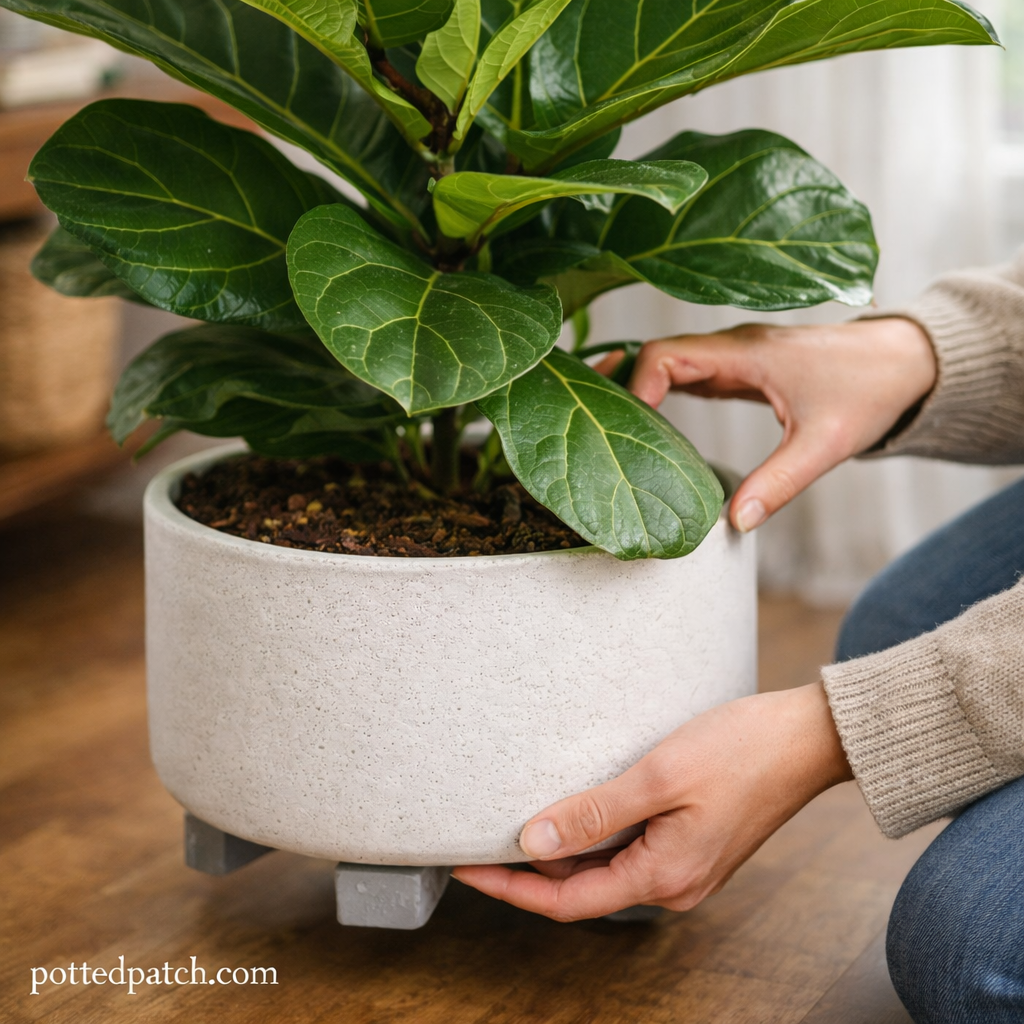
Sometimes drainage holes exist—but the pot sits flat against a surface, blocking airflow.
Simple Fix:
- Use pot feet or risers.
- Place the pot on a tray with slight elevation.
- Ensure water can escape freely.
Air circulation under the pot helps soil dry more evenly.
Signs Drainage Has Improved
Once drainage is corrected, you should notice:
- Faster soil drying (within 7–10 days)
- Reduced leaf yellowing
- Firmer stems
- Less fungus gnat activity
- Healthier new growth
Recovery may take a few weeks, but improvement will be visible in new leaves.
When to Repot Completely
If your plant shows advanced signs of root rot:
- Persistent soggy soil
- Foul smell
- Mushy roots
You may need to repot fully.
Repotting Steps:
- Remove the plant from its pot.
- Trim away black or mushy roots.
- Replace with fresh, well-draining soil.
- Use a pot with proper drainage holes.
Act quickly—root rot spreads.
Common Drainage Mistakes to Avoid
- Using decorative pots without holes
- Adding gravel layers without holes
- Watering on a strict schedule
- Choosing oversized containers
- Ignoring compacted soil
Drainage problems are almost always fixable with simple adjustments.
Final Thoughts
Improving drainage for a fiddle leaf fig is one of the most important steps in long-term plant health.
Focus on:
- Proper pots with drainage holes
- Airy, well-draining soil
- Correct pot sizing
- Mindful watering
Healthy drainage means healthy roots—and healthy roots mean strong, glossy leaves.