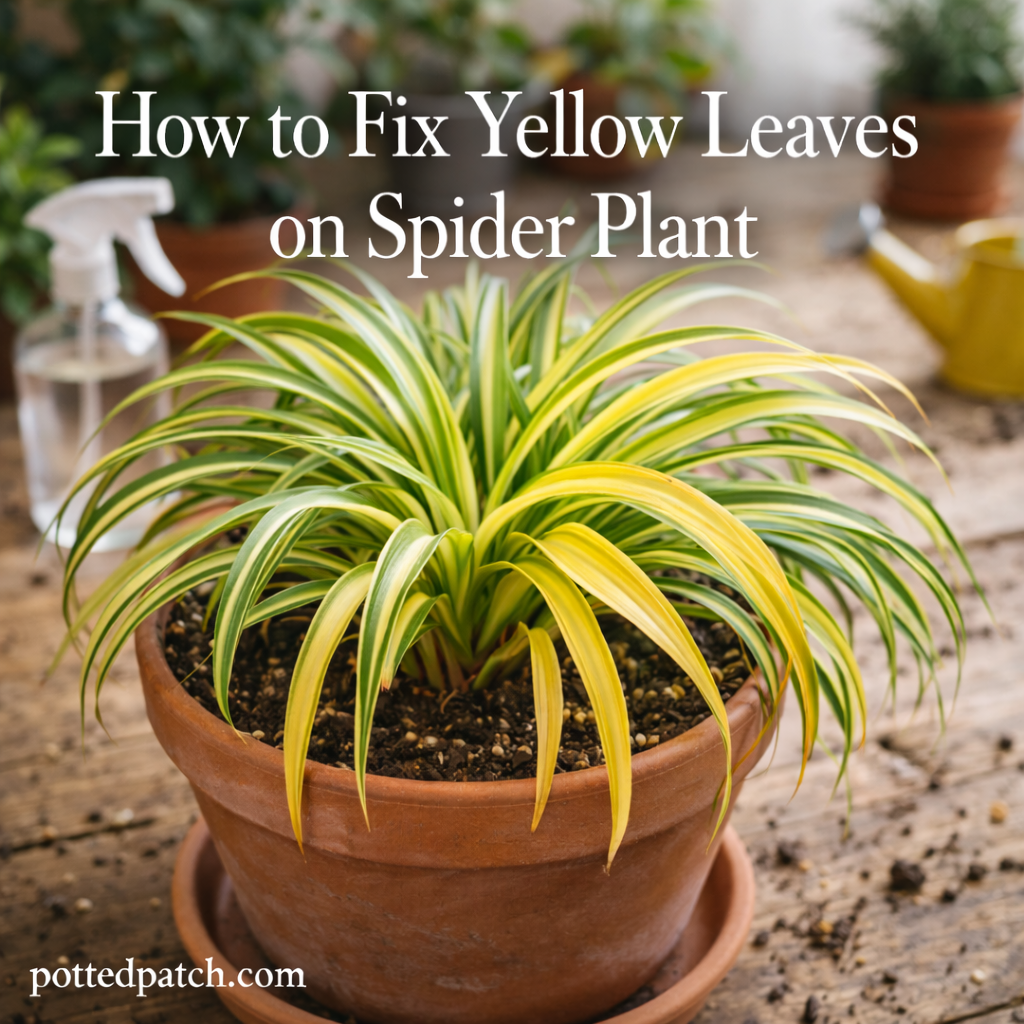
Yellow leaves on a spider plant can feel alarming — especially when the plant was thriving just weeks ago.
The good news?
Most causes are easy to correct once you identify the root issue.
In this guide, you’ll learn exactly why spider plant leaves turn yellow and how to fix the problem step by step.
Step 1: Check the Soil Moisture First
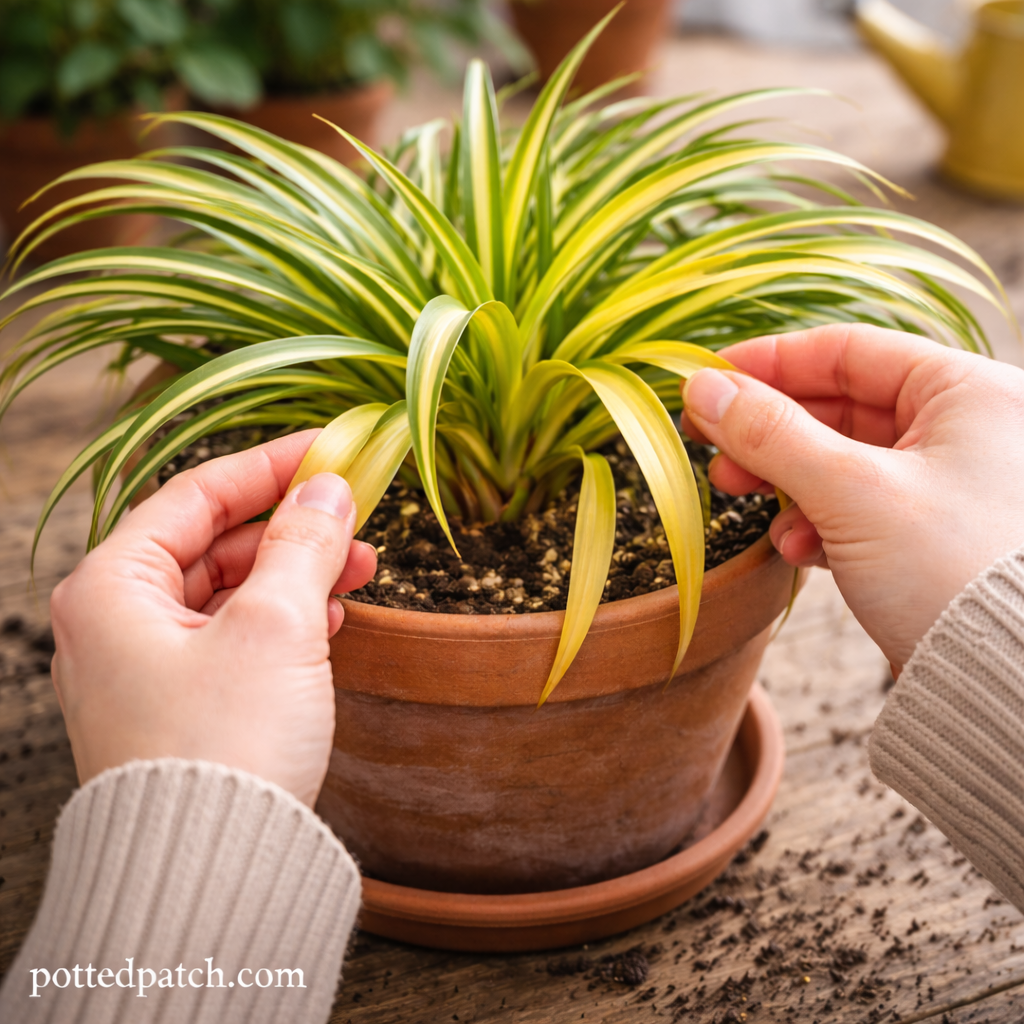
The most common reason spider plant leaves turn yellow is improper watering.
Before doing anything else, test the soil.
How to Check
- Stick your finger 1–2 inches into the soil
- If it feels soggy, you may be overwatering
- If it feels bone dry and compacted, you may be underwatering
Watering issues account for most yellowing problems.
Fixing Overwatering
Spider plants prefer slightly moist soil — not constantly wet soil.
Signs of Overwatering
- Multiple yellow leaves at once
- Soft or mushy stems
- Wilting despite wet soil
- Sour smell from the pot
How to Fix It
- Stop watering immediately
- Allow the soil to dry out fully
- Ensure the pot has drainage holes
- Empty the saucer after watering
If roots are soft or black, repot into fresh, well-draining soil and trim damaged roots.
Fixing Underwatering
Underwatering causes leaves to fade, then yellow, before turning brown and crispy.
Signs of Underwatering
- Soil pulling away from pot edges
- Drooping leaves
- Dry, lightweight pot
How to Fix It
- Water thoroughly until water drains out the bottom
- Let excess drain completely
- Resume a consistent watering routine
Spider plants like the top inch of soil to dry between waterings — not the entire root ball.
Step 2: Improve Drainage
Even correct watering won’t help if the soil traps moisture.
Common Drainage Problems
- No drainage holes
- Dense, compacted soil
- Decorative outer pots trapping water
How to Fix Drainage Issues
- Use a pot with drainage holes
- Switch to a light, well-draining potting mix
- Add perlite to improve airflow
- Never let the plant sit in standing water
Healthy roots need oxygen.
Step 3: Adjust the Light
Spider plants thrive in bright, indirect light.
Too much direct sunlight can bleach leaves yellow.
Signs of Light Stress
- Faded or pale leaves
- Yellowing on the sun-facing side
- Dry, crispy texture
How to Fix It
- Move the plant a few feet away from direct sun
- Use sheer curtains to filter light
- Avoid harsh afternoon exposure
Balanced lighting helps restore leaf color.
Step 4: Check Your Water Quality
Spider plants are sensitive to chemicals in tap water, especially fluoride and chlorine.
Over time, mineral buildup can stress the plant and cause yellowing.
Signs of Water Sensitivity
- Yellow leaves with brown tips
- White crust on soil surface
- Gradual decline over months
How to Fix It
- Switch to distilled or rainwater
- Let tap water sit 24 hours before using
- Flush soil occasionally with distilled water
Water quality often gets overlooked — but it matters.
Step 5: Address Nutrient Deficiencies
If your spider plant hasn’t been fertilized in a long time, it may lack nutrients.
Nitrogen deficiency typically causes uniform yellowing.
How to Fix It
- Use a balanced liquid houseplant fertilizer
- Feed during spring and summer
- Avoid fertilizing in winter
Follow label instructions — over-fertilizing can worsen yellowing.
Step 6: Repot If Root Bound
Spider plants grow quickly and can outgrow their pots.
When roots are tightly packed, the plant struggles to absorb water and nutrients.
Signs of Being Root Bound
- Roots circling the bottom
- Water running straight through the pot
- Stunted growth
How to Fix It
- Repot into a container 1–2 inches larger
- Refresh with new soil
- Wait 5–7 days before watering
A little extra space often restores healthy growth.
Should You Cut Off Yellow Leaves?
Yes.
Yellow leaves will not turn green again.
Use clean scissors and trim at the base. Removing damaged leaves:
- Improves appearance
- Redirects energy to healthy growth
- Encourages new leaves
Pruning helps speed recovery.
How Long Does Recovery Take?
Most spider plants improve within 2–4 weeks once the issue is corrected.
You’ll notice:
- New green growth
- Stronger leaf structure
- Fewer yellowing leaves
Patience and consistent care make the difference.
Quick Fix Checklist
If your spider plant has yellow leaves, check:
- Soil moisture
- Drainage
- Light exposure
- Water quality
- Fertilizer schedule
- Root crowding
One small adjustment often solves the problem.
Final Thoughts
Yellow leaves on a spider plant are a signal — not a death sentence.
Start with watering, then work through light, drainage, and nutrients.
With a few simple corrections, your spider plant can return to lush, vibrant growth in no time.