
Snake plants are tough, adaptable houseplants, so when their leaves start turning yellow, it’s usually a sign that something in their care routine needs adjusting. Yellow leaves don’t mean the plant is dying—but they do mean it’s under stress.
This guide explains exactly how to fix yellow leaves on a snake plant, step by step, by identifying the root cause and correcting it calmly and effectively.
First: Understand Why Yellow Leaves Appear
Yellow leaves are a reaction, not the problem itself. Snake plants respond slowly, so yellowing often reflects an issue that’s been developing over time.
Common underlying causes include:
- Too much water
- Poor drainage
- Cold stress
- Low light combined with overwatering
- Natural aging
Fixing the issue starts with identifying which of these applies.
Step 1: Check the Soil Moisture
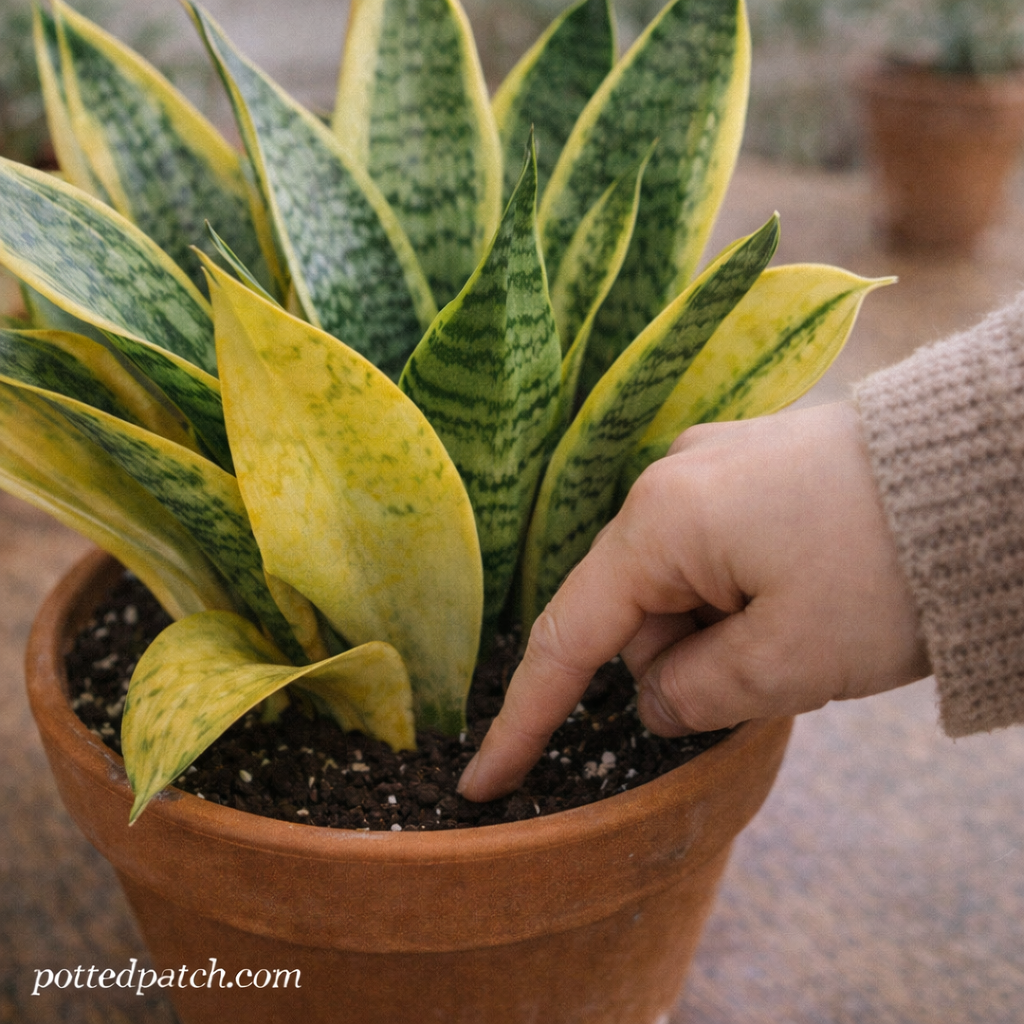
The most important step is checking how wet the soil is.
If the soil feels damp or soggy:
- Overwatering is the likely cause
- Roots may be stressed or beginning to rot
If the soil is completely dry and compacted:
- The plant may be experiencing inconsistent watering
Snake plants prefer soil that dries out fully between waterings.
Step 2: Adjust Your Watering Routine
If You’ve Been Overwatering
This is the most common scenario.
What to do:
- Stop watering immediately
- Allow the soil to dry out completely
- Move the plant to bright, indirect light
- Resume watering only when the soil is fully dry
In severe cases, you may need to remove the plant from the pot and inspect the roots.
If Watering Has Been Inconsistent
Occasional underwatering followed by heavy watering can also cause yellowing.
Fix this by:
- Watering deeply but less often
- Avoiding small, frequent waterings
- Letting excess water drain fully
Consistency matters more than frequency.
Step 3: Check Drainage and Pot Type
Even perfect watering won’t help if water can’t escape the pot.
Drainage problems include:
- Pots without drainage holes
- Decorative pots trapping excess water
- Heavy, compacted soil
Fixes:
- Switch to a pot with drainage holes
- Use a well-draining soil mix
- Empty outer pots after watering
Proper drainage alone often stops yellowing from spreading.
Step 4: Inspect the Roots (If Yellowing Continues)
If multiple leaves are yellowing or feel soft at the base, root inspection is necessary.
How to inspect:
- Gently remove the plant from the pot
- Look for black, mushy, or foul-smelling roots
- Trim away damaged roots with clean scissors
- Repot in fresh, dry soil
Healthy roots should be firm and light in color.
Step 5: Improve Light Conditions
Snake plants tolerate low light, but low light combined with moisture is a problem.
If your plant sits in a very dim area:
- Move it to brighter indirect light
- Avoid dark corners long-term
- Rotate the plant occasionally
Better light helps the plant use water more efficiently.
Step 6: Eliminate Cold Stress
Cold temperatures can cause sudden yellowing.
Check for:
- Drafty windows
- Air conditioning vents
- Temperatures below 55°F
Move the plant to a stable, warm location and avoid temperature swings.
Step 7: Remove Yellow Leaves Properly
Once a snake plant leaf turns fully yellow, it won’t recover.
How to remove it:
- Use clean, sharp scissors
- Cut the leaf at the base
- Avoid tearing or twisting
Removing damaged leaves allows the plant to redirect energy to healthy growth.
Step 8: Pause Fertilizing
If you’ve fertilized recently, yellow leaves could be related to nutrient stress.
What to do:
- Stop fertilizing immediately
- Flush the soil with water if buildup is suspected
- Resume fertilizing lightly only during spring or summer
Snake plants need very little fertilizer.
What Recovery Looks Like
After fixing the cause:
- Yellowing should stop spreading
- New growth will appear green and firm
- The plant may look sparse temporarily
Recovery is slow but steady. Snake plants reward patience.
Quick Fix Checklist
If your snake plant has yellow leaves:
- Let soil dry out fully
- Improve drainage
- Increase light slightly
- Remove cold exposure
- Trim yellow leaves
- Reduce fertilizing
Most fixes require doing less, not more.
Final Thoughts
Yellow leaves on a snake plant are almost always fixable. By slowing down, checking moisture, improving drainage, and stabilizing the environment, you give the plant exactly what it needs to recover.
Snake plants thrive on neglect done correctly. Once balance is restored, healthy growth will follow. 🌱