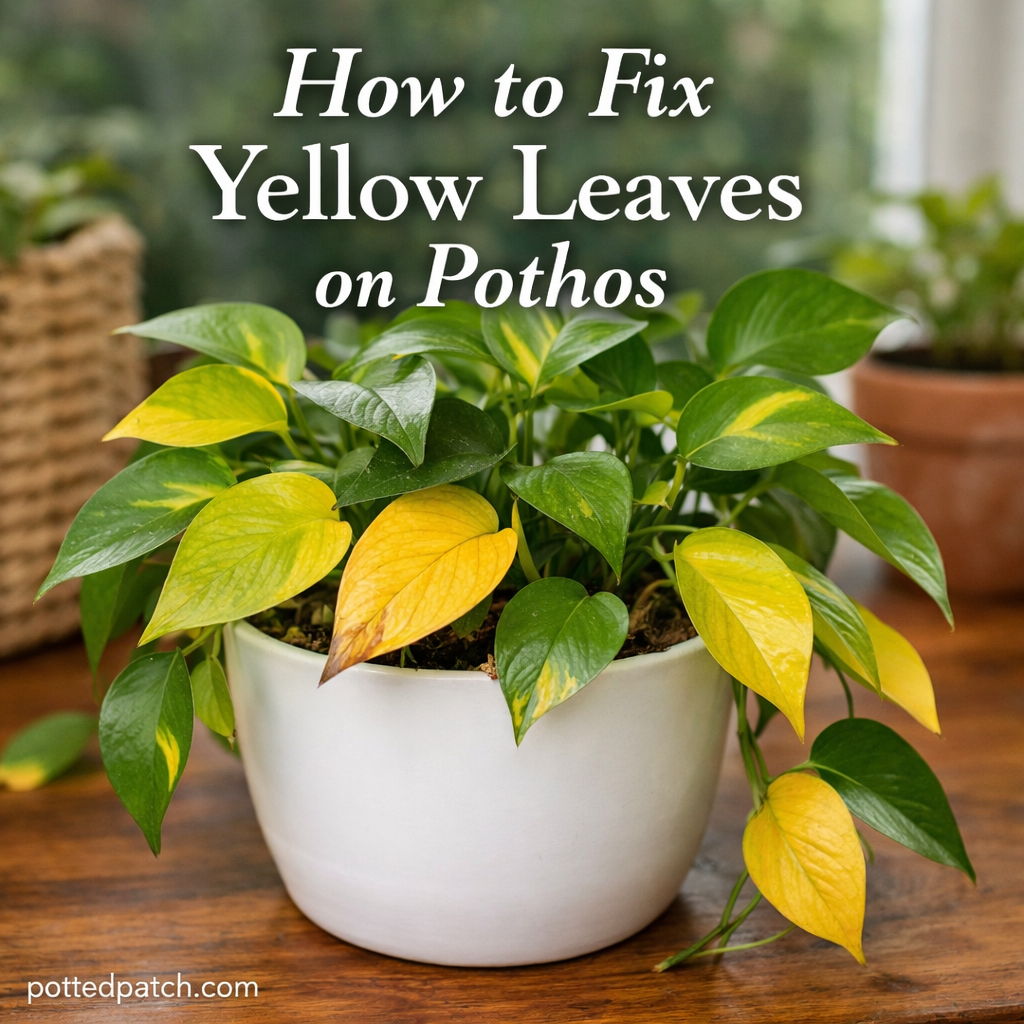
Pothos plants are known for being easygoing and beginner-friendly. So when those glossy green leaves start turning yellow, it can feel frustrating and confusing.
The good news? Yellow leaves on pothos are usually fixable.
In this guide, you’ll learn the most common causes, how to diagnose the issue, and step-by-step fixes to help your plant bounce back quickly.
Why Are My Pothos Leaves Turning Yellow?
Yellow leaves are your plant’s way of signaling stress. The most common causes include:
- Overwatering
- Poor drainage
- Underwatering
- Low light
- Nutrient deficiencies
- Natural aging
Identifying the real cause is the key to solving the problem.
Step 1: Check Your Watering Habits
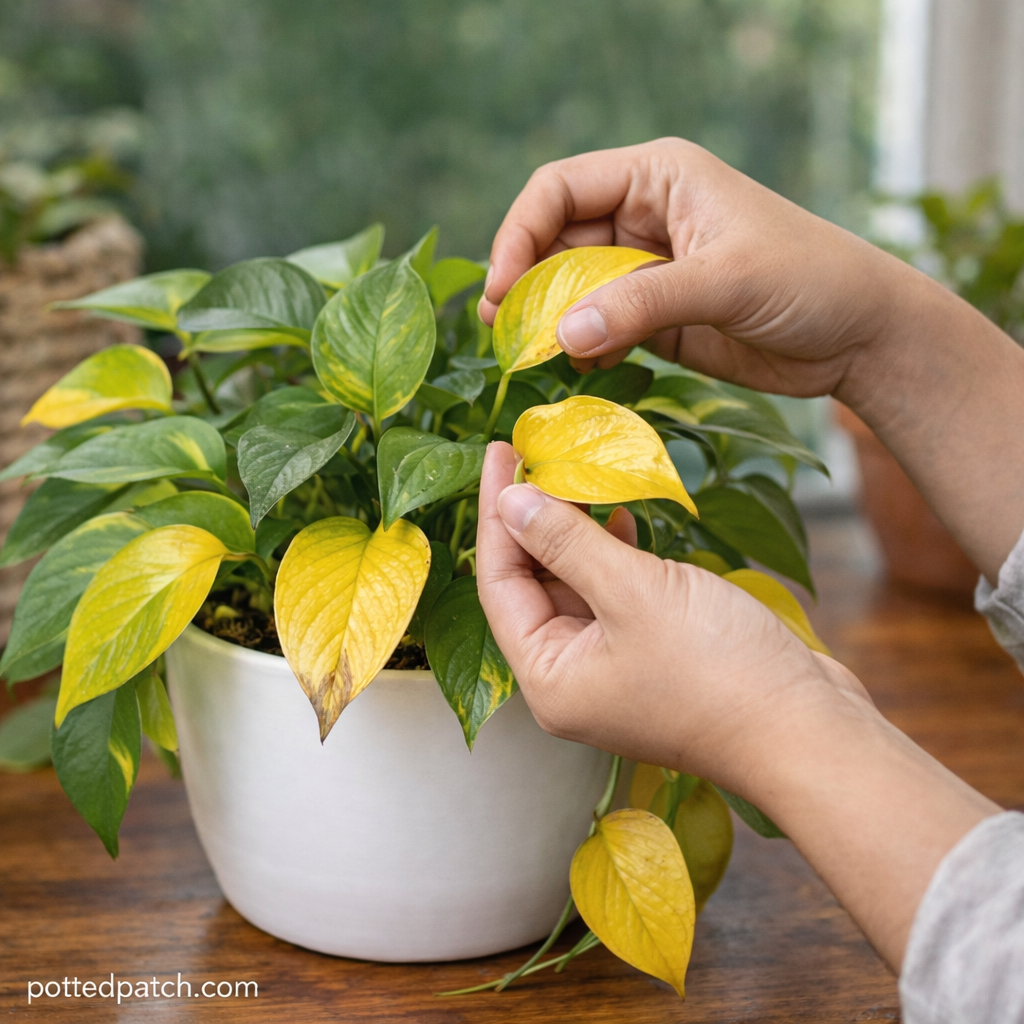
Overwatering is the #1 reason pothos leaves turn yellow.
Signs of Overwatering
- Soil feels soggy or constantly wet
- Yellow leaves feel soft or limp
- Stems may look dark or mushy
- Foul smell from the soil
How to Fix Overwatering
- Stop watering immediately.
- Let the top 2–3 inches of soil dry out completely.
- Remove any yellow leaves with clean scissors.
- Check that your pot has drainage holes.
- If roots are mushy, repot in fresh, well-draining soil.
Pro tip: Always check the soil with your finger before watering. If it’s still moist, wait.
Step 2: Rule Out Underwatering
While less common, underwatering can also cause yellowing.
Signs of Underwatering
- Dry, crumbly soil
- Leaves feel thin or crispy
- Plant looks droopy but not mushy
How to Fix Underwatering
- Water thoroughly until excess drains from the bottom.
- Ensure the entire root ball gets hydrated.
- Resume a consistent watering schedule.
A good rule of thumb: Water when the top 2 inches of soil are dry.
Step 3: Evaluate Light Conditions
Pothos tolerate low light, but extremely dim conditions can cause yellowing.
Signs of Low Light Stress
- Slower growth
- Smaller leaves
- Yellowing on multiple leaves at once
How to Fix Light Issues
- Move your pothos closer to a bright window.
- Provide bright, indirect sunlight.
- Avoid harsh direct sun, which can scorch leaves.
If you can comfortably read a book without artificial light, the spot is usually bright enough.
Step 4: Check Drainage and Soil
Poor drainage suffocates roots and leads to yellow leaves.
Make Sure:
- Your pot has drainage holes.
- Soil drains quickly after watering.
- Water doesn’t sit in a decorative cachepot.
If needed, repot into a chunky, well-draining mix such as:
- Regular potting soil
- Perlite
- Orchid bark
A 2:1:1 mix works well for most homes.
Step 5: Consider Nutrient Deficiency
If your watering and lighting are correct, yellow leaves may signal a lack of nutrients.
Signs of Nutrient Issues
- Pale yellow leaves with green veins
- Slow growth during growing season
- Overall faded appearance
How to Fix It
- Use a balanced liquid houseplant fertilizer.
- Feed monthly during spring and summer.
- Avoid fertilizing in winter when growth slows.
Always dilute fertilizer according to label instructions to avoid root burn.
Step 6: Remove Naturally Aging Leaves
Sometimes, yellow leaves are completely normal.
Older leaves near the base of the plant will eventually yellow and drop off as new growth appears.
If only one or two lower leaves are yellow and the rest of the plant looks healthy, there’s usually nothing to worry about.
Simply trim them away.
How to Prevent Yellow Leaves in the Future
Prevention is easier than treatment.
Follow these best practices:
- Water only when soil is partially dry
- Use pots with drainage holes
- Provide bright, indirect light
- Avoid letting water sit in saucers
- Fertilize lightly during the growing season
- Keep temperatures between 65–85°F
Consistency is the secret to healthy pothos plants.
When to Repot Your Pothos
If yellowing continues despite correcting care, your plant may be rootbound or suffering from root rot.
Signs it’s time to repot:
- Roots growing out of drainage holes
- Soil drying out extremely fast
- Persistent yellowing
- Stunted growth
Choose a pot only 1–2 inches larger than the current one to prevent overwatering issues.
Final Thoughts
Yellow leaves on pothos are common — and usually reversible.
Start by checking watering habits, then evaluate light, drainage, and nutrients. Make one adjustment at a time and observe how your plant responds over the next 1–2 weeks.
With proper care, your pothos should return to its vibrant, trailing beauty quickly.
Healthy plants aren’t about perfection. They’re about consistency.