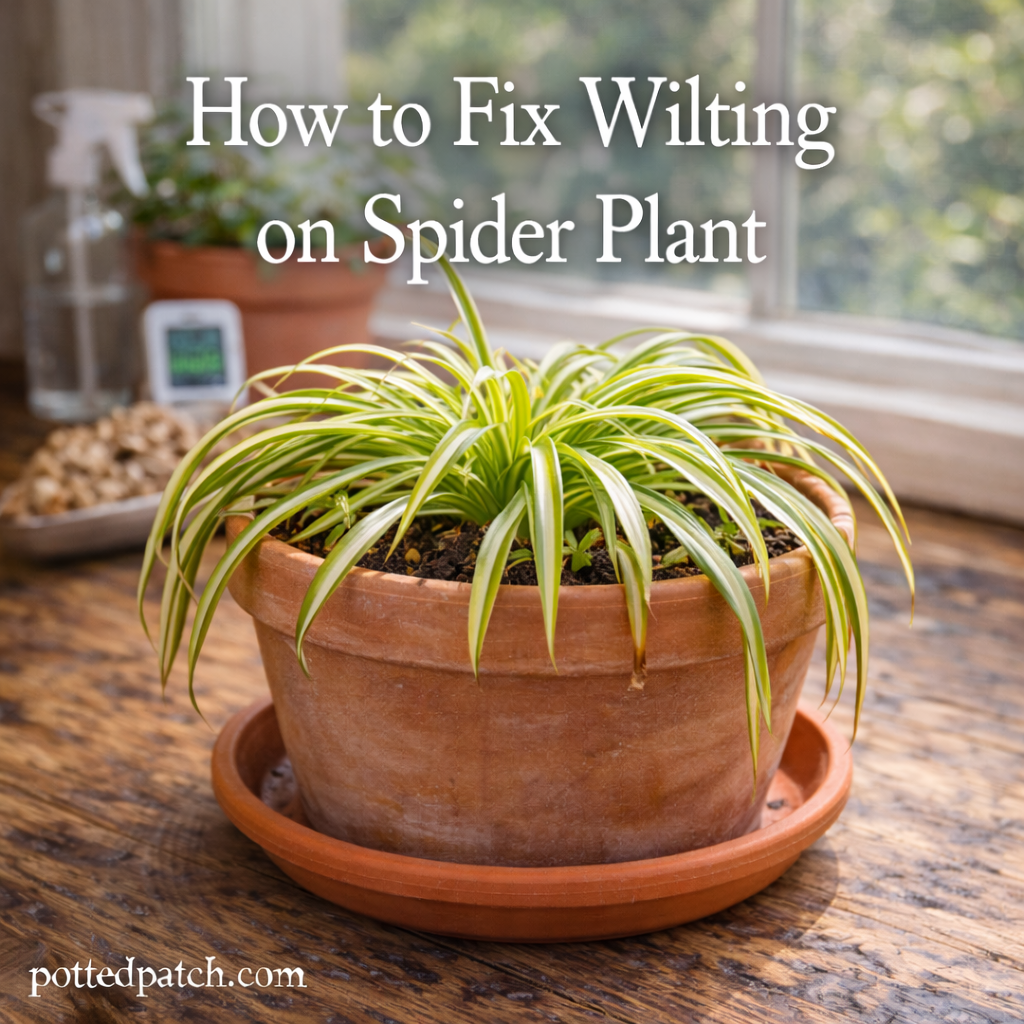
A wilting spider plant can look dramatic — limp leaves, drooping stems, and an overall tired appearance.
The good news?
Wilting is usually reversible once you correct the underlying issue.
In this guide, you’ll learn exactly how to fix wilting on a spider plant, step by step.
Step 1: Check the Soil Moisture Immediately
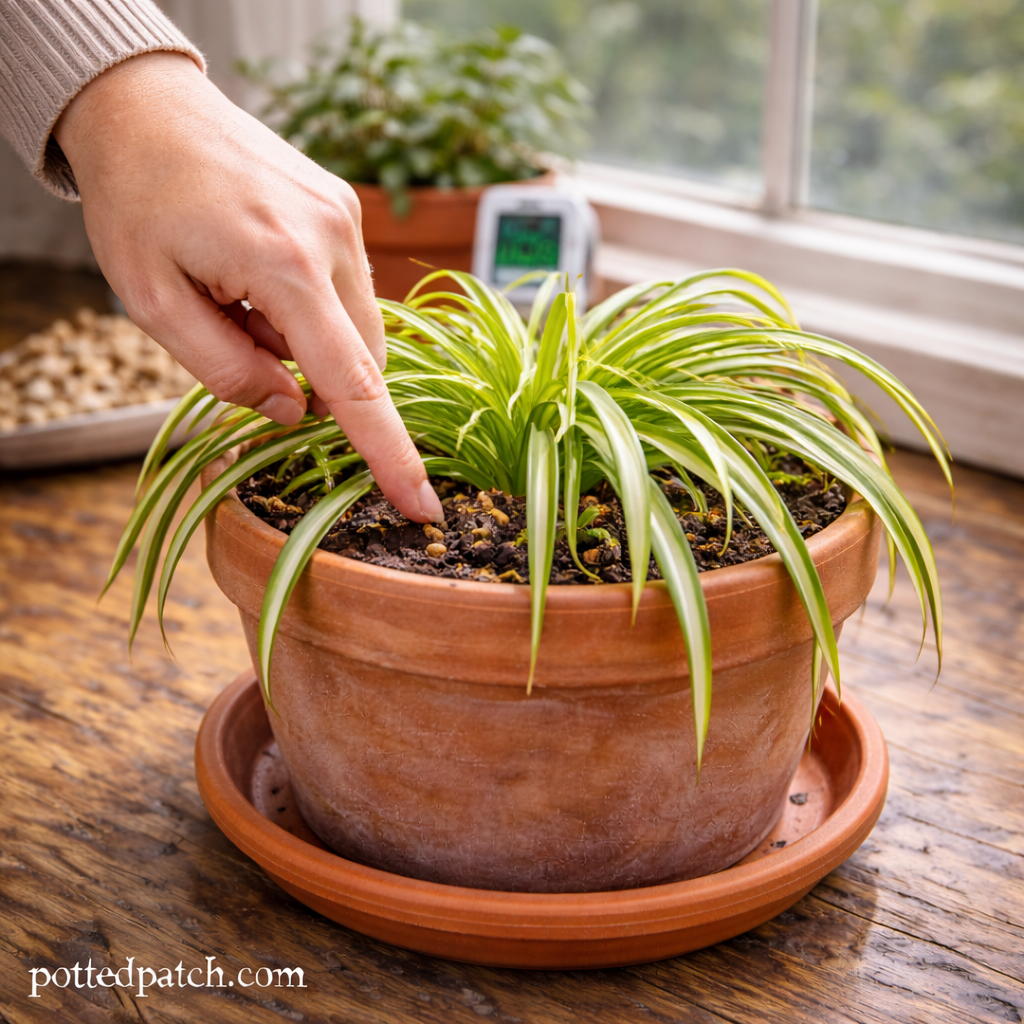
The first thing to do is inspect the soil.
Spider plants wilt most often due to watering problems.
How to Test
- Insert your finger 1–2 inches into the soil
- If it feels dry, you’re likely underwatering
- If it feels soggy, overwatering may be the issue
Start here before making any other changes.
If the Soil Is Bone Dry (Underwatering Fix)
Underwatering is the most common cause of sudden wilting.
How to Fix It
- Water thoroughly until excess drains from the bottom
- Let the pot drain completely
- Avoid letting the plant sit in standing water
Severely dry soil may repel water. If that happens:
- Place the pot in a bowl of water for 10–15 minutes
- Allow the soil to rehydrate from the bottom
Most spider plants perk up within a few hours.
If the Soil Is Soggy (Overwatering Fix)
Too much water can suffocate roots and cause wilting.
How to Fix It
- Stop watering immediately
- Allow soil to dry completely
- Ensure the pot has proper drainage
- Empty any standing water in the saucer
If roots are mushy or smell bad, repot the plant in fresh, well-draining soil.
Recovery may take 1–3 weeks.
Step 2: Check for Root Bound Stress
Spider plants grow quickly and often outgrow their pots.
When roots are crowded, water absorption becomes uneven.
Signs
- Roots circling inside the pot
- Water draining straight through
- Wilting shortly after watering
Fix
- Repot into a container 1–2 inches larger
- Use fresh, well-draining potting mix
Giving the roots space can restore leaf firmness.
Step 3: Stabilize Temperature and Placement
Environmental stress can also cause wilting.
Spider plants prefer:
- 60–80°F
- Bright, indirect light
- Stable indoor conditions
Avoid:
- Cold drafts
- Air conditioning vents
- Direct afternoon sun
Consistent conditions help prevent recurring droop.
Step 4: Improve Drainage
Poor drainage traps water around the roots.
If soil stays wet for days, roots can weaken.
What to Check
- Does the pot have drainage holes?
- Is the soil compacted?
- Is water pooling in the saucer?
Switch to a lighter potting mix if needed.
Step 5: Be Patient After Repotting
If you recently repotted or divided your spider plant, temporary wilting is normal.
This is called transplant shock.
What to Do
- Keep soil lightly moist
- Avoid fertilizing for a few weeks
- Maintain steady light
Most plants recover within 1–2 weeks.
Should You Trim Wilted Leaves?
If leaves are:
- Yellow
- Brown
- Soft and collapsing
You can trim them at the base using clean scissors.
If leaves are just drooping but still green, allow them to recover naturally.
How Long Until It Recovers?
Recovery timeline depends on the cause:
- Underwatering: Hours to 1 day
- Overwatering: Several days to weeks
- Root bound stress: 1–3 weeks
- Environmental stress: A few days
New upright growth is the best sign of improvement.
Quick Fix Checklist
If your spider plant is wilting, check:
- Soil moisture
- Drainage
- Root crowding
- Temperature exposure
- Recent changes in environment
Start with watering — it’s usually the answer.
Final Thoughts
Wilting on a spider plant is common and usually easy to fix.
Correct the watering issue first, stabilize the environment, and give your plant time to recover.
Spider plants are forgiving — with consistent care, they bounce back quickly.