Pothos (Epipremnum aureum) is known for being tough, adaptable, and beginner-friendly. So when it suddenly starts wilting, it can feel confusing.
The good news? Wilting pothos is usually fixable.
In most cases, the issue comes down to watering habits, root health, lighting, or temperature stress. This guide walks you step-by-step through diagnosing and fixing a wilting pothos plant.
Step 1: Check the Soil Moisture Immediately
Wilting is most commonly caused by watering problems — either too much or too little.
Stick your finger 2 inches into the soil.
If the Soil Is Bone Dry
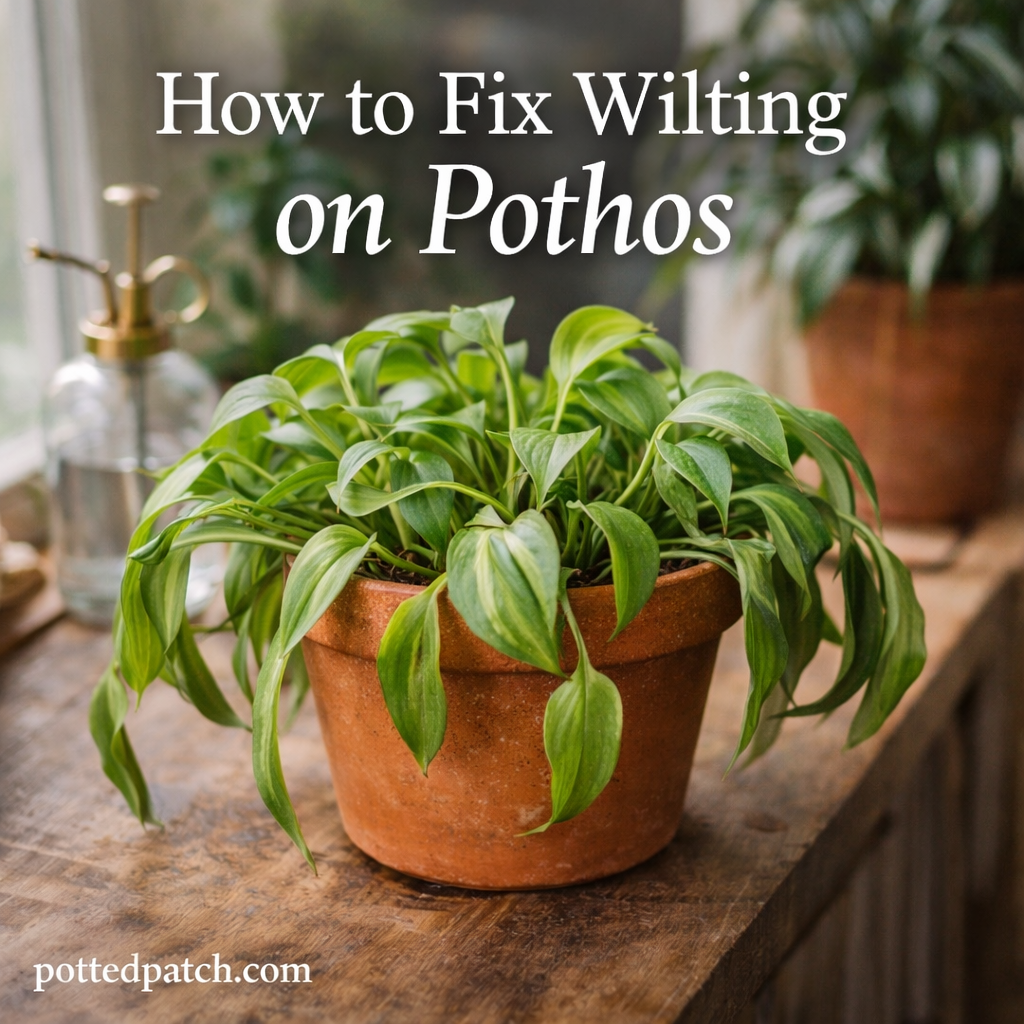
Your pothos is likely underwatered.
Signs include:
- Limp, drooping vines
- Dry, crumbly soil pulling away from the pot edges
- Leaves that feel thin instead of firm
How to Fix Underwatering
- Water thoroughly until water drains from the bottom.
- Let excess water drain completely.
- Resume a consistent watering schedule.
- Water again when the top 1–2 inches are dry.
Pothos often perk up within hours after a deep watering.
If the Soil Is Wet or Soggy
Overwatering may be the issue.
Signs include:
- Yellowing leaves
- Mushy stems
- A sour smell in the soil
- Persistent drooping despite wet soil
Overwatering can lead to root rot, which requires more attention.
Step 2: Inspect the Roots
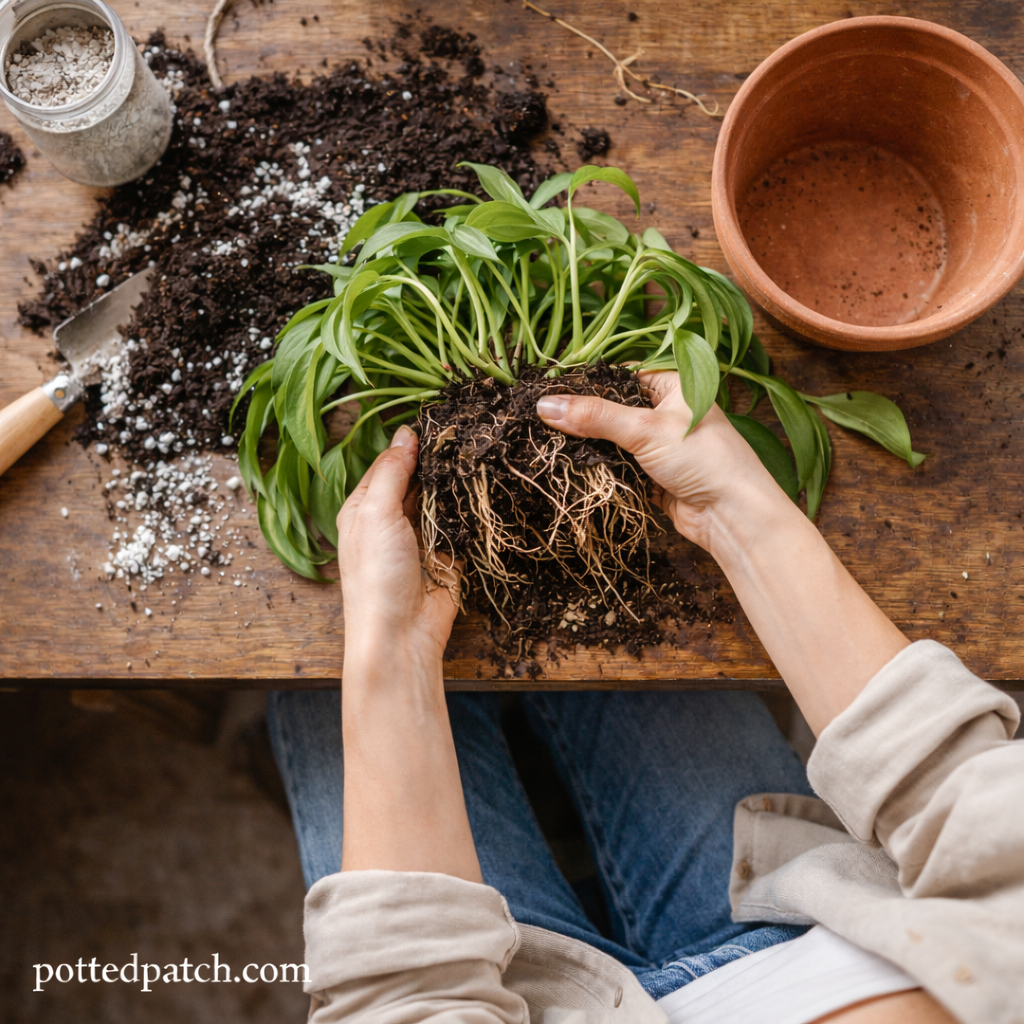
If the plant doesn’t improve after adjusting watering, check the roots.
Gently remove the plant from its pot.
Healthy roots:
- White or light tan
- Firm to the touch
Rotting roots:
- Brown or black
- Soft and mushy
- Foul smell
How to Fix Root Rot
- Trim off all mushy roots with sterile scissors.
- Discard old soil.
- Repot in fresh, well-draining potting mix.
- Use a pot with drainage holes.
- Water lightly after repotting.
Avoid fertilizing until the plant shows recovery.
Step 3: Evaluate Light Conditions
Pothos tolerate low light, but extreme conditions can cause stress.
Too Little Light
- Leggy vines
- Slow growth
- Persistent drooping
Too Much Direct Sun
- Crispy edges
- Leaf scorch
- Rapid wilting
Ideal Light
- Bright, indirect light
- Near an east-facing window
- A few feet from a south or west window
Move the plant gradually if adjusting its location.
Step 4: Check Temperature and Drafts
Pothos prefer stable indoor temperatures between 65–85°F.
Wilting can occur if the plant is exposed to:
- Cold drafts from windows or doors
- Air conditioning vents
- Heating vents
- Sudden temperature swings
If your plant is near a draft, relocate it to a more stable spot.
Step 5: Examine the Pot and Drainage
Even perfect watering won’t help if drainage is poor.
Check for:
- Drainage holes in the pot
- Compact, heavy soil
- Roots tightly circling the pot (root-bound)
If water pools on the surface or drains too slowly, repot using:
- Standard potting mix
- Added perlite for aeration
- A container only 1–2 inches larger than the root ball
Step 6: Consider Fertilizer Burn
Too much fertilizer can damage roots and cause wilting.
Signs include:
- Brown leaf tips
- White crust on soil surface
- Wilting despite proper watering
How to Fix It
- Flush the soil thoroughly with distilled water.
- Stop fertilizing for 4–6 weeks.
- Resume feeding at half strength during growing season only.
How Long Does Recovery Take?
- Underwatering: often improves within 24 hours.
- Mild overwatering: 3–7 days.
- Root rot recovery: several weeks.
- Light stress adjustment: 1–2 weeks.
New growth is the best sign your pothos is recovering.
When Wilting Is Normal
Sometimes wilting happens briefly before scheduled watering. If the plant perks up after watering, that’s normal thirst — not a serious issue.
Occasional drooping isn’t a crisis. Persistent wilting is.
Final Thoughts
If your pothos is wilting, don’t panic.
Work through this checklist:
- Check soil moisture.
- Inspect roots.
- Evaluate light.
- Review temperature.
- Improve drainage.
- Reduce fertilizer if needed.
Most pothos plants bounce back quickly once the root cause is addressed.
With consistent care and proper conditions, your pothos will return to full, trailing health — and stay that way.