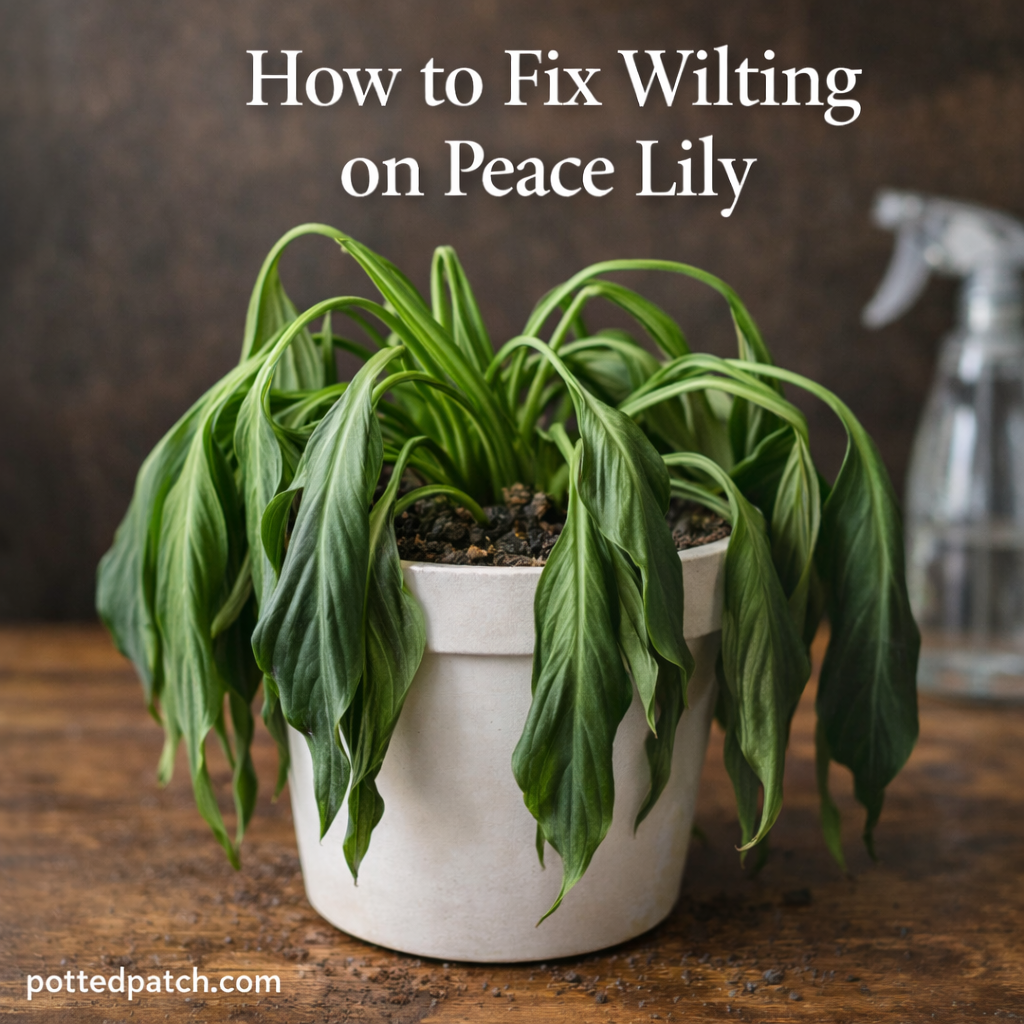
Peace lilies are known for their elegant white blooms and glossy green leaves. But when those leaves suddenly droop and collapse, it can be alarming.
The good news? Wilting in a peace lily is very common — and usually very fixable.
In this guide, you’ll learn why peace lilies wilt, how to identify the exact cause, and step-by-step solutions to bring your plant back to life.
Why Peace Lilies Wilt So Dramatically
Peace lilies are expressive plants. Unlike many houseplants that slowly decline, they visibly droop when stressed — especially when thirsty.
The key is identifying whether the wilting is caused by:
- Underwatering
- Overwatering
- Poor drainage
- Temperature stress
- Root problems
Let’s walk through each cause and how to fix it.
1. Underwatering (The Most Common Cause)
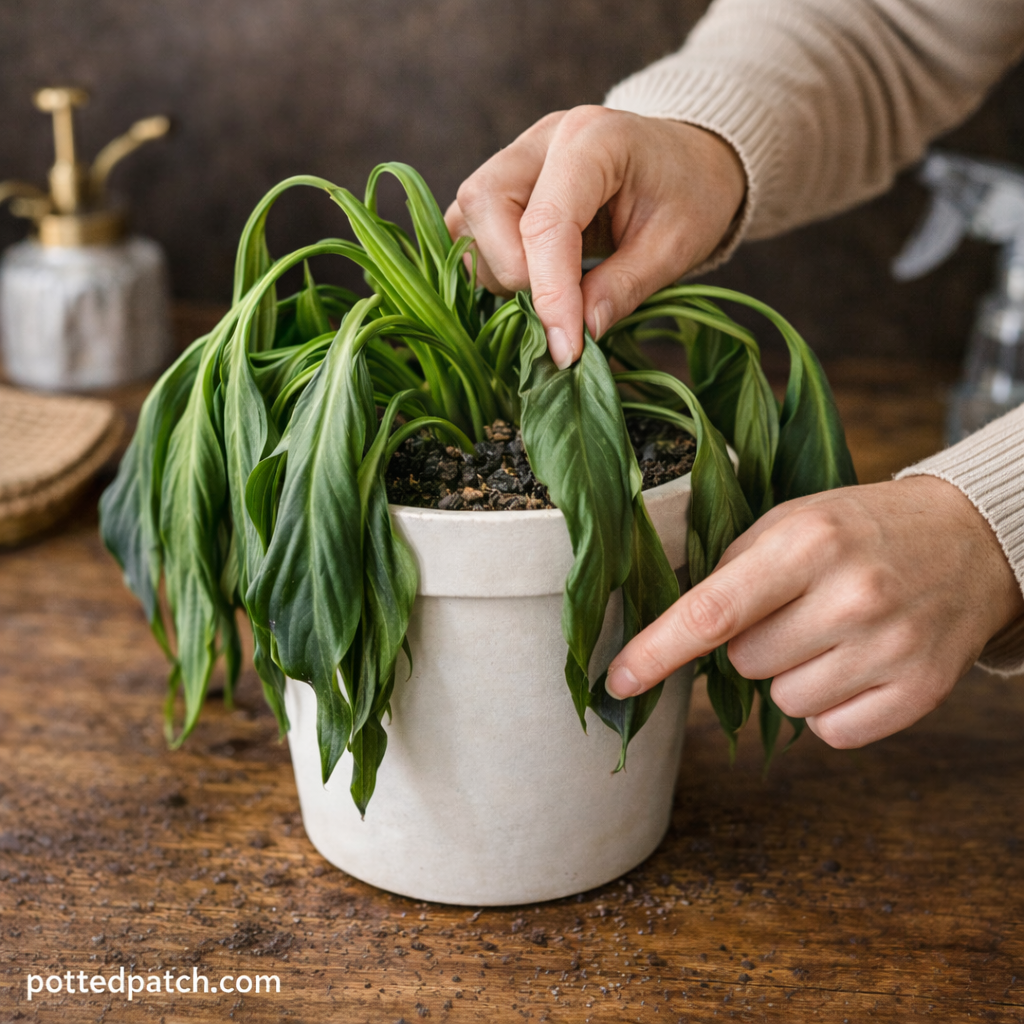
Peace lilies are thirsty plants. When the soil dries out too much, the leaves quickly droop.
Signs of Underwatering
- Dramatic drooping leaves
- Dry soil pulling away from the pot edges
- Lightweight pot
- Leaves perk up within hours after watering
How to Fix It
- Water thoroughly until water drains from the bottom.
- Allow excess water to drain completely.
- Empty the saucer so the plant isn’t sitting in water.
Within a few hours, you should see leaves stand upright again.
Prevention Tip
Check soil moisture weekly. Water when the top 1–2 inches feel dry.
2. Overwatering (Often Confused With Thirst)
Surprisingly, overwatering can also cause wilting.
When roots sit in soggy soil, they can’t absorb oxygen. This leads to root rot and drooping leaves.
Signs of Overwatering
- Yellowing leaves
- Soft, mushy stems
- Soil stays wet for many days
- Foul smell from soil
How to Fix It
- Remove the plant from its pot.
- Inspect roots — trim any black, mushy sections.
- Repot in fresh, well-draining soil.
- Use a pot with drainage holes.
Allow the soil to dry slightly between waterings moving forward.
3. Poor Drainage
Even if you water correctly, a pot without drainage can trap moisture at the bottom.
What To Check
- Does the pot have drainage holes?
- Is the soil compacted or heavy?
- Is water pooling in the saucer?
The Fix
Repot using:
- A container with drainage holes
- A light, well-draining indoor potting mix
- Optional perlite added for extra aeration
Good drainage prevents both wilting and root rot.
4. Temperature or Draft Stress
Peace lilies prefer stable indoor temperatures.
Ideal Conditions
- 65–80°F
- No cold drafts
- No direct hot air from vents
Sudden temperature drops can cause drooping leaves.
Solution
Move the plant away from:
- Exterior doors
- AC vents
- Cold windows during winter
Stable warmth helps leaves stay upright.
5. Root Bound Issues
If your peace lily hasn’t been repotted in years, tight roots may restrict water absorption.
Signs It’s Root Bound
- Roots growing out of drainage holes
- Water runs straight through the pot
- Soil dries out extremely fast
How to Fix It
Repot into a container 1–2 inches larger in diameter.
Gently loosen roots before placing in fresh soil.
Repotting every 1–2 years keeps peace lilies healthy.
How Long Does It Take to Recover?
Recovery depends on the cause:
- Underwatering: Leaves perk up in hours
- Mild overwatering: Several days to a week
- Root rot: 1–3 weeks after treatment
Patience is key — avoid making multiple changes at once.
Quick Peace Lily Recovery Checklist
If your plant is wilting, go through this checklist:
- Check soil moisture.
- Confirm the pot has drainage holes.
- Inspect roots if wilting continues.
- Adjust watering frequency.
- Ensure stable temperature conditions.
Address the most obvious issue first before changing anything else.
When Wilting Is Normal
Occasional drooping before watering is normal for peace lilies. Many owners even use this as a reminder that it’s time to water.
As long as the plant perks back up after watering, there’s no cause for concern.
Final Thoughts
Wilting on a peace lily can look dramatic, but it’s usually a simple care adjustment away from recovery.
Start by checking the soil. Most issues come down to watering habits or drainage problems. Once you correct the root cause, your peace lily should bounce back quickly and continue producing healthy green leaves — and beautiful white blooms.
With consistent care and attention to moisture levels, peace lilies remain one of the most rewarding indoor plants to grow.