
Soft stems on a spider plant can be alarming. The base should feel firm and stable — not mushy or weak.
In most cases, soft stems are caused by excess moisture and can be reversed if caught early.
This guide walks you through exactly how to fix soft stems and prevent the problem from coming back.
Step 1: Stop Watering Immediately
If stems feel soft, your first move is simple:
Stop watering.
Softness usually means the roots are sitting in wet soil and beginning to rot. Adding more water will only make things worse.
Let the soil dry out while you assess the damage.
Step 2: Remove the Plant From the Pot
Carefully slide the plant out of its container.
Gently remove excess soil so you can clearly see the root system.
You’re looking for:
- Brown, mushy roots
- Slimy texture
- Sour smell
- Roots that fall apart easily
Healthy roots should be firm and white or light tan.
Step 3: Trim Away Damaged Roots
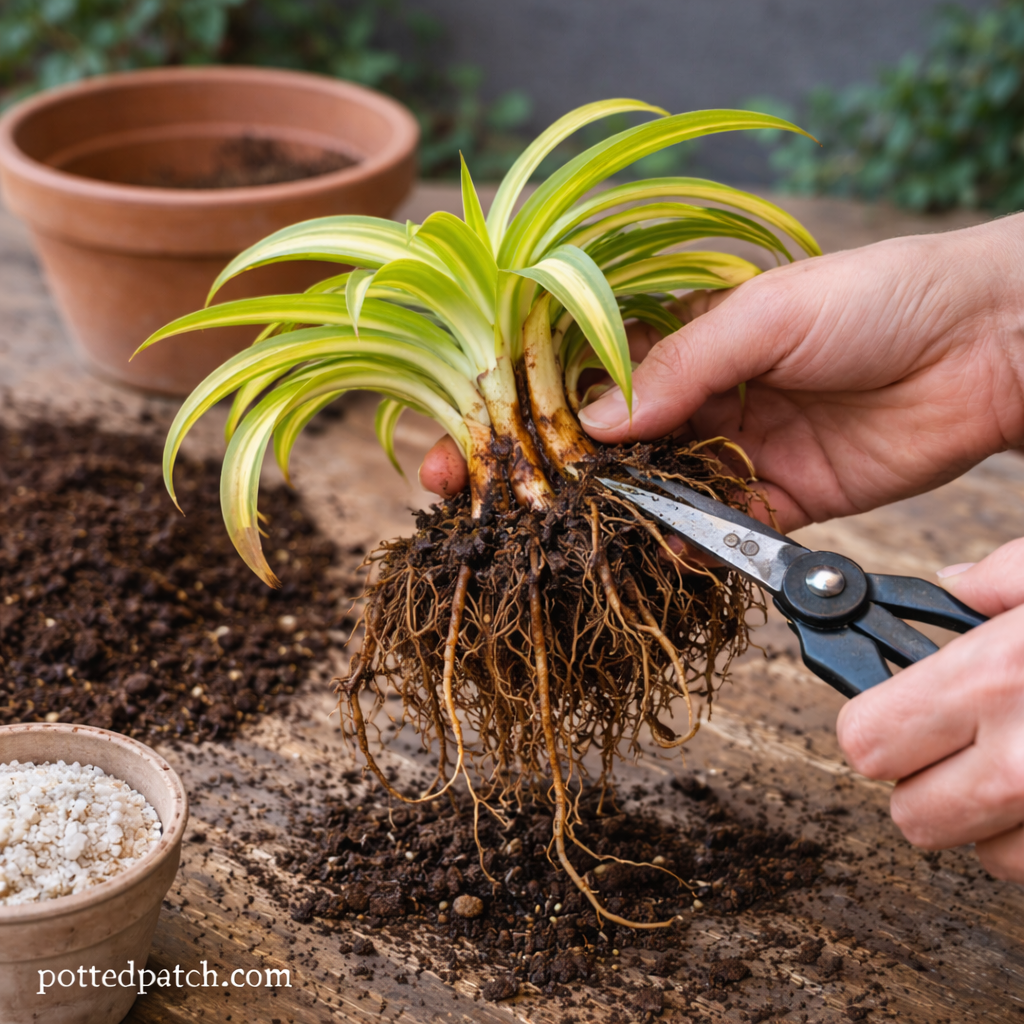
Using clean, sharp scissors:
- Cut off all brown or mushy roots.
- Remove any blackened or soft stem tissue at the base.
- Keep only firm, healthy sections.
Do not leave partially damaged tissue — rot spreads.
If most of the root system is affected, saving the main plant may be difficult.
Step 4: Replace the Soil
Discard the old soil completely.
Soft stems are usually linked to moisture-retentive or compacted soil.
Repot using a well-draining mix:
- 2 parts indoor potting soil
- 1 part perlite
- 1 part coarse sand or orchid bark
This improves airflow and reduces future rot risk.
Step 5: Choose a Pot With Drainage
If your previous container lacked drainage holes, switch immediately.
Even perfect soil cannot compensate for a pot that traps water.
Make sure:
- The pot has at least one drainage hole.
- Excess water can fully drain out.
- The saucer is emptied after watering.
Good drainage is essential for spider plant health.
Step 6: Adjust Your Watering Routine
After repotting:
- Wait a few days before watering again.
- Water only when the top 1–2 inches of soil feel dry.
- Never water on a fixed schedule without checking soil.
Spider plants prefer slightly dry conditions between waterings.
Consistency prevents recurrence.
Step 7: Improve Airflow and Light
Plants recovering from rot need stable conditions.
Provide:
- Bright, indirect light
- Moderate indoor temperatures (65–80°F)
- Good air circulation
Avoid placing the plant in dark corners while it recovers.
Light helps stimulate new growth.
If the Crown Is Too Soft to Save
If the center of the plant is mushy and collapsing, recovery may not be possible.
In that case:
- Remove healthy offshoots (spider plant babies).
- Root them in water or well-draining soil.
Spider plants propagate easily, so you can preserve the plant’s genetics even if the parent fails.
How Long Does Recovery Take?
If caught early, new growth may appear within 2–4 weeks.
Watch for:
- Firm new stems
- Fresh green leaves
- No further softening
Avoid fertilizing until the plant shows clear signs of recovery.
Quick Recovery Checklist
If your spider plant has soft stems:
- Stop watering.
- Remove and inspect roots.
- Trim all damaged tissue.
- Replace soil with a well-draining mix.
- Use a pot with drainage holes.
- Adjust watering habits.
Acting quickly gives your plant the best chance.
Final Thoughts
Soft stems on a spider plant are usually caused by excess moisture — whether from overwatering, poor drainage, or compacted soil.
The solution is simple but urgent: remove rot, improve drainage, and adjust watering habits.
Spider plants are resilient. With fast action and consistent care, most plants can fully recover.